
 Image 1 of 5
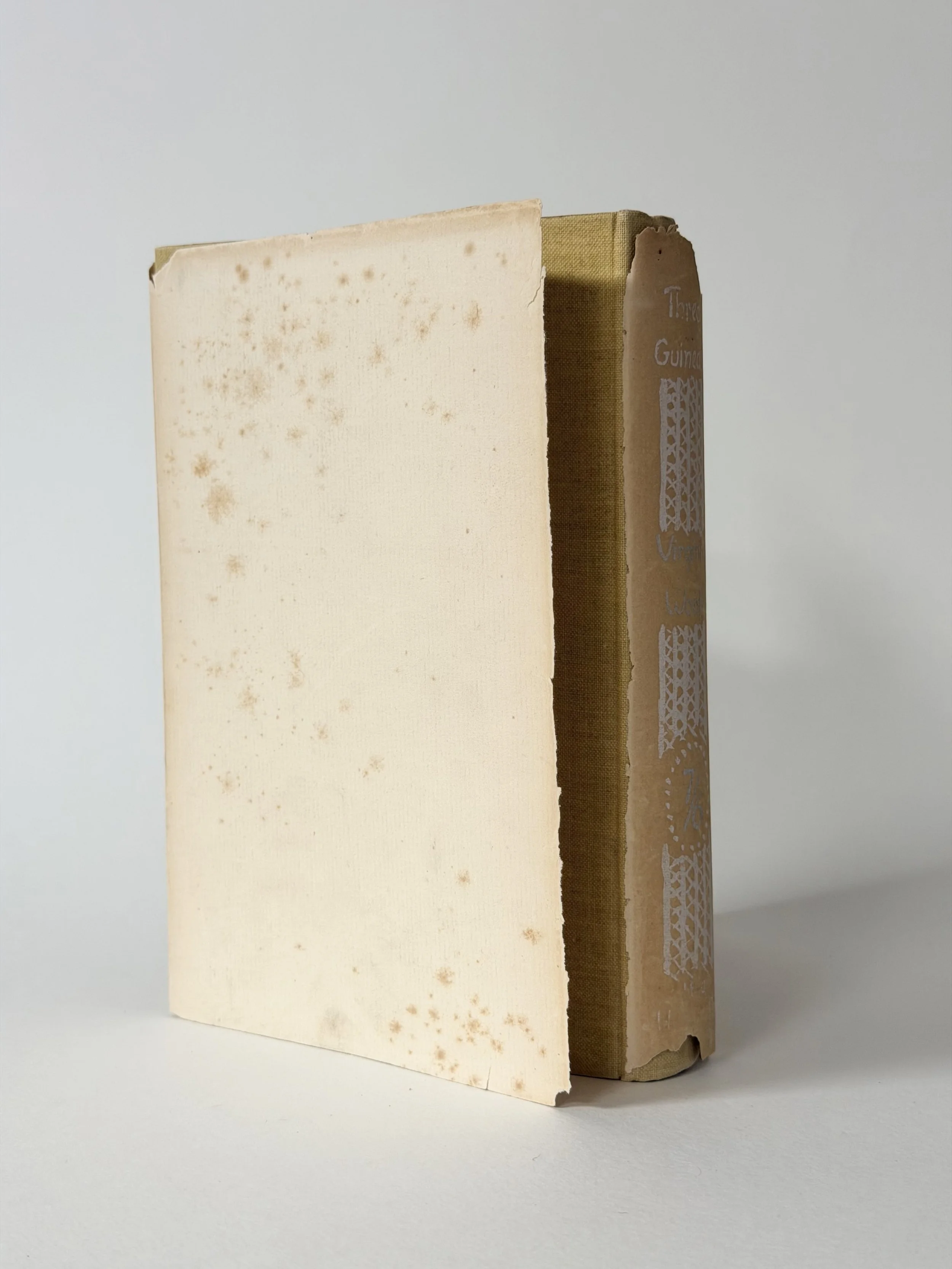 Image 2 of 5
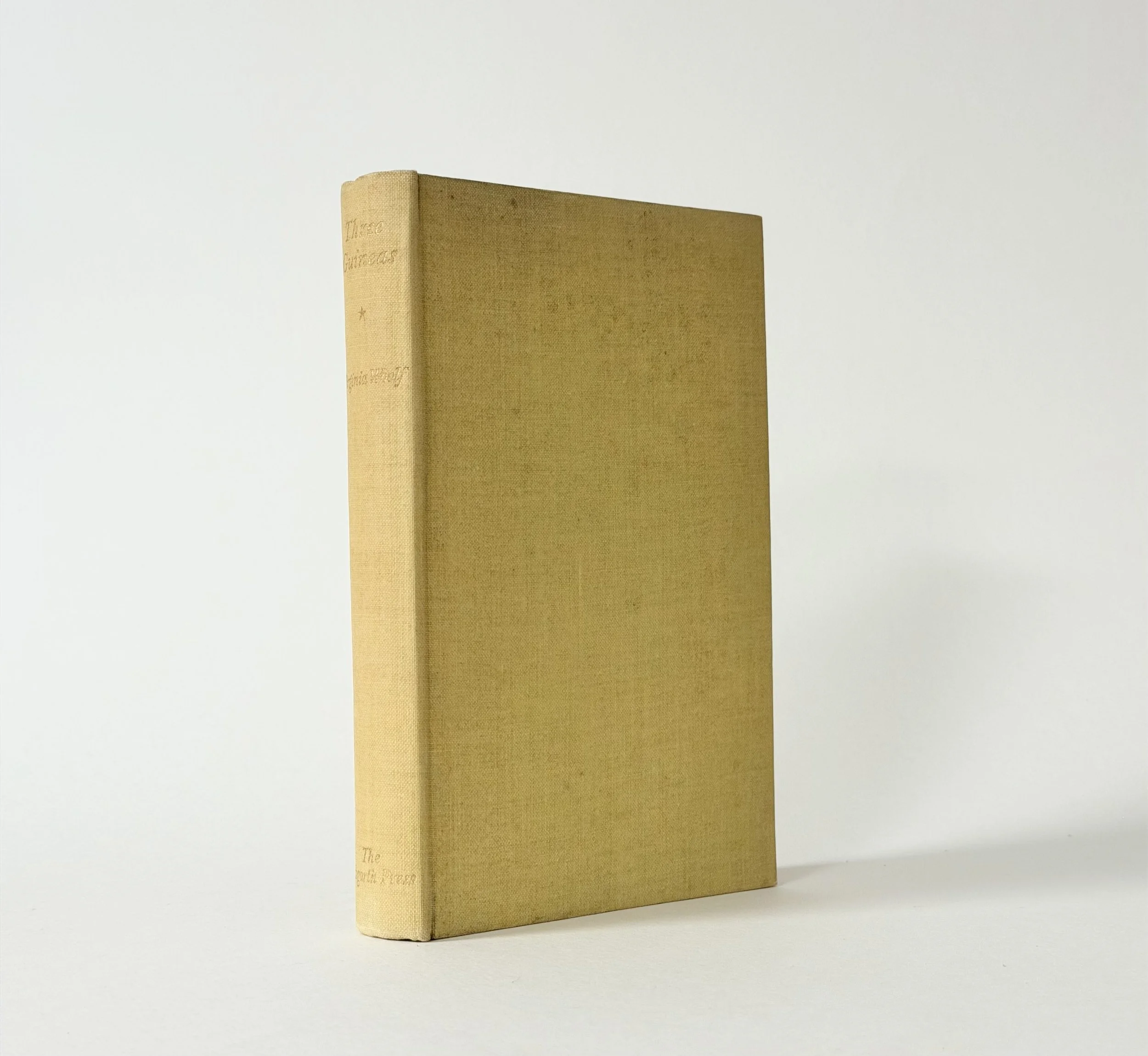 Image 3 of 5
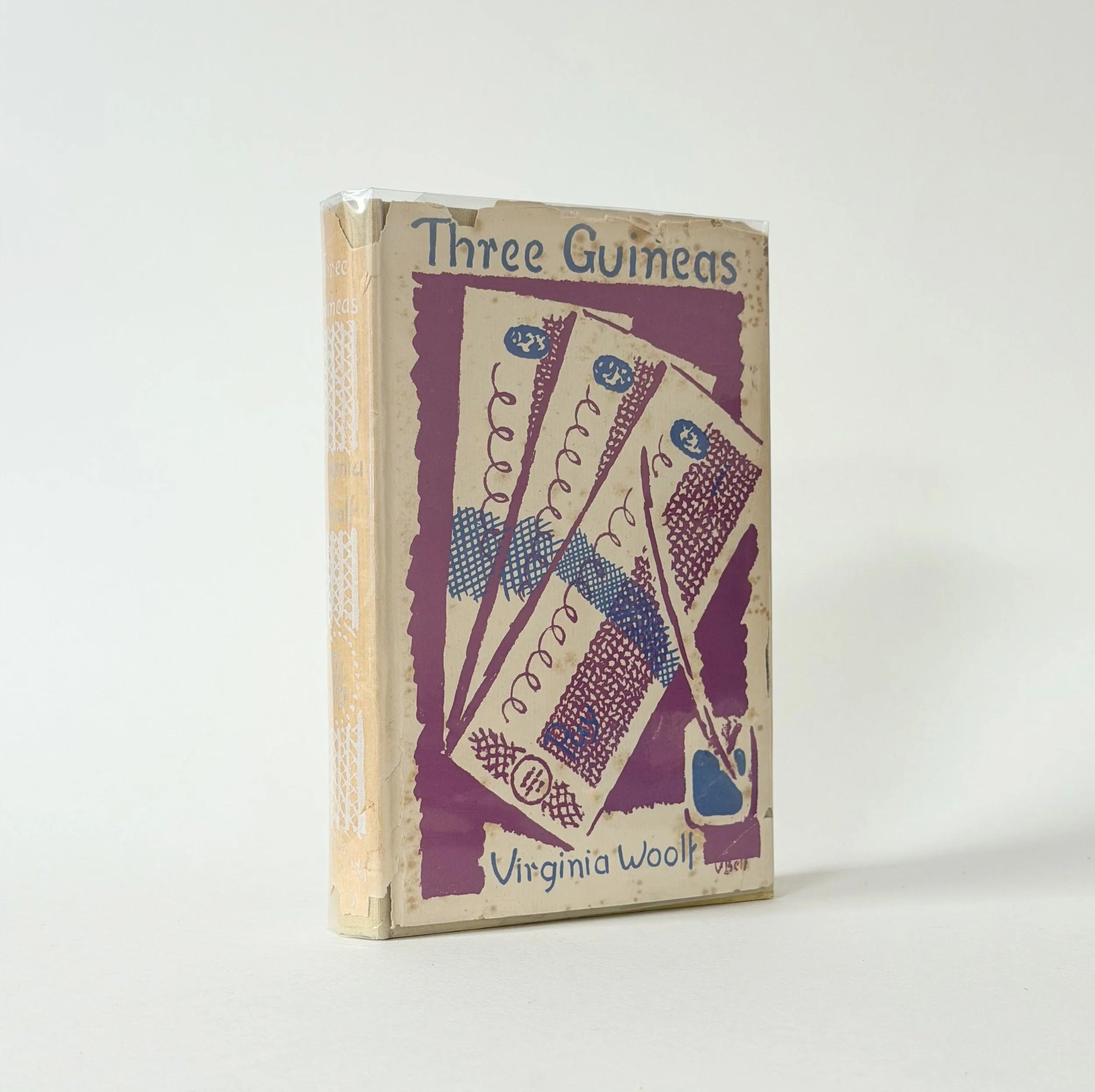 Image 4 of 5
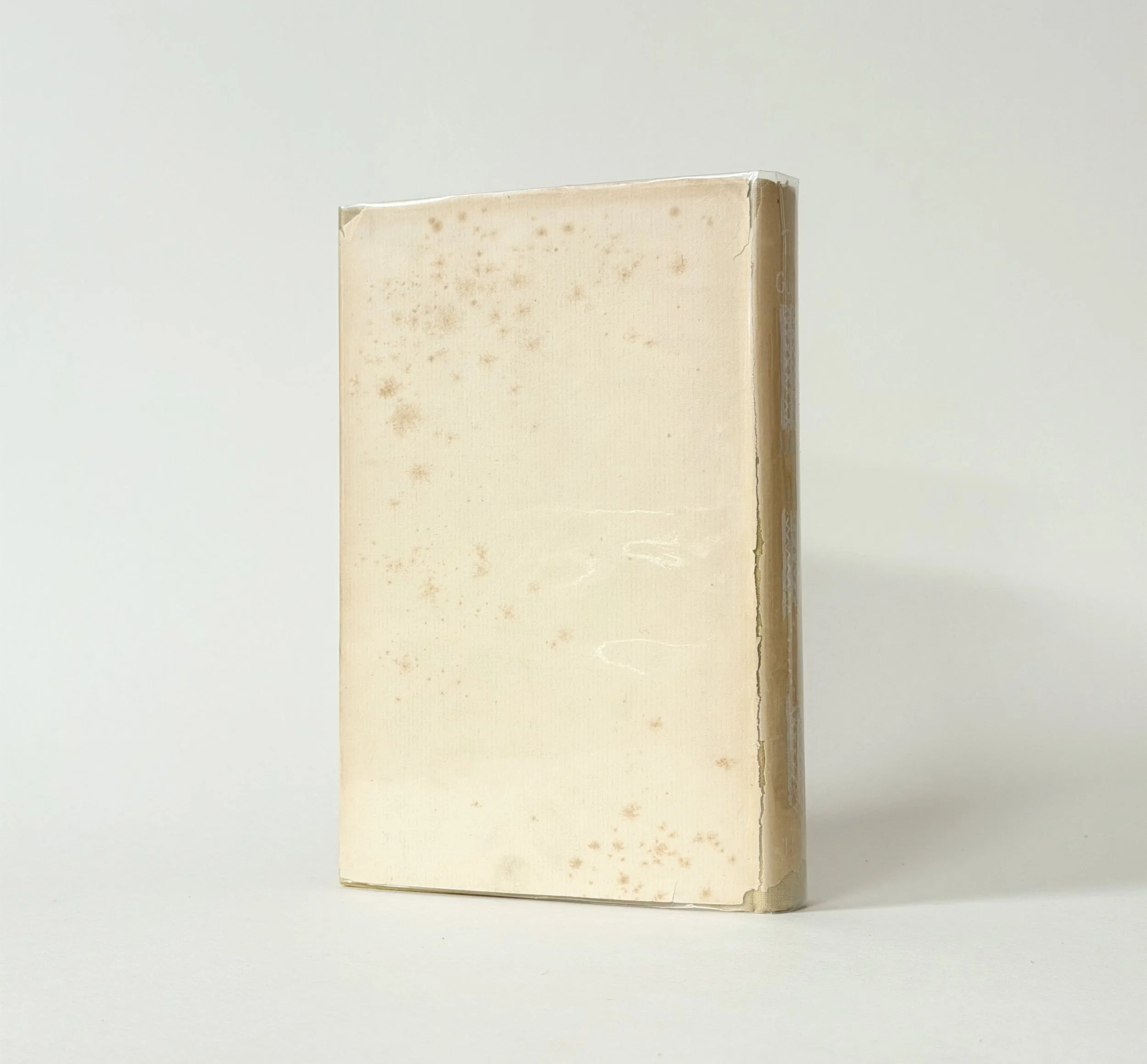 Image 5 of 5
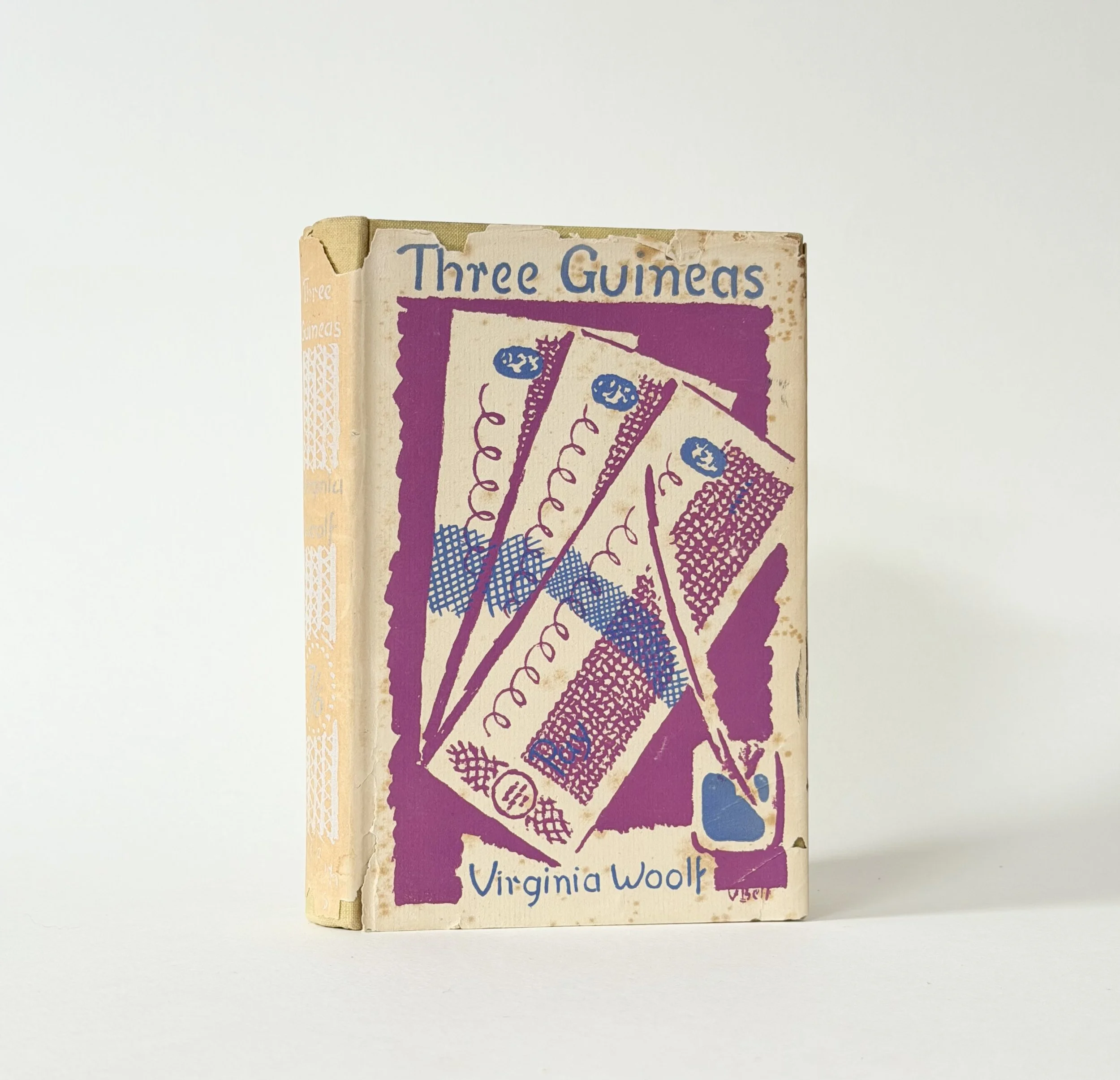
WOOLF, Virginia. Three Guineas. London: The Hogarth Press. 1938. 8vo. First edition. Publisher’s pale yellow cloth lettered in gilt to the spine, in the dust jacket designed by Vanessa Bell. Five monotone photographic plates, all present. The book very good. The gilt perhaps a trifle dulled, the corners and tips sharp, the binding tight and square, the contents fine but for some offsetting to the front endpaper, lighter to half-title and facing, small handful of faint pencil underlining. Small Cape Town bookseller label to rear pastedown. The dust jacket priced 7/6 net to the spine panel, split in two pieces (front flap, front panel, spine, then rear panel, rear flap), smaller splits to other joints, several instances of loss to spine foot, head, and other edges, some overall spotting, yet still quite fairly presentable in mylar with thanks to Bell’s scintillating design.
A three-fold answer in non-fiction form to three separate requests received by Woolf for a guinea each for peace, education, and work. The work is one of Woolf’s most actively feminist and is equal parts measured and fierce. It was the outcome of her own struggles with what eventually became The Waves (1931)—a larger work was to juxtapose the two in a single volume. Uncommon in such condition.
WOOLF, Virginia. Three Guineas. London: The Hogarth Press. 1938. 8vo. First edition. Publisher’s pale yellow cloth lettered in gilt to the spine, in the dust jacket designed by Vanessa Bell. Five monotone photographic plates, all present. The book very good. The gilt perhaps a trifle dulled, the corners and tips sharp, the binding tight and square, the contents fine but for some offsetting to the front endpaper, lighter to half-title and facing, small handful of faint pencil underlining. Small Cape Town bookseller label to rear pastedown. The dust jacket priced 7/6 net to the spine panel, split in two pieces (front flap, front panel, spine, then rear panel, rear flap), smaller splits to other joints, several instances of loss to spine foot, head, and other edges, some overall spotting, yet still quite fairly presentable in mylar with thanks to Bell’s scintillating design.
A three-fold answer in non-fiction form to three separate requests received by Woolf for a guinea each for peace, education, and work. The work is one of Woolf’s most actively feminist and is equal parts measured and fierce. It was the outcome of her own struggles with what eventually became The Waves (1931)—a larger work was to juxtapose the two in a single volume. Uncommon in such condition.