
 Image 1 of 3
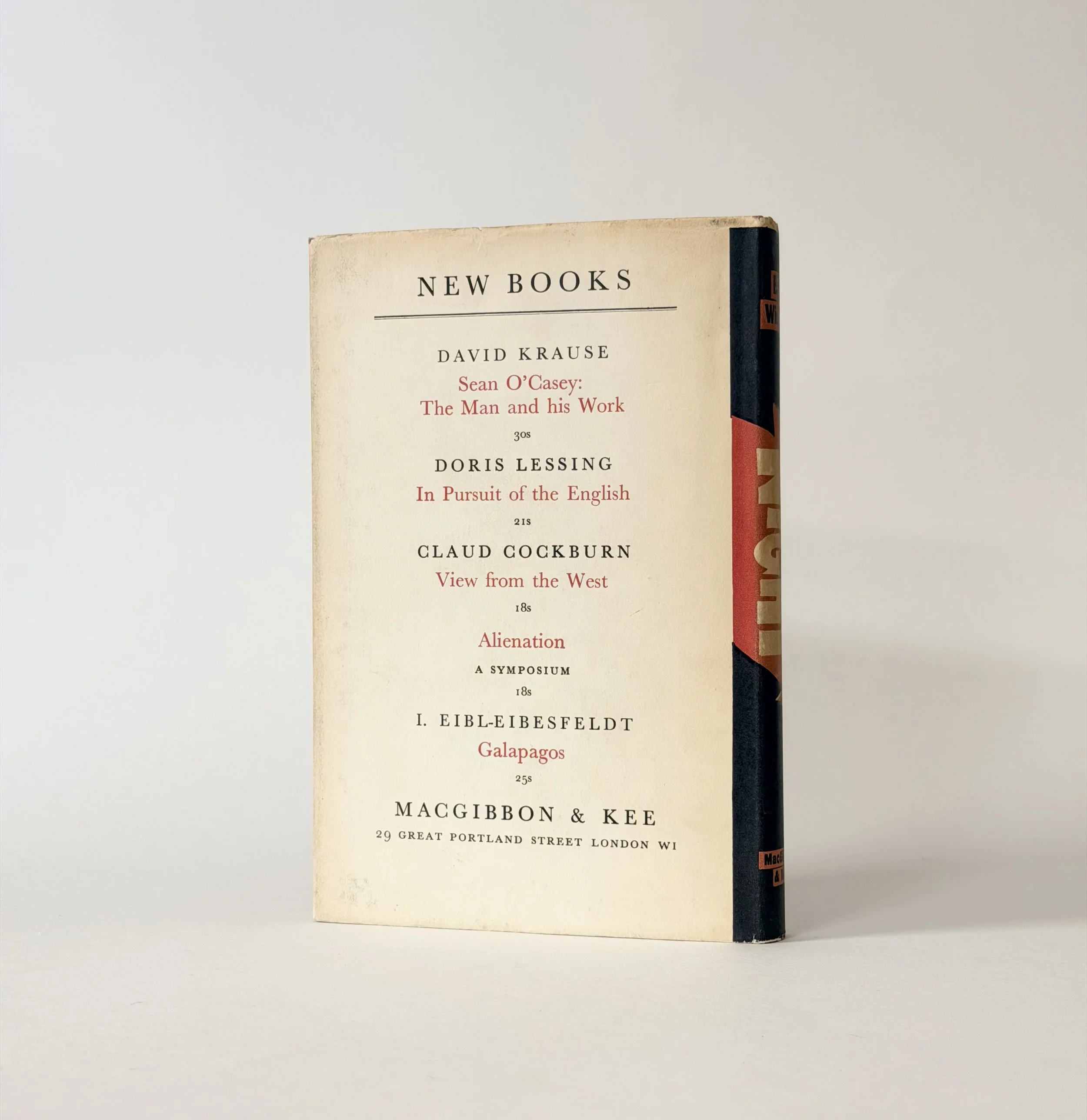 Image 2 of 3
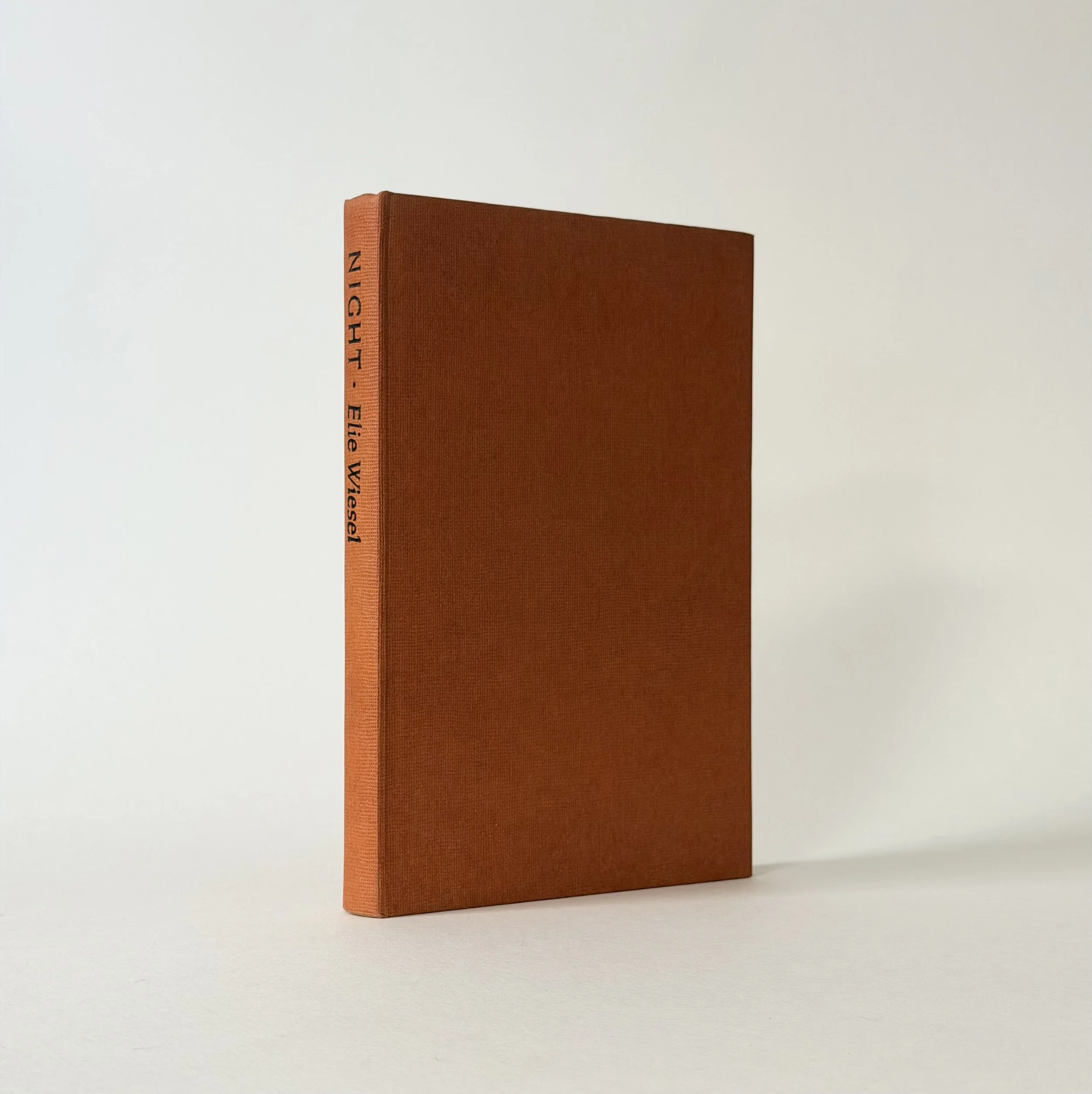 Image 3 of 3
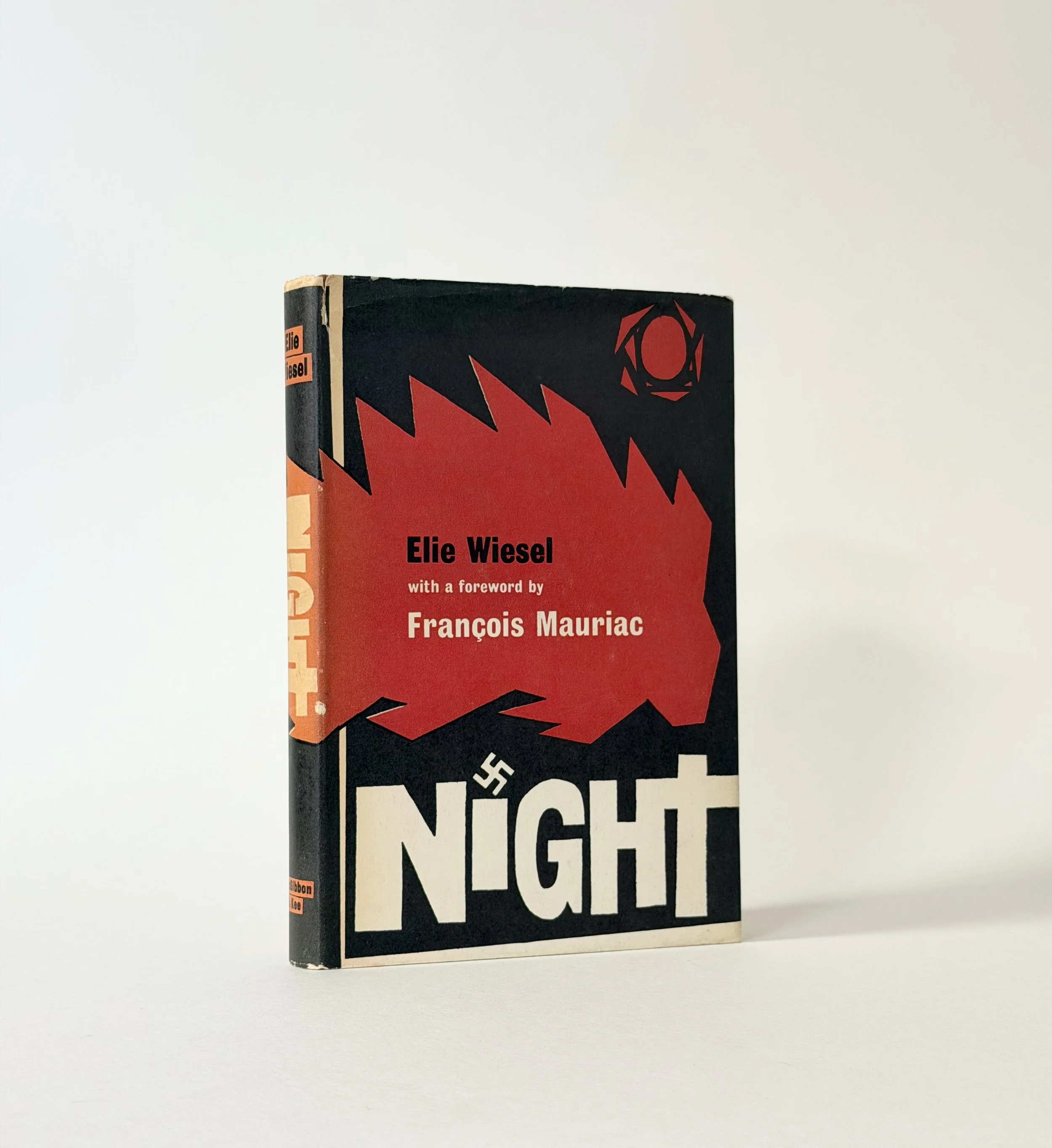
WIESEL, Elie. Night. Trans. from the French by Stella Rodway with a foreword by François Mauriac. London: MacGibbon and Kee. 1960. 8vo. First British edition. Publisher’s pale red cloth lettered in black to the spine, in the dust jacket designed by Cowan. A very good or better example. The cloth clean and bright, without any publisher’s imprint to foot as called for—there was also a blue cloth variant, no priority established, though this British edition does precede the American edition. The binding tight and square, the contents clean and fine. The dust jacket unclipped (12s 6d net) struck through and amended with new price in ink. Closed tear to spine head, and several tiny chips and rubbing to corners, tips and some edges, but still a sharp and pleasing example.
Required reading, Wiesel’s harrowing autobiographical novel is a cornerstone of Holocaust literature which follows the fifteen-year-old Wiesel and his decaying father imprisoned at Auschwitz and Buchenwald in the final months of the Second World War. Though of incredible historical and literary worth and weight, it is just 139 pages long—the original manuscript, written in Yiddish, was 862 pages. Wiesel aims his anger not so much at his bestial Nazi captors, but God. An important book. Uncommon.
WIESEL, Elie. Night. Trans. from the French by Stella Rodway with a foreword by François Mauriac. London: MacGibbon and Kee. 1960. 8vo. First British edition. Publisher’s pale red cloth lettered in black to the spine, in the dust jacket designed by Cowan. A very good or better example. The cloth clean and bright, without any publisher’s imprint to foot as called for—there was also a blue cloth variant, no priority established, though this British edition does precede the American edition. The binding tight and square, the contents clean and fine. The dust jacket unclipped (12s 6d net) struck through and amended with new price in ink. Closed tear to spine head, and several tiny chips and rubbing to corners, tips and some edges, but still a sharp and pleasing example.
Required reading, Wiesel’s harrowing autobiographical novel is a cornerstone of Holocaust literature which follows the fifteen-year-old Wiesel and his decaying father imprisoned at Auschwitz and Buchenwald in the final months of the Second World War. Though of incredible historical and literary worth and weight, it is just 139 pages long—the original manuscript, written in Yiddish, was 862 pages. Wiesel aims his anger not so much at his bestial Nazi captors, but God. An important book. Uncommon.