
 Image 1 of 5
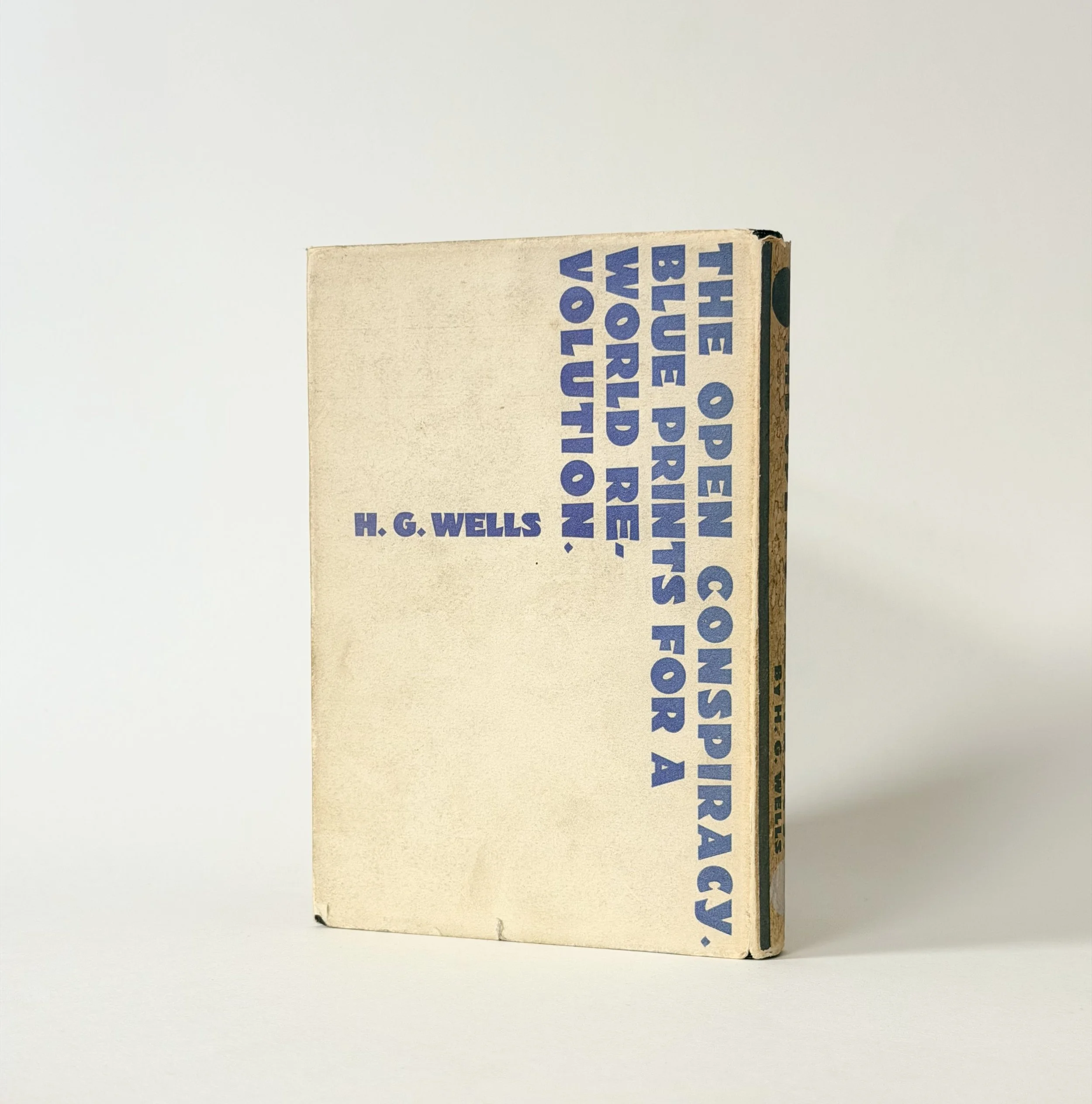 Image 2 of 5
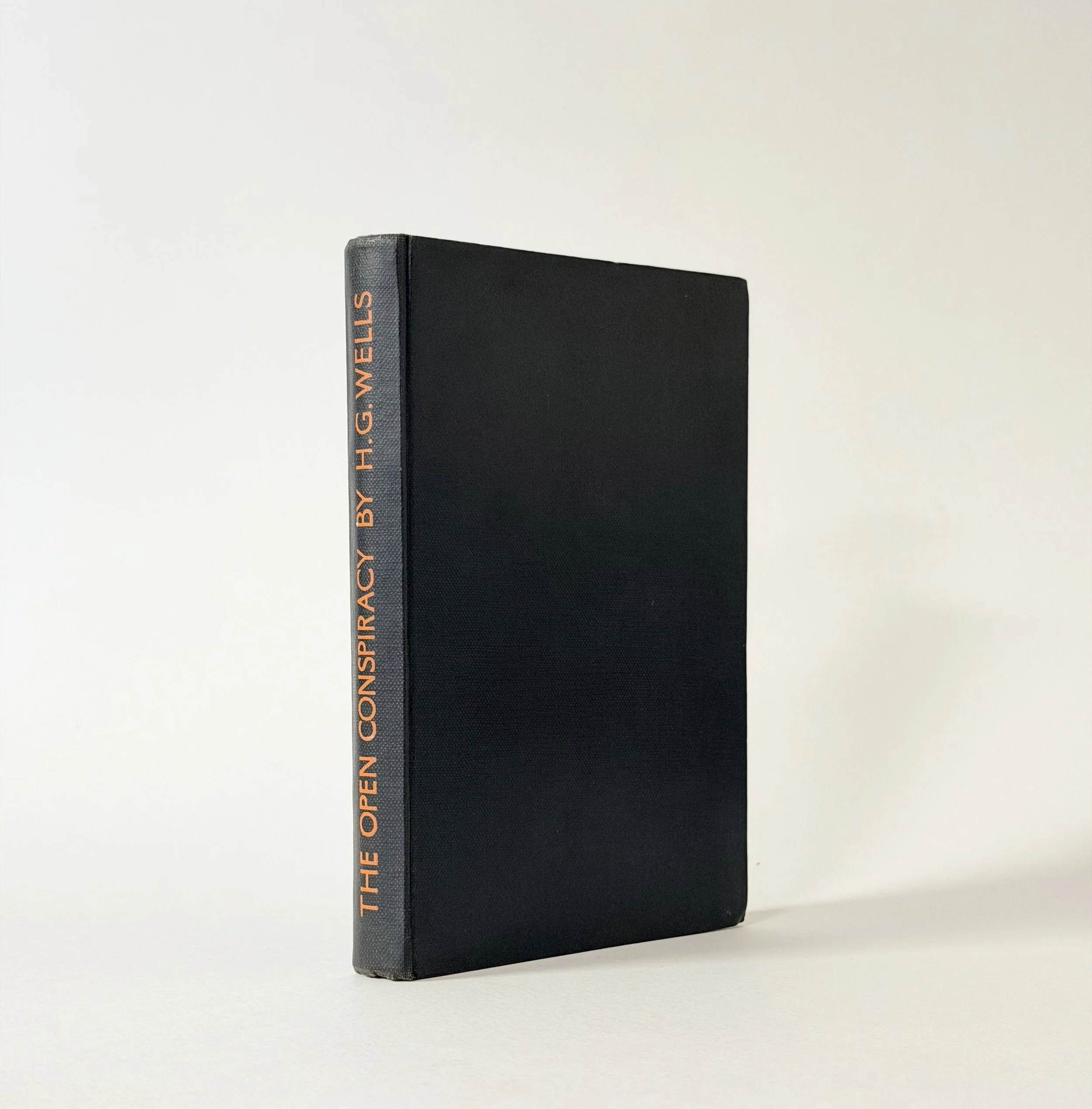 Image 3 of 5
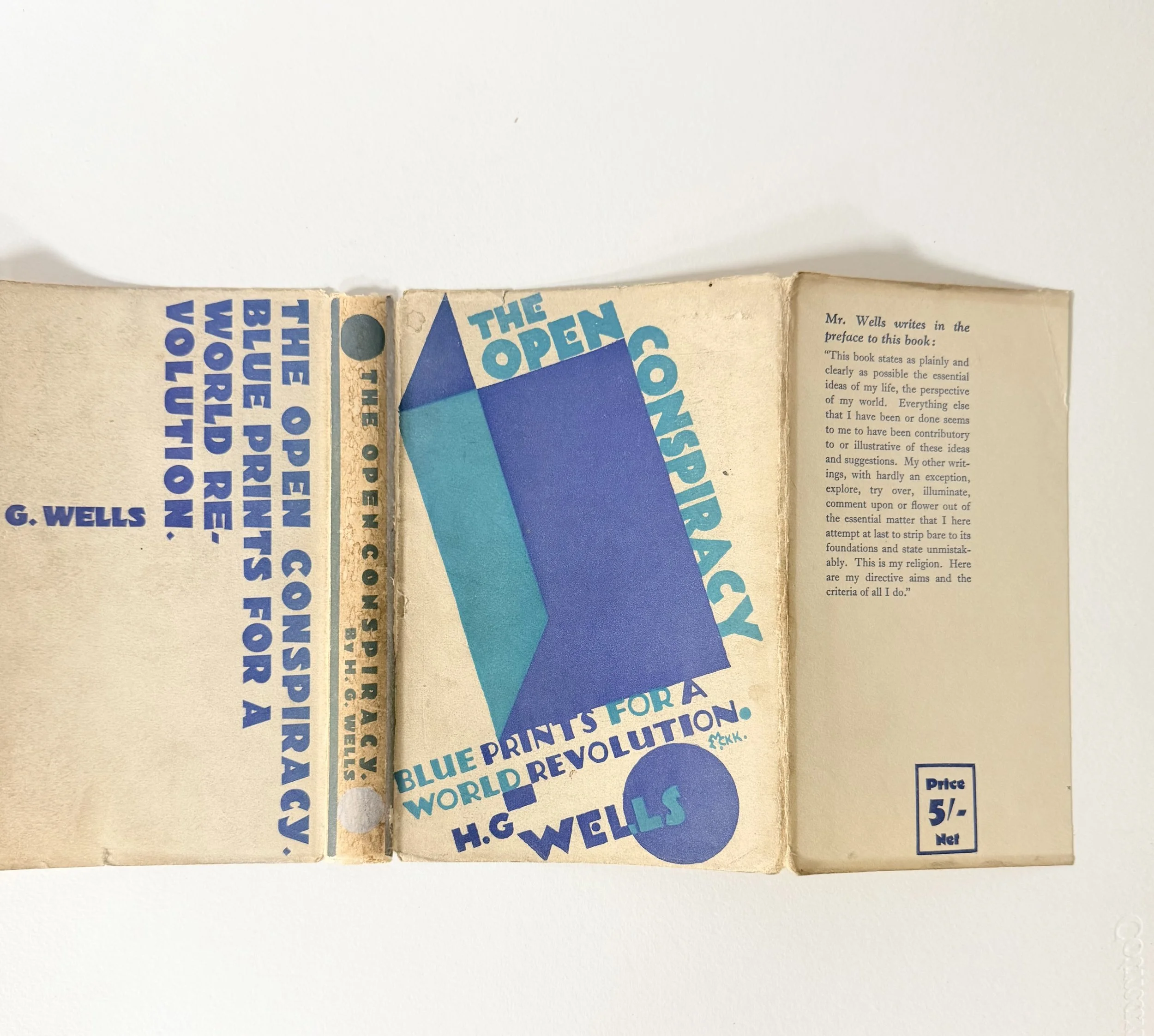 Image 4 of 5
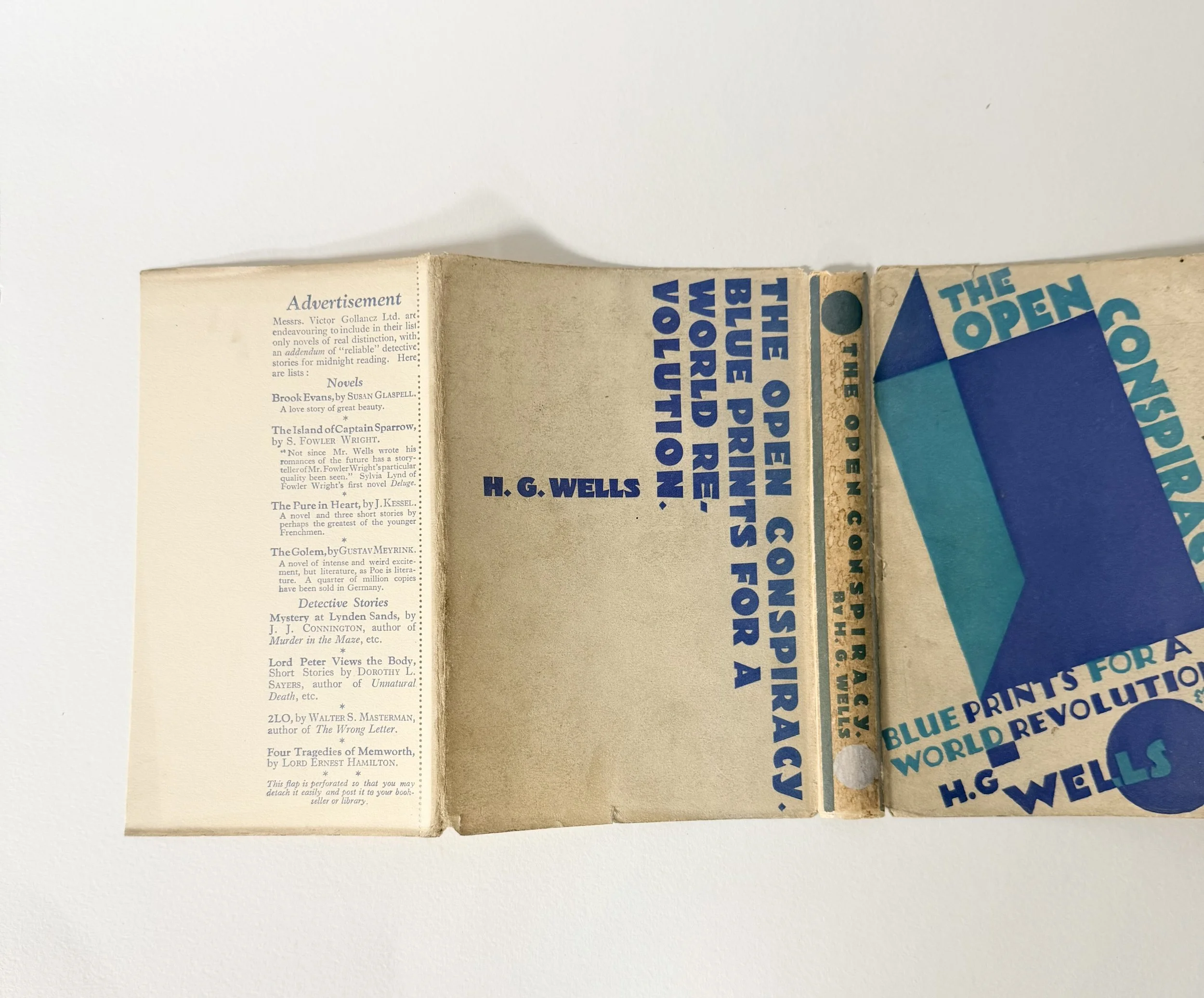 Image 5 of 5
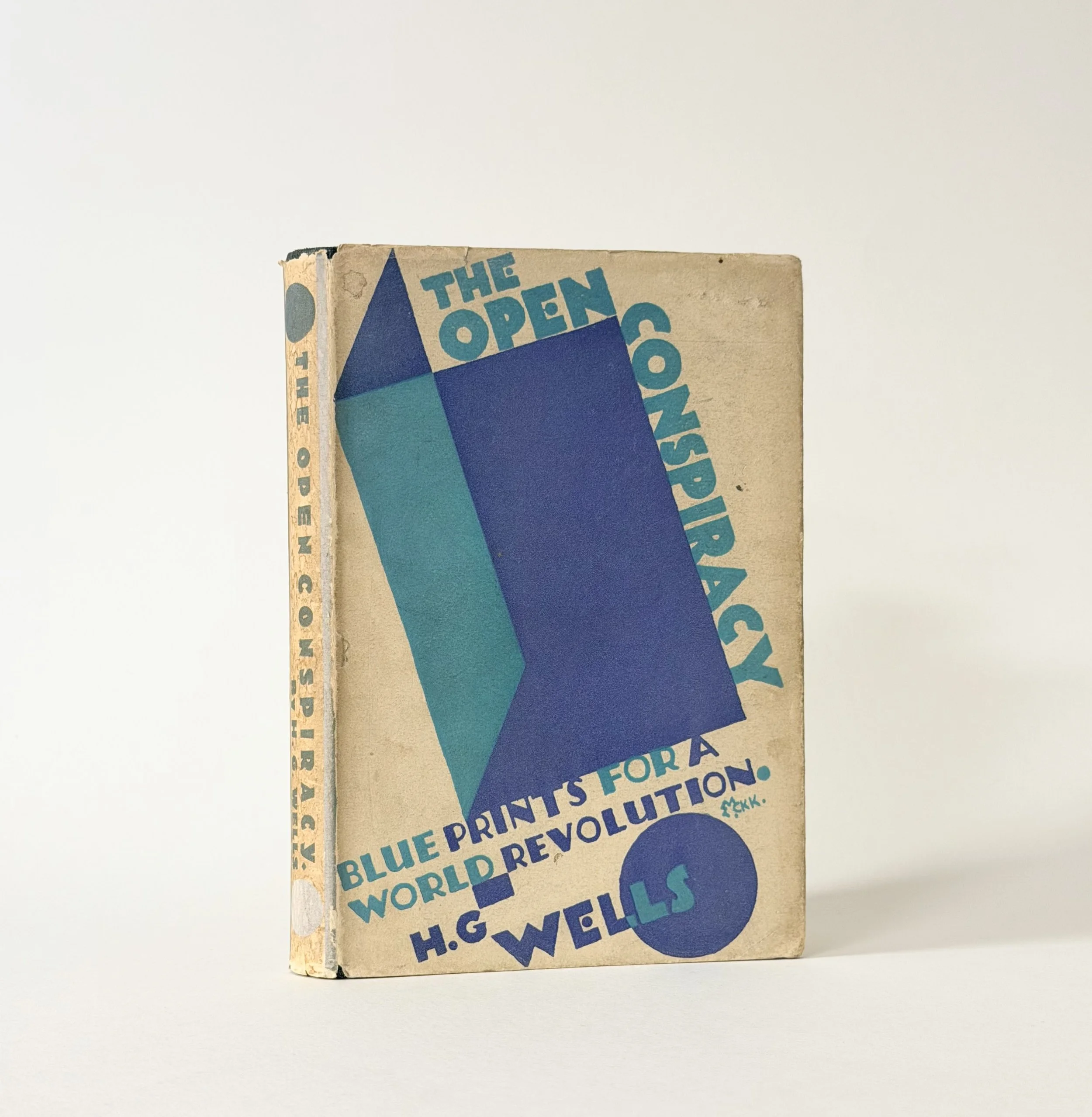
WELLS, H. G. The Open Conspiracy: Blue Prints for a World Revolution. London: Victor Gollancz. 1928. 8vo. First edition. Publisher’s blue cloth lettered in orange to the spine, in the dust jacket designed by Edward McKnight Kauffer. A very good copy. The cloth clean and bright, a trifle bumped to some edges. The binding tight and square, the contents usually fine, with ink ownership signature to front endpaper and light offsetting to endpapers. The dust jacket unclipped with printed price of 5/- net to the front flap, the spine panel toned and spotted, gently rubbed to all corners, tips and joints, minor abrasion and tiny chips, but still a presentable copy.
An important work in the author’s non-fiction canon, dubbed by Wells, in fact, as the most straightforward outcome of all of his previous work. It reads as a hymn, however idealist, to world social and political combined movement, the basis of which is to eliminate war, poverty, and injustice by way of an intellectual collective based on science and rational organisation. Indeed, the premise appears increasingly more utopian.
The superb dust jacket designed by Edward McKnight-Kauffer represents one of eighteen produced in the first year of publishers Gollancz. Victor Gollancz, after a lengthy apprenticeship with Ernest Benn, decided to go it alone and set up shop in Henrietta Street in Covent Garden in December 1927. For his first list in 1928, he turned to one of the most exciting designers in operation, Kauffer. When the typographer, Stanley Morison joined Gollancz shortly afterwards, he persuaded Gollancz to dismiss such pictorial jackets and to instead adopt the now-iconic plain yellow jacket—he saw no reason why ‘a man approaching a new book, with any curiosity about the contents, should be fobbed off with a picture on the jacket’, he said. [Artmonsky & Webb].
WELLS, H. G. The Open Conspiracy: Blue Prints for a World Revolution. London: Victor Gollancz. 1928. 8vo. First edition. Publisher’s blue cloth lettered in orange to the spine, in the dust jacket designed by Edward McKnight Kauffer. A very good copy. The cloth clean and bright, a trifle bumped to some edges. The binding tight and square, the contents usually fine, with ink ownership signature to front endpaper and light offsetting to endpapers. The dust jacket unclipped with printed price of 5/- net to the front flap, the spine panel toned and spotted, gently rubbed to all corners, tips and joints, minor abrasion and tiny chips, but still a presentable copy.
An important work in the author’s non-fiction canon, dubbed by Wells, in fact, as the most straightforward outcome of all of his previous work. It reads as a hymn, however idealist, to world social and political combined movement, the basis of which is to eliminate war, poverty, and injustice by way of an intellectual collective based on science and rational organisation. Indeed, the premise appears increasingly more utopian.
The superb dust jacket designed by Edward McKnight-Kauffer represents one of eighteen produced in the first year of publishers Gollancz. Victor Gollancz, after a lengthy apprenticeship with Ernest Benn, decided to go it alone and set up shop in Henrietta Street in Covent Garden in December 1927. For his first list in 1928, he turned to one of the most exciting designers in operation, Kauffer. When the typographer, Stanley Morison joined Gollancz shortly afterwards, he persuaded Gollancz to dismiss such pictorial jackets and to instead adopt the now-iconic plain yellow jacket—he saw no reason why ‘a man approaching a new book, with any curiosity about the contents, should be fobbed off with a picture on the jacket’, he said. [Artmonsky & Webb].