
 Image 1 of 3
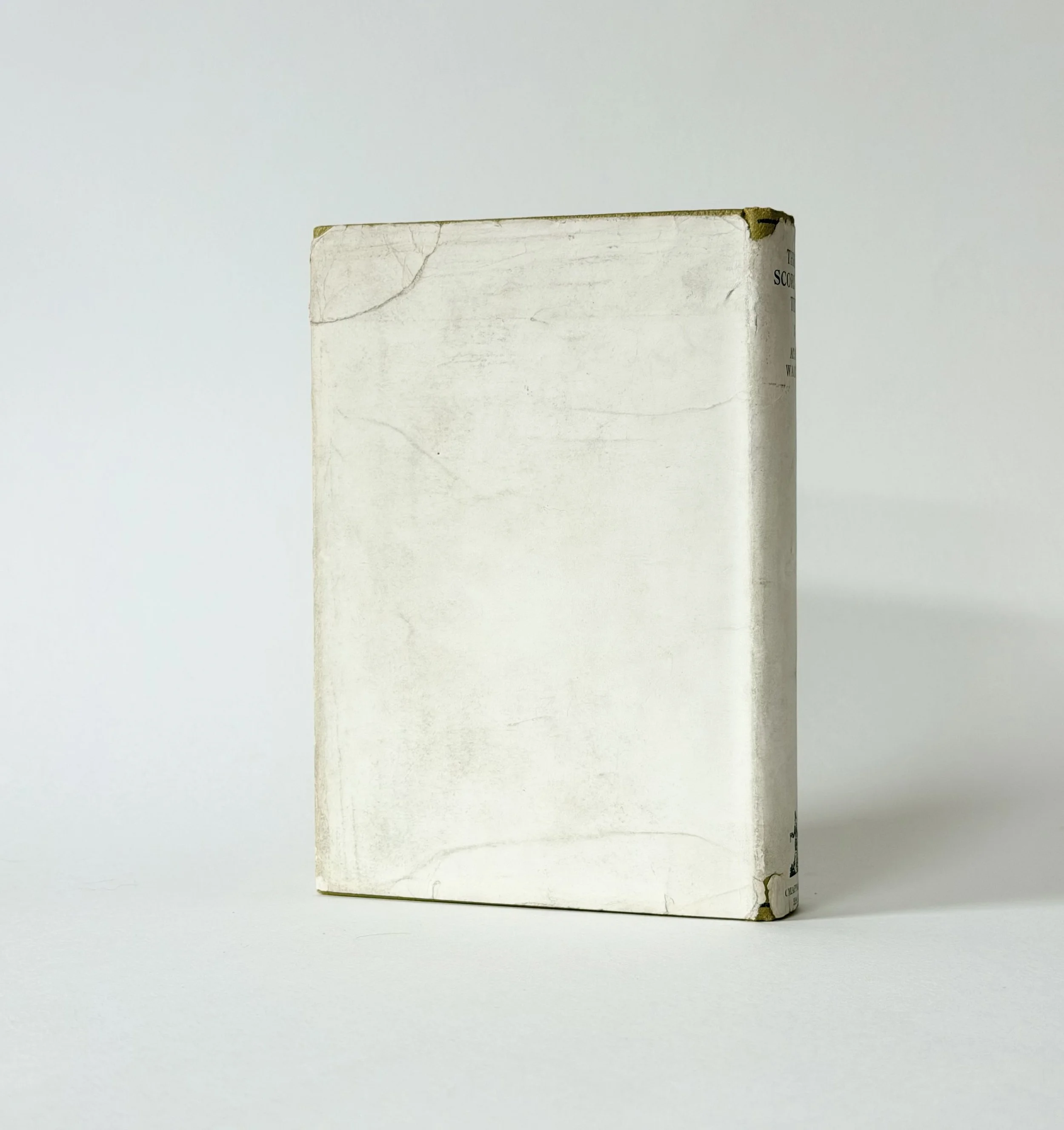 Image 2 of 3
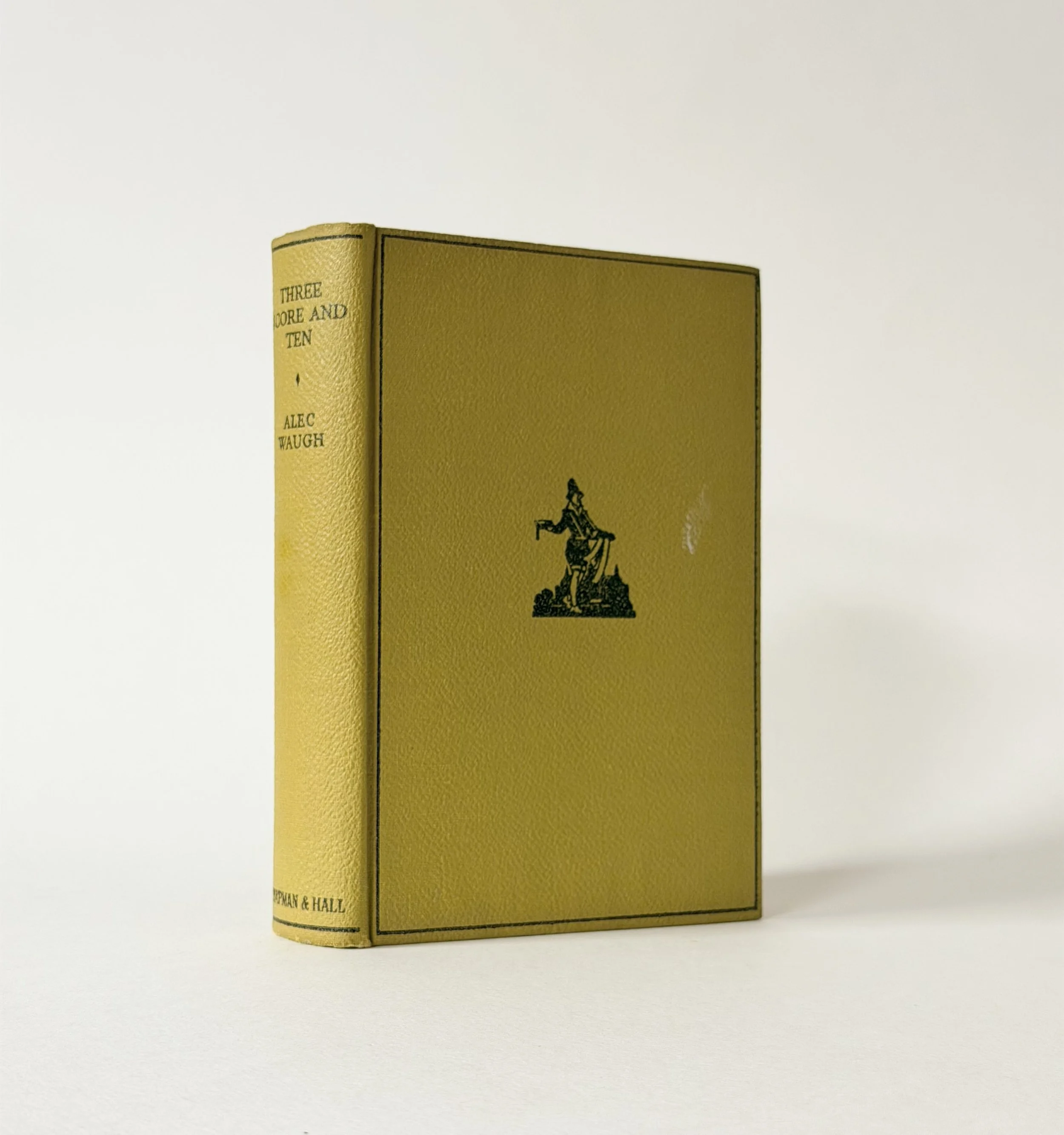 Image 3 of 3
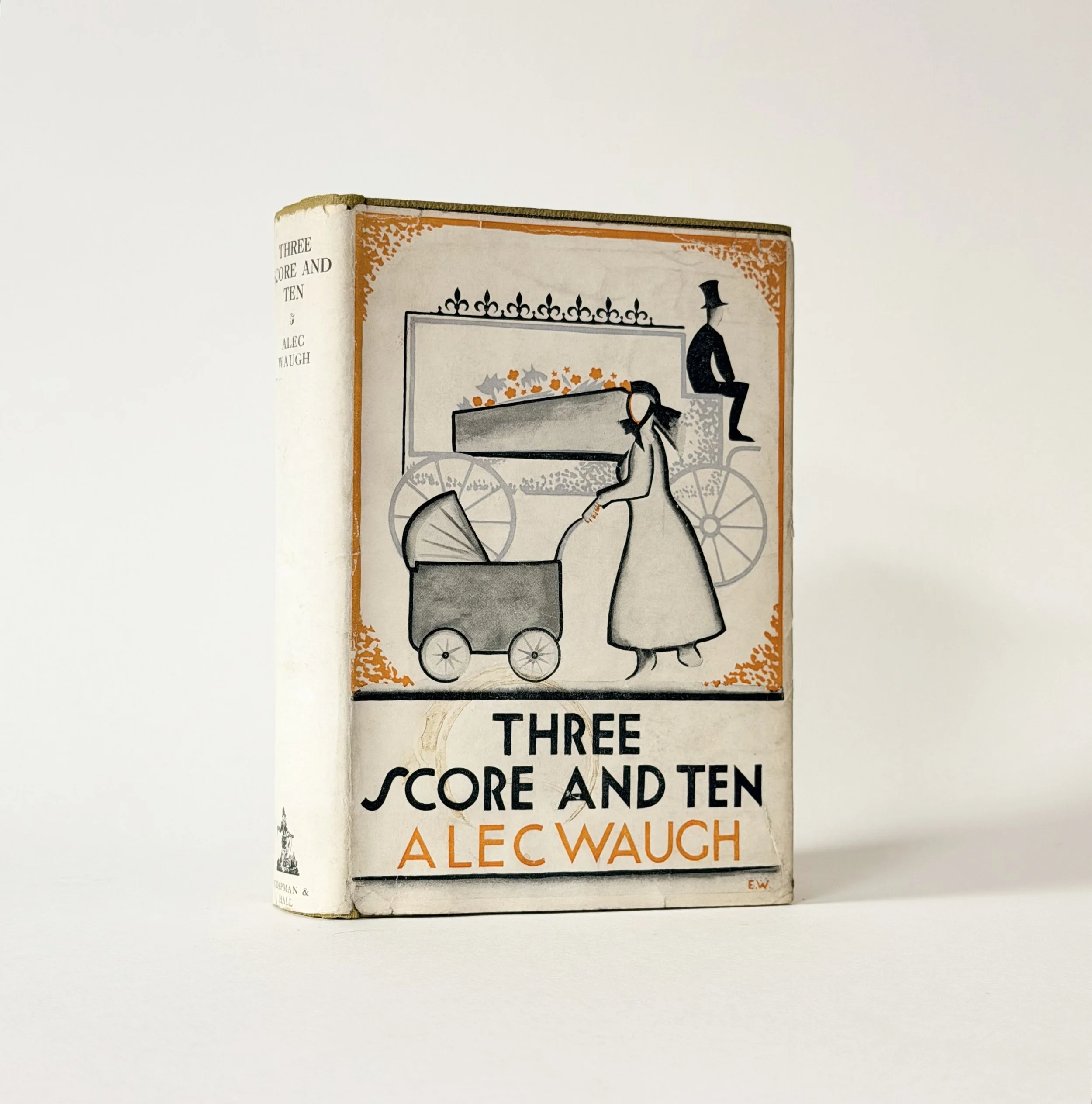
WAUGH, Alec. Three Score and Ten. London: Chapman & Hall. 1929. 8vo. Sixth impression. Publisher’s pale green cloth lettered in black to spine with publisher’s motif to front board. In the charming period dust jacket designed by the author’s younger brother, Evelyn Waugh. The cloth clean, bright with one mild mark to front board. The binding tight and square, mild spots to textblock edges, else clean. The dust jacket with no printed price, several ring stains to front panel, large closed tears to rear panel upper, front panel lower, other smaller nicks, chips and rubbing, front flap joint frayed. Good.
One of Waugh’s many novels of the late 20s and early 30s, a fruitful period for the author. This novel, an assessment of relationships in young couples during the interwar period, seems to accentuate Waugh’s praise of youth amid their struggles within traditional institutions, a developing theme played with from his earliest work (The Loom of Youth, 1917), and one which triggered a libel action, and various spats, between Wyndham Lewis and Waugh, Lewis' targeting both Waughs, in fact. Evelyn here asserting his appetite for a career as dust jacket designer were it not for his innate skill as novelist.
WAUGH, Alec. Three Score and Ten. London: Chapman & Hall. 1929. 8vo. Sixth impression. Publisher’s pale green cloth lettered in black to spine with publisher’s motif to front board. In the charming period dust jacket designed by the author’s younger brother, Evelyn Waugh. The cloth clean, bright with one mild mark to front board. The binding tight and square, mild spots to textblock edges, else clean. The dust jacket with no printed price, several ring stains to front panel, large closed tears to rear panel upper, front panel lower, other smaller nicks, chips and rubbing, front flap joint frayed. Good.
One of Waugh’s many novels of the late 20s and early 30s, a fruitful period for the author. This novel, an assessment of relationships in young couples during the interwar period, seems to accentuate Waugh’s praise of youth amid their struggles within traditional institutions, a developing theme played with from his earliest work (The Loom of Youth, 1917), and one which triggered a libel action, and various spats, between Wyndham Lewis and Waugh, Lewis' targeting both Waughs, in fact. Evelyn here asserting his appetite for a career as dust jacket designer were it not for his innate skill as novelist.