
 Image 1 of 5
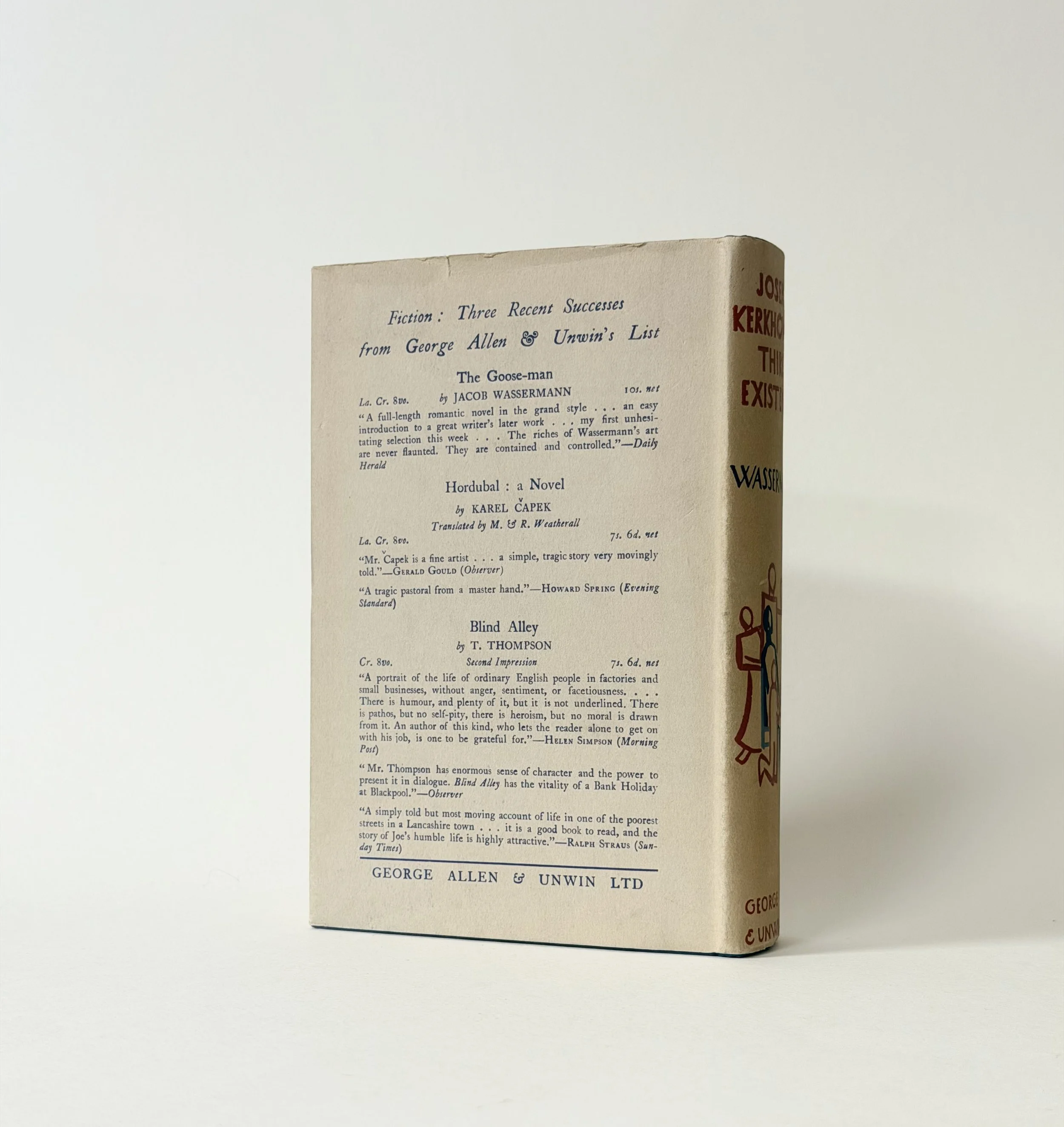 Image 2 of 5
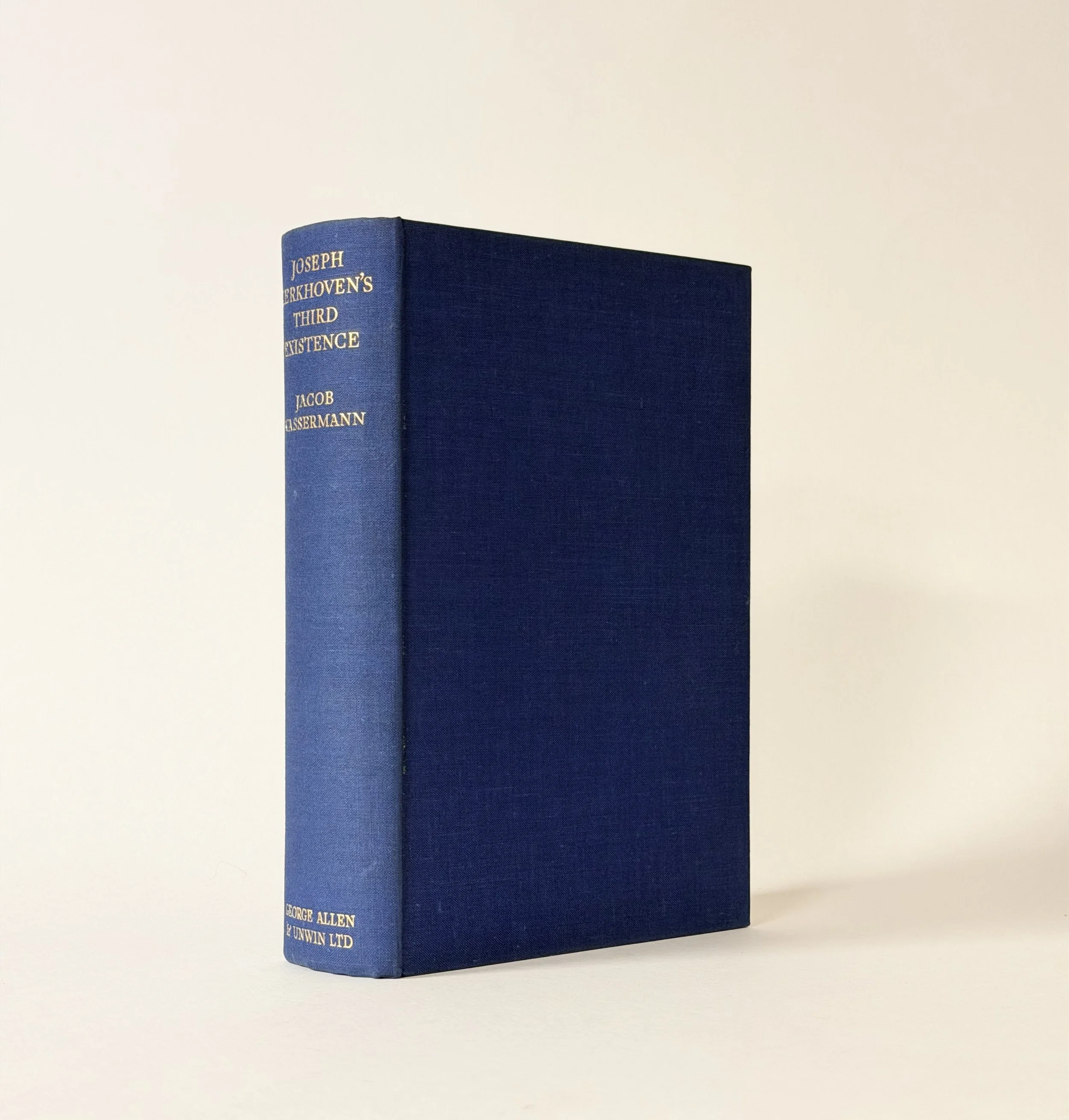 Image 3 of 5
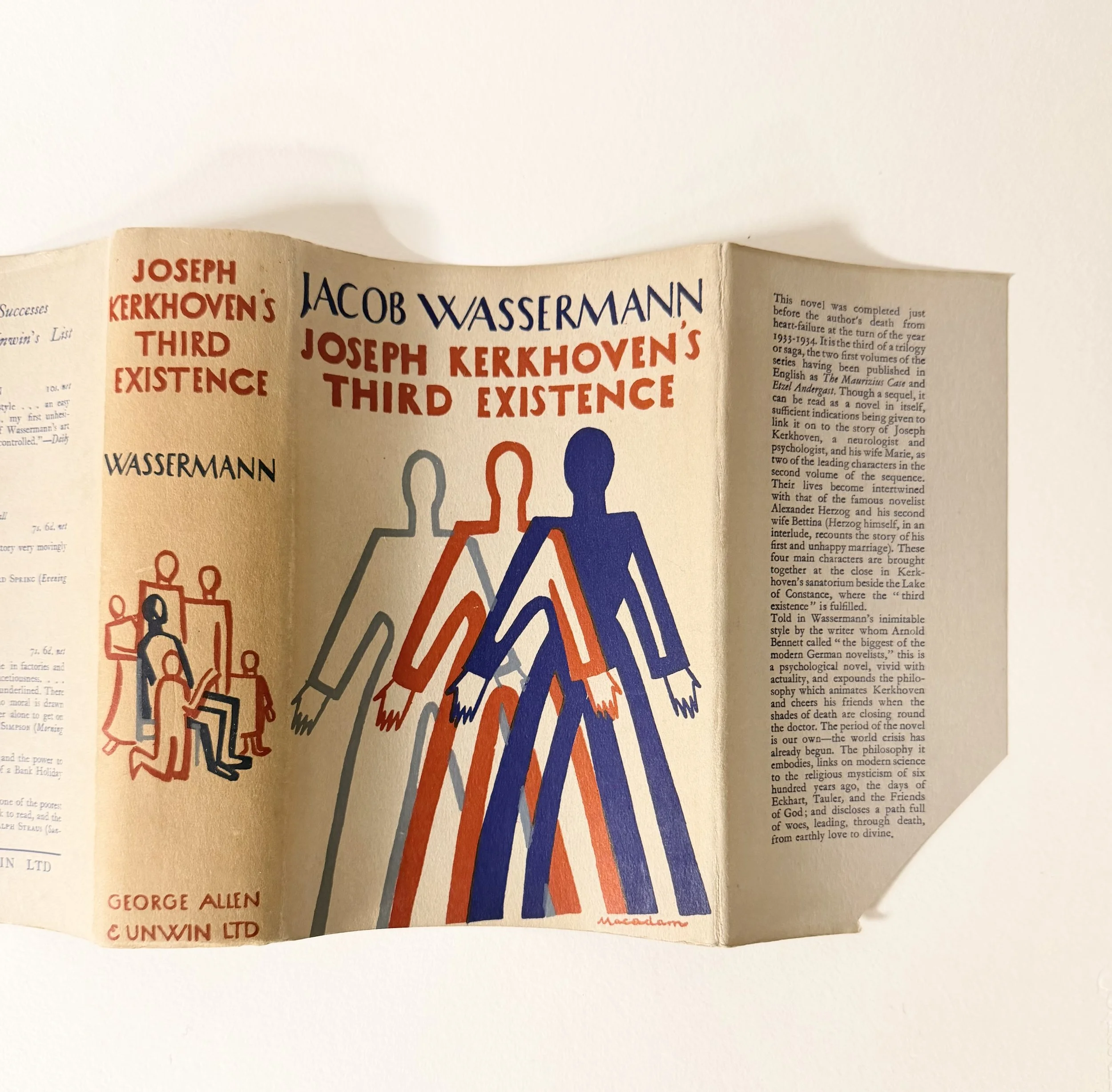 Image 4 of 5
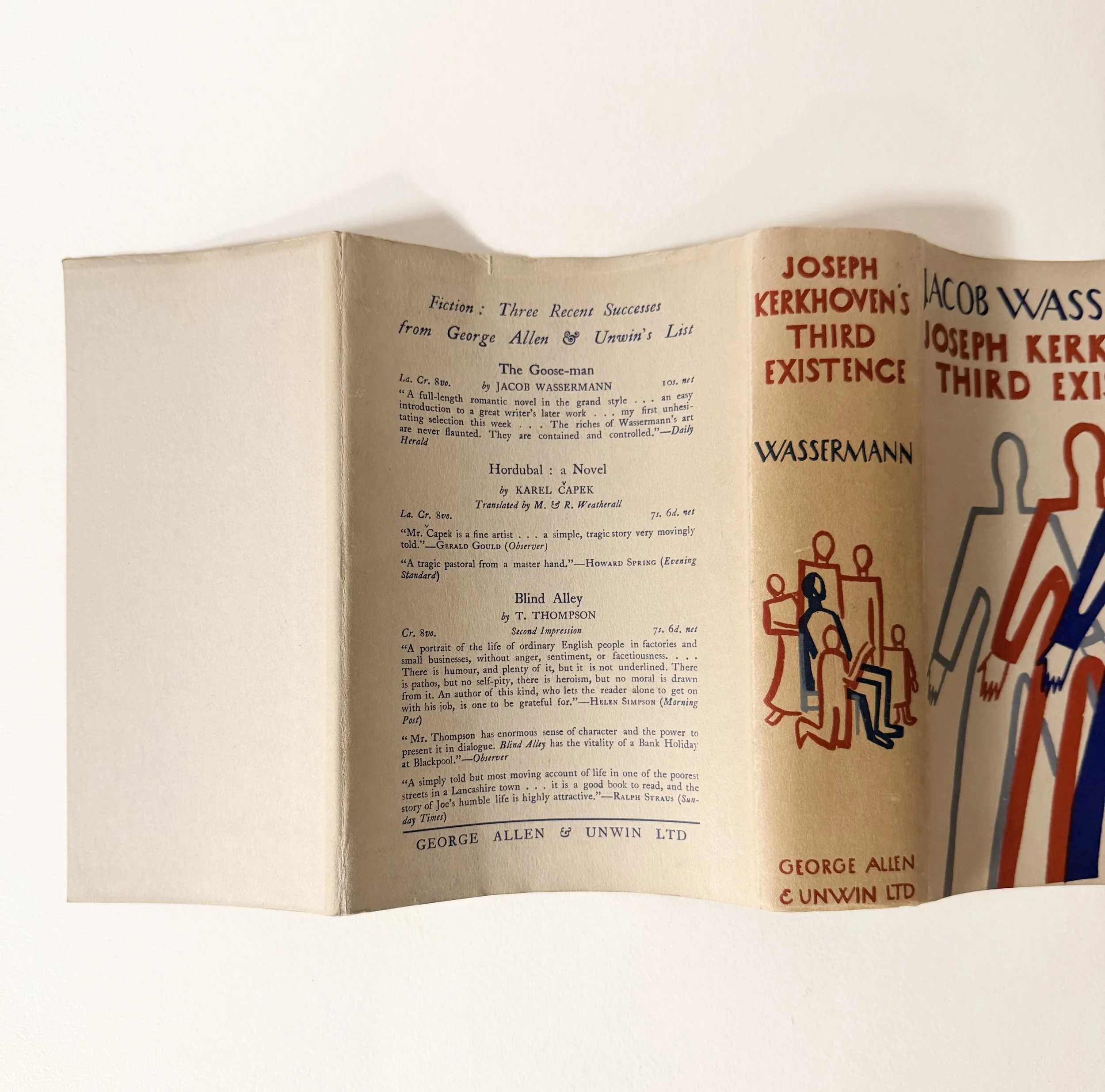 Image 5 of 5
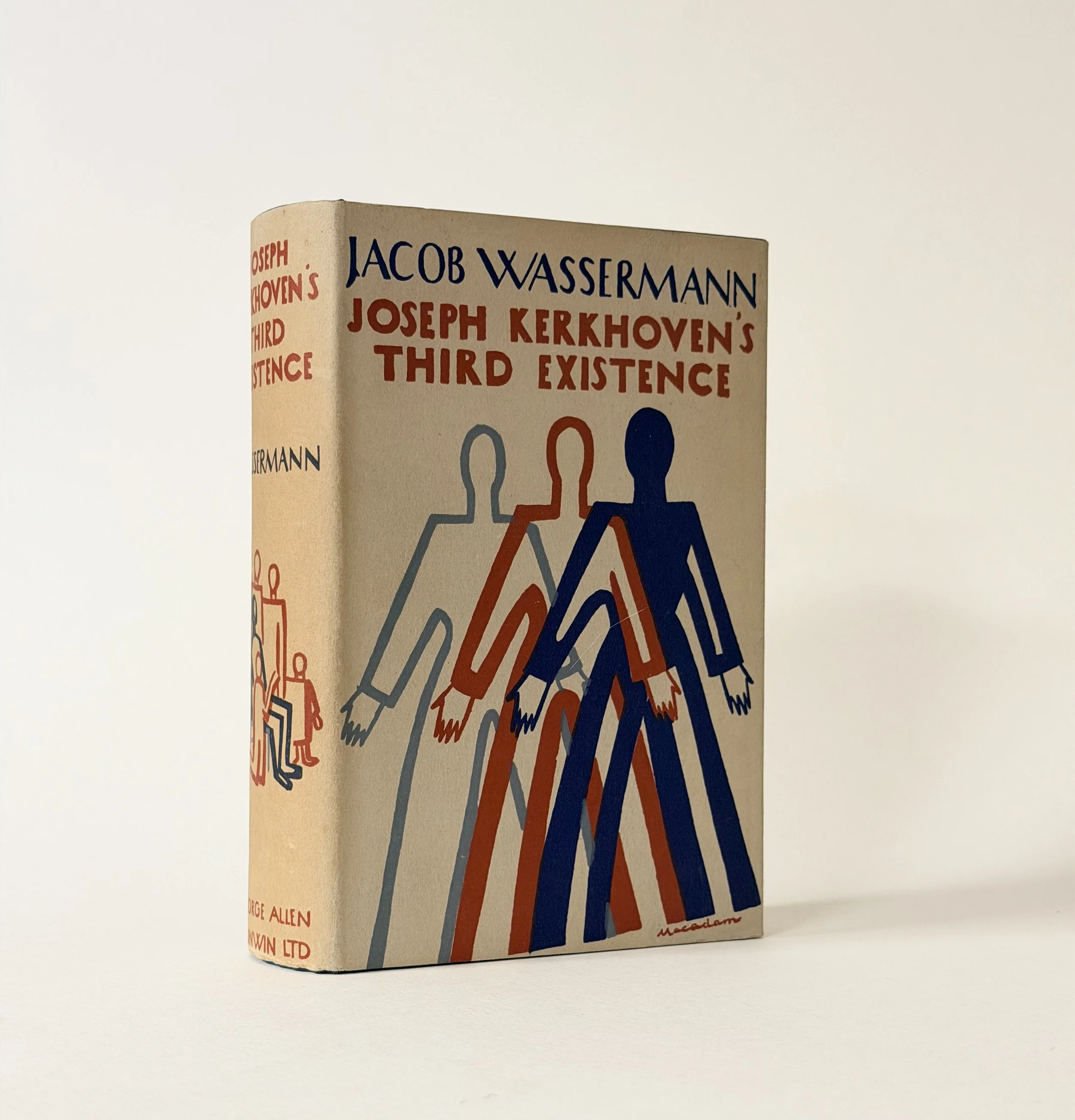
WASSERMANN, Jacob. Joseph Kerkhoven's Third Existence. Trans. from the German by Eden and Cedar Paul. London: George Allen and Unwin. 1934. 8vo. First English language edition. Publisher’s blue cloth lettered in black to the spine, in the wonderful dust jacket designed by Margaret Macadam. A superior example. The cloth clean and sharp, the gilt very bright, the topstain vivid. The binding tight and square, with a handful of very mild spots to the fore-edge. The contents clean and fine throughout, 2pp ads to rear. The dust jacket price-clipped with one tiny closed tear to rear panel upper, but externally very bright and sharp indeed, perhaps very trivially toned at backstrip, with some discreet tape reinforcement to verso.
Posthumously published (just), this is the German Wassermann’s third novel in a loose trilogy or saga which, says the front flap, can equally be considered standalone—it follows a disastrous marriage and the downfall of a man enduring love lost, based supposedly on Wassermann’s first marriage. Wassermann enjoyed critical and commercial success in the 1920s and early 30s across Germany, but the rise of the Nazis became a growing concern, and in his final years, his books were banned and his freedoms shackled owing to his Jewish heritage. His dense, philosophical, sometimes dream-like writing style was likened to Stefan Zweig and Arthur Schnitzler in his time. The terrific dust jacket is by Margaret Macadam, much of whose work had been uncredited until the discovery of her archive in 2016. She produced a generally small but exquisite portfolio of commercial art, and only a small handful of dust jackets, perhaps most notably for Agatha Christie’s Giant’s Bread, published in 1930 under her Mary Westmacott pseudonym. Her style here and in her other work is not dissimilar to the work of Edward McKnight-Kauffer, who was a known influence on Macadam. Scarce.
WASSERMANN, Jacob. Joseph Kerkhoven's Third Existence. Trans. from the German by Eden and Cedar Paul. London: George Allen and Unwin. 1934. 8vo. First English language edition. Publisher’s blue cloth lettered in black to the spine, in the wonderful dust jacket designed by Margaret Macadam. A superior example. The cloth clean and sharp, the gilt very bright, the topstain vivid. The binding tight and square, with a handful of very mild spots to the fore-edge. The contents clean and fine throughout, 2pp ads to rear. The dust jacket price-clipped with one tiny closed tear to rear panel upper, but externally very bright and sharp indeed, perhaps very trivially toned at backstrip, with some discreet tape reinforcement to verso.
Posthumously published (just), this is the German Wassermann’s third novel in a loose trilogy or saga which, says the front flap, can equally be considered standalone—it follows a disastrous marriage and the downfall of a man enduring love lost, based supposedly on Wassermann’s first marriage. Wassermann enjoyed critical and commercial success in the 1920s and early 30s across Germany, but the rise of the Nazis became a growing concern, and in his final years, his books were banned and his freedoms shackled owing to his Jewish heritage. His dense, philosophical, sometimes dream-like writing style was likened to Stefan Zweig and Arthur Schnitzler in his time. The terrific dust jacket is by Margaret Macadam, much of whose work had been uncredited until the discovery of her archive in 2016. She produced a generally small but exquisite portfolio of commercial art, and only a small handful of dust jackets, perhaps most notably for Agatha Christie’s Giant’s Bread, published in 1930 under her Mary Westmacott pseudonym. Her style here and in her other work is not dissimilar to the work of Edward McKnight-Kauffer, who was a known influence on Macadam. Scarce.