
 Image 1 of 3
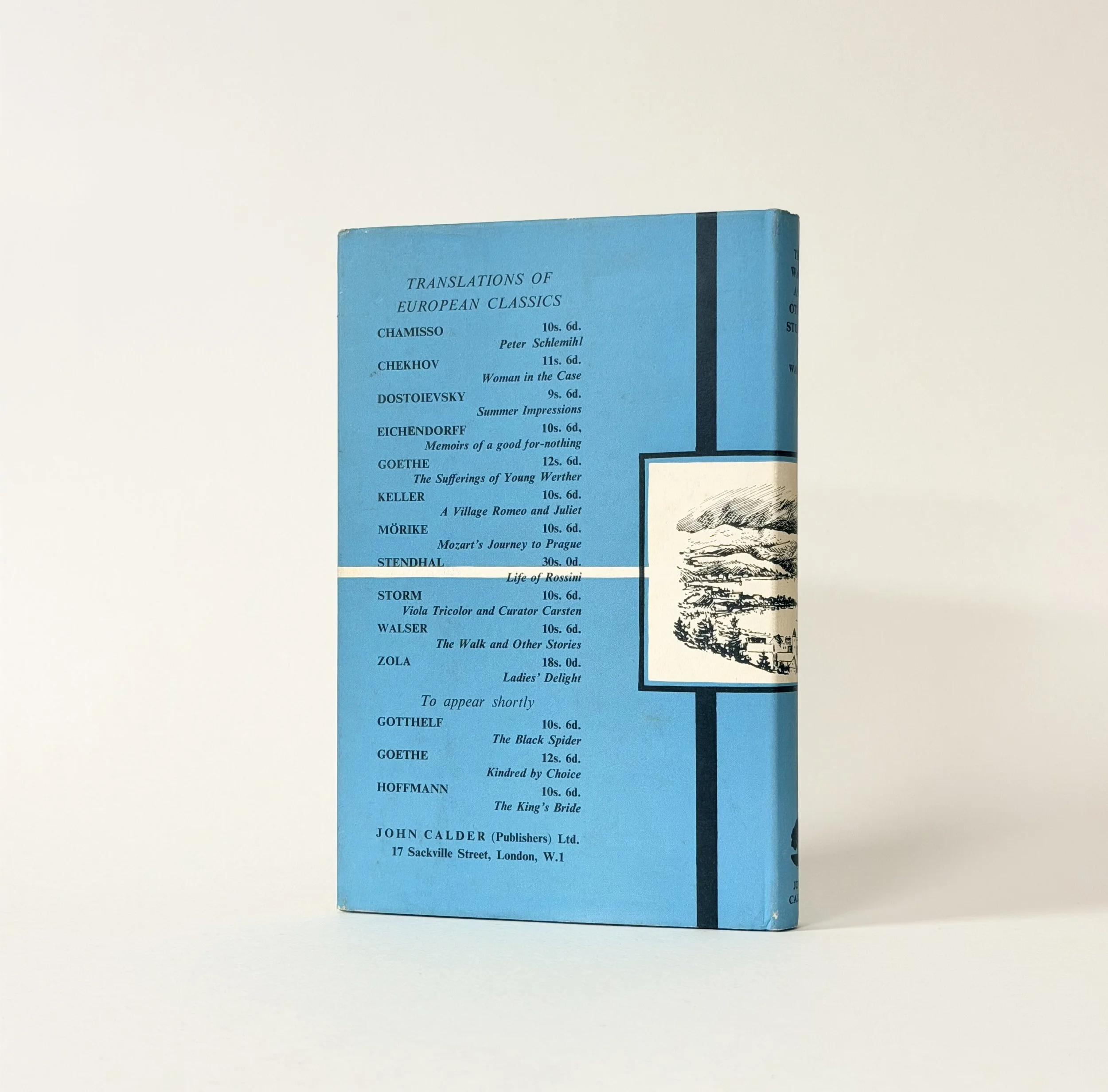 Image 2 of 3
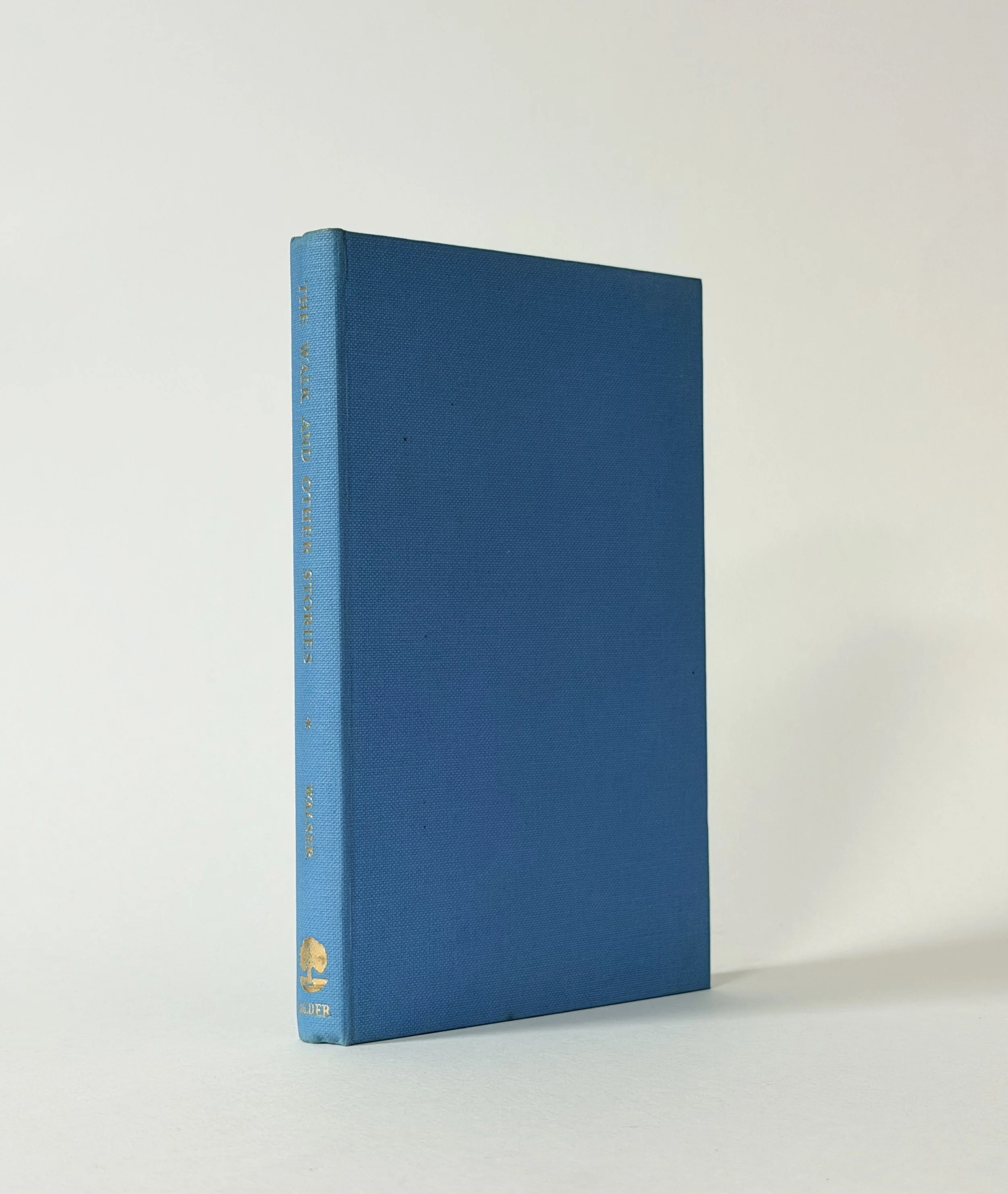 Image 3 of 3
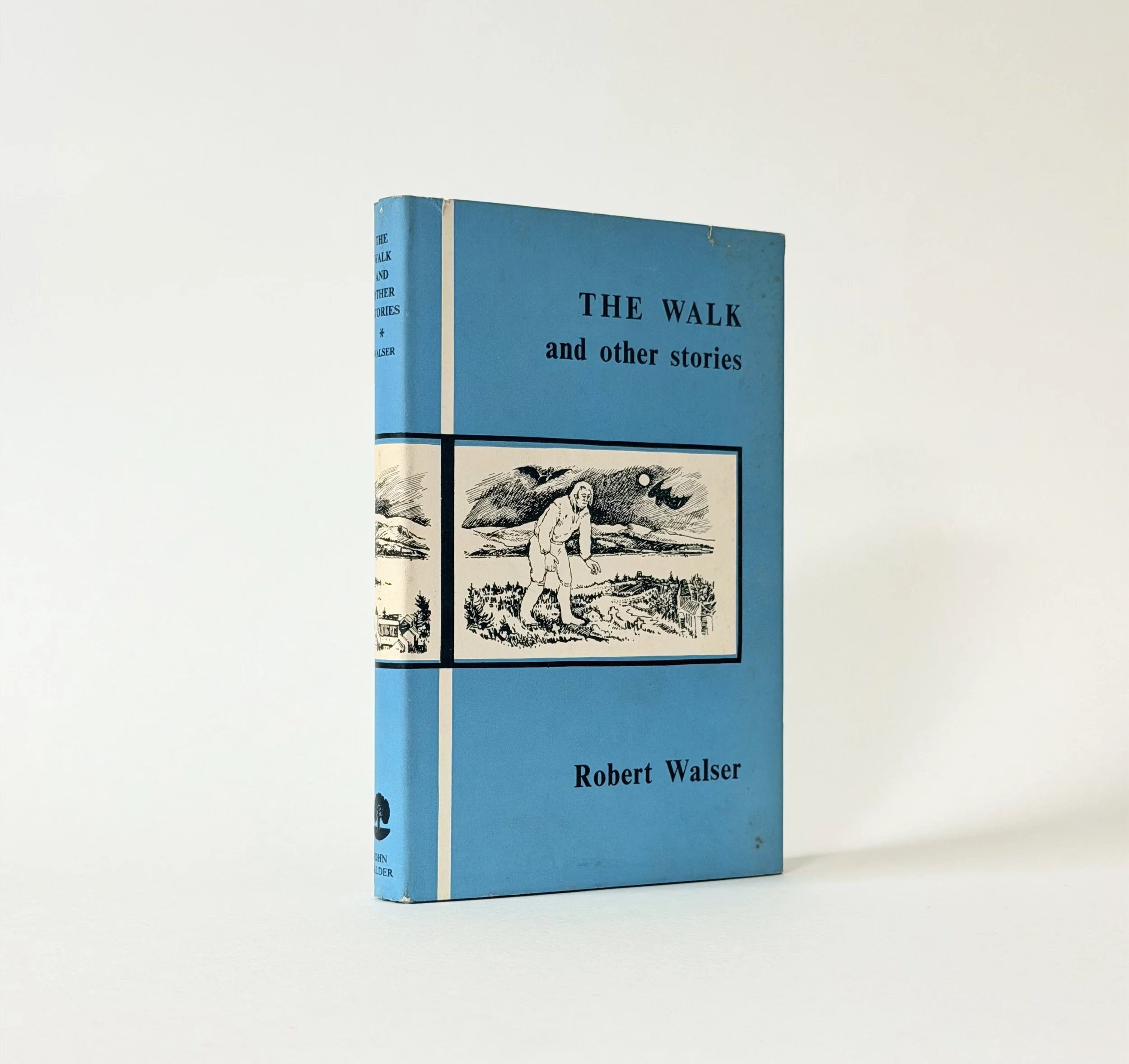
WALSER, Robert. The Walk and Other Stories. Trans. from the German by Christopher Middleton. London: John Calder. 1957. 8vo. First English language edition. Publisher’s pale blue cloth lettered in gilt to the spine, in the dust jacket. A very good copy, the cloth clean and bright, the binding tight and square, the contents largely fine, with some spots to textblock top edge and to endpapers. The dust jacket price-clipped with reprice sticker to front flap, one small closed tear to front panel upper and gently bumped and marked, else clean.
The first English language appearance of this short story collection, the titular novella ‘The Walk’ originally published in 1917. Robert Walser, though known by few in England, was an important Swiss writer of the early twentieth century, dubbed almost immediately after he picked up the pen a literary innovator, and later hailed by writers including Robert Musil, Hermann Hesse, and Stefan Zweig. Research shows Franz Kafka was an admirer, and reading some of the stories here—especially the titular novella—one feels the connection vividly. Like Kafka, he is incessantly intrigued by minute things, by microscopic perceptions and by the existential interrogation of the self in his characters. In The Walk, the character, a possible stand-in for Walser, merely walks while considering his own purpose and meaning beyond himself, occasionally confronting the reader directly, Calvino-like. The playfulness of what is dubbed ‘spectral minimalism’ in the introduction seems later to influence Samuel Beckett, Thomas Bernhard, and others. J. M. Coetzee name-dropped him as an influence, and it seems an even wider circle of writers influenced by Walser will come to light. Yet his books are not in print in English, and he remains unjustly obscure to English readers, which might have something to do with his life path: he lived most of his life on or under the poverty line, working usually part-time as a clerk. The seventh of eight children, depression, mental illness and suicide were constants in his family. After writing six novels in the first quarter of the twentieth century, of which only three have survived, Walser endured a breakdown, and spent the rest of his life—over three decades—in a mental asylum, never writing again. With luck, Dalkey or similar will pick his novels and short stories up and run with them. Scarce.
WALSER, Robert. The Walk and Other Stories. Trans. from the German by Christopher Middleton. London: John Calder. 1957. 8vo. First English language edition. Publisher’s pale blue cloth lettered in gilt to the spine, in the dust jacket. A very good copy, the cloth clean and bright, the binding tight and square, the contents largely fine, with some spots to textblock top edge and to endpapers. The dust jacket price-clipped with reprice sticker to front flap, one small closed tear to front panel upper and gently bumped and marked, else clean.
The first English language appearance of this short story collection, the titular novella ‘The Walk’ originally published in 1917. Robert Walser, though known by few in England, was an important Swiss writer of the early twentieth century, dubbed almost immediately after he picked up the pen a literary innovator, and later hailed by writers including Robert Musil, Hermann Hesse, and Stefan Zweig. Research shows Franz Kafka was an admirer, and reading some of the stories here—especially the titular novella—one feels the connection vividly. Like Kafka, he is incessantly intrigued by minute things, by microscopic perceptions and by the existential interrogation of the self in his characters. In The Walk, the character, a possible stand-in for Walser, merely walks while considering his own purpose and meaning beyond himself, occasionally confronting the reader directly, Calvino-like. The playfulness of what is dubbed ‘spectral minimalism’ in the introduction seems later to influence Samuel Beckett, Thomas Bernhard, and others. J. M. Coetzee name-dropped him as an influence, and it seems an even wider circle of writers influenced by Walser will come to light. Yet his books are not in print in English, and he remains unjustly obscure to English readers, which might have something to do with his life path: he lived most of his life on or under the poverty line, working usually part-time as a clerk. The seventh of eight children, depression, mental illness and suicide were constants in his family. After writing six novels in the first quarter of the twentieth century, of which only three have survived, Walser endured a breakdown, and spent the rest of his life—over three decades—in a mental asylum, never writing again. With luck, Dalkey or similar will pick his novels and short stories up and run with them. Scarce.