
 Image 1 of 3
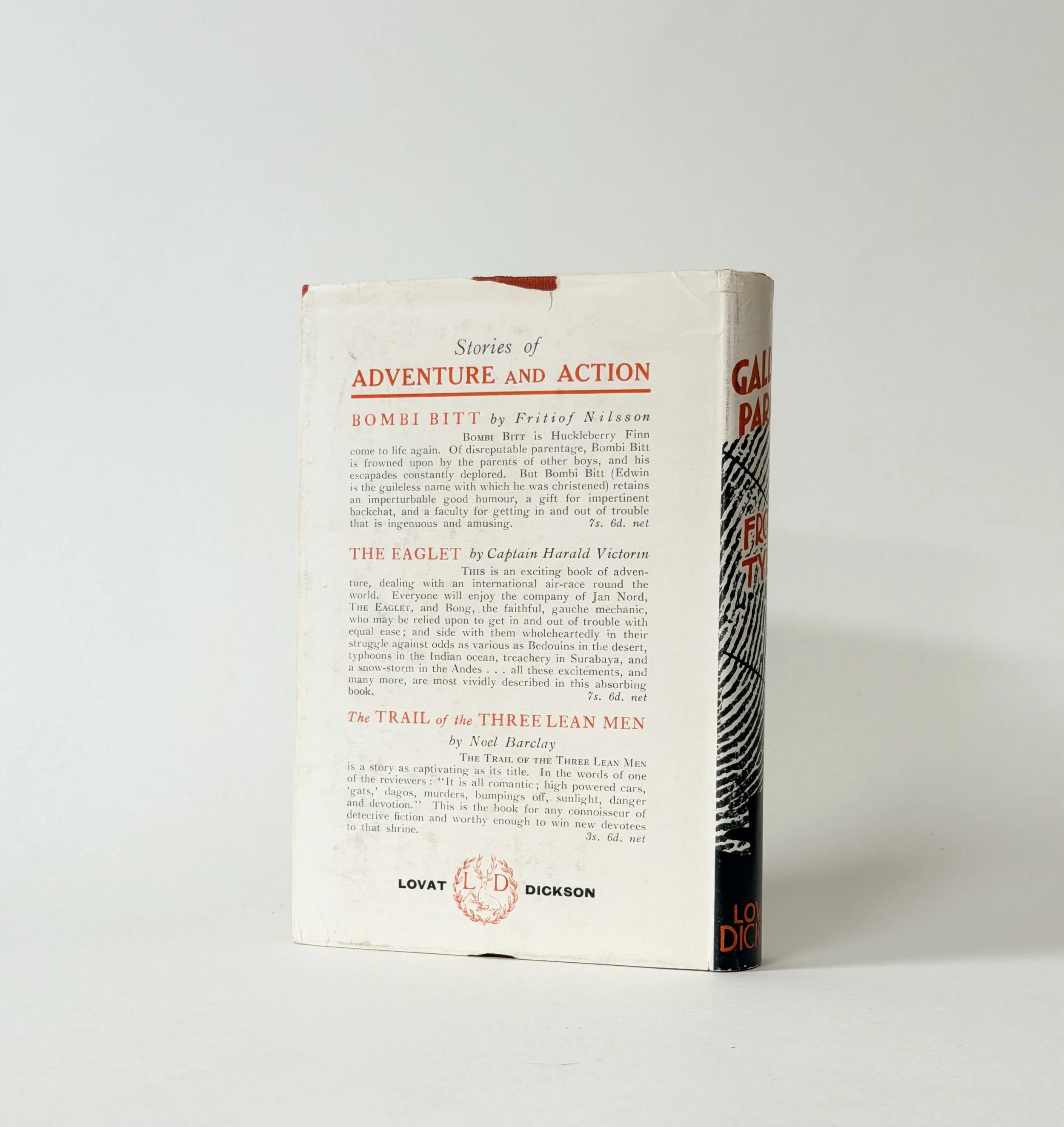 Image 2 of 3
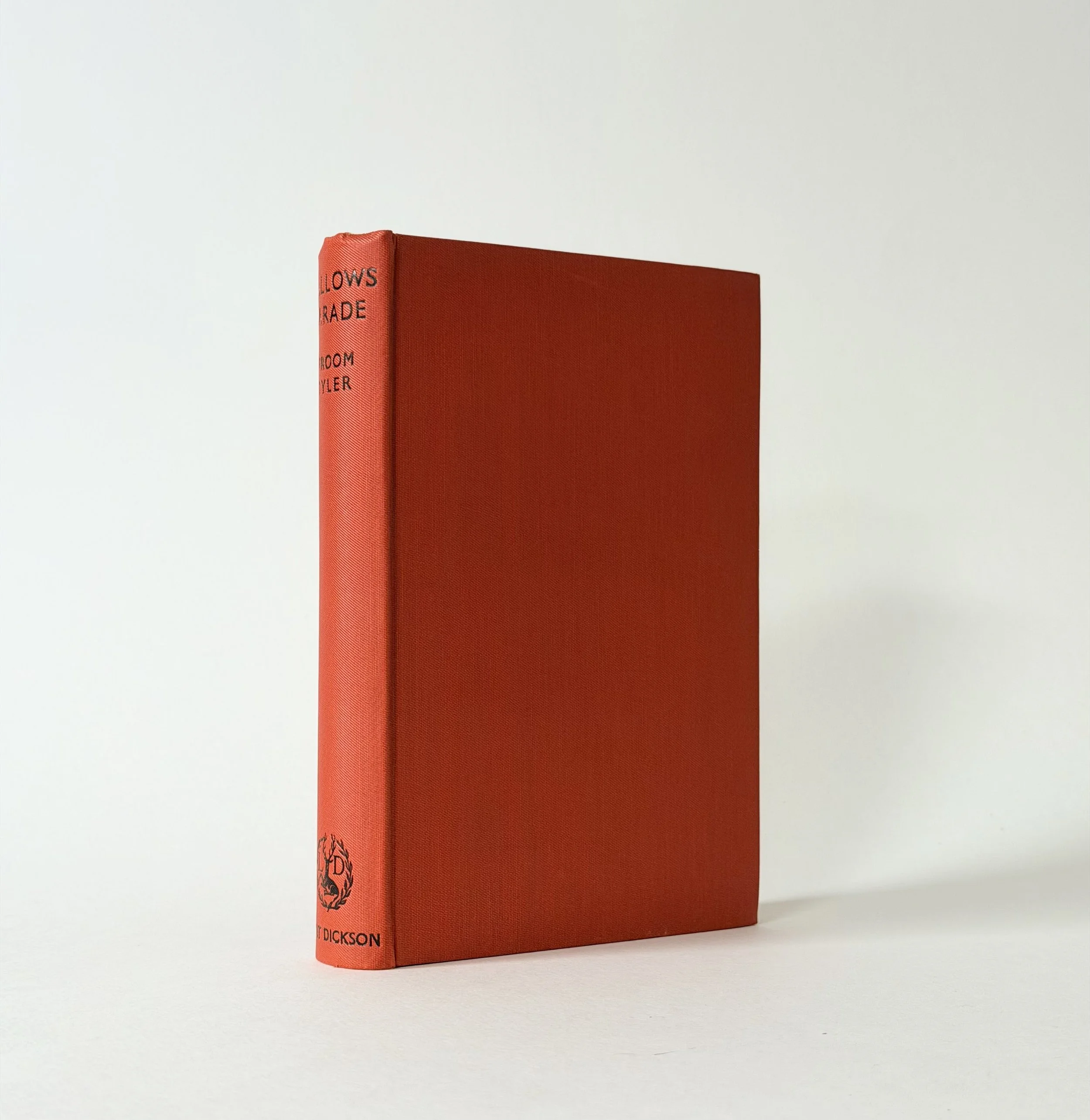 Image 3 of 3
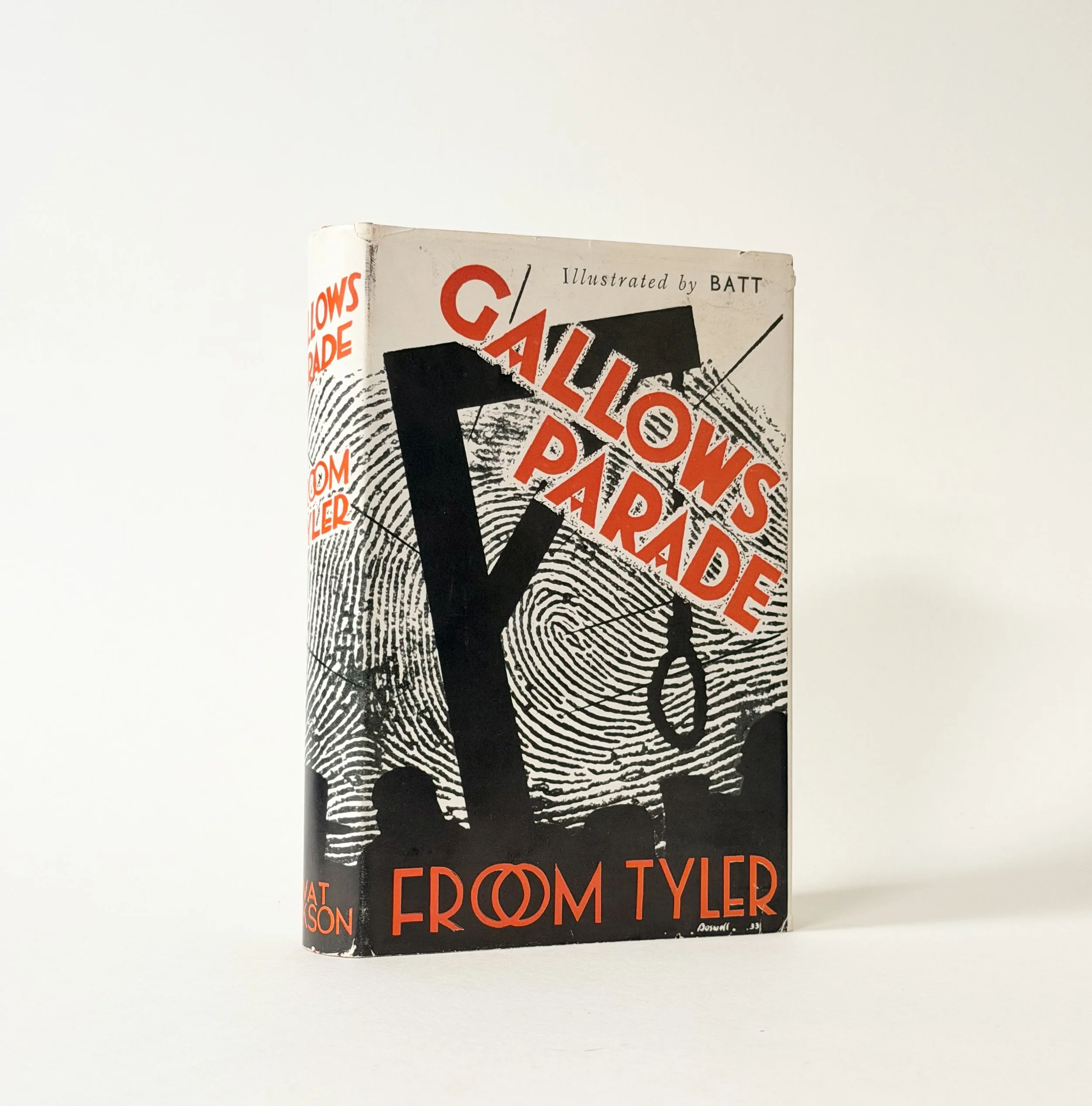
TYLER, Froom. Gallows Parade. London: Lovat Dickson. 1933. 8vo. First edition. Publisher’s red cloth lettered in black to the spine, in the dust jacket designed by James Boswell. With chapter headings by Batt. The cloth very clean and bright, a trifle bumped around crown with small and discreet slit to rear panel top edge. The binding tight and square, the red topstain vivid. The contents clean and fine throughout. The dust jacket unclipped (7/6 net), small chip to rear panel upper edge, and a handful of tiny bumps and closed tears, but sharp overall. A near fine copy.
An unusual collection of fictitious or doctored true crime tales by this curious journalist I can find little biographical information on. In his preface, fashioned as ‘an apology’, Tyler states ‘truth is stranger than fiction only when it is so strange as to appear fictitious’. He goes on to explain that if a fact can be embellished but remain as apparent fact, then why not? ‘That is journalism’, he says, which is no longer ‘written’, but ‘written up’, and so the stories here, though the facts of each case remains, each fact within the case has been embellished. Stories include the murderer who, upon being arrested, swallowed twelve half-pennies; the slaying of a kidnapped baronet abroad a British man o’-war; the murderer who went to prison to escape arrest; the gentleman of culture who murdered a woman with mushrooms; and the highwayman, slayer and seducer, who underwent conversion in the condemned cell and led a religious revival in the prison before he was hanged. The striking dust jacket was produced by New Zealand-born British illustrator, James Boswell. Boswell came to London in 1925 to study at the Royal College of Art, later serving in the Second World War, as art editor of Lilliput magazine, and producing posters for Ealing Studios. His work in this medium is considerable, but pre-war examples are scarce. At the time of this commission, he would have recently joined the Communist Party of Great Britain.
TYLER, Froom. Gallows Parade. London: Lovat Dickson. 1933. 8vo. First edition. Publisher’s red cloth lettered in black to the spine, in the dust jacket designed by James Boswell. With chapter headings by Batt. The cloth very clean and bright, a trifle bumped around crown with small and discreet slit to rear panel top edge. The binding tight and square, the red topstain vivid. The contents clean and fine throughout. The dust jacket unclipped (7/6 net), small chip to rear panel upper edge, and a handful of tiny bumps and closed tears, but sharp overall. A near fine copy.
An unusual collection of fictitious or doctored true crime tales by this curious journalist I can find little biographical information on. In his preface, fashioned as ‘an apology’, Tyler states ‘truth is stranger than fiction only when it is so strange as to appear fictitious’. He goes on to explain that if a fact can be embellished but remain as apparent fact, then why not? ‘That is journalism’, he says, which is no longer ‘written’, but ‘written up’, and so the stories here, though the facts of each case remains, each fact within the case has been embellished. Stories include the murderer who, upon being arrested, swallowed twelve half-pennies; the slaying of a kidnapped baronet abroad a British man o’-war; the murderer who went to prison to escape arrest; the gentleman of culture who murdered a woman with mushrooms; and the highwayman, slayer and seducer, who underwent conversion in the condemned cell and led a religious revival in the prison before he was hanged. The striking dust jacket was produced by New Zealand-born British illustrator, James Boswell. Boswell came to London in 1925 to study at the Royal College of Art, later serving in the Second World War, as art editor of Lilliput magazine, and producing posters for Ealing Studios. His work in this medium is considerable, but pre-war examples are scarce. At the time of this commission, he would have recently joined the Communist Party of Great Britain.