
 Image 1 of 5
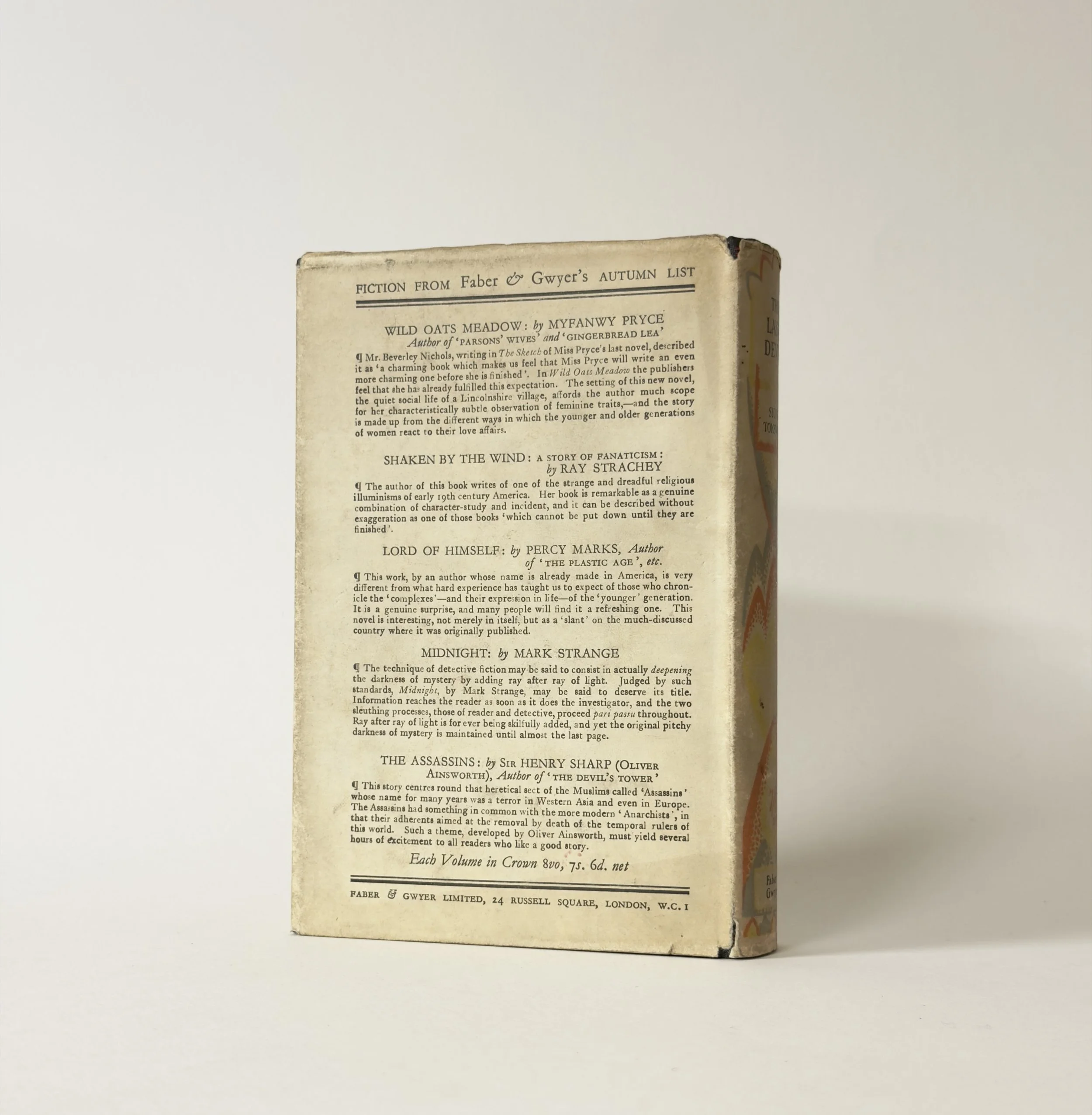 Image 2 of 5
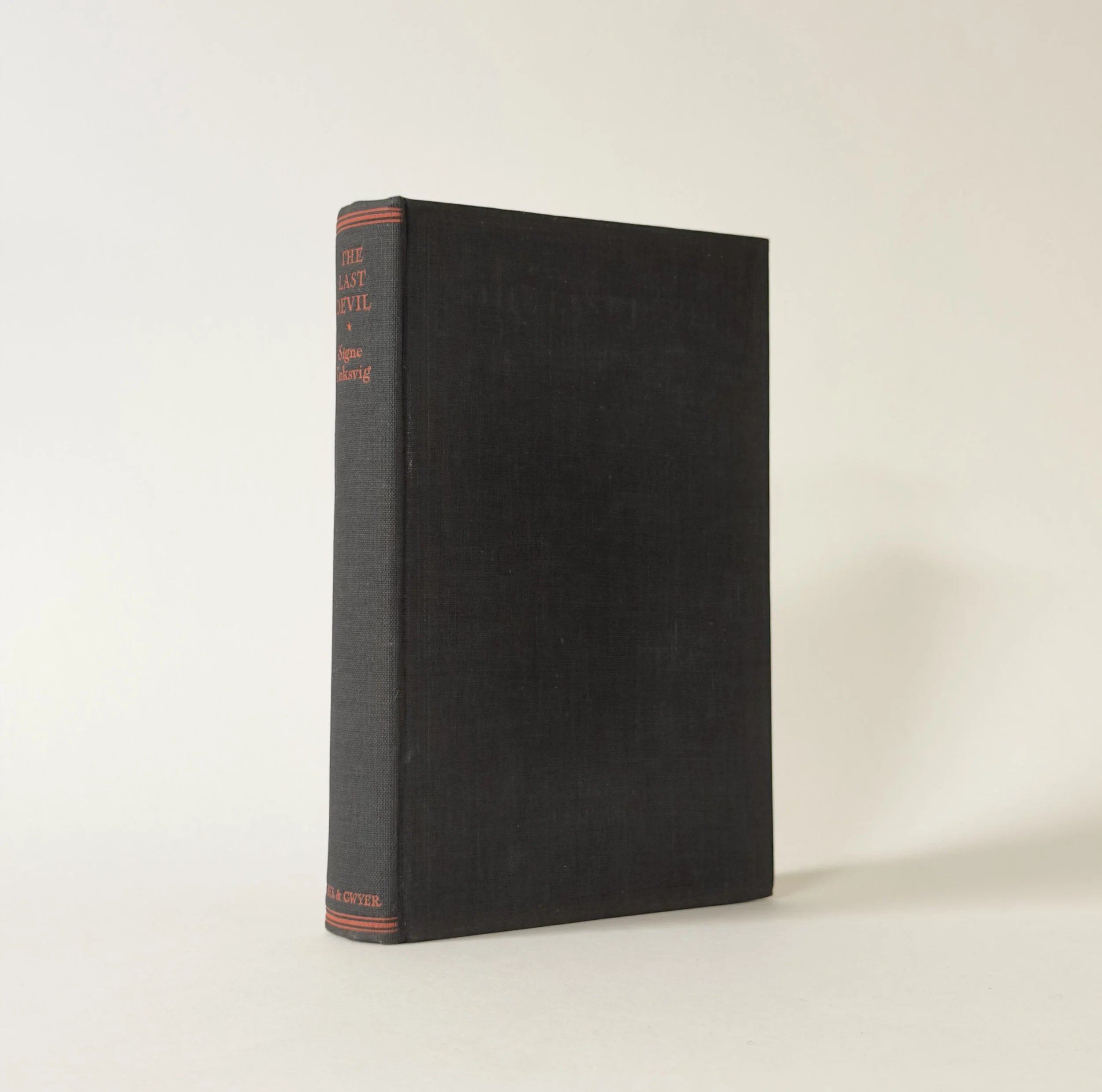 Image 3 of 5
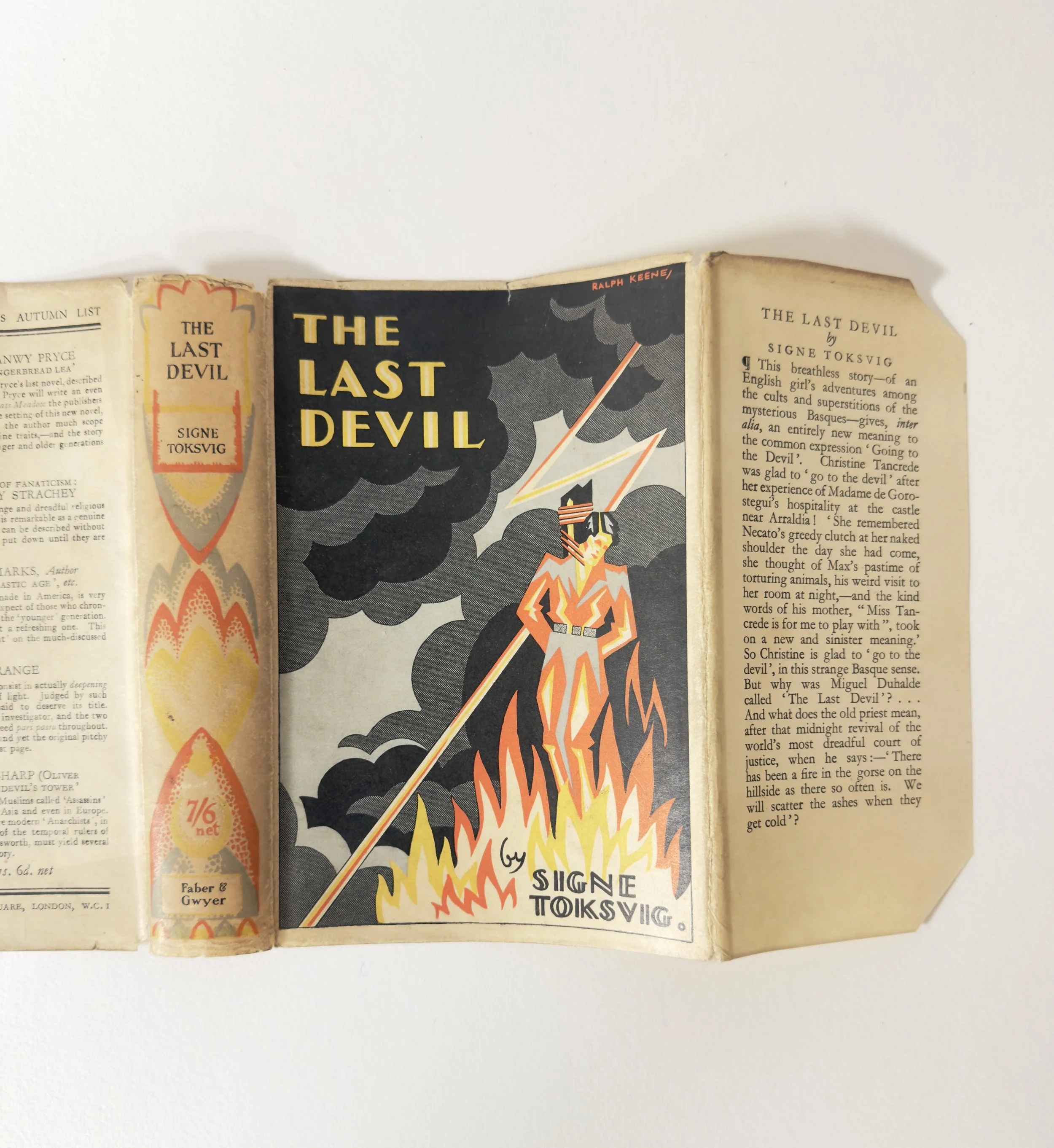 Image 4 of 5
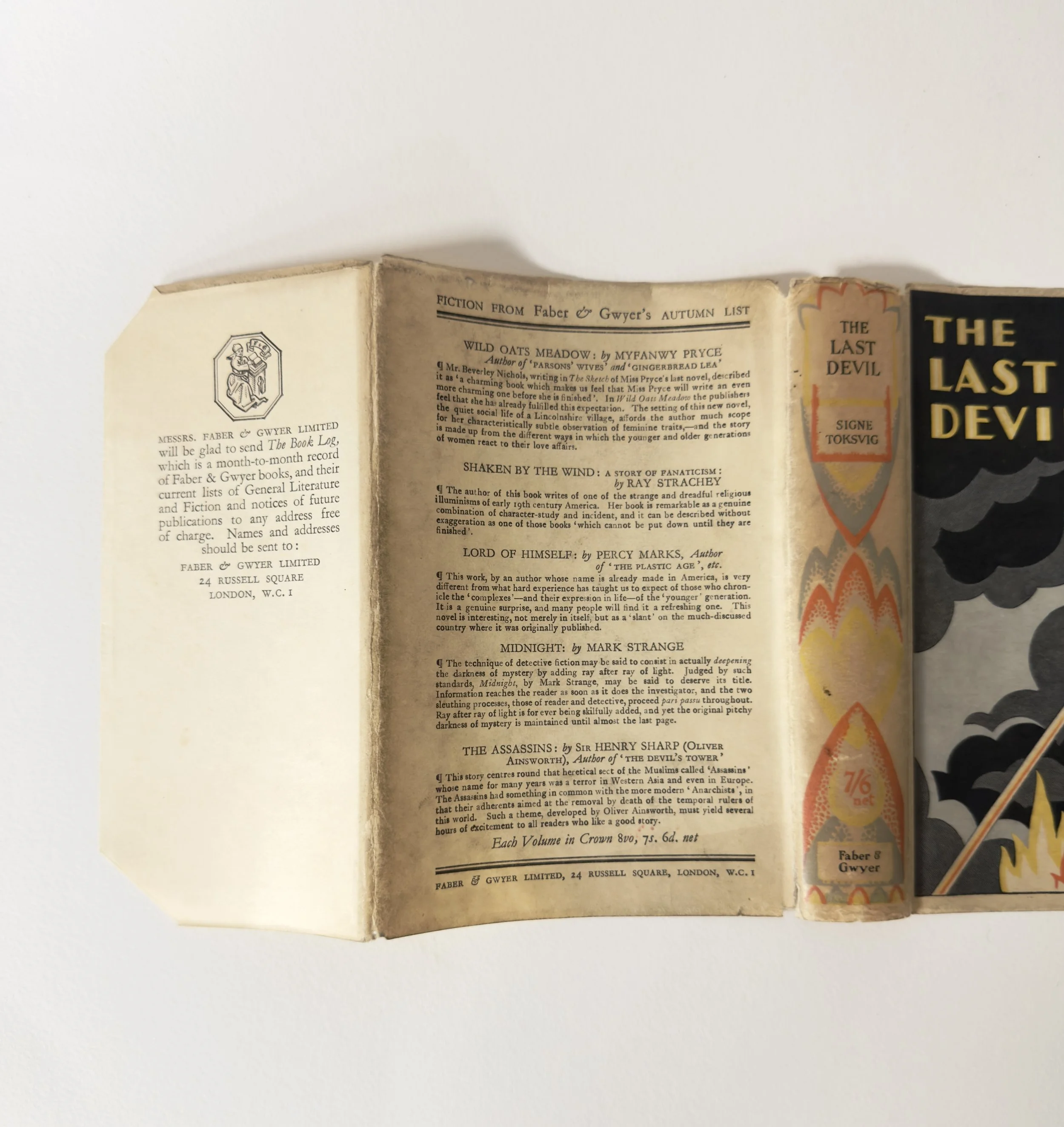 Image 5 of 5
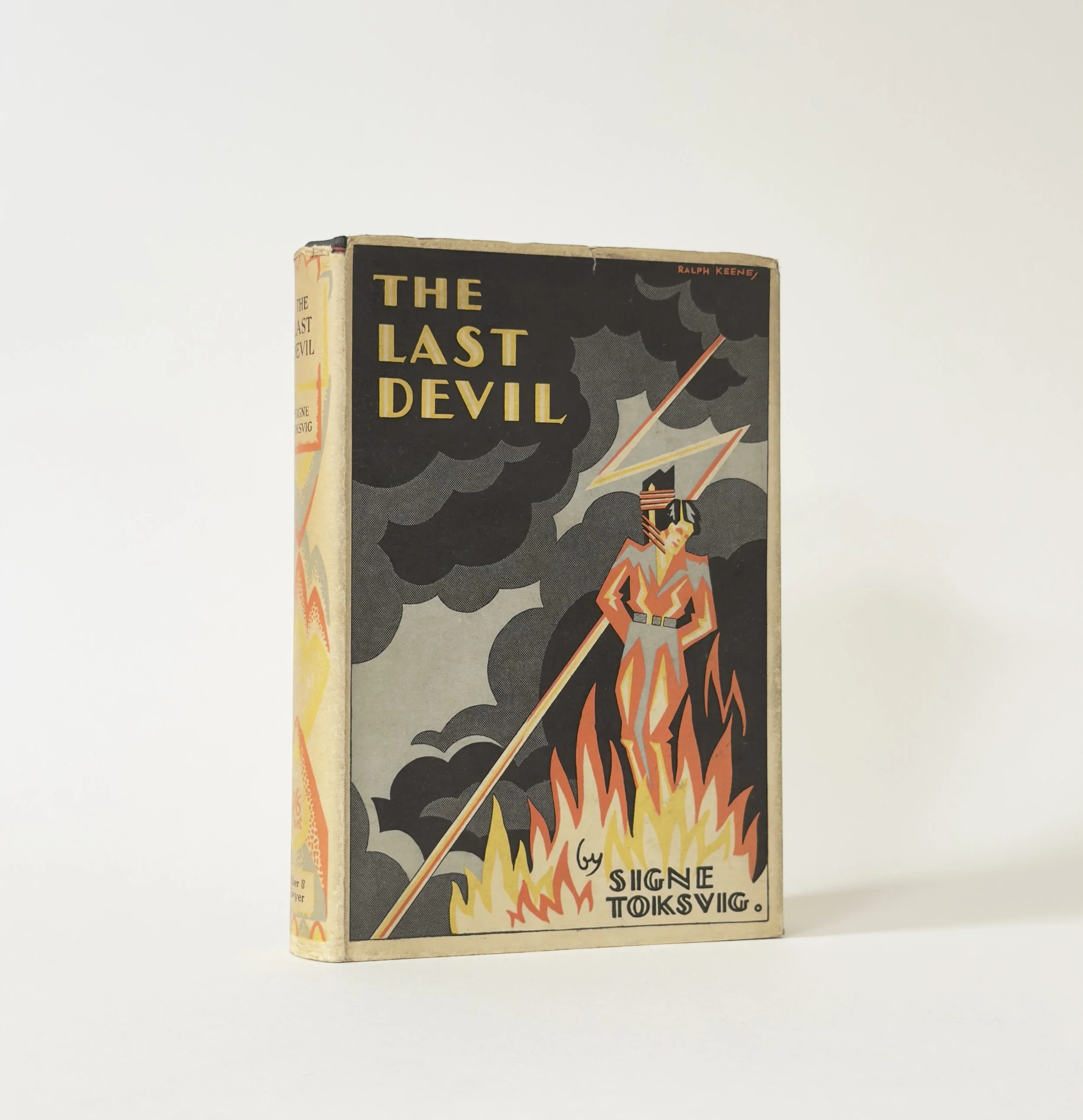
TOKSVIG, Signe. The Last Devil. London: Faber and Gwyer. 1927. 8vo. First edition. Publisher’s black cloth lettered in red to the spine with blindstamped titles to the front board, in the remarkable dust jacket designed by Ralph Keene. A near fine copy. The cloth clean and bright, the binding tight and square, the topstain still vivid. Some very faint spots to the textblock edges, with light offsetting to the front endpaper, else fine throughout. The dust jacket priced 7/6 net to the spine, four corners neatly cut, some tiny chips to the spine tips and corners, the spine and rear panels a touch marked. A sharp example.
The scarce first edition of this, the first of four novels by the Danish author, who despite spending her youth in her native Denmark, wrote exclusively in English, amid her many travels across the world, and more systematically to and fro the Atlantic. The novel follows an innocent yet adventurous young woman, Christine Tancrede, and her exploits alongside romantic companions in that unknowable region of the Basque Country. Devil-worship, animal torture, snake bites, and ancient curses ensue. Toksvig was motivated by folklore and weird fiction— she wrote one piece for Weird Tales in 1928, entitled ‘The Devil’s Martyr’, and edited an edition of the works of the fairy stories of Hans Christian Andersen, about whom she also wrote a biography. While working as an editor at The New Statesman, she met and married one of the magazine’s founders, Francis Hackett. The pair underwent a period of mostly European vagabondage, and it might have been on this half-a-decade-long journey that Toksvig learnt of the Basque witch trials and associated devil worship in the early seventeenth century, of which the crux of the novel is clearly based. By this time, the couple were important and well-connected literary figures both sides of the Atlantic, having settled in Ireland for a decade or so from 1926. They later moved to Ireland, having grown tired of the cultural and political changes at play. Eve’s Doctor, her second novel, was banned; the Dictionary of Irish Biography called it' ‘a harrowing critique of the influence of Catholic teaching on Irish obstetric and gynaecological practice, and of Irish indulgence of clientism and mediocrity’. The exquisite dust jacket is by Ralph Keene, certainly one of his most vivid designs and perhaps his best. Scarce in the dust jacket.
TOKSVIG, Signe. The Last Devil. London: Faber and Gwyer. 1927. 8vo. First edition. Publisher’s black cloth lettered in red to the spine with blindstamped titles to the front board, in the remarkable dust jacket designed by Ralph Keene. A near fine copy. The cloth clean and bright, the binding tight and square, the topstain still vivid. Some very faint spots to the textblock edges, with light offsetting to the front endpaper, else fine throughout. The dust jacket priced 7/6 net to the spine, four corners neatly cut, some tiny chips to the spine tips and corners, the spine and rear panels a touch marked. A sharp example.
The scarce first edition of this, the first of four novels by the Danish author, who despite spending her youth in her native Denmark, wrote exclusively in English, amid her many travels across the world, and more systematically to and fro the Atlantic. The novel follows an innocent yet adventurous young woman, Christine Tancrede, and her exploits alongside romantic companions in that unknowable region of the Basque Country. Devil-worship, animal torture, snake bites, and ancient curses ensue. Toksvig was motivated by folklore and weird fiction— she wrote one piece for Weird Tales in 1928, entitled ‘The Devil’s Martyr’, and edited an edition of the works of the fairy stories of Hans Christian Andersen, about whom she also wrote a biography. While working as an editor at The New Statesman, she met and married one of the magazine’s founders, Francis Hackett. The pair underwent a period of mostly European vagabondage, and it might have been on this half-a-decade-long journey that Toksvig learnt of the Basque witch trials and associated devil worship in the early seventeenth century, of which the crux of the novel is clearly based. By this time, the couple were important and well-connected literary figures both sides of the Atlantic, having settled in Ireland for a decade or so from 1926. They later moved to Ireland, having grown tired of the cultural and political changes at play. Eve’s Doctor, her second novel, was banned; the Dictionary of Irish Biography called it' ‘a harrowing critique of the influence of Catholic teaching on Irish obstetric and gynaecological practice, and of Irish indulgence of clientism and mediocrity’. The exquisite dust jacket is by Ralph Keene, certainly one of his most vivid designs and perhaps his best. Scarce in the dust jacket.