
 Image 1 of 4
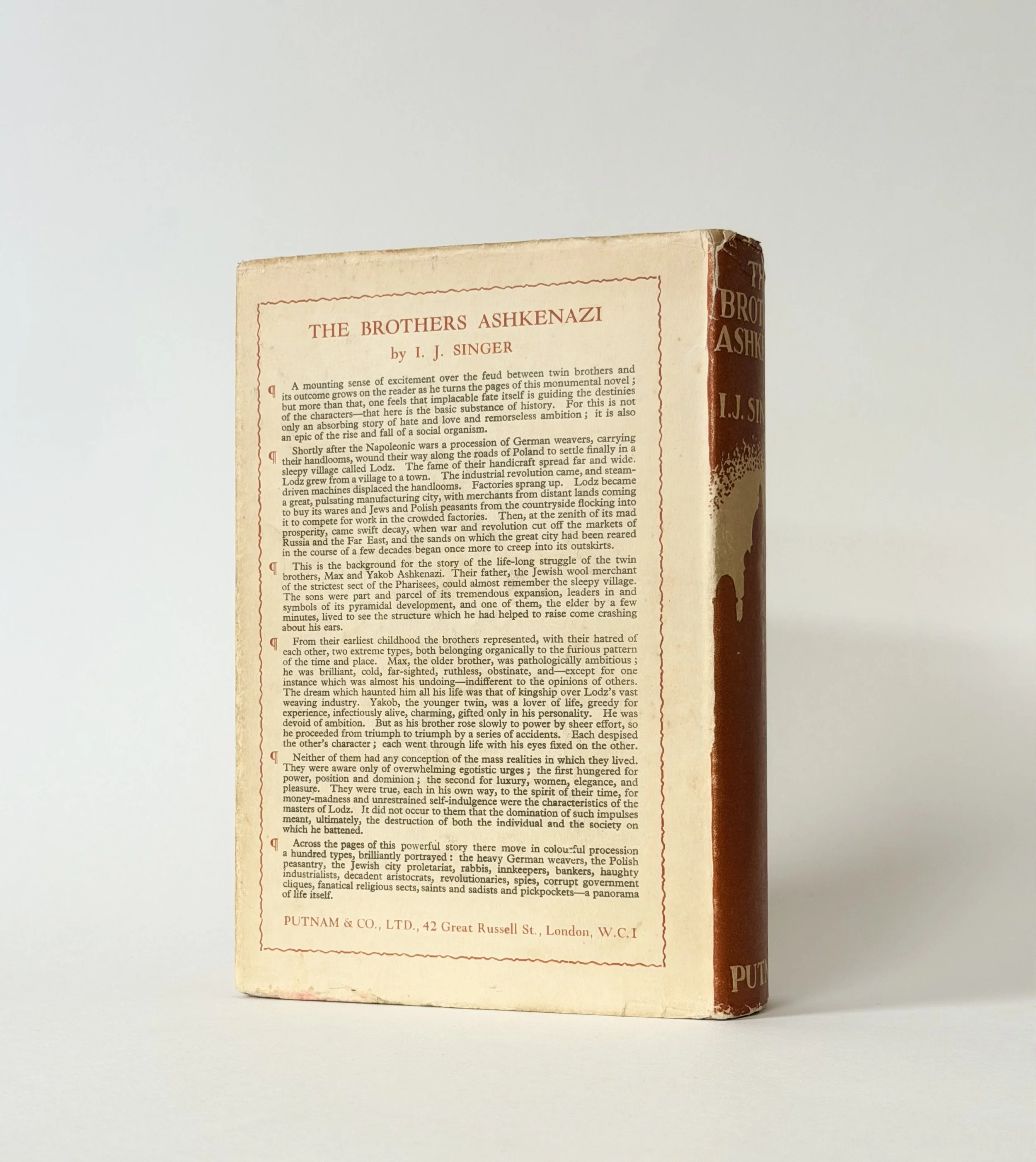 Image 2 of 4
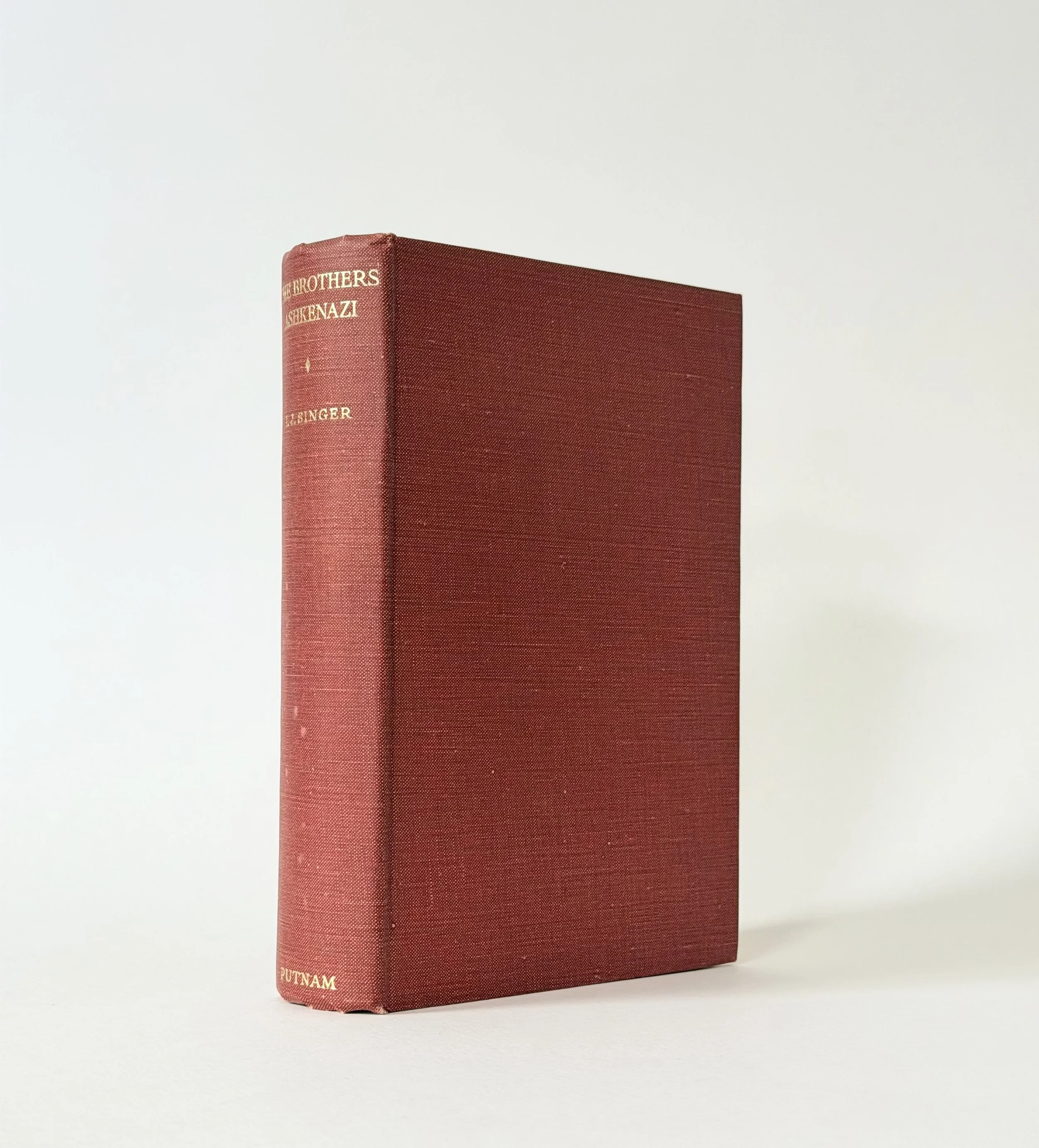 Image 3 of 4
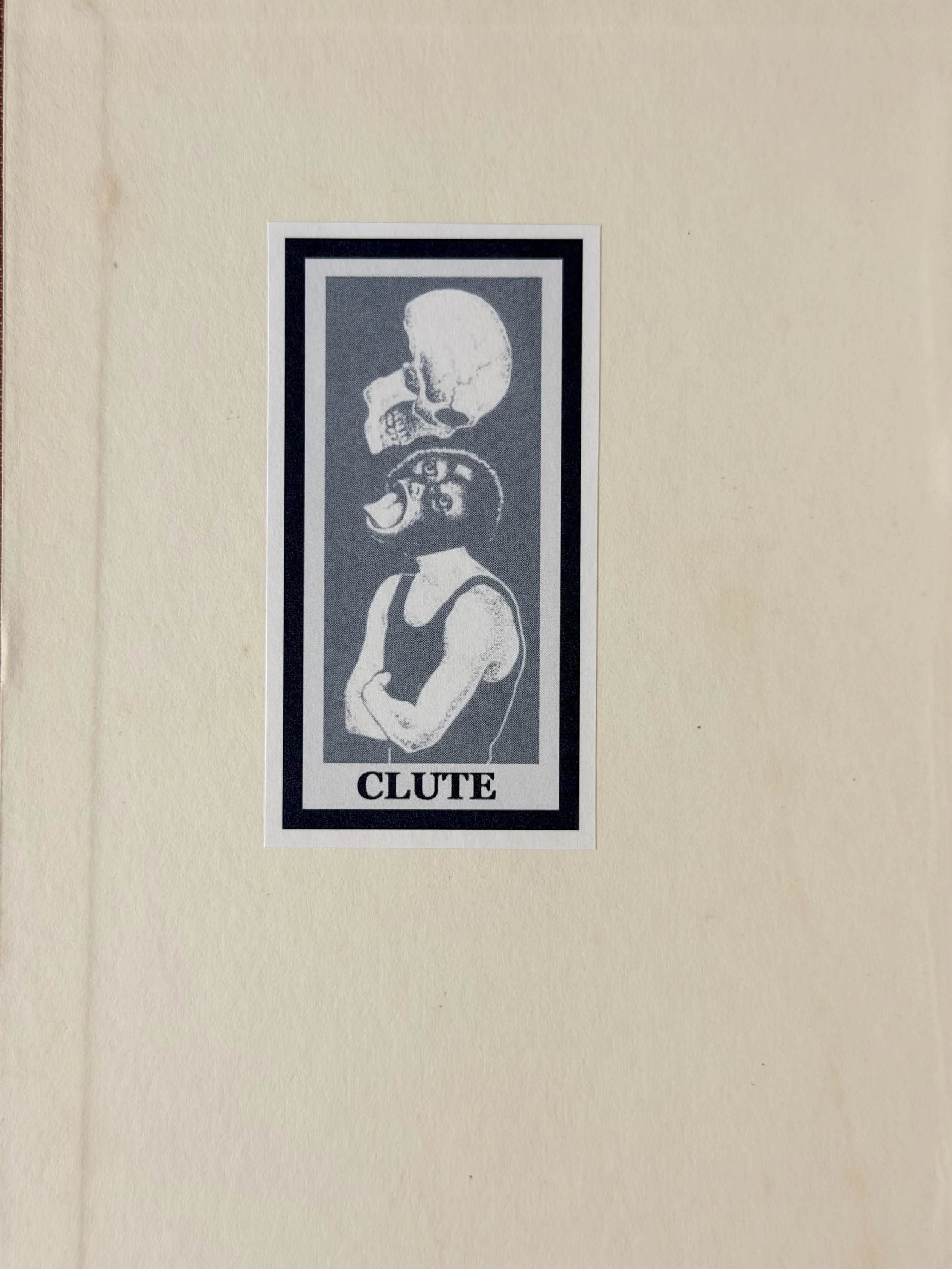 Image 4 of 4
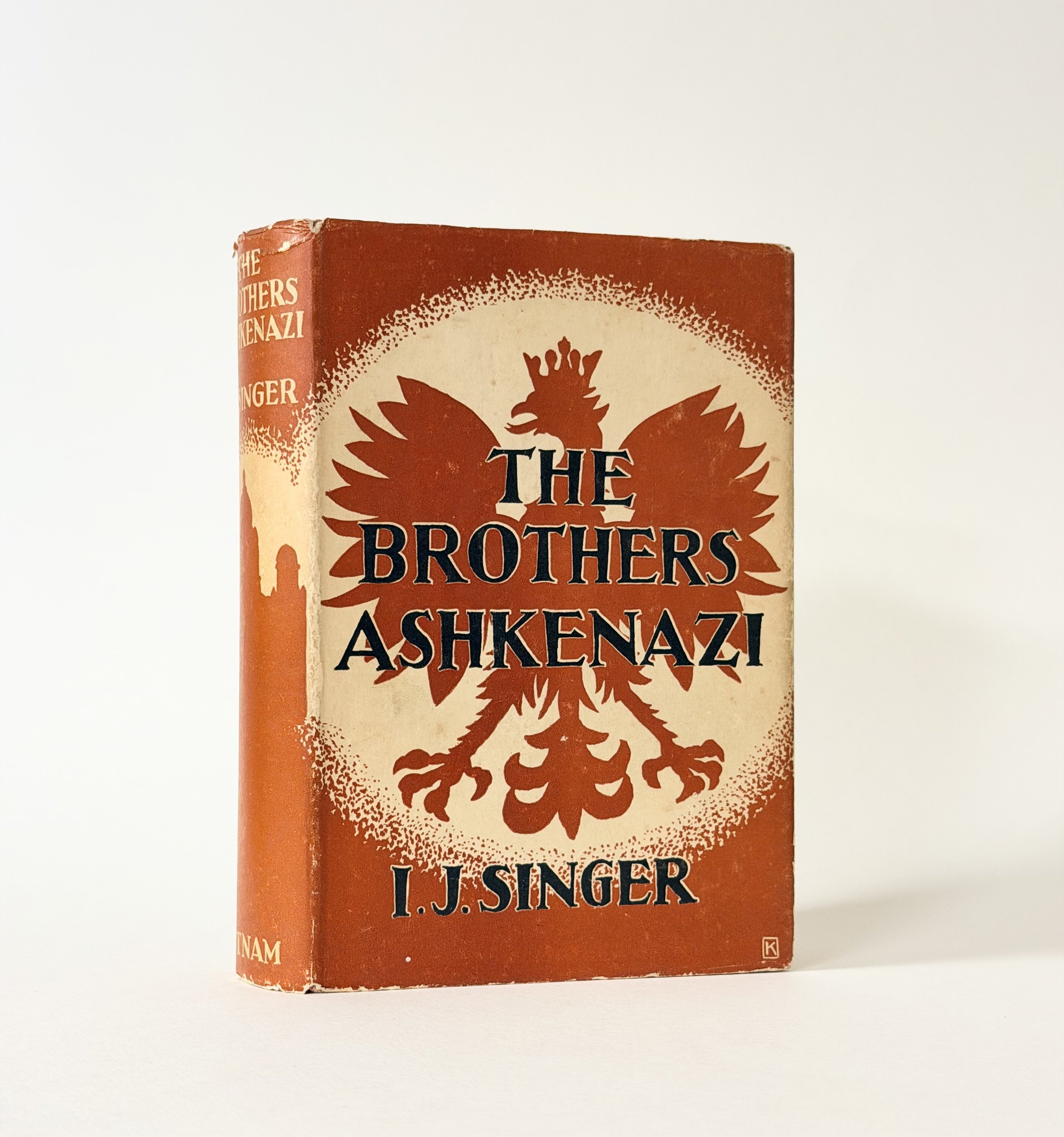
SINGER, Israel Joshua. The Brothers Ashkenazi. Trans. from the Yiddish by Maurice Samuel. London: Putnam and Company. 1936. 8vo. First British edition. Publisher’s red cloth lettered in gilt to the spine, in the dust jacket designed by William Kermode. A very good copy, the cloth clean and bright. the spine tips gently pushed. The binding tight and square, the contents largely fine, with mild stains to textblock edges and prelims, then usually fine. With bookplate of ‘Clute’ to front pastedown concealed by the jacket front flap. The dust jacket unclipped (8/6 net), rubbed to most corners, edges and joints with some very tiny nicks. One small repair to spine head at verso.
A wildly panoramic novel by the once top-drawer Polish author and older brother to the Nobel Prize-winning Isaac Bashevis Singer. The scope is the early nineteenth century up until the end of the First World War, the location Lodz in Poland, as it develops from a small town into a major industrial hub where German weavers, Polish peasants, Jewish city proletariat, rabbis, innkeepers, spies, corrupt government cliques, fanatical religious sects, saints and sadist and pickpockets each vie for a better life. Told through the battle between twin brothers, Max and Yakob, the novel is microcosmically a striking portrait of the rise of Communism in Europe vs the constraints of man in its single unmoving obsession: greed. Max is ‘pathologically ambitious, brilliant, cold, far-sighted, ruthless, obstinate, indifferent to the opinions of others’, while Yakob is ‘a lover of life, greedy for experience, infectiously alive, charming, gifted only in his personality’. Their life-long rivalry and Max’s outright ambition to dominate him and his surroundings, ‘a dream of kingship’, is as scathing of capitalist ideals and its destruction of civilisation as it is ambitious in presenting a socialist revolutionary alternative. Singer was in his own life the famed modernist and one of the most revered writers in Yiddish, yet his own brother’s winning of the Nobel Prize has unjustly degraded Israel to ‘the other Singer’. This was the first book to be published after Israel settled in the US, and this British edition was published alongside the Knopf edition.
SINGER, Israel Joshua. The Brothers Ashkenazi. Trans. from the Yiddish by Maurice Samuel. London: Putnam and Company. 1936. 8vo. First British edition. Publisher’s red cloth lettered in gilt to the spine, in the dust jacket designed by William Kermode. A very good copy, the cloth clean and bright. the spine tips gently pushed. The binding tight and square, the contents largely fine, with mild stains to textblock edges and prelims, then usually fine. With bookplate of ‘Clute’ to front pastedown concealed by the jacket front flap. The dust jacket unclipped (8/6 net), rubbed to most corners, edges and joints with some very tiny nicks. One small repair to spine head at verso.
A wildly panoramic novel by the once top-drawer Polish author and older brother to the Nobel Prize-winning Isaac Bashevis Singer. The scope is the early nineteenth century up until the end of the First World War, the location Lodz in Poland, as it develops from a small town into a major industrial hub where German weavers, Polish peasants, Jewish city proletariat, rabbis, innkeepers, spies, corrupt government cliques, fanatical religious sects, saints and sadist and pickpockets each vie for a better life. Told through the battle between twin brothers, Max and Yakob, the novel is microcosmically a striking portrait of the rise of Communism in Europe vs the constraints of man in its single unmoving obsession: greed. Max is ‘pathologically ambitious, brilliant, cold, far-sighted, ruthless, obstinate, indifferent to the opinions of others’, while Yakob is ‘a lover of life, greedy for experience, infectiously alive, charming, gifted only in his personality’. Their life-long rivalry and Max’s outright ambition to dominate him and his surroundings, ‘a dream of kingship’, is as scathing of capitalist ideals and its destruction of civilisation as it is ambitious in presenting a socialist revolutionary alternative. Singer was in his own life the famed modernist and one of the most revered writers in Yiddish, yet his own brother’s winning of the Nobel Prize has unjustly degraded Israel to ‘the other Singer’. This was the first book to be published after Israel settled in the US, and this British edition was published alongside the Knopf edition.