
 Image 1 of 3
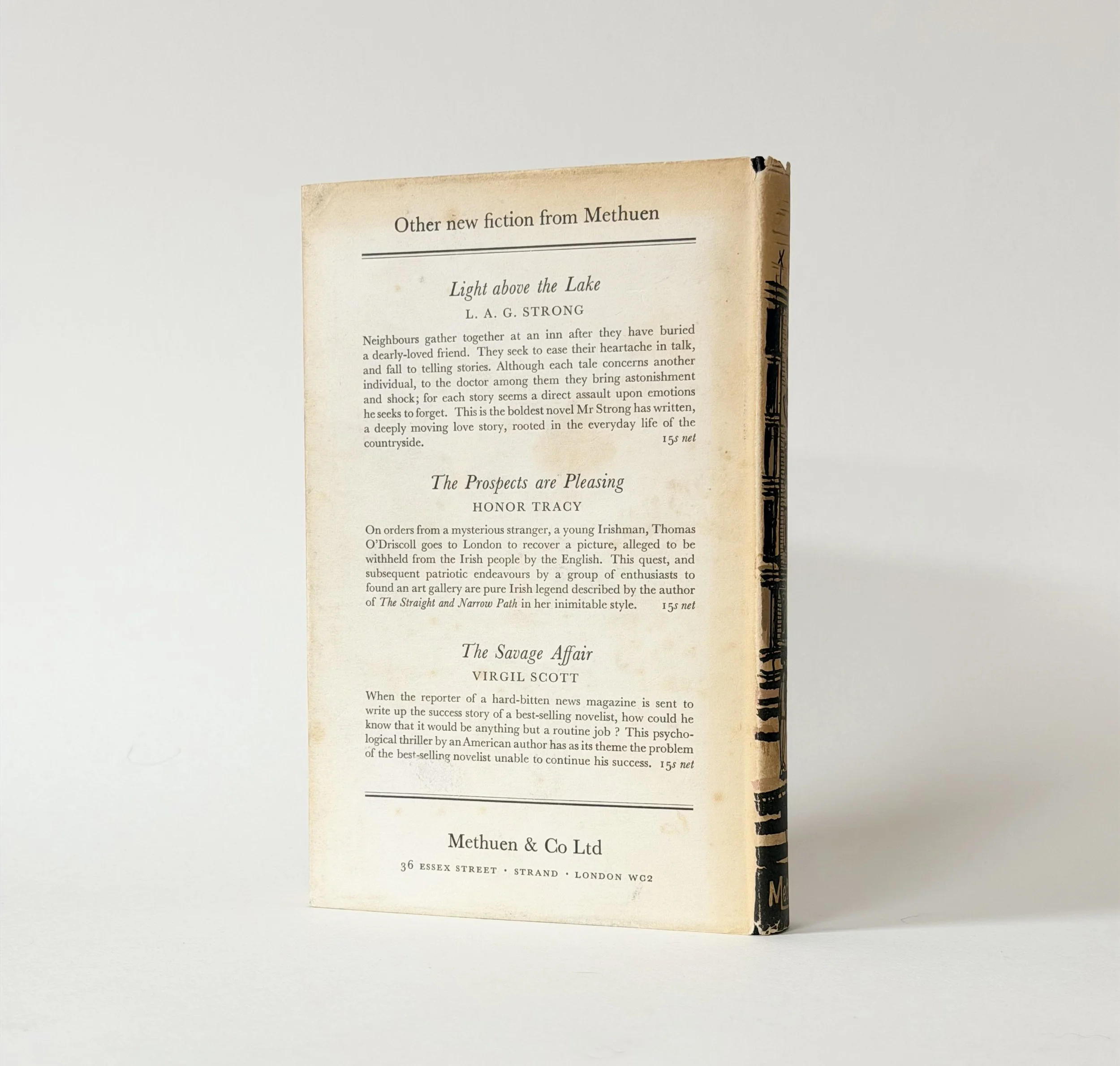 Image 2 of 3
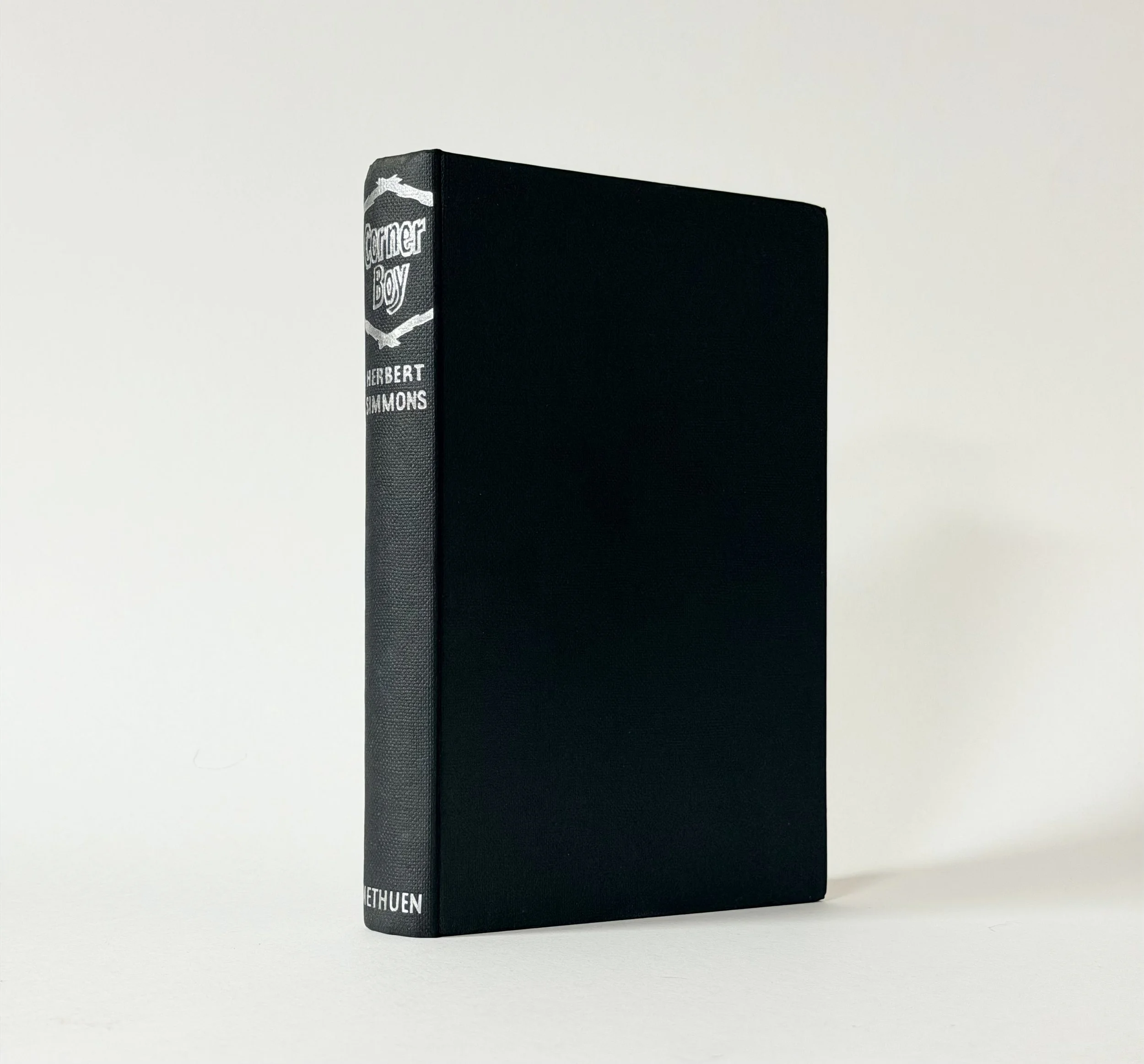 Image 3 of 3
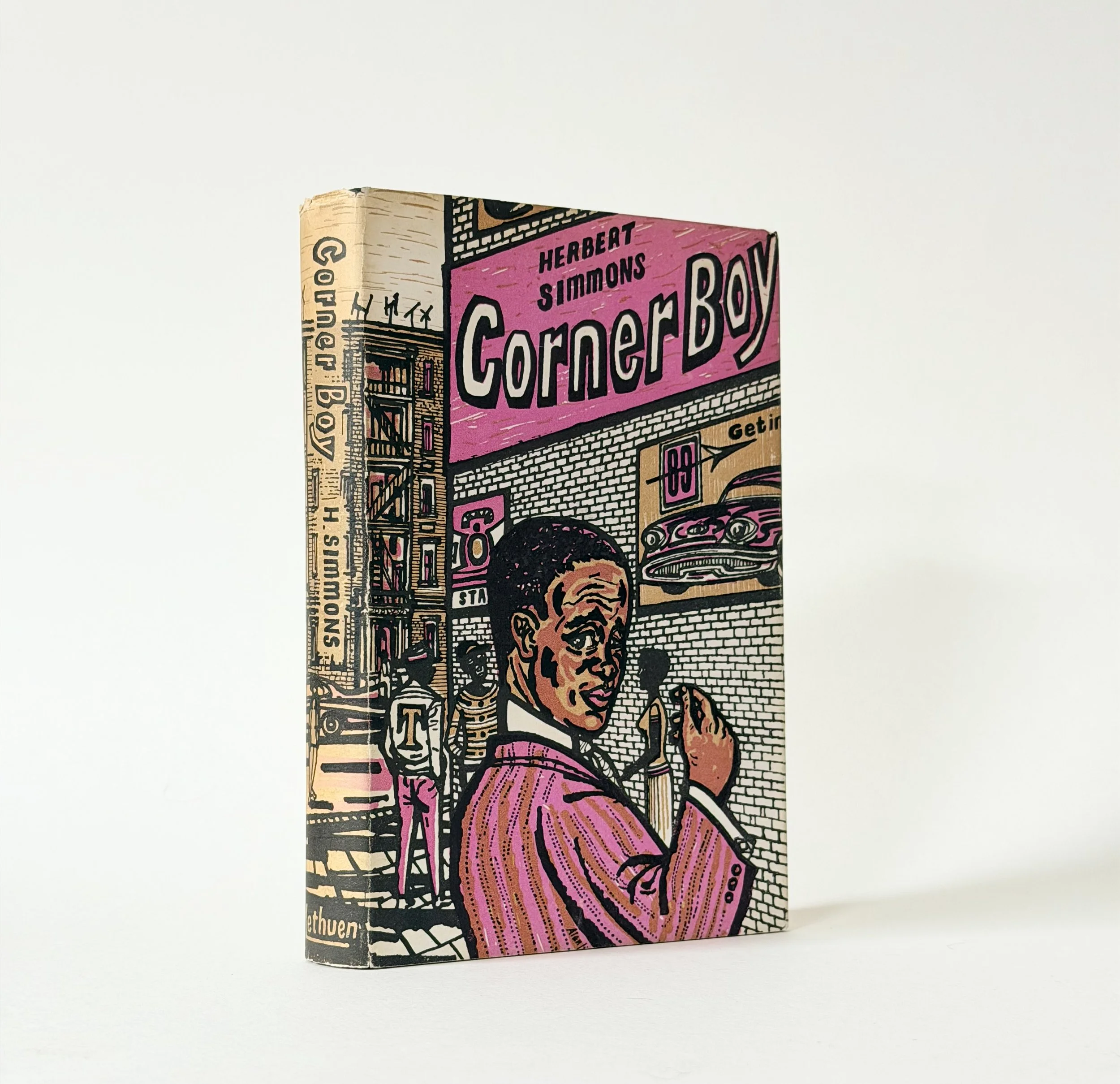
SIMMONS, Herbert. Corner Boy. London: Methuen. 1958. 8vo. First British edition. Publisher’s black cloth lettered in silver gilt to spine, in the terrific dust jacket designed by Alan Lindsay. A very good example, the cloth clean and bright, the binding tight and just a trifle rolled. Ink ownership signature to front pastedown with bookseller label to corner and transfer mark to endpaper. A few spots to the textblock edges, else very clean. The dust jacket price-clipped, the spine and rear panels slightly toned, but the front panel especially bright and clean.
Herbert Simmons’ first of only two novels follows the violent rise and inevitable fall of drug-peddling teenager, Jake Adams, who alongside his fellow black boys works the corners of a city which rejects them—the author’s proposed microcosm of the American urban problem, written on the cusp of the civil rights movement. During his rise from poverty and hopelessness, Jake seems to revel in jazz sessions and gang warfare, in custom-made suits and in endless women, ‘in their wild scramble for status in an unfriendly world’, all the while told with a rhythmic sense of downfall. The novel won the prestigious Houghton Mifflin Literary Fellowship Award.
SIMMONS, Herbert. Corner Boy. London: Methuen. 1958. 8vo. First British edition. Publisher’s black cloth lettered in silver gilt to spine, in the terrific dust jacket designed by Alan Lindsay. A very good example, the cloth clean and bright, the binding tight and just a trifle rolled. Ink ownership signature to front pastedown with bookseller label to corner and transfer mark to endpaper. A few spots to the textblock edges, else very clean. The dust jacket price-clipped, the spine and rear panels slightly toned, but the front panel especially bright and clean.
Herbert Simmons’ first of only two novels follows the violent rise and inevitable fall of drug-peddling teenager, Jake Adams, who alongside his fellow black boys works the corners of a city which rejects them—the author’s proposed microcosm of the American urban problem, written on the cusp of the civil rights movement. During his rise from poverty and hopelessness, Jake seems to revel in jazz sessions and gang warfare, in custom-made suits and in endless women, ‘in their wild scramble for status in an unfriendly world’, all the while told with a rhythmic sense of downfall. The novel won the prestigious Houghton Mifflin Literary Fellowship Award.