
 Image 1 of 3
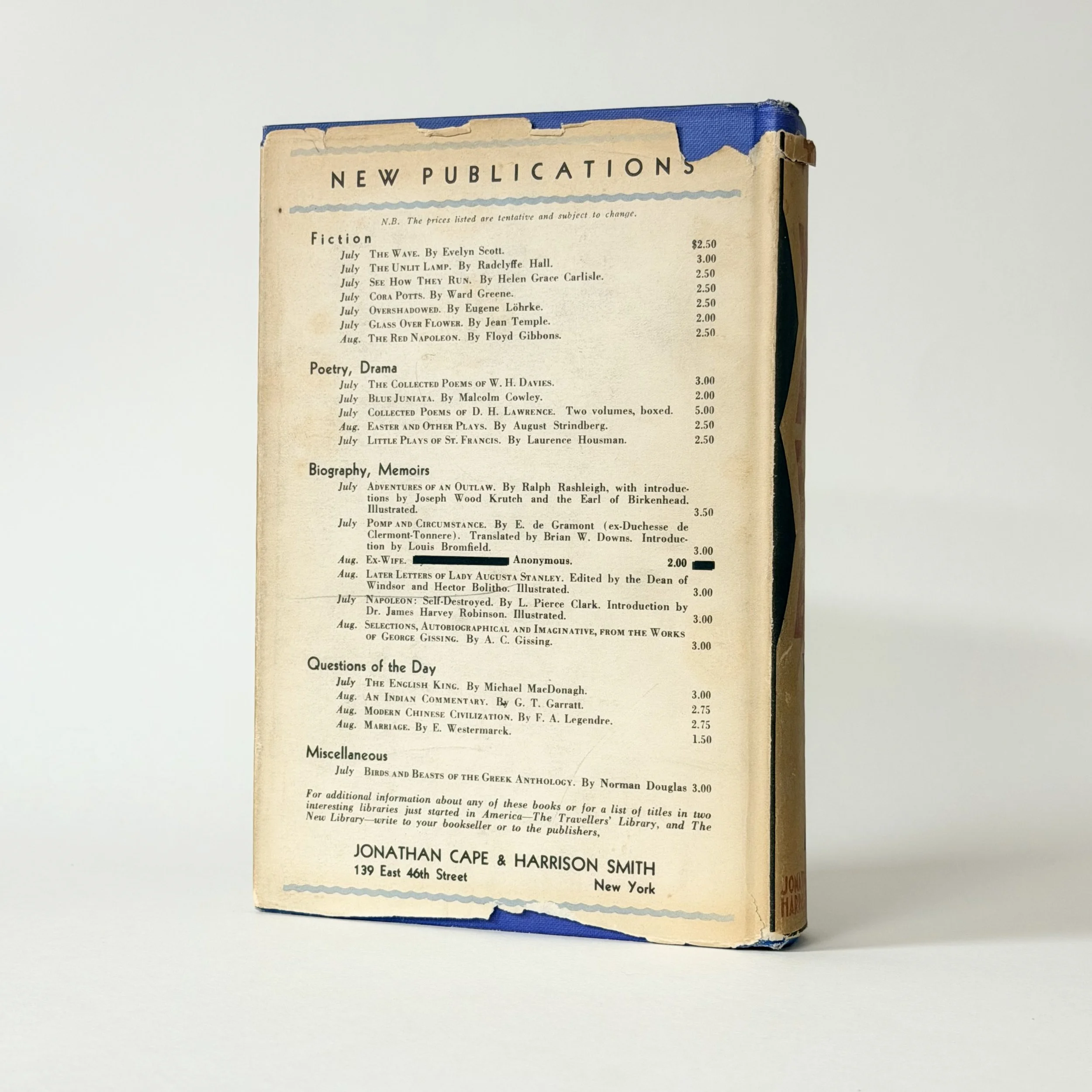 Image 2 of 3
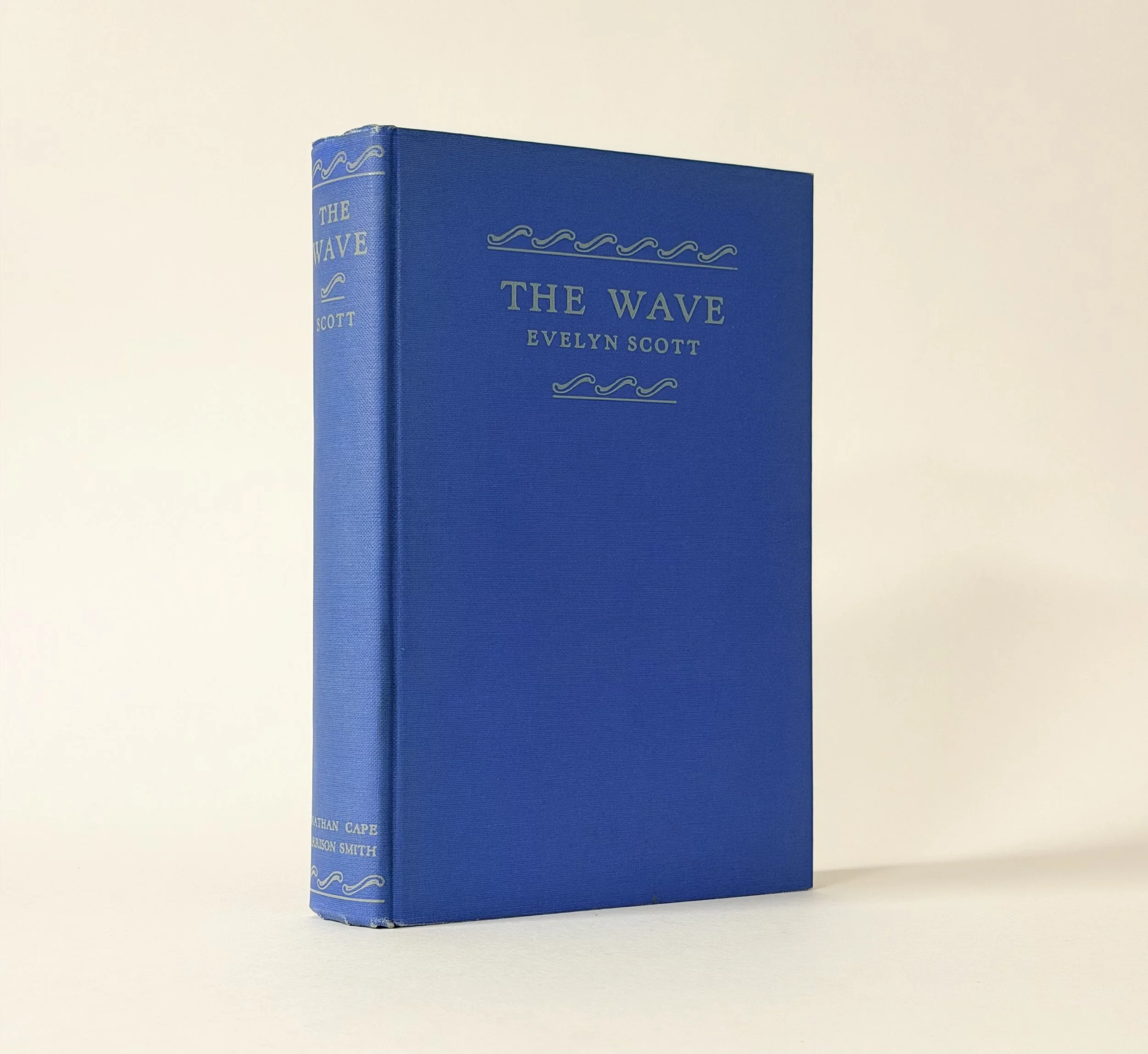 Image 3 of 3
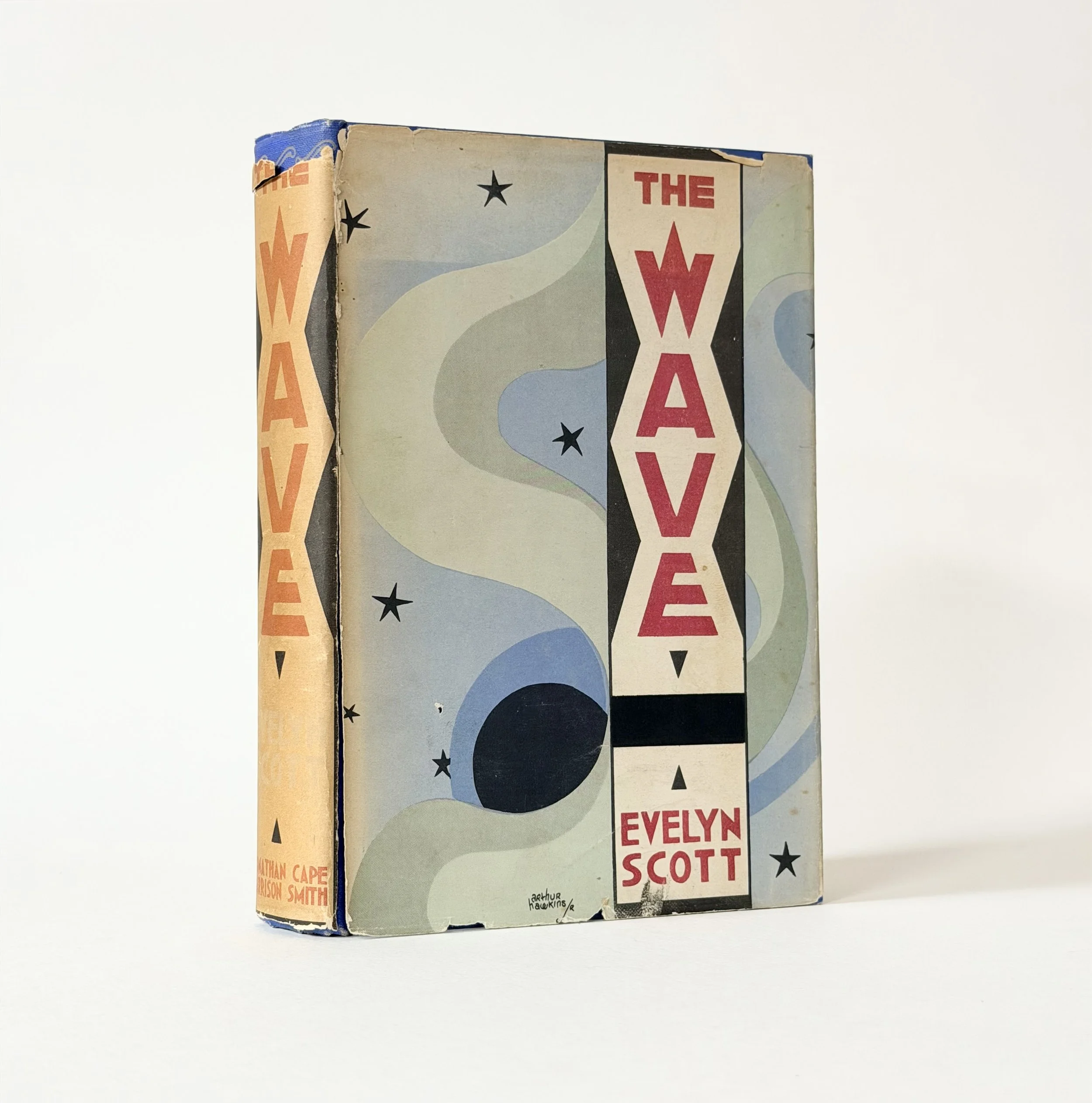
SCOTT, Evelyn. The Wave. New York: Jonathan Cape & Harrison Smith. 1929. 8vo. First edition. Publisher’s blue cloth lettered in silver gilt to the spine and upper board, in the superb dust jacket designed by Arthur Hawkins Jr. A very good copy. The cloth clean and bright, the backstrip slightly dulled, extremities gently bumped to all edges. The binding tight and square, the contents clean and fine throughout, with California bookshop label to rear pastedown corner. The dust jacket fair. Unclipped, the front flap neatly cut at corners. Considerable split to spine and front panel joint, made discreet by the jacket design, with several small chips, nicks and creases along most edges, corners and tips, the heaviest loss to spine head.
Perhaps the author’s most important book. Maximalist in its scope and ambition, modernist in its prose, The Wave is an all-encompassing weaving of many narratives, documenting the American Civil War experienced by men and women, old, young, black, white, and far beyond that, which gained Scott yet more literary praise to add to her already glowing reputation. When Jonathan Cape & Harrison Smith published William Faulkner’s The Sound and the Fury later in the year, it was Scott who was tasked with introducing it to readers, and it was among Scott’s lofty ranks whom the publishers suggested Faulkner could join—he later rebuffed Scott was ‘pretty good, for a woman’. I can think of few novelists, therefore, whose fade into obscurity is so undeserving, or so titanic. Scott was the pseudonym of Elsie (or Elsa) Dunn, whose affair with and eventual marriage to already-married Frederick Creighton Wellman incited the pair to adopt matching Scott pseudonyms (Evelyn and Cyril Kay), the pair fleeing to Brazil for a time. Despite obvious mental illnesses, Scott participated in almost every aspect of American intellectual life; 'the Greenwich Village revolt, the Stieglitz group, the European expatriate scene, the art colonies of Taos and Santa Fe, feminism, anarchism, the rise of literary communism and the emergence of the loose group known as the Southern Renaissance’ (Callard).