
 Image 1 of 5
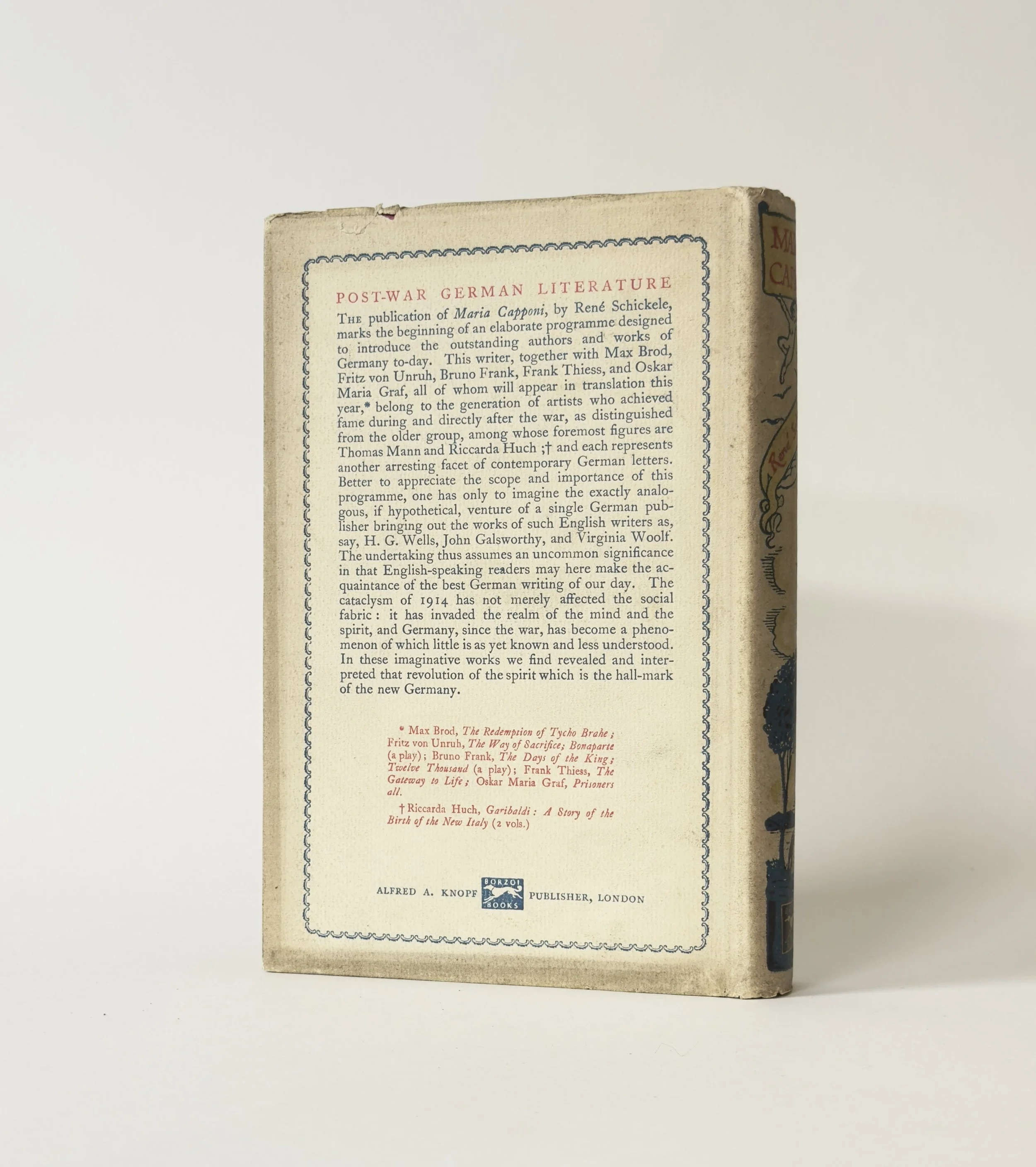 Image 2 of 5
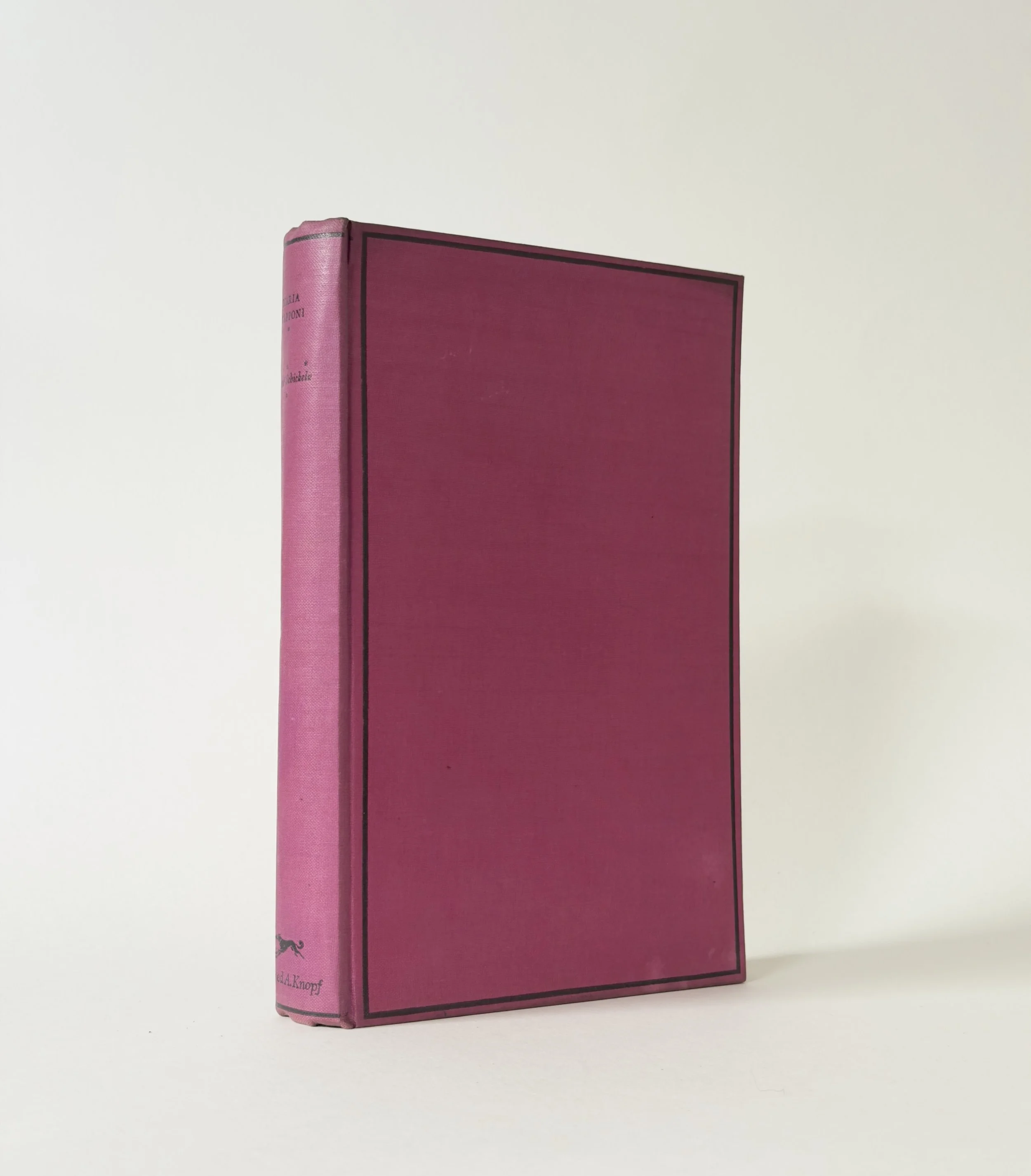 Image 3 of 5
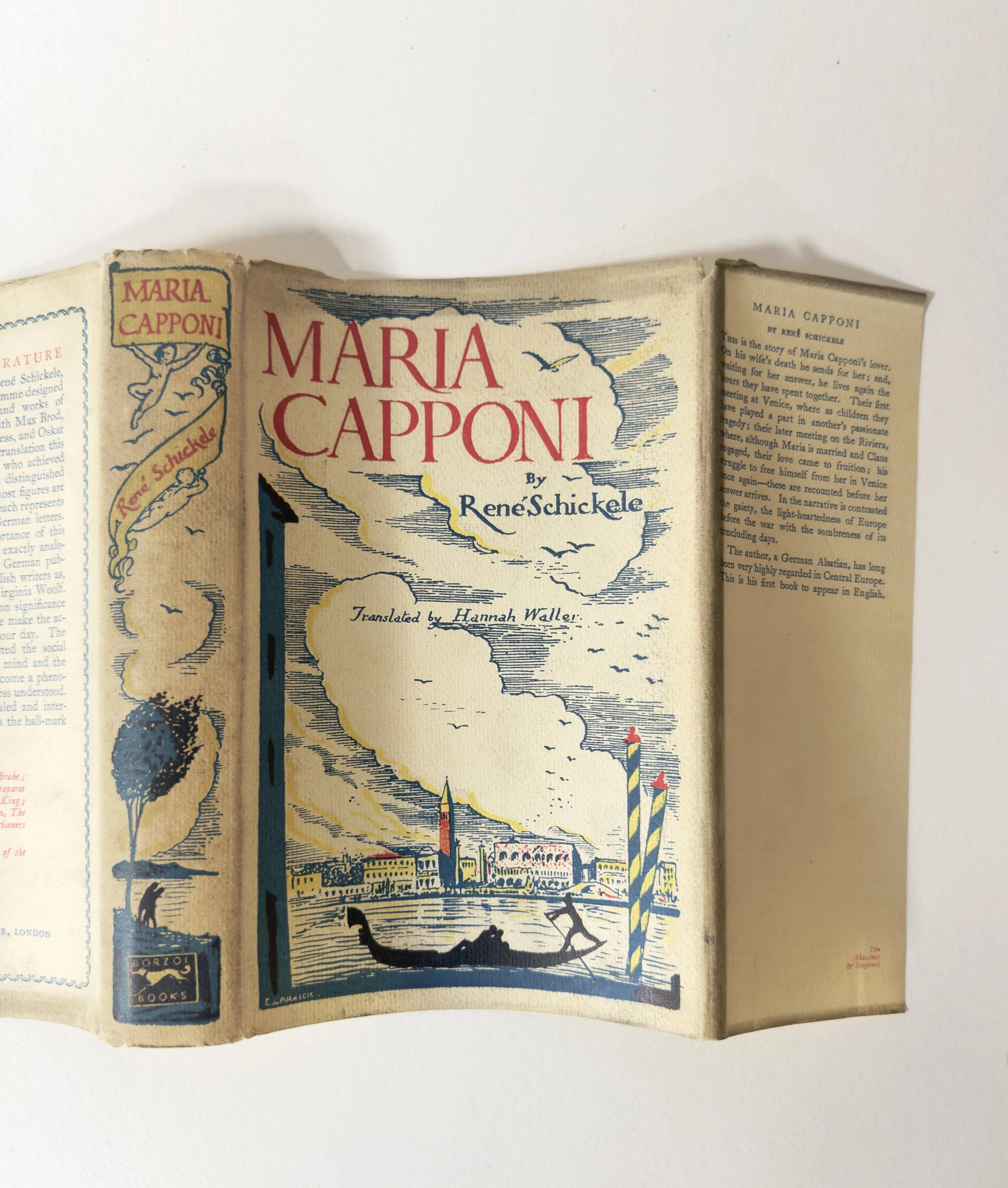 Image 4 of 5
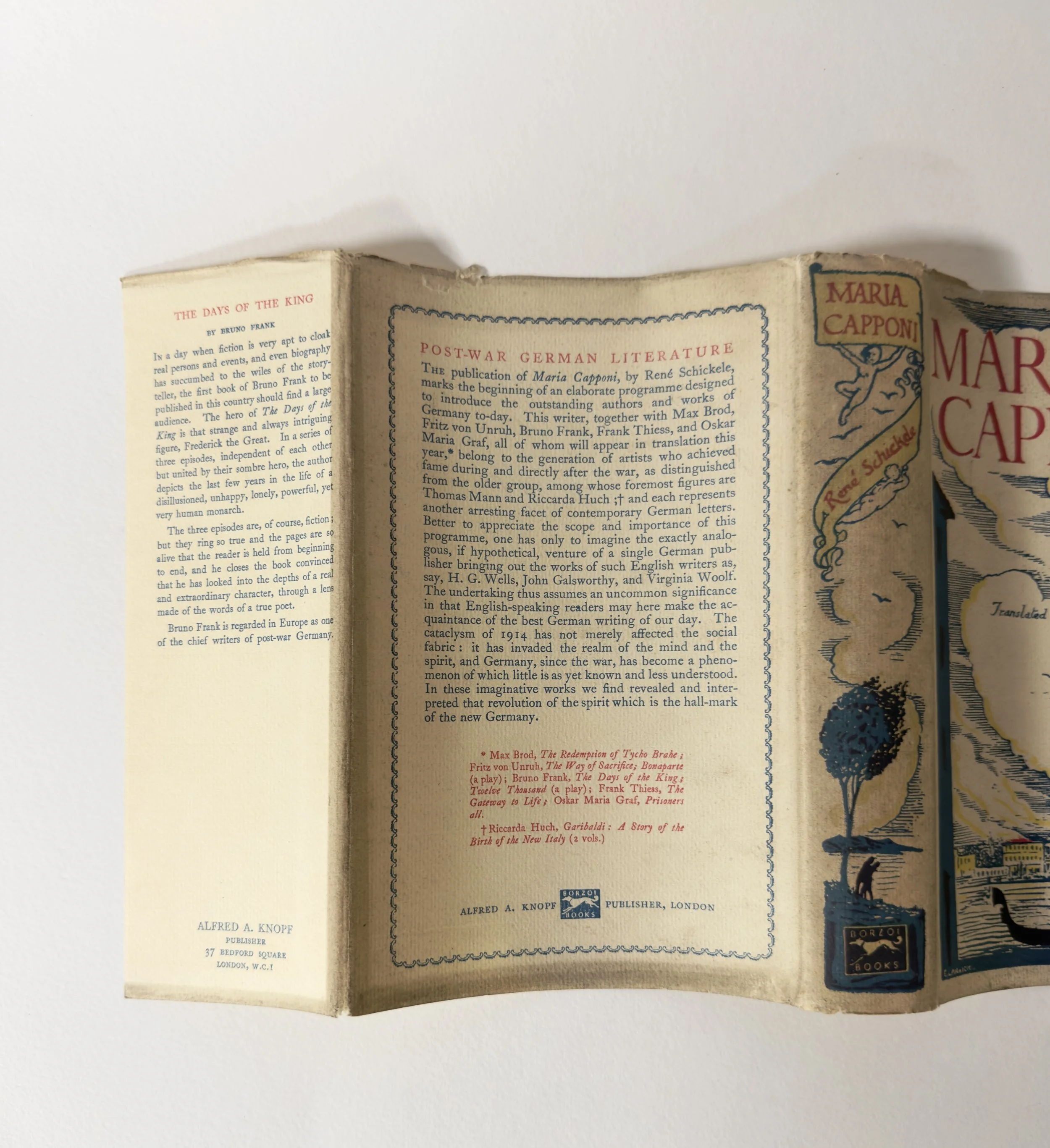 Image 5 of 5
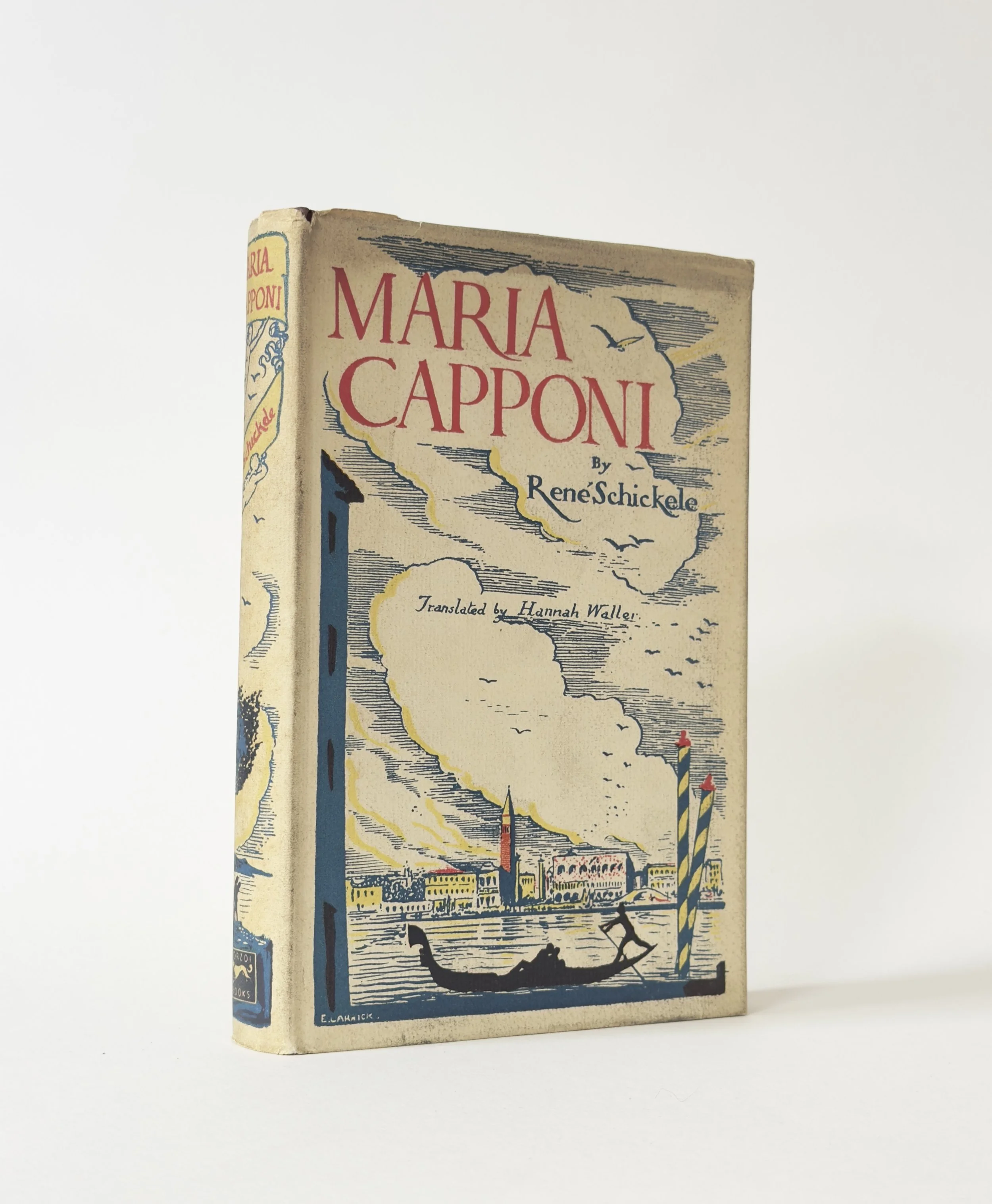
SCHICKELE, René. Maria Capponi. Translated from the German by Hannah Waller. London: Alfred A. Knopf. 1928. 8vo. First British edition printed from the American sheets. Publisher’s purple boards lettered in black to the spine and with ruling to boards, in the excellent dust jacket designed by Edward Carrick. A near fine copy, the cloth clean and bright with one or two very minor marks, the binding tight and square, the contents mostly fine, endpapers and prelims a touch patchy, but without stamps or inscriptions. The dust jacket priced two shillings and sixpence to front flap, a little crimped at extremities but a very pleasing example overall.
The author’s first book to be translated into English, and the first volume in what would become the trilogy Das Erbe am Rhein (The Inheritance on the Rhine), which remains his best known work. Born in Alsace, Shickele was German, preferred speaking French, but almost always wrote in German. His earliest work resonates with the historical essence of his locale—a political, cultural, philosophical dispute between Germany and France, and this continued throughout the trilogy and much of his other works. He worked first as a journalist and editor of ‘Die Weissen Blätter’, the expressionist anti-war magazine which published early works by Franz Kafka. Motivated by the expressionist ethos that art be political, his early novels and poetry collections vouch for pacifism and internationalism, these goals augmenting during and after the First World War. He believed the Alsace dispute and its potential resolution was a microcosm of the possible extent of war in Europe, spending the interwar period celebrating the region and its intelligent peoples amid the gradually idealist hope for peace. This particularly tells of ‘the gaiety and light-heartedness of Europe’ prewar, with episodes in Venice as per the jacket illustration. The growing threat of the Nazis against Schickele’s pacifist mantra led him to flee Germany for France in 1932, and he in time became disillusioned with expressionism, refuting his earlier belief that art is politics, due undoubtedly to the terror he could envision. Almost prophetically, he died just weeks before the Battle of France.
The dust jacket designer is Edward Carrick, son of Edward Gordon Craig and so then grandson of Ellen Terry, and like them he worked in stage design and production, among other forms. Carrick dropped his father’s surname in an attempt to dispel the level of control his father had on him, on both his artistic career and his personal relationships. Though he produced woodblock illustrations for various books, this is likely his first and indeed perhaps his only foray into this medium. Scarce.
SCHICKELE, René. Maria Capponi. Translated from the German by Hannah Waller. London: Alfred A. Knopf. 1928. 8vo. First British edition printed from the American sheets. Publisher’s purple boards lettered in black to the spine and with ruling to boards, in the excellent dust jacket designed by Edward Carrick. A near fine copy, the cloth clean and bright with one or two very minor marks, the binding tight and square, the contents mostly fine, endpapers and prelims a touch patchy, but without stamps or inscriptions. The dust jacket priced two shillings and sixpence to front flap, a little crimped at extremities but a very pleasing example overall.
The author’s first book to be translated into English, and the first volume in what would become the trilogy Das Erbe am Rhein (The Inheritance on the Rhine), which remains his best known work. Born in Alsace, Shickele was German, preferred speaking French, but almost always wrote in German. His earliest work resonates with the historical essence of his locale—a political, cultural, philosophical dispute between Germany and France, and this continued throughout the trilogy and much of his other works. He worked first as a journalist and editor of ‘Die Weissen Blätter’, the expressionist anti-war magazine which published early works by Franz Kafka. Motivated by the expressionist ethos that art be political, his early novels and poetry collections vouch for pacifism and internationalism, these goals augmenting during and after the First World War. He believed the Alsace dispute and its potential resolution was a microcosm of the possible extent of war in Europe, spending the interwar period celebrating the region and its intelligent peoples amid the gradually idealist hope for peace. This particularly tells of ‘the gaiety and light-heartedness of Europe’ prewar, with episodes in Venice as per the jacket illustration. The growing threat of the Nazis against Schickele’s pacifist mantra led him to flee Germany for France in 1932, and he in time became disillusioned with expressionism, refuting his earlier belief that art is politics, due undoubtedly to the terror he could envision. Almost prophetically, he died just weeks before the Battle of France.
The dust jacket designer is Edward Carrick, son of Edward Gordon Craig and so then grandson of Ellen Terry, and like them he worked in stage design and production, among other forms. Carrick dropped his father’s surname in an attempt to dispel the level of control his father had on him, on both his artistic career and his personal relationships. Though he produced woodblock illustrations for various books, this is likely his first and indeed perhaps his only foray into this medium. Scarce.