RAEMAEKERS, Louis. Het Toppunt der Beschaving [The Pinnacle of Civilisation]. Amsterdam: Elsevier. 1914-1917. Folios. Seven issues, complete. All first editions. Stapled iIllustrated colour wraps with twelve mono plates to each volume by the illustrator. An exciting full run of the important portfolios, each volume about very good, with the same ink ownership signature to the front covers to the first three issues, all dated 1915. Several mostly small closed tears to most edges, with some usually light and occasionally heavier foxing and toning to the covers, the contents largely fine. The stapled wraps a little frayed on occasion, though none loose. The contents largely fine throughout, with again some mild foxing in places.
A spectacular complete run of the first edition of the Dutchman’s magnum opus. Published in Der Telegraaf on August 1 1914 following the German declarations of war, the illustrations here—the first few issues with captions in Dutch only—defy and indeed transcend national borders and language barriers. From a young age, Raemaekers became aware of the growing Pan-Germanic intent of Kaiser Wilhelm II, and only shortly in his cartoonist career did he portray this fear of imperial expansionism. It was entirely legitimatised by August 1914, and seven excellent series followed portraying war in its brutality, its absurdity, its horror, its poignancy. Purportedly, Kaiser Wilhelm II was so enraged by the caricatures—which often targeted him directly—that he put a price of 12,000 marks for Raemaekers’ head: “Traps have been laid for his capture from time to time. Submarines have been dispatched with orders to take him alive. He knows what awaits him if such plans should meet with success -- a lingering tortured death; consequently he travels armed and has promised his wife to blow his brains out the moment he is captured”. The cartoons brought Raemaekers international recognition, and when in exile in London, his cartoons were used in almost every form of traditional propaganda the Allies produced, to devastating effect. The Christian Science Monitor praised the work, writing it “revealed something more than the humorous or ironical power of the caricaturist; they showed that behind the mere pictorial comment on the war was a man who thought and wrought with a deep and uncompromising conviction as to right and wrong”. This conviction was an essential one; Raemaekers was awarded the French Legion of Honour, and more importantly for the wider scope of the war, proved an influence on the United States’ decision to enter the war. His New York Times obituary read “there were a dozen or so people (emperors, kings, statesmen, and commanders-in-chief) who obviously, and notoriously, shaped policies and guided events. Outside that circle of the great, Louis Raemaekers stands conspicuous as the one man who, without any assistance of title or office, indubitably swayed the destinies of peoples...” Though widely reprinted, the original issues are scarce in the first edition, and so it is nice to see the set together here.
RAEMAEKERS, Louis. Het Toppunt der Beschaving [The Pinnacle of Civilisation]. Amsterdam: Elsevier. 1914-1917. Folios. Seven issues, complete. All first editions. Stapled iIllustrated colour wraps with twelve mono plates to each volume by the illustrator. An exciting full run of the important portfolios, each volume about very good, with the same ink ownership signature to the front covers to the first three issues, all dated 1915. Several mostly small closed tears to most edges, with some usually light and occasionally heavier foxing and toning to the covers, the contents largely fine. The stapled wraps a little frayed on occasion, though none loose. The contents largely fine throughout, with again some mild foxing in places.
A spectacular complete run of the first edition of the Dutchman’s magnum opus. Published in Der Telegraaf on August 1 1914 following the German declarations of war, the illustrations here—the first few issues with captions in Dutch only—defy and indeed transcend national borders and language barriers. From a young age, Raemaekers became aware of the growing Pan-Germanic intent of Kaiser Wilhelm II, and only shortly in his cartoonist career did he portray this fear of imperial expansionism. It was entirely legitimatised by August 1914, and seven excellent series followed portraying war in its brutality, its absurdity, its horror, its poignancy. Purportedly, Kaiser Wilhelm II was so enraged by the caricatures—which often targeted him directly—that he put a price of 12,000 marks for Raemaekers’ head: “Traps have been laid for his capture from time to time. Submarines have been dispatched with orders to take him alive. He knows what awaits him if such plans should meet with success -- a lingering tortured death; consequently he travels armed and has promised his wife to blow his brains out the moment he is captured”. The cartoons brought Raemaekers international recognition, and when in exile in London, his cartoons were used in almost every form of traditional propaganda the Allies produced, to devastating effect. The Christian Science Monitor praised the work, writing it “revealed something more than the humorous or ironical power of the caricaturist; they showed that behind the mere pictorial comment on the war was a man who thought and wrought with a deep and uncompromising conviction as to right and wrong”. This conviction was an essential one; Raemaekers was awarded the French Legion of Honour, and more importantly for the wider scope of the war, proved an influence on the United States’ decision to enter the war. His New York Times obituary read “there were a dozen or so people (emperors, kings, statesmen, and commanders-in-chief) who obviously, and notoriously, shaped policies and guided events. Outside that circle of the great, Louis Raemaekers stands conspicuous as the one man who, without any assistance of title or office, indubitably swayed the destinies of peoples...” Though widely reprinted, the original issues are scarce in the first edition, and so it is nice to see the set together here.

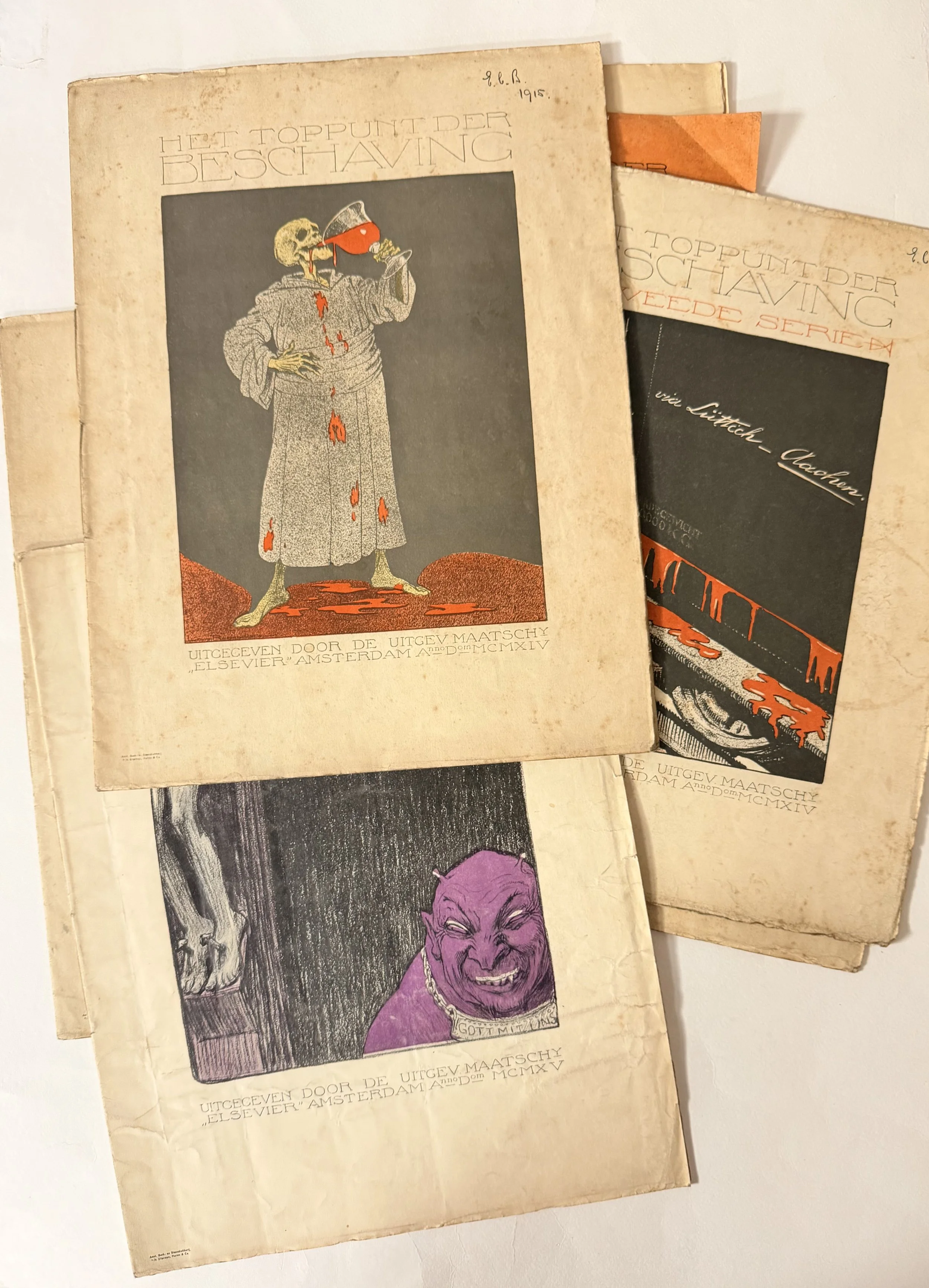 Image 1 of 8
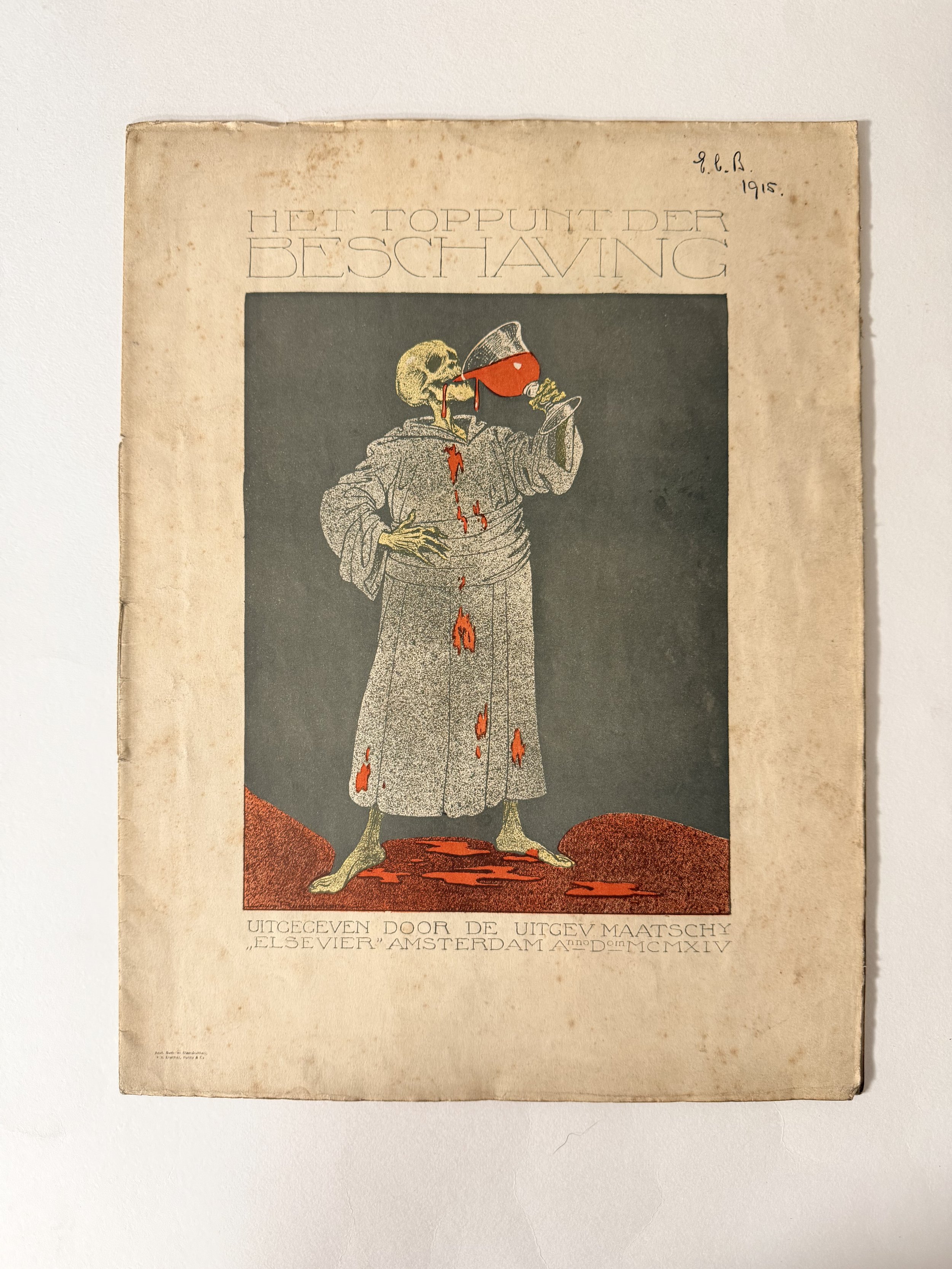 Image 2 of 8
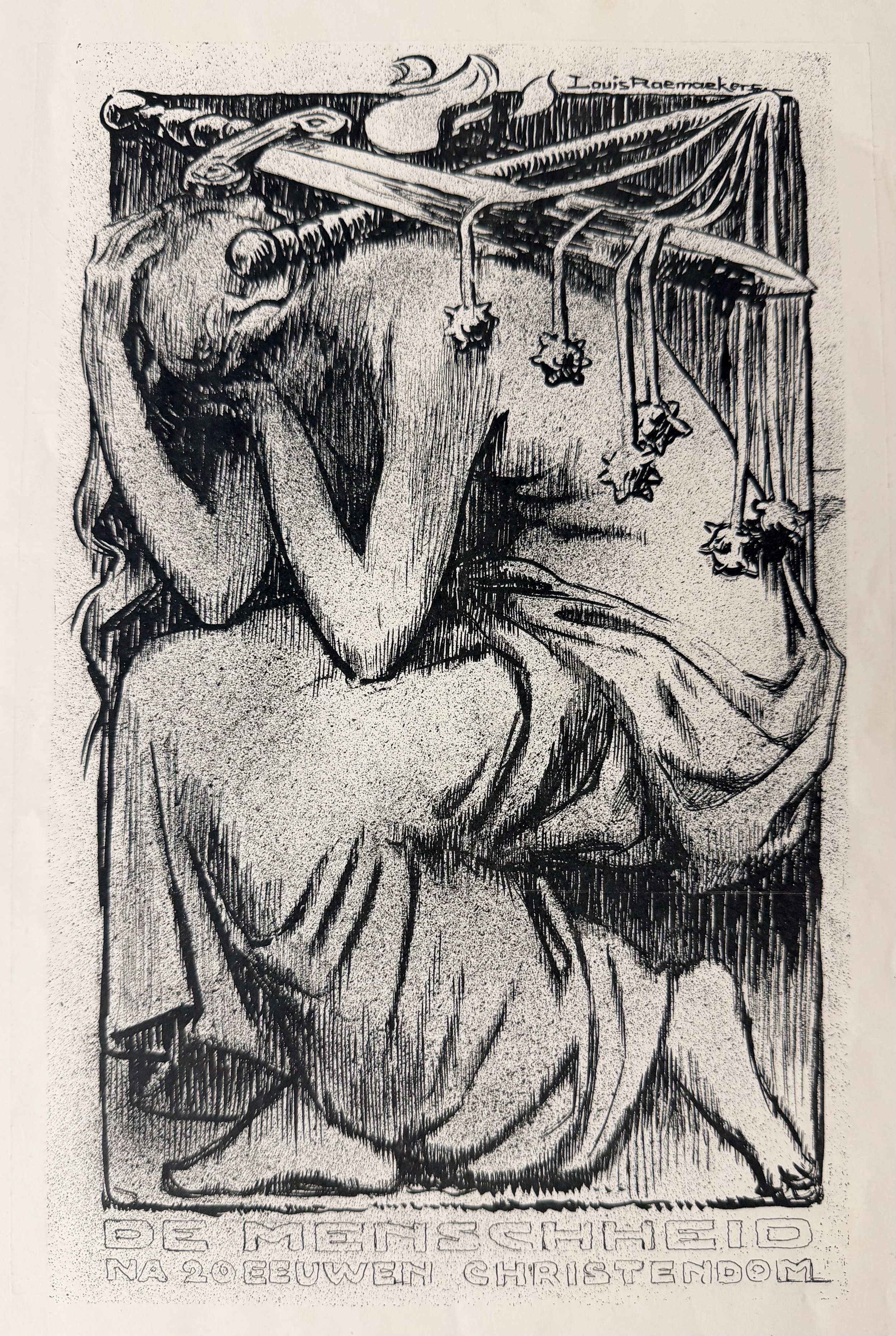 Image 3 of 8
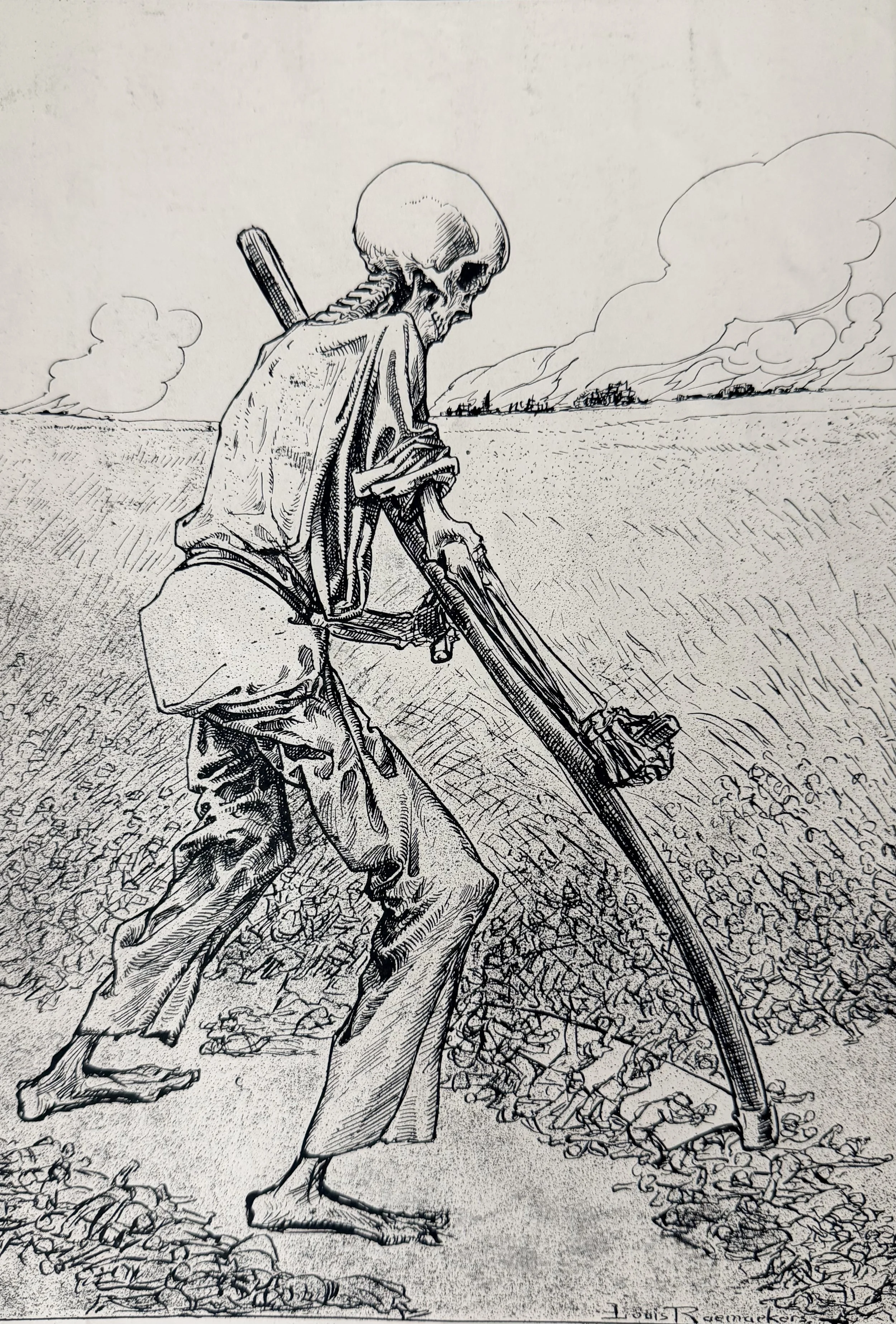 Image 4 of 8
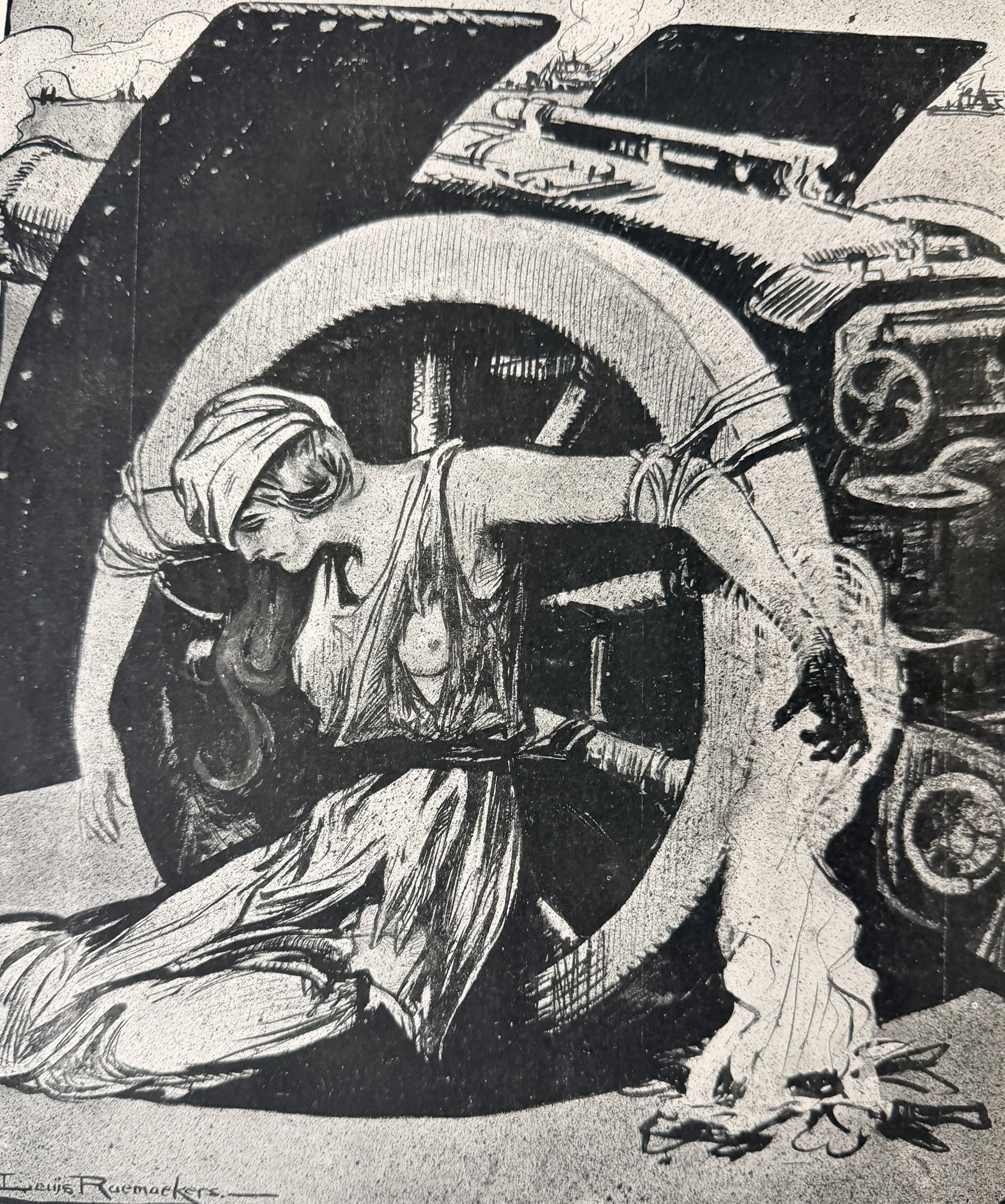 Image 5 of 8
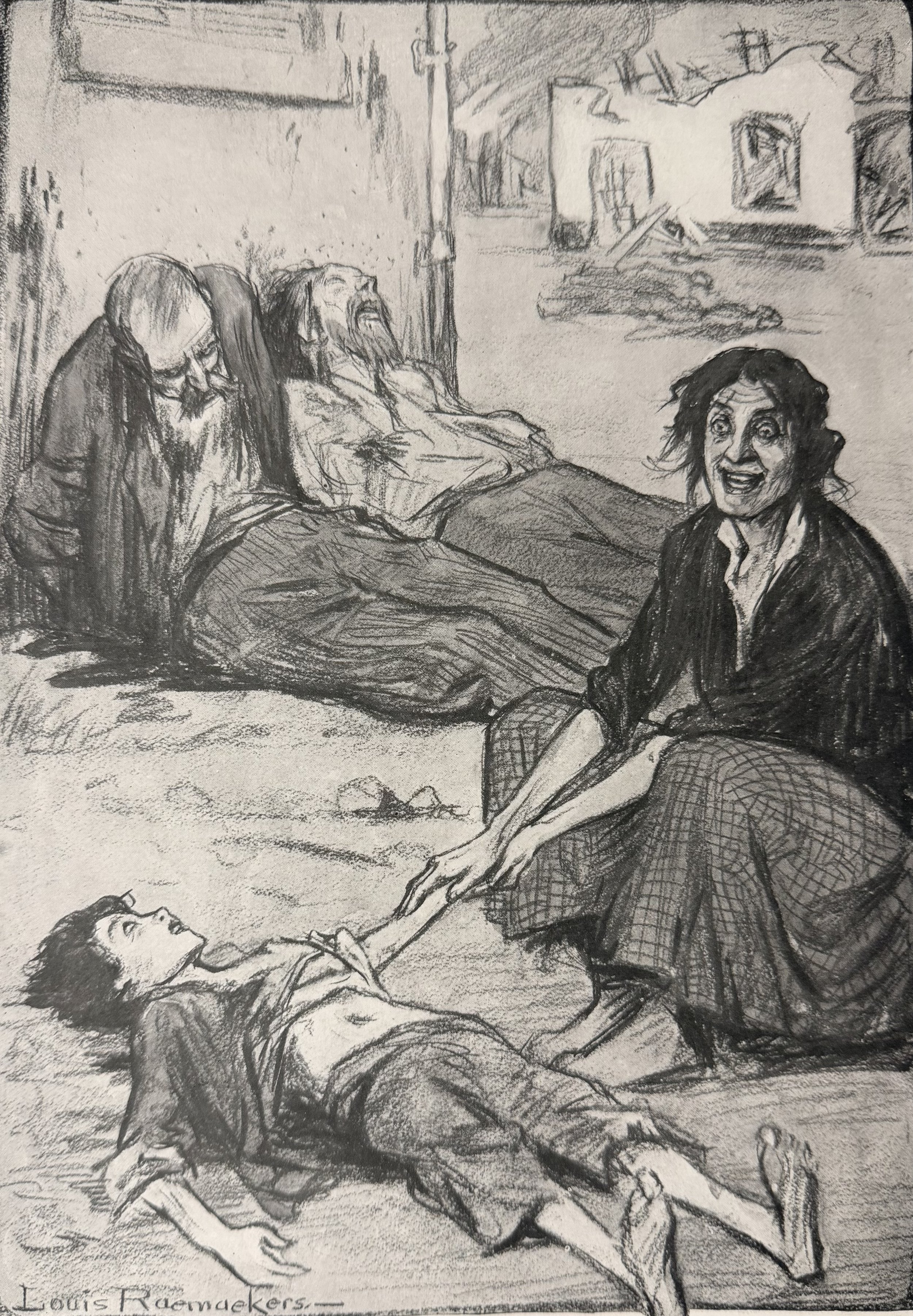 Image 6 of 8
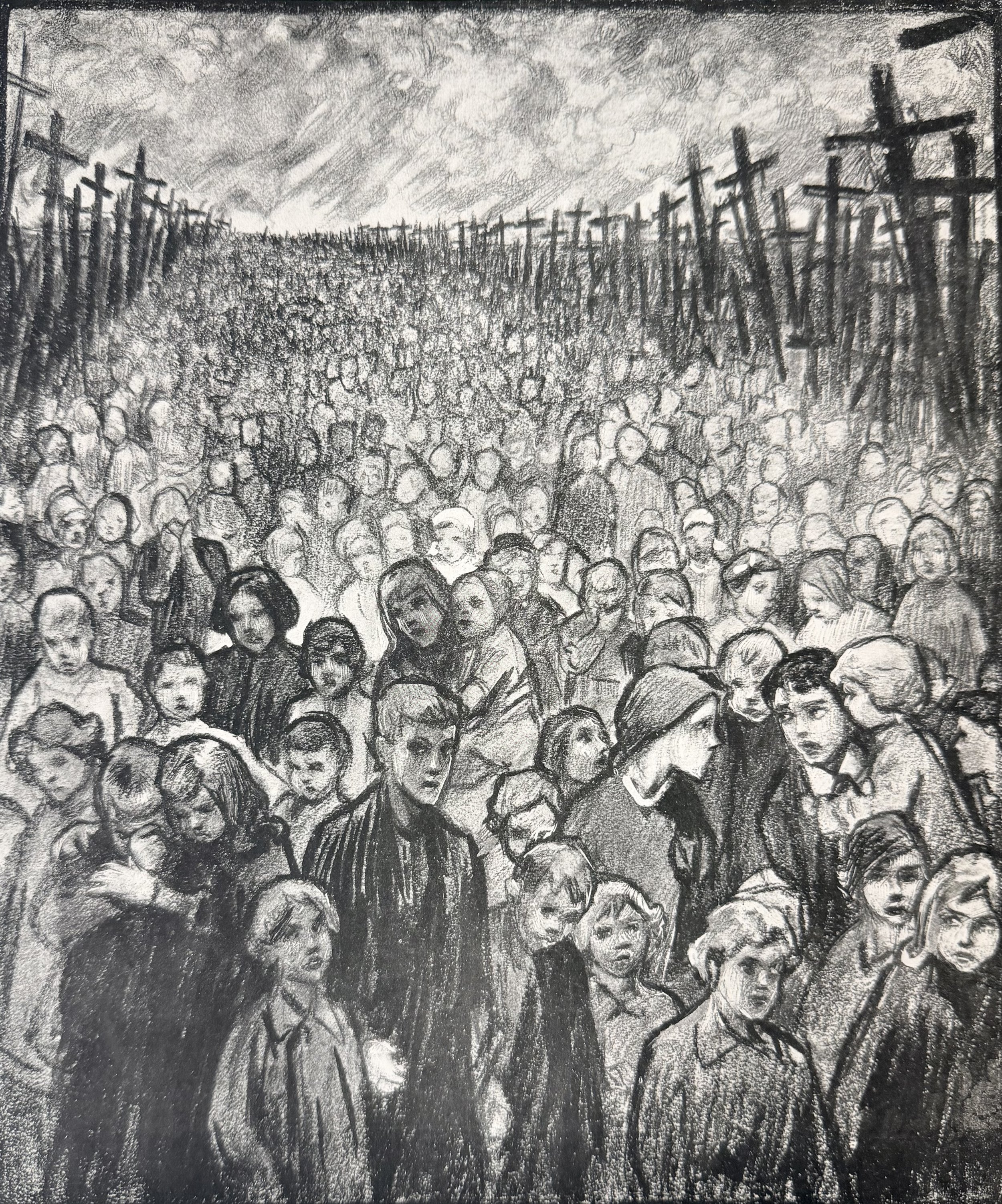 Image 7 of 8
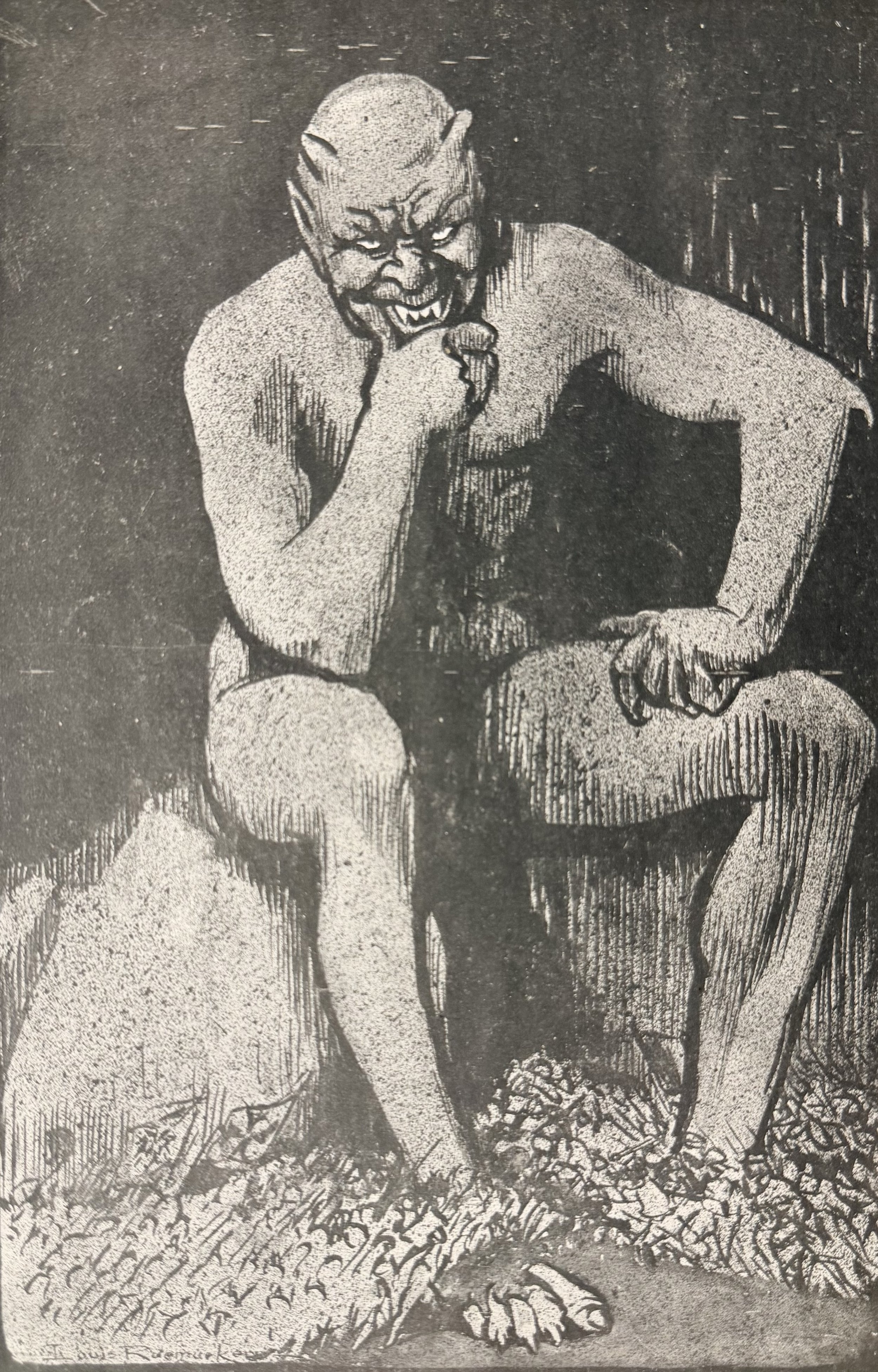 Image 8 of 8