
 Image 1 of 5
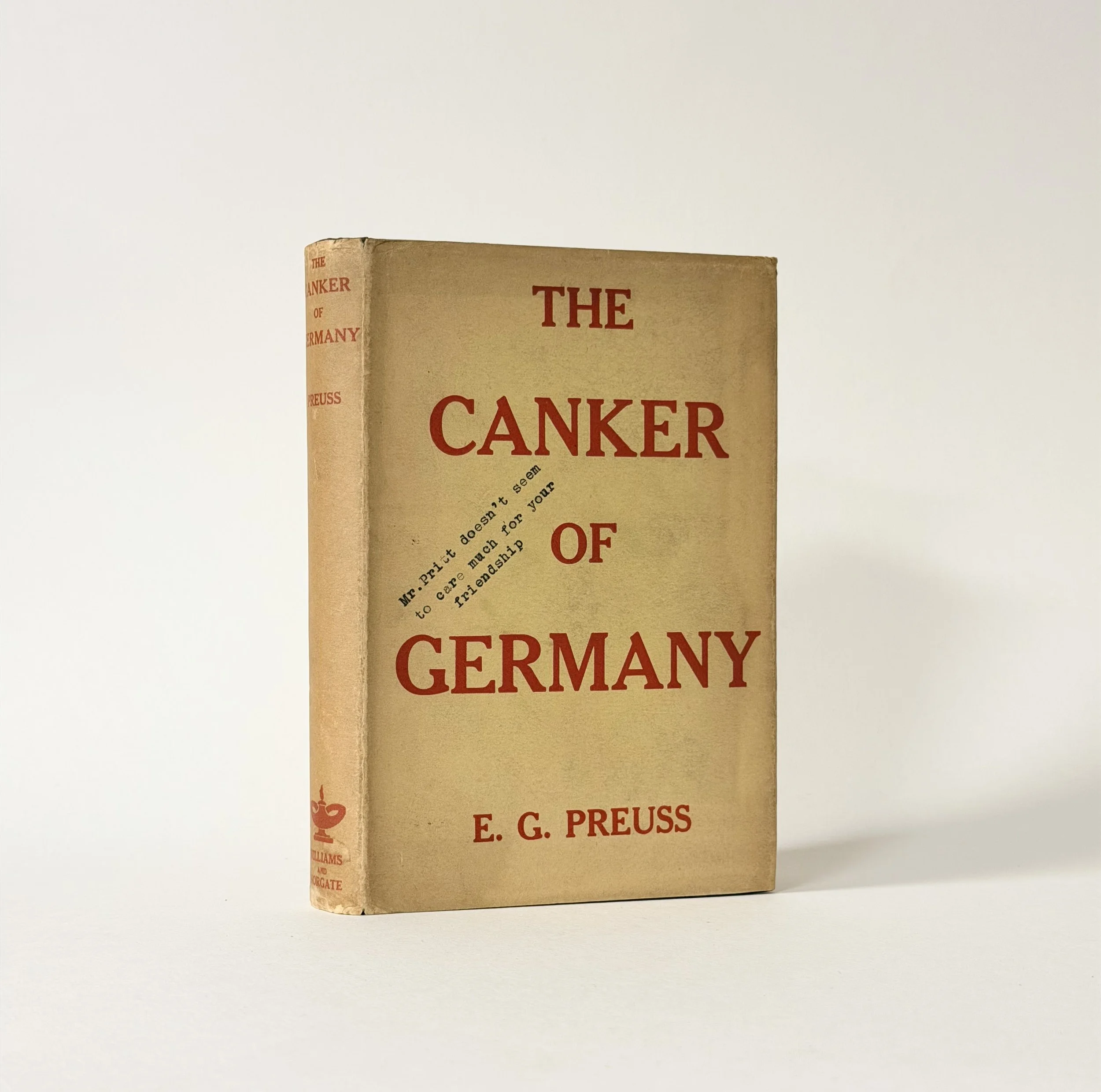 Image 2 of 5
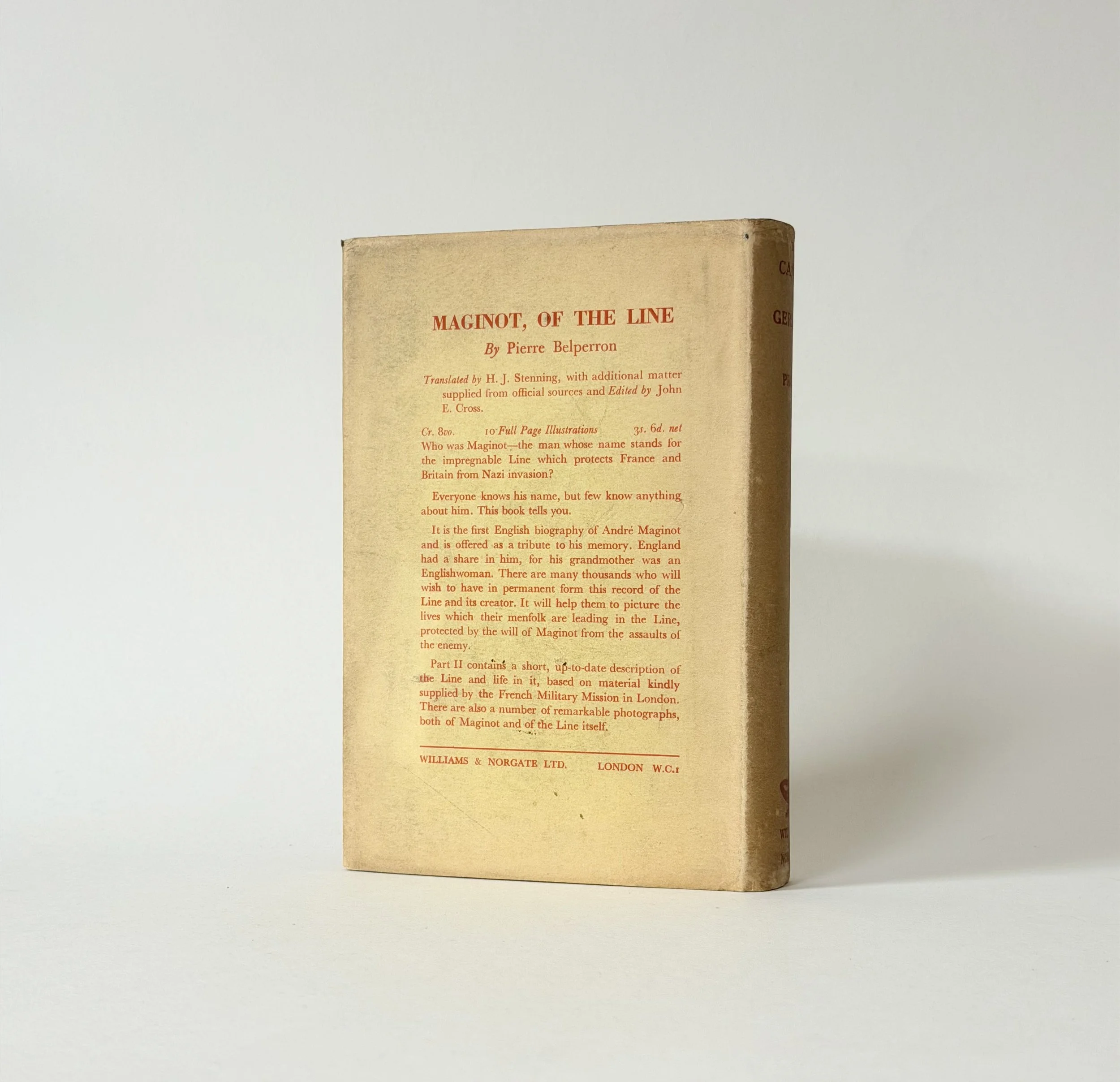 Image 3 of 5
 Image 4 of 5
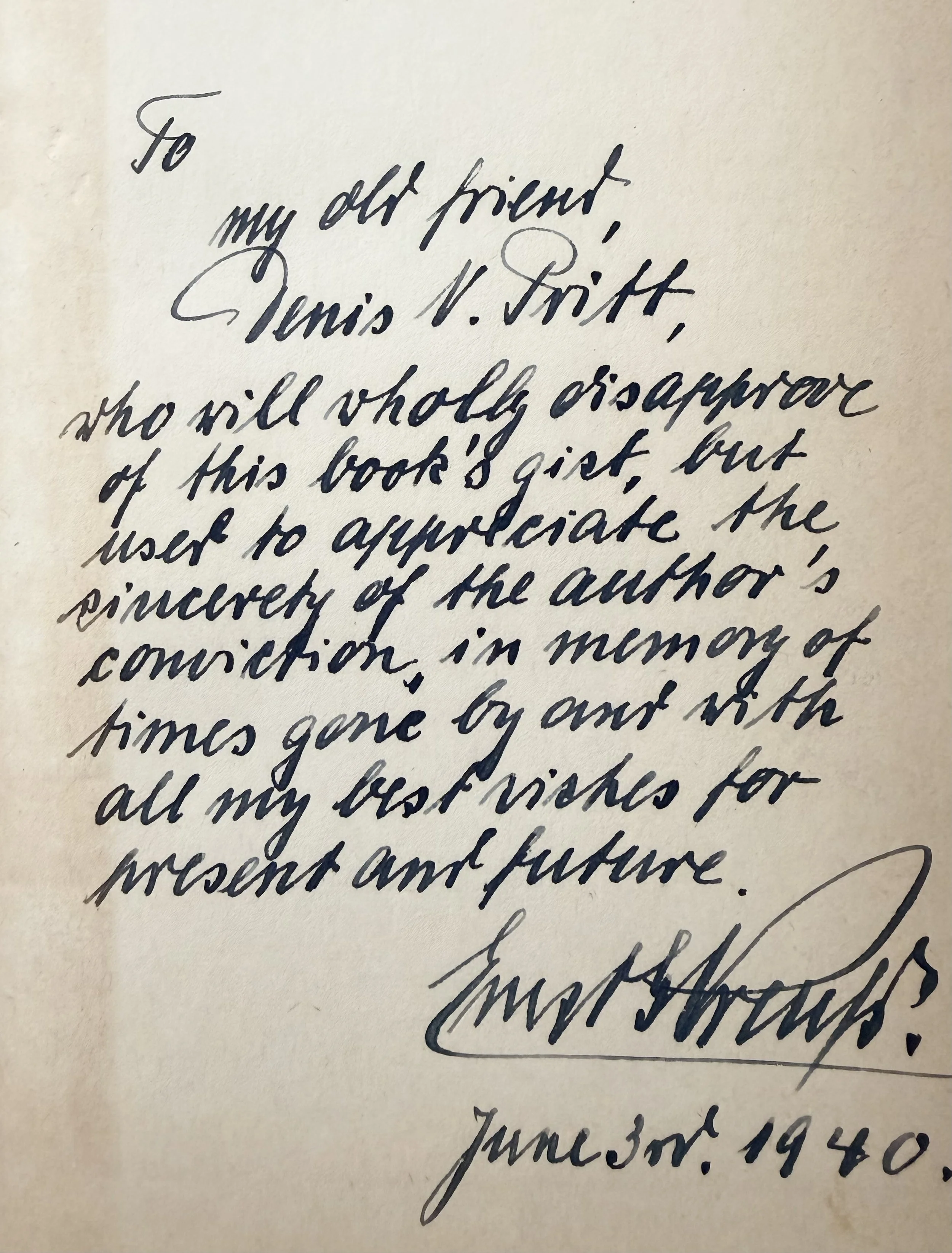 Image 5 of 5
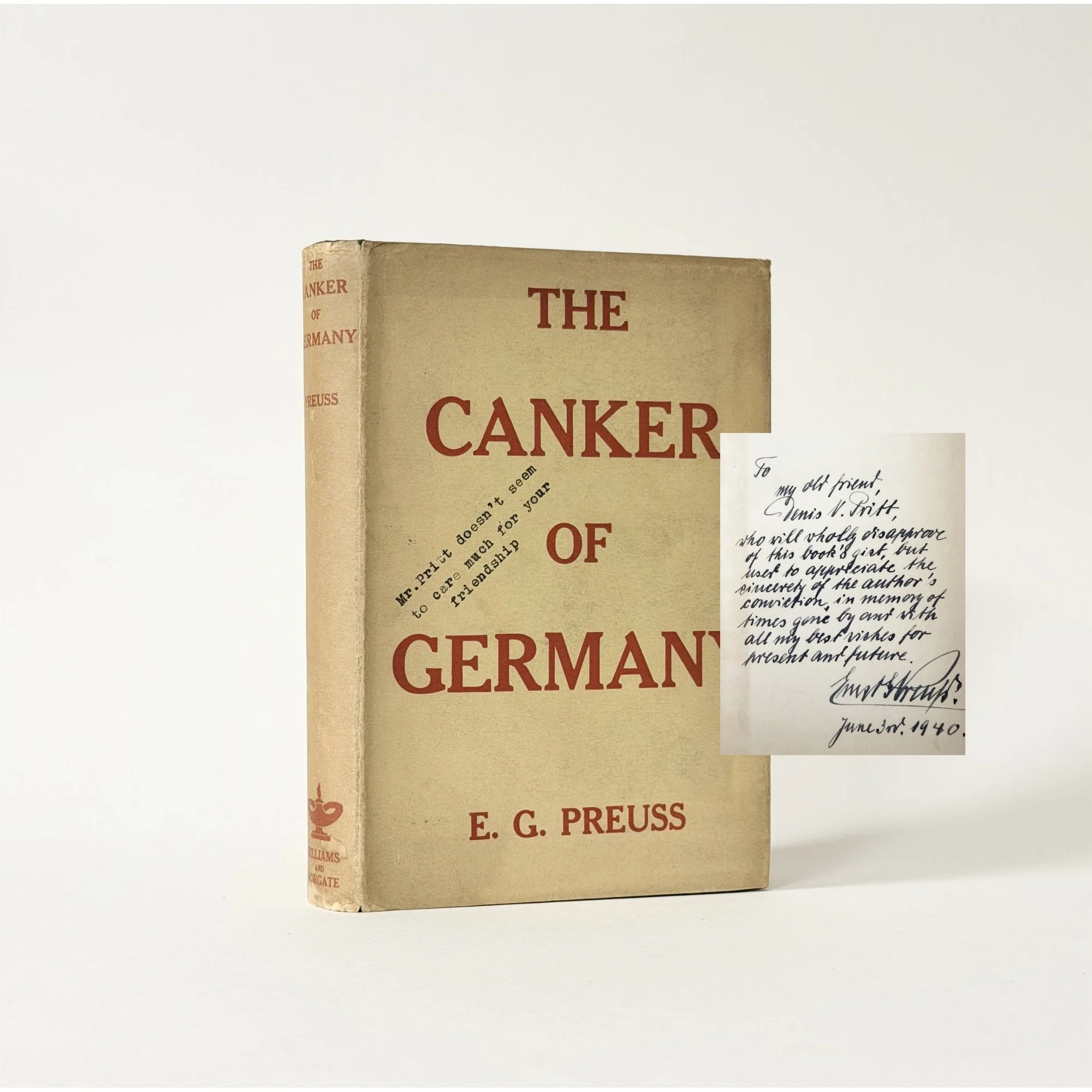
PREUSS, Ernst Gustav. The Canker of Germany. Trans. from the German by Norbert S. Maiman. London: Williams and Norgate. 1940. 8vo. First English edition. Publisher’s black cloth lettered in red to the spine, in the dust jacket. This copy with a lengthy inscription by the author to Denis V. Pritt at the front endpaper, and an intriguing typewritten note to the jacket front panel in response. A very good example, the cloth clean and just a trifle bumped at corners and tips. The contents clean throughout, some light offsetting to endpapers only. The dust jacket unclipped (7s 6d net), gently rubbed at extremities, some light marks, but a smart copy.
An extremely outspoken attack published at the commencement of the Second World War and aimed at its primary antagonist, but deploring not the Third Reich, ‘Herr Hitler’s gang of murderers’, per se, but more sensationally, every German person who lives under the regime, ‘the partially insane’. Preuss’ argument lies somewhat in indifference; ‘Nazism in all its ghastliness is only a symptom’ of this canker—’a corrupting influence, a rotten tendency’—which, he argues, begins well before the Third Reich, into the very beginning of German political consciousness probably some centuries before. The argument, though lined with haphazard generalisations—Germans have no understanding of political freedom, for instance—, in its most basic premise—that a population of over sixty-five million people merely allowed the legalisation of Jewish persecution, of outright murder of its civilians &c. &c. without a nationwide revolt or public condemnation—is an interesting and indeed convincing one. Of course, Preuss seems to overlook the effectiveness of Goebbels’ propaganda machine, or the pure survival instincts written within every living thing at work under such circumstances. To condemn a nation for its lack of direct action against such tyranny seems unjustly extreme by modern sentiment, his expression of concern on German civilians once the Third Reich is defeated quite bizarre. Yet it gives the reader a window into a viewpoint undoubtedly shared by others. Preuss was a successful Jewish German who earned several important roles in local and national politics, heading up the manufacturing company, AEG, which supported the Nazis in their interwar rearmament plans. He fled Germany in 1937.
The book is inscribed by the author to Denis Pritt, the Fabian socialist, Labour Party MP and Soviet sympathiser, a probable Communist but an ‘able and courageous’ politician according to George Orwell, whose infamous List Pritt appeared on. The inscription is warm; ‘To my old friend, Denis N. Pritt, who will wholly disapprove of this book’s gist, but used to appreciate the sincerity of the author’s conviction, in memory of times gone by and with all my best wishes for present and future’, dated June 3 1940, the same day 254 Parisian civilians were killed from Luftwaffe bombings. It appears Pritt did not in fact appreciate the sincerity: typewritten to the jacket front panel Pritt [we presume] writes: ‘Mr. Pritt doesn’t seem to care much for your friendship’. An important, certainly contentious, perhaps even persuasive volume with unique attributes. Scarce.
PREUSS, Ernst Gustav. The Canker of Germany. Trans. from the German by Norbert S. Maiman. London: Williams and Norgate. 1940. 8vo. First English edition. Publisher’s black cloth lettered in red to the spine, in the dust jacket. This copy with a lengthy inscription by the author to Denis V. Pritt at the front endpaper, and an intriguing typewritten note to the jacket front panel in response. A very good example, the cloth clean and just a trifle bumped at corners and tips. The contents clean throughout, some light offsetting to endpapers only. The dust jacket unclipped (7s 6d net), gently rubbed at extremities, some light marks, but a smart copy.
An extremely outspoken attack published at the commencement of the Second World War and aimed at its primary antagonist, but deploring not the Third Reich, ‘Herr Hitler’s gang of murderers’, per se, but more sensationally, every German person who lives under the regime, ‘the partially insane’. Preuss’ argument lies somewhat in indifference; ‘Nazism in all its ghastliness is only a symptom’ of this canker—’a corrupting influence, a rotten tendency’—which, he argues, begins well before the Third Reich, into the very beginning of German political consciousness probably some centuries before. The argument, though lined with haphazard generalisations—Germans have no understanding of political freedom, for instance—, in its most basic premise—that a population of over sixty-five million people merely allowed the legalisation of Jewish persecution, of outright murder of its civilians &c. &c. without a nationwide revolt or public condemnation—is an interesting and indeed convincing one. Of course, Preuss seems to overlook the effectiveness of Goebbels’ propaganda machine, or the pure survival instincts written within every living thing at work under such circumstances. To condemn a nation for its lack of direct action against such tyranny seems unjustly extreme by modern sentiment, his expression of concern on German civilians once the Third Reich is defeated quite bizarre. Yet it gives the reader a window into a viewpoint undoubtedly shared by others. Preuss was a successful Jewish German who earned several important roles in local and national politics, heading up the manufacturing company, AEG, which supported the Nazis in their interwar rearmament plans. He fled Germany in 1937.
The book is inscribed by the author to Denis Pritt, the Fabian socialist, Labour Party MP and Soviet sympathiser, a probable Communist but an ‘able and courageous’ politician according to George Orwell, whose infamous List Pritt appeared on. The inscription is warm; ‘To my old friend, Denis N. Pritt, who will wholly disapprove of this book’s gist, but used to appreciate the sincerity of the author’s conviction, in memory of times gone by and with all my best wishes for present and future’, dated June 3 1940, the same day 254 Parisian civilians were killed from Luftwaffe bombings. It appears Pritt did not in fact appreciate the sincerity: typewritten to the jacket front panel Pritt [we presume] writes: ‘Mr. Pritt doesn’t seem to care much for your friendship’. An important, certainly contentious, perhaps even persuasive volume with unique attributes. Scarce.