
 Image 1 of 3
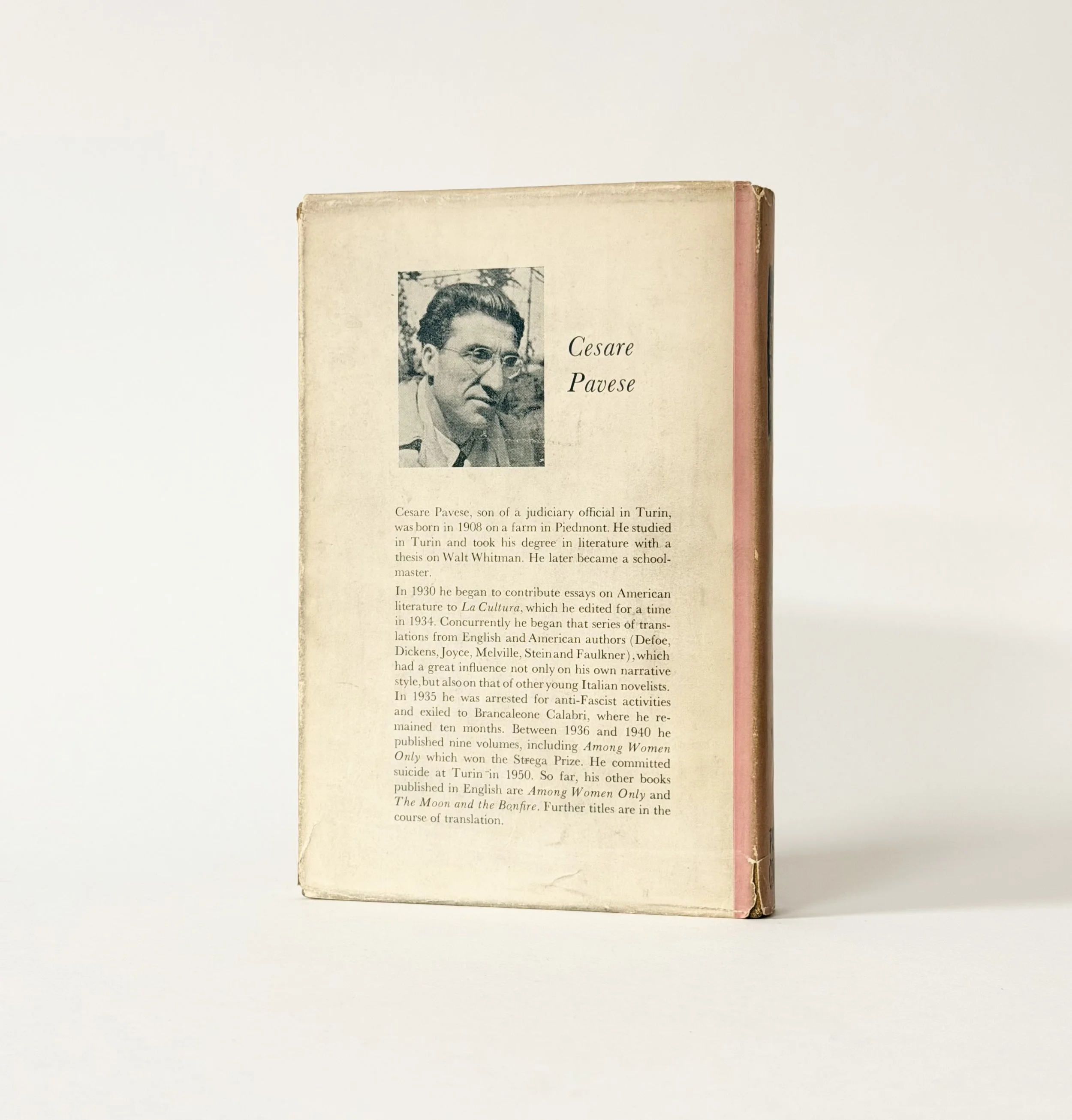 Image 2 of 3
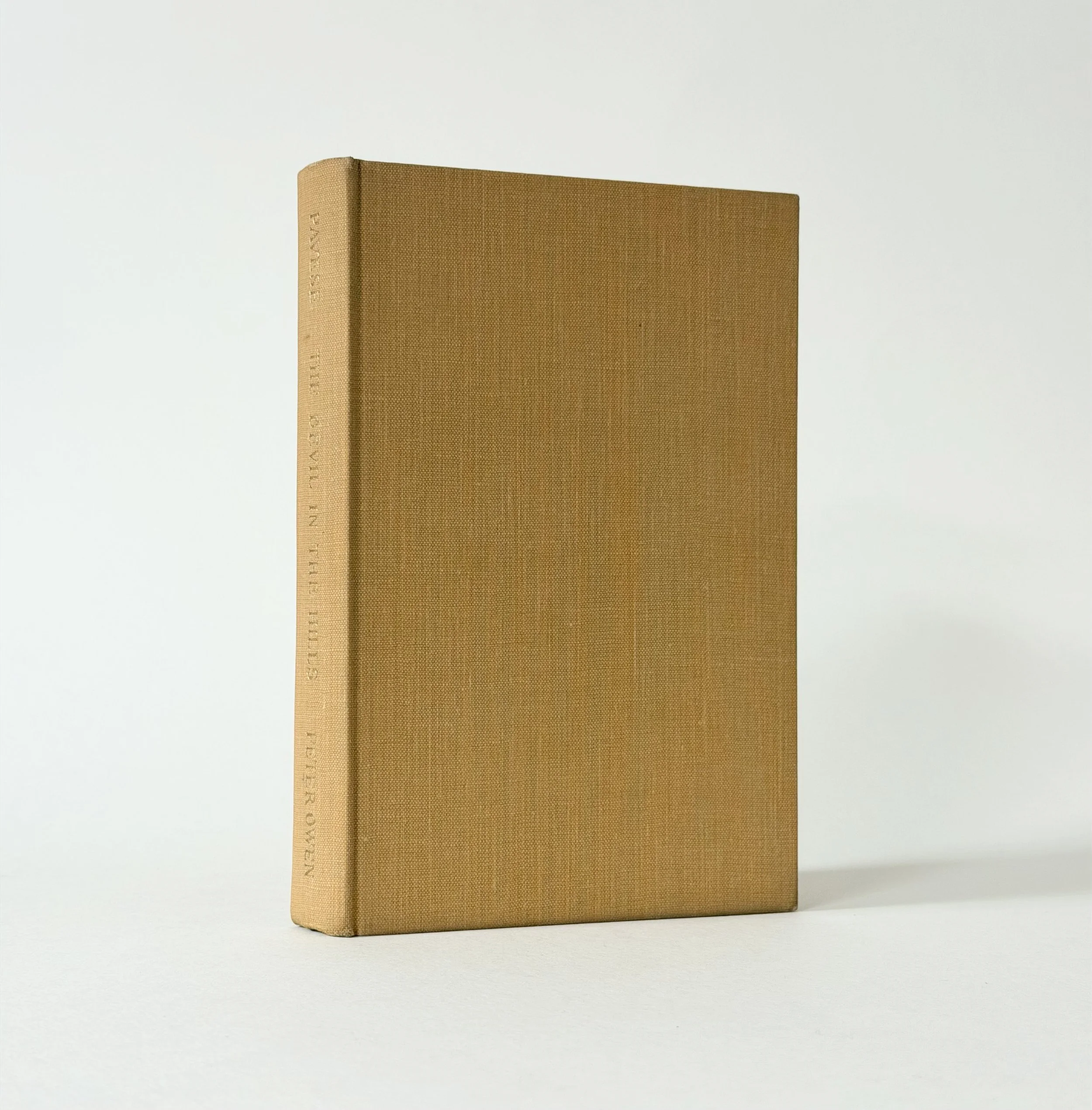 Image 3 of 3
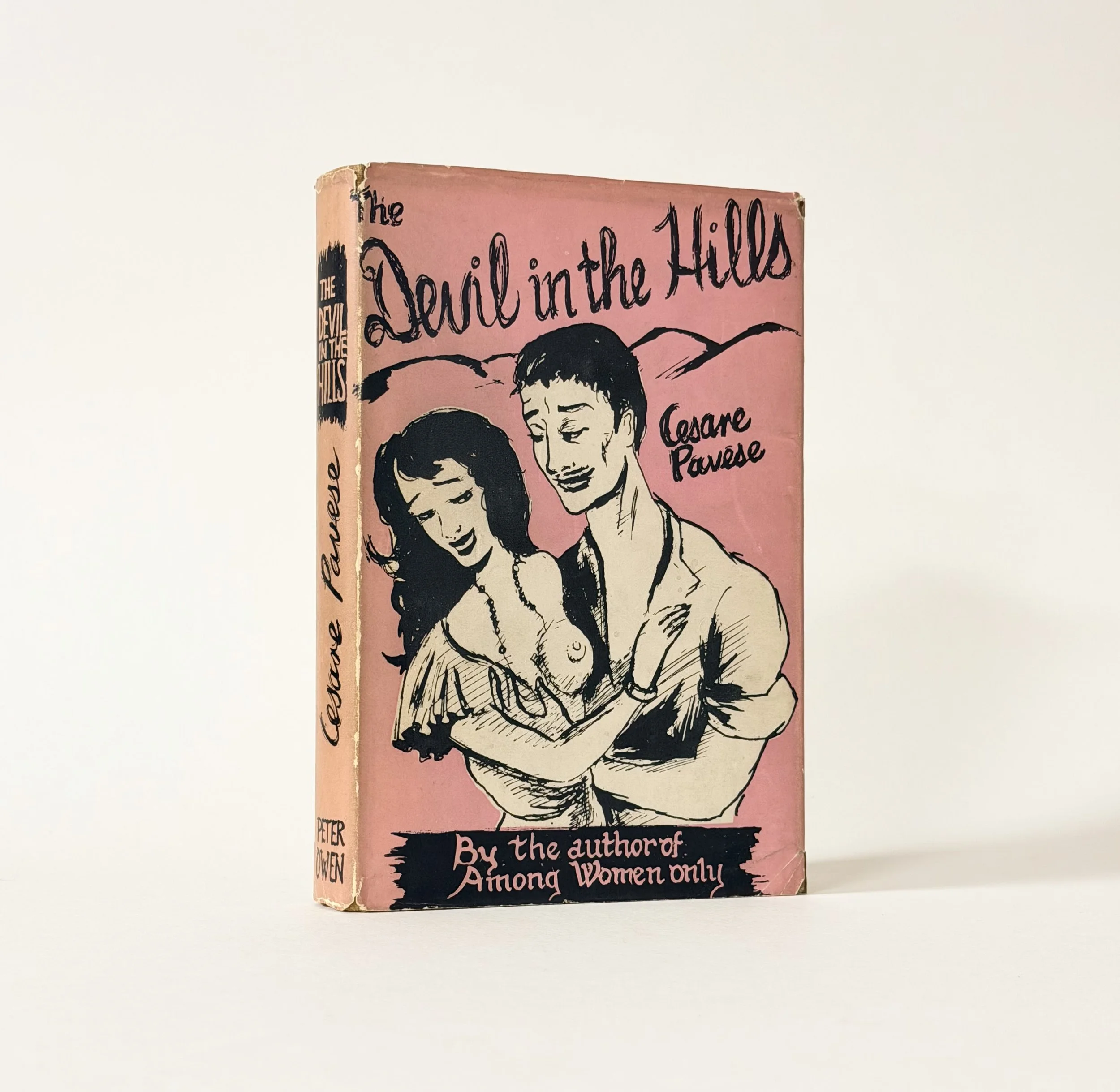
PAVESE, Cesare. The Devil in the Hills. Trans. from the Italian by D. D. Paige. London: Peter Owen. 1954. 8vo. First British edition. Publisher’s pale orange cloth lettered in gilt to the spine, in the wonderfully evocative dust jacket designed by Wendy des Moulins. A very good or better copy. The cloth very clean and bright, the binding tight and square. The contents clean and fine throughout barring a few mild marks only. The dust jacket unclipped (11s 6d net) and complete, with very short nicks and rubbing around spine tips and corners, the rear panel slightly marked. A handsome copy.
First published in Italy before the Second World War, Pavese’s close-to-home novel follows three students from the city ascend the hills for a month of peace. Here they meet Poli, a wealthy master of decadence who takes drugs and eschews the estranged relationship with his wife. The students partake in the self-indulgence, professing their apparent belief in nothing. Its characters and the philosophies which underpin them are typical of the author and scratches the itchiness Peter Owen seemed devilishly possessed with. Wendy des Moulins, the jacket illustrator, worked closely with Peter Owen and Vision Press for several volumes—a scantily-clad woman and her rejoicing lover fondling away a much-used motif. I can find little on the artist.