
 Image 1 of 4
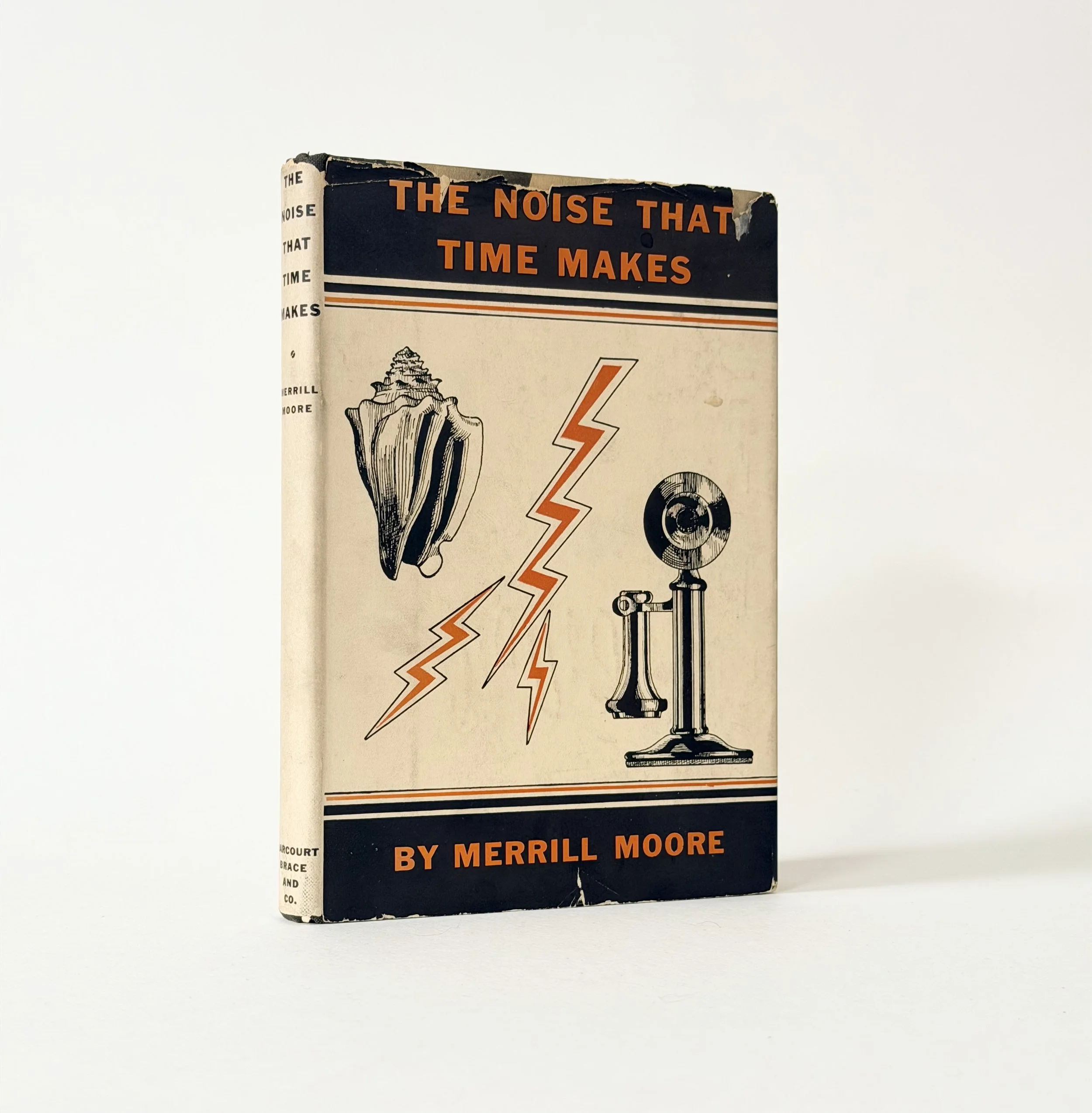 Image 2 of 4
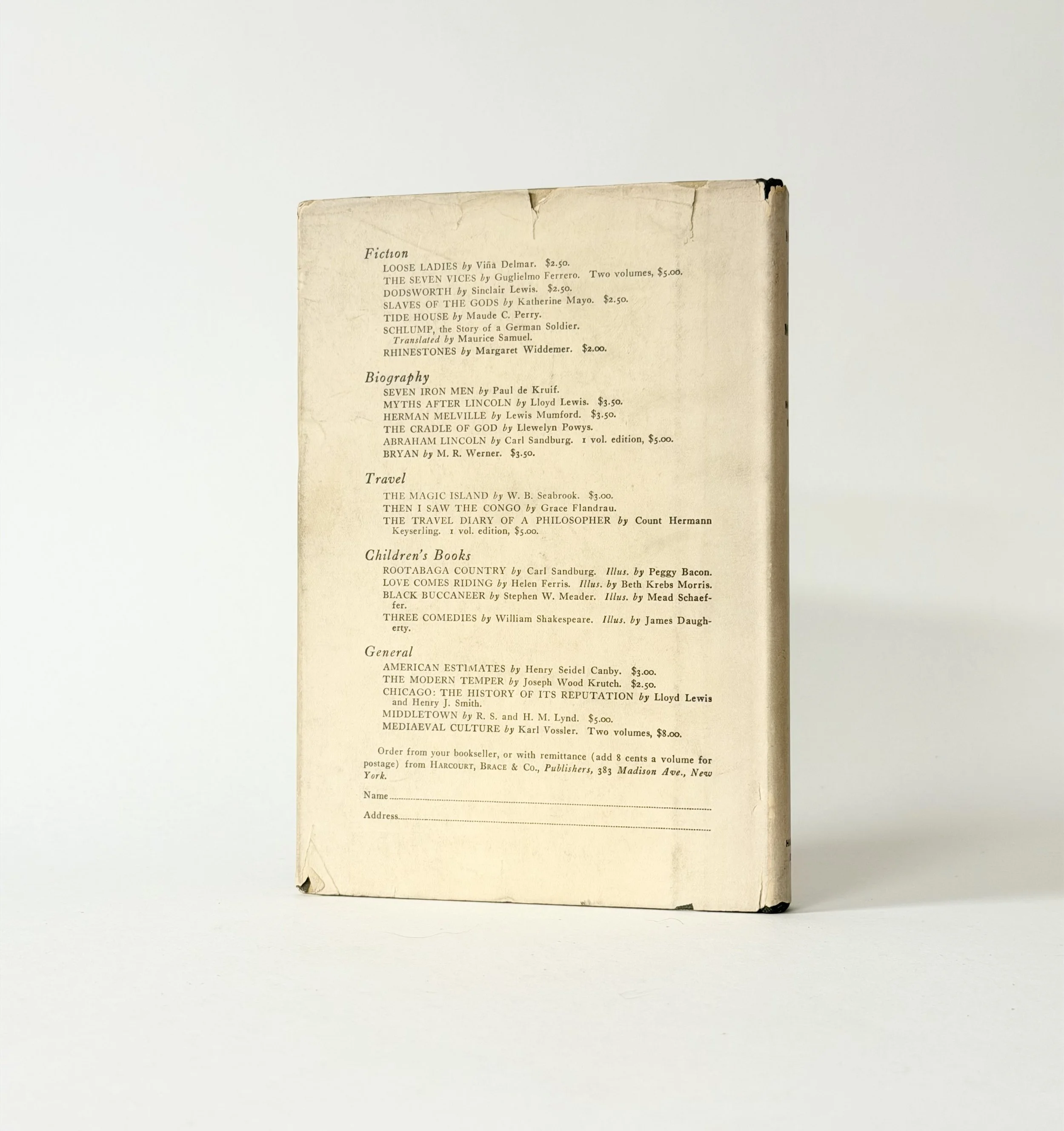 Image 3 of 4
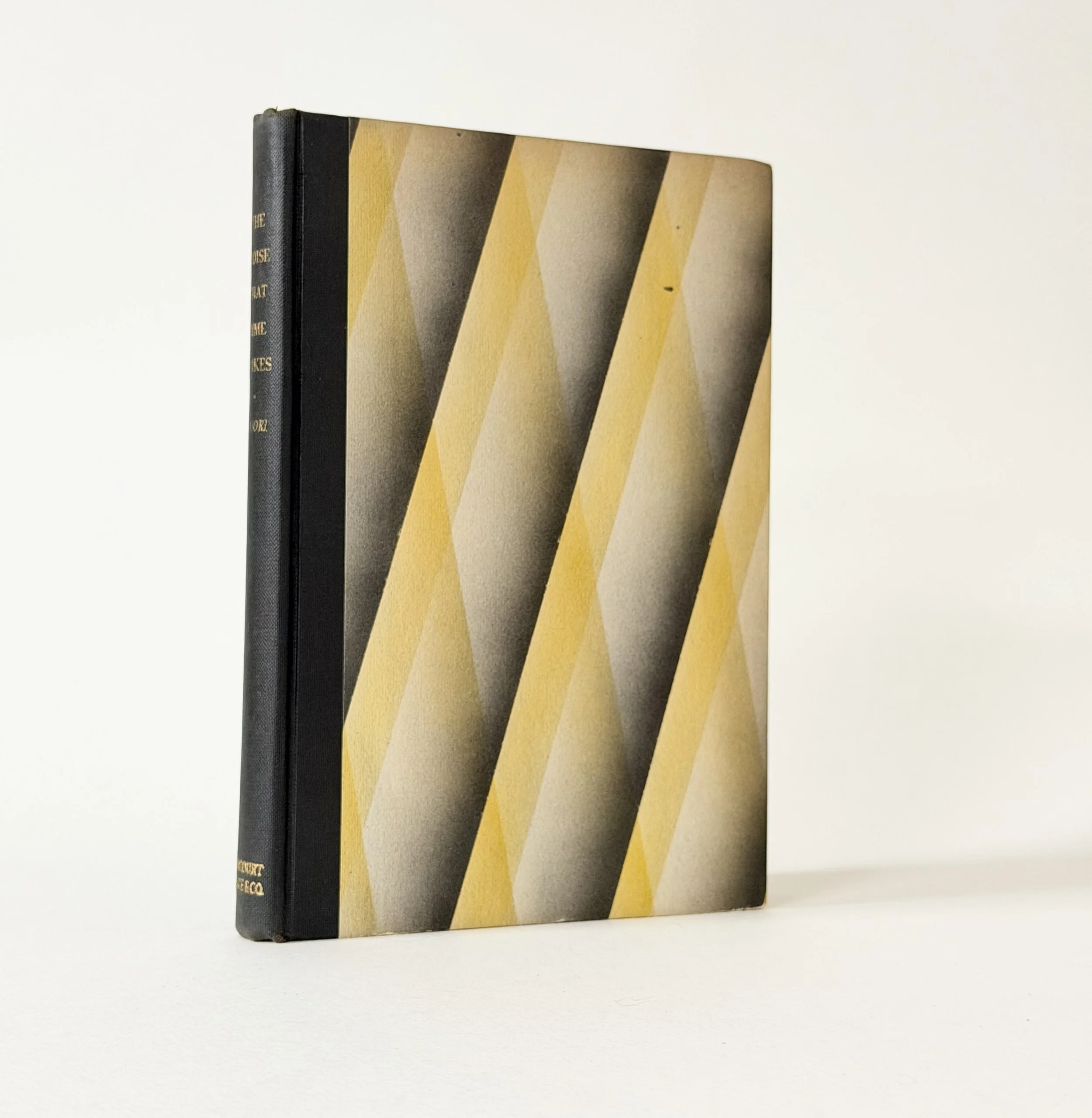 Image 4 of 4
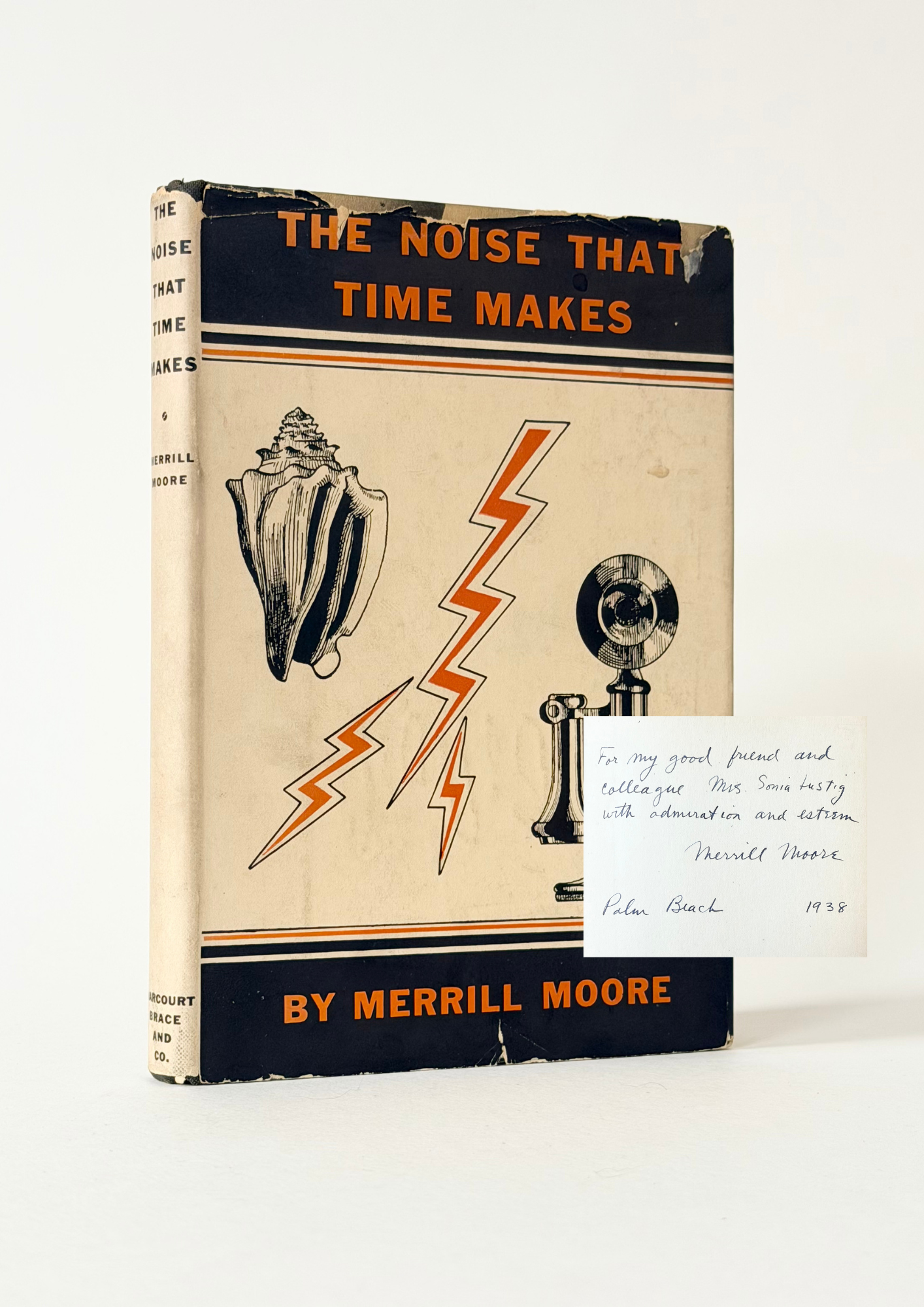
MOORE, Merrill. The Noise that Time Makes. With a foreword by John Crowe Ransom. New York: Harcourt, Brace and Company. 1929. 8vo. First edition. Publisher’s quarter black cloth over striking deco patterned-covered boards lettered in gilt to the spine, in the rare dust jacket designed by Gaston Werm, a pseudonym of Charles Bissell, who also provides the engraved frontispiece. This copy signed and inscribed by the author to fellow author, Sonia Lustig to front endpaper. A very good copy. The boards clean and bright, the lettering slightly rubbed, the corners gently bumped. The binding tight and square, the contents clean and fine throughout, with small bookshop label to rear endpaper. The fragile dust jacket price-clipped with several nicks, chips and closed tears to upper edges, one or two to lower edge.
One might be forgiven for presuming this volume to be some soporific history of early radio systems, but in reality it represents just a snippet of work by the mightily industrious Tennessee poet, Merrill Moore, who belonged to the Fugitives, a group of poets from the Vanderbilt University of Nashville. The group published a literary magazine in the early 1920s, and Robert Penn Warren was perhaps its major figure. Moore, though, was unique in his own right. Unusually, the volume here comprises only sonnets, his favourite form. Some put his output at 50,000 sonnets, though most were destroyed by Moore on the go—’because it has always proved easier simply to write a new one’. Moore was also a noted psychiatrist and wrote then groundbreaking papers on alcoholism.