
 Image 1 of 3
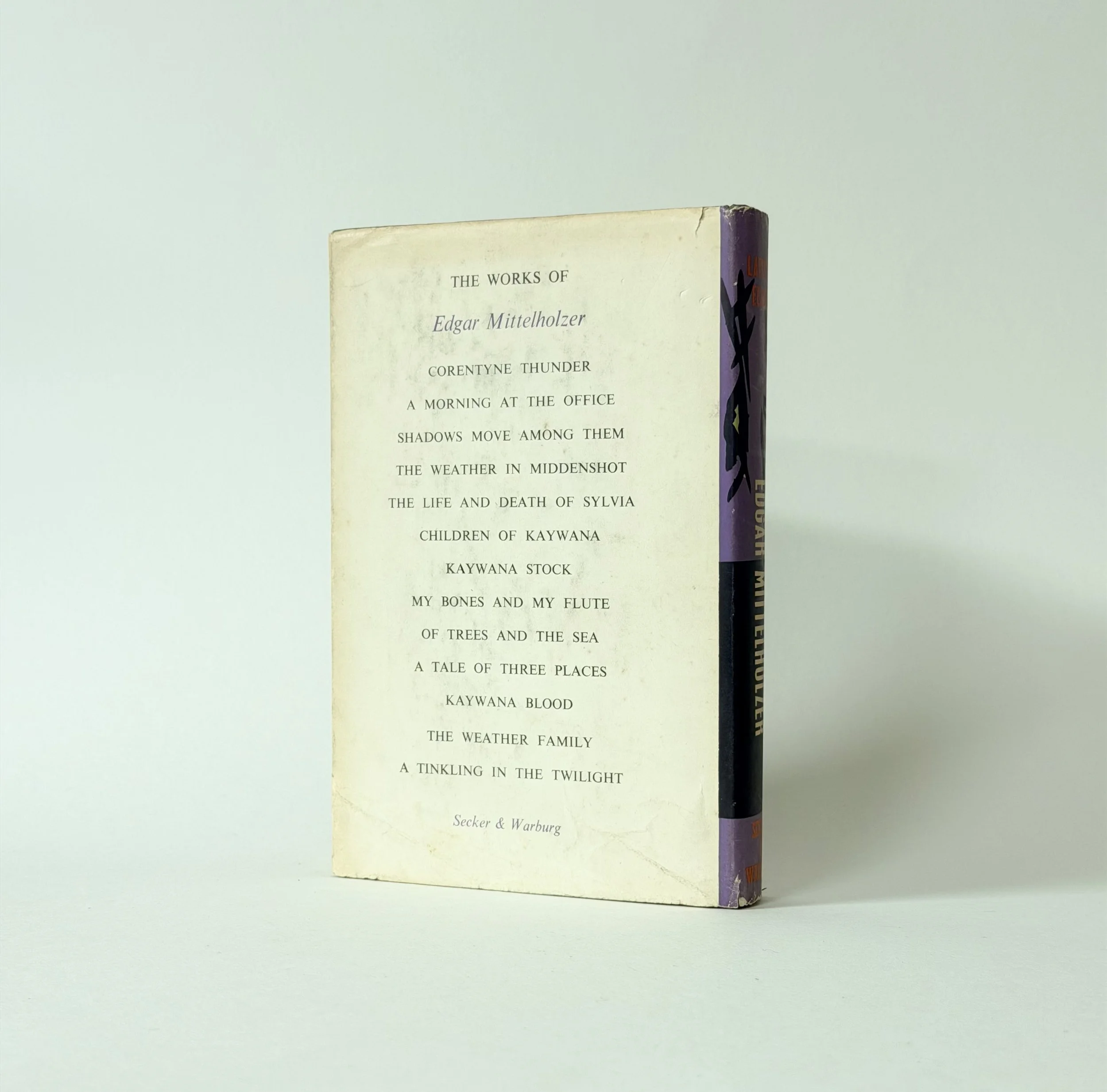 Image 2 of 3
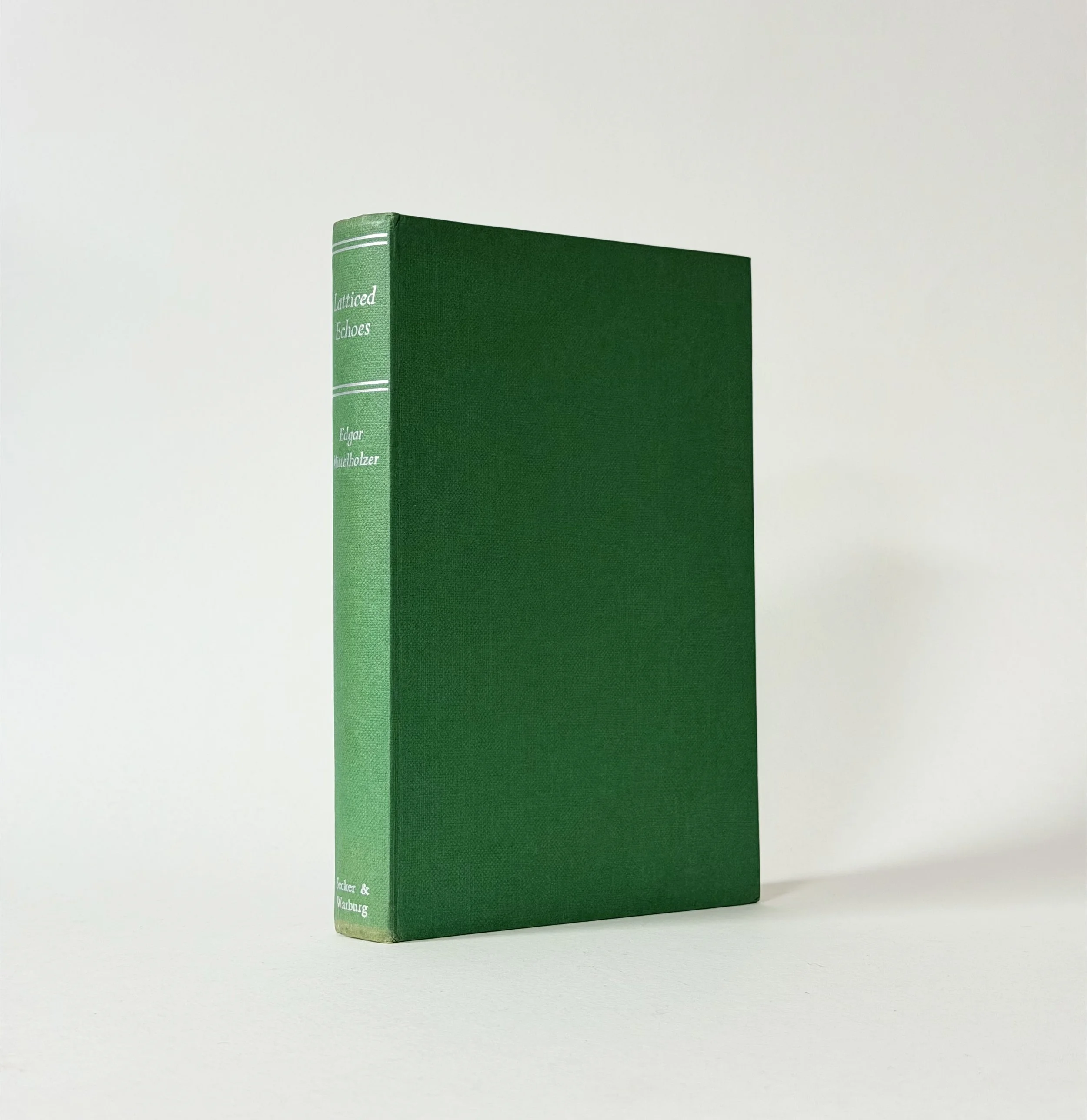 Image 3 of 3
MITTELHOLZER, Edgar. Latticed Echoes. London: Secker and Warburg. 1960. 8vo. First British edition. Publisher’s bright green cloth lettered in silver gilt to backstrip, in the dust jacket designed by Elizabeth Fort. A very good or better copy, the cloth clean and bright, the binding tight and square. Some light scattered foxing to textblock edges and prelims, then often fine. The dust jacket unclipped (18s net), gently rubbed and nicked to corners and tips, but a pleasing example overall.
Subtitled ‘A Novel in the Leitmotif Manner’, Mittelholzer’s Latticed Echoes reads like a formal experimental novel which uses dialogue alone to move the narrative, lattice-like, sometimes with great haste and sometimes near-painfully slowly, eking out a moral story of lust and infidelity among four friends in New Amsterdam, Guyana, the author’s hometown. Mittelholzer was the first West Indian novelist who could live off his writing, and should be better remembered for that alone. His other novels, this cataloguer understands, push similar boundaries in form and syntax, character and theme. Tellingly, perhaps, Mittelholzer used suicide in many of his novels, and in 1965, at the age of 56, he committed suicide by self-immolation. Though a member of what Margaret Cohen called ‘the great unread’ in forgotten authors, some of his novels have been republished and he remains ripe for further rediscovery. Uncommon.
MITTELHOLZER, Edgar. Latticed Echoes. London: Secker and Warburg. 1960. 8vo. First British edition. Publisher’s bright green cloth lettered in silver gilt to backstrip, in the dust jacket designed by Elizabeth Fort. A very good or better copy, the cloth clean and bright, the binding tight and square. Some light scattered foxing to textblock edges and prelims, then often fine. The dust jacket unclipped (18s net), gently rubbed and nicked to corners and tips, but a pleasing example overall.
Subtitled ‘A Novel in the Leitmotif Manner’, Mittelholzer’s Latticed Echoes reads like a formal experimental novel which uses dialogue alone to move the narrative, lattice-like, sometimes with great haste and sometimes near-painfully slowly, eking out a moral story of lust and infidelity among four friends in New Amsterdam, Guyana, the author’s hometown. Mittelholzer was the first West Indian novelist who could live off his writing, and should be better remembered for that alone. His other novels, this cataloguer understands, push similar boundaries in form and syntax, character and theme. Tellingly, perhaps, Mittelholzer used suicide in many of his novels, and in 1965, at the age of 56, he committed suicide by self-immolation. Though a member of what Margaret Cohen called ‘the great unread’ in forgotten authors, some of his novels have been republished and he remains ripe for further rediscovery. Uncommon.