
 Image 1 of 3
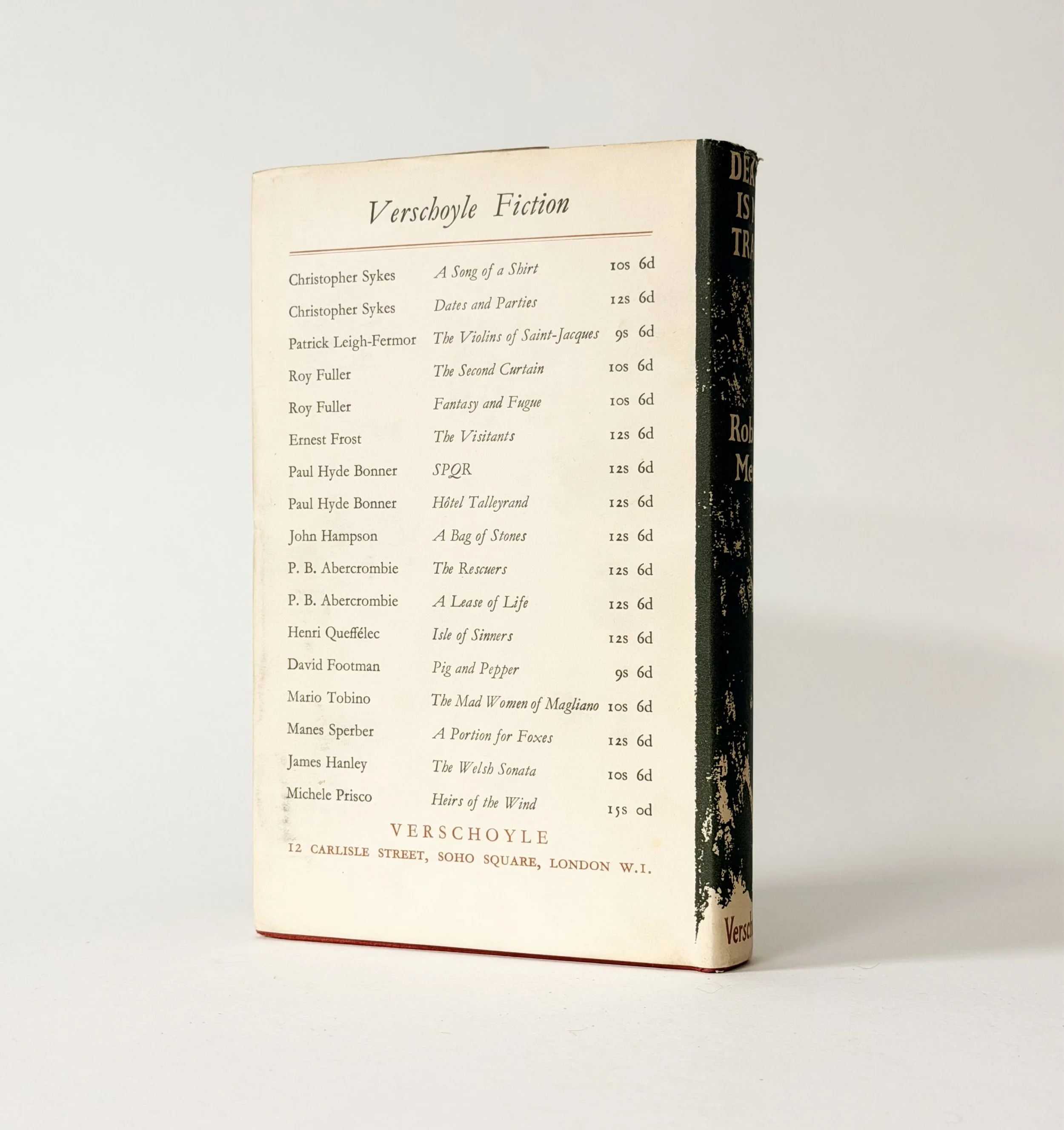 Image 2 of 3
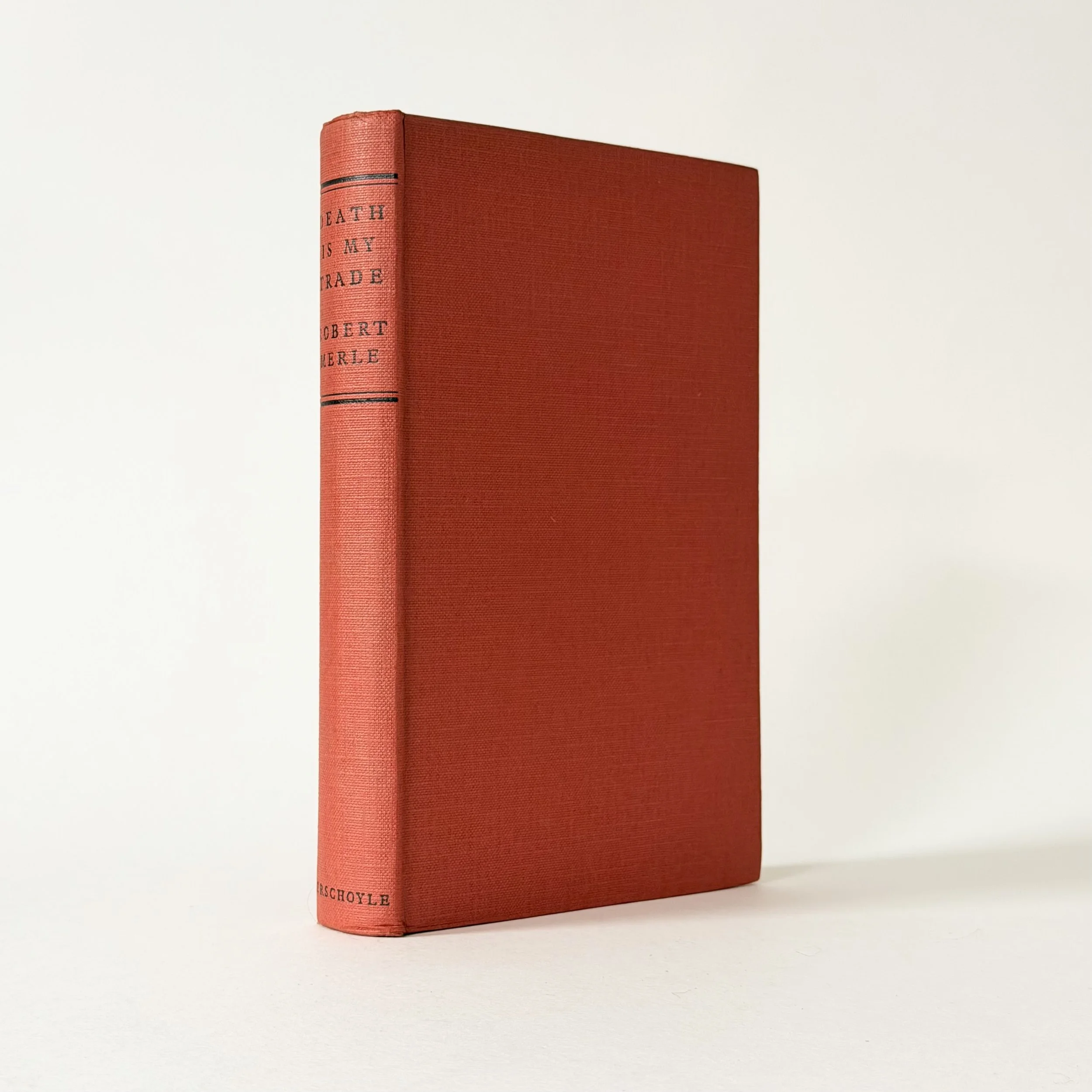 Image 3 of 3
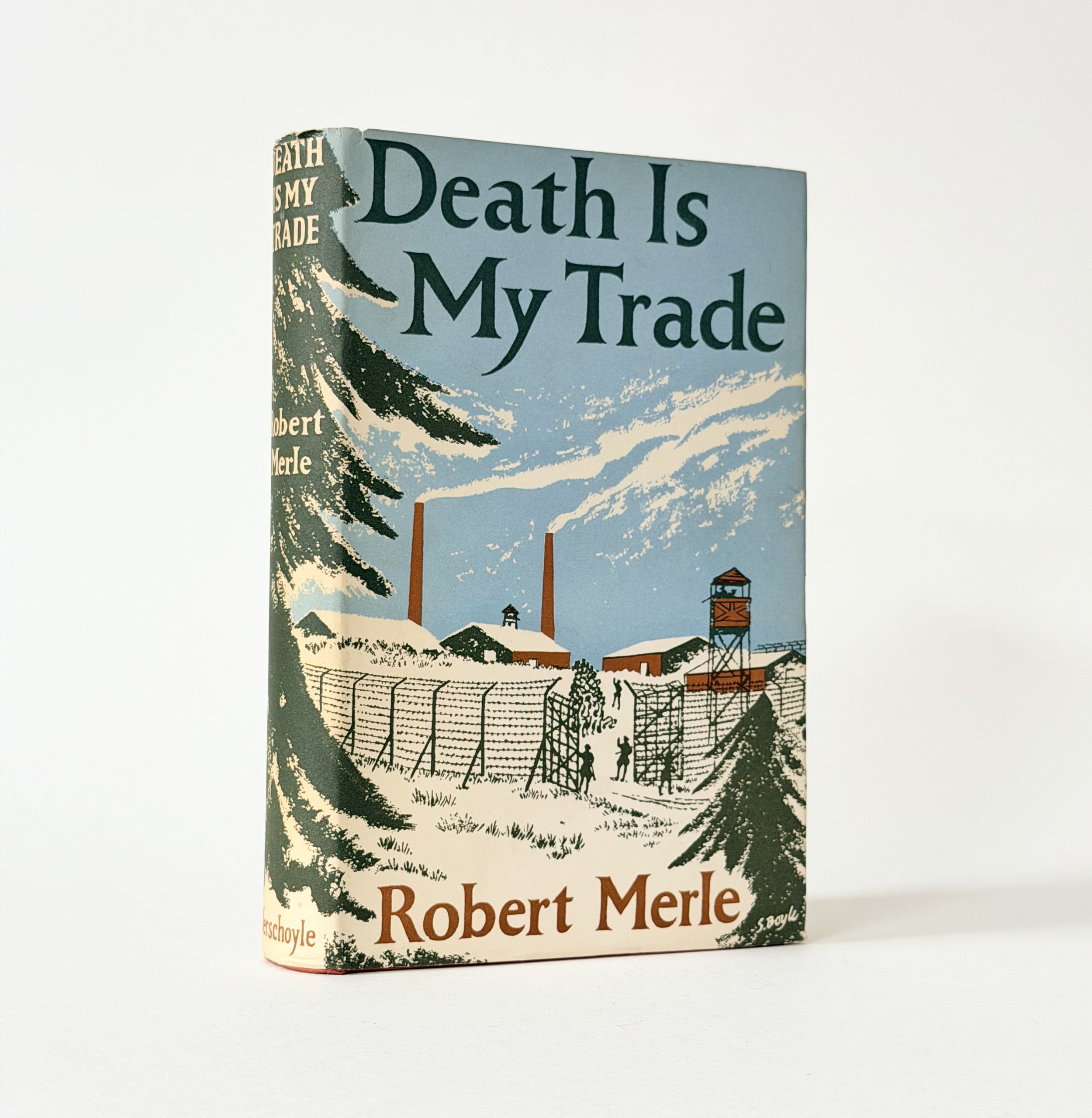
MERLE, Robert. Death is My Trade. London: Derek Verschoyle. 1954. 8vo. First British edition. Publisher’s red cloth lettered in black to the spine, in the dust jacket designed by Stuart Boyle. An about fine copy, the cloth very clean and bright, the binding tight and square. The textblock top edge gently spotted, else fine, the contents clean and fine throughout without stamps, inscriptions, or foxing. The dust jacket unclipped (12s 6d net) and very bright indeed, with a couple of tiny nicks and trivial rubbing around spine head, one or two singular light marks, but a very sharp copy.
The author’s biographical novel of Rudolf Lang, based closely on Rudolf Höss, tracing his career rise to Commandant of the Auschwitz Concentration camp, responsible thus for industrial-scale extermination of some three million people. Merle’s biographical account is an interesting one since it follows Lang/Höss from an alienated teenager whose angst expands from the difficult relationship with his father. Confirmed in Höss’s later autobiography and in various sources, Merle sustains the notion that he was less concerned with the philosophical underpinnings of the Nazi system, the Übermensch/Untermensch rhetoric, but believed principally and without doubt the chain of command, of duty, service, the obedient fulfilment of order. It is this notion that Höss used in his defence at the Nuremberg Trials, blaming Hitler and Himmler for using their powers ‘wrongly and even criminally’. He saw himself as ‘a cog in the wheel of the great extermination machine created by the Third Reich’, and blamed his subordinates for their cruel treatment of prisoners which he was unable to control. He remained mostly apathetic about his crimes and his punishment—public execution by hanging—until his final few days, when he reverted to Catholicism and showed considerable remorse. This novel is the first such study of the Commandant—Martin Amis’s The Zone of Interest (2014) and its subsequent film adaptation (2023) might also be of interest. A very scarce book.