
 Image 1 of 3
 Image 2 of 3
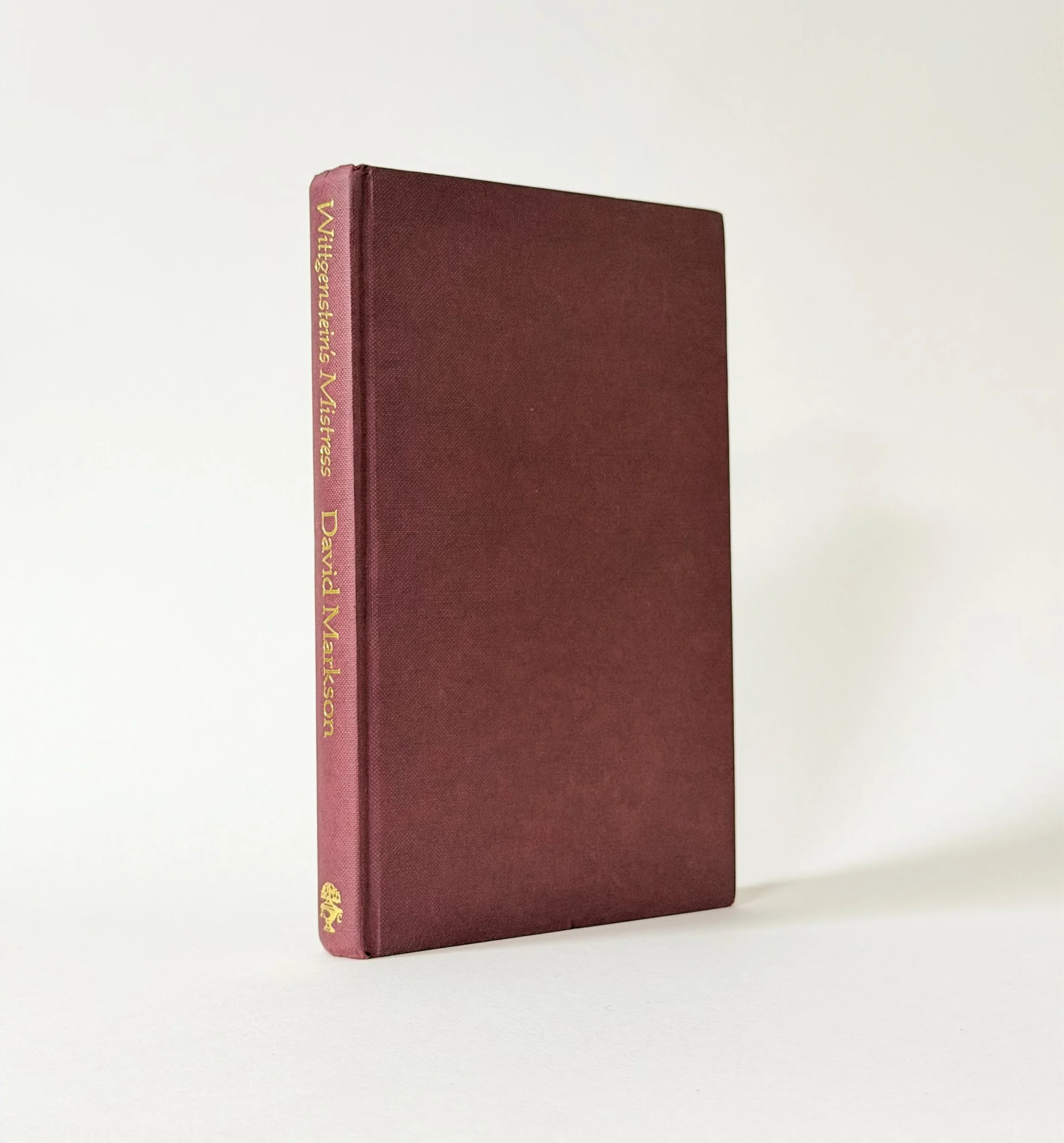 Image 3 of 3
MARKSON, David. Wittgenstein's Mistress. London: Jonathan Cape. 1989. 8vo. First British edition, first printing. Publisher’s mauve cloth lettered in gilt to the spine, in the dust jacket designed by Steven Woollard. The boards clean and sharp, just a trifle pushed at tips. The binding tight and square, the contents clean and bright throughout without stamps, inscriptions or any of the foxing often blighting the book. The dust jacket unclipped, complete, very slightly rubbed and bumped to spine tips and corners, but a fine copy overall.
The author’s magnum opus, an immediate study of depression and loneliness told through a single narrative; a woman who may or may not be the last person on Earth. It was rejected by 54 publishers before Dalkey Archive took the gamble, and this Cape British edition followed a year later. David Foster Wallace praised the work and later wrote an afterword. In it, he describes the novel’s slippery philosophy, “though its prose and monotone are hauntingly pedestrian, the novel’s diffracted system of allusions to everything from antiquity to Astroturf are a bitch to trace out”. A quiet classic and a favourite of this bookseller. Uncommon.
MARKSON, David. Wittgenstein's Mistress. London: Jonathan Cape. 1989. 8vo. First British edition, first printing. Publisher’s mauve cloth lettered in gilt to the spine, in the dust jacket designed by Steven Woollard. The boards clean and sharp, just a trifle pushed at tips. The binding tight and square, the contents clean and bright throughout without stamps, inscriptions or any of the foxing often blighting the book. The dust jacket unclipped, complete, very slightly rubbed and bumped to spine tips and corners, but a fine copy overall.
The author’s magnum opus, an immediate study of depression and loneliness told through a single narrative; a woman who may or may not be the last person on Earth. It was rejected by 54 publishers before Dalkey Archive took the gamble, and this Cape British edition followed a year later. David Foster Wallace praised the work and later wrote an afterword. In it, he describes the novel’s slippery philosophy, “though its prose and monotone are hauntingly pedestrian, the novel’s diffracted system of allusions to everything from antiquity to Astroturf are a bitch to trace out”. A quiet classic and a favourite of this bookseller. Uncommon.