MANNING-SANDERS, George. The Burnt Man. London: Faber and Faber. 1930. 8vo. First edition. Publisher’s maroon cloth lettered in gilt to the spine and blindstamped to front board. Printed dedication to Dod Procter. In the exceptional dust jacket designed by Mabel Lapthorn. This copy with a cut sheet signed by the author. A superior example, the cloth clean and bright, the contents clean and fine throughout. The dust jacket unclipped (7s 6d net), all four corners neatly cut. Closed tear to spine foot leading up about 2.5 inches, and one or two tiny closed tears and other bumps and light rubbing, but all made for the most part discreet with thanks to the busy design. Order form for Frank Morison’s Who Moved the Stone? and two adverts for Norman Lindsay’s Redhead and Bruce Hamilton’s To Be Hanged loosely inserted.
The author’s second of only two published novels—the first Drum and Monkey (1929). It follows Humphry Daine, a somewhat misanthropic painter and decorator feeling the immense pressures of crippling debts and his burning albeit sudden hatred of his wife. As remedy, Humphry opts to reinvent himself by way of staging his own death—by arson, leaving a planted skeleton prostrate in his bed, all that remains. With a new woman in sight, so begins a new life of ghosts, of himself and his own thoughts, and of his wife, ‘the fast piece’, who swore to have seen her burnt man very much alive. The novel seems certainly based somewhat on his own life—Manning-Sanders was an established art master before turning to writing, but found much less commercial success than his Newlyn School contemporaries. He was somewhat overshadowed by both his wife, the poet and now acclaimed folklorist, Ruth Manning-Sanders, and at least for a time their daughter, Joan, a child prodigy in the art world who had her first painting accepted by the Royal Academy aged just thirteen. It’s worth noting here that Ruth might be the second woman in the novel, not the first. Of additional interest is the exceptional dust jacket designed inimitably by the artist Mabel Dickinson Lapthorn, a London-based artist working in poster design, ceramics, and, occasionally as in here, dust jackets. Scarce, especially so in the jacket.
MANNING-SANDERS, George. The Burnt Man. London: Faber and Faber. 1930. 8vo. First edition. Publisher’s maroon cloth lettered in gilt to the spine and blindstamped to front board. Printed dedication to Dod Procter. In the exceptional dust jacket designed by Mabel Lapthorn. This copy with a cut sheet signed by the author. A superior example, the cloth clean and bright, the contents clean and fine throughout. The dust jacket unclipped (7s 6d net), all four corners neatly cut. Closed tear to spine foot leading up about 2.5 inches, and one or two tiny closed tears and other bumps and light rubbing, but all made for the most part discreet with thanks to the busy design. Order form for Frank Morison’s Who Moved the Stone? and two adverts for Norman Lindsay’s Redhead and Bruce Hamilton’s To Be Hanged loosely inserted.
The author’s second of only two published novels—the first Drum and Monkey (1929). It follows Humphry Daine, a somewhat misanthropic painter and decorator feeling the immense pressures of crippling debts and his burning albeit sudden hatred of his wife. As remedy, Humphry opts to reinvent himself by way of staging his own death—by arson, leaving a planted skeleton prostrate in his bed, all that remains. With a new woman in sight, so begins a new life of ghosts, of himself and his own thoughts, and of his wife, ‘the fast piece’, who swore to have seen her burnt man very much alive. The novel seems certainly based somewhat on his own life—Manning-Sanders was an established art master before turning to writing, but found much less commercial success than his Newlyn School contemporaries. He was somewhat overshadowed by both his wife, the poet and now acclaimed folklorist, Ruth Manning-Sanders, and at least for a time their daughter, Joan, a child prodigy in the art world who had her first painting accepted by the Royal Academy aged just thirteen. It’s worth noting here that Ruth might be the second woman in the novel, not the first. Of additional interest is the exceptional dust jacket designed inimitably by the artist Mabel Dickinson Lapthorn, a London-based artist working in poster design, ceramics, and, occasionally as in here, dust jackets. Scarce, especially so in the jacket.

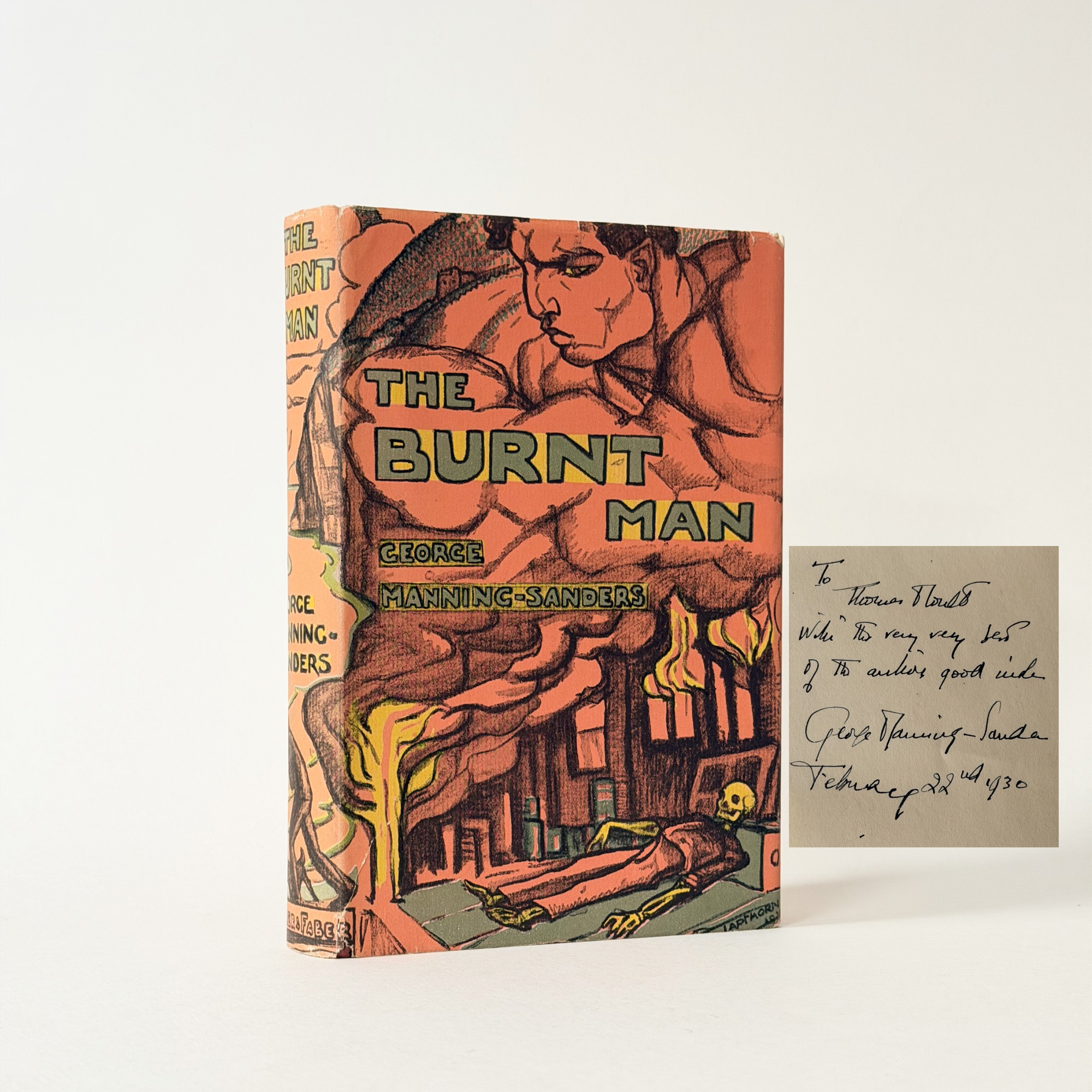 Image 1 of 7
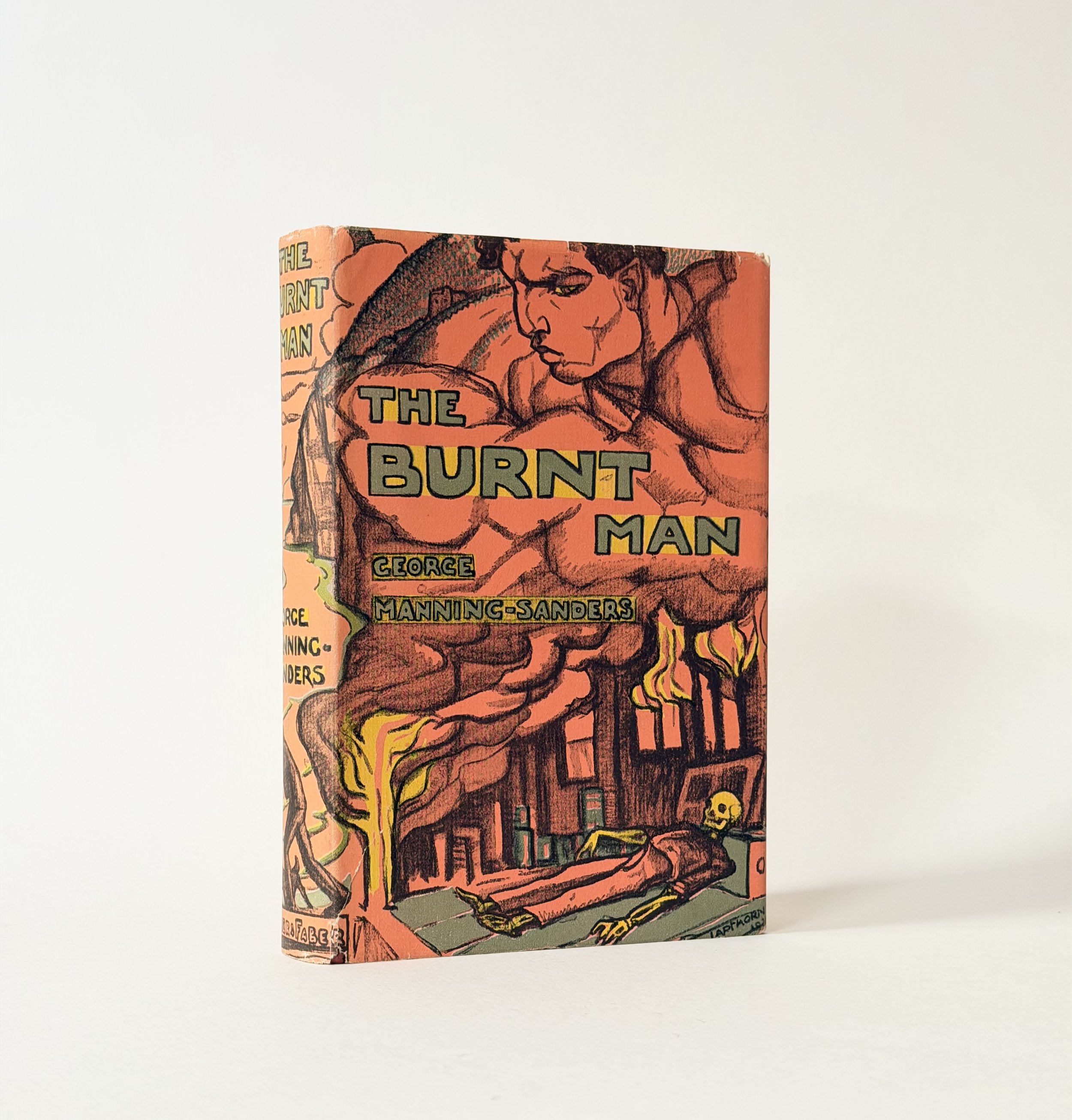 Image 2 of 7
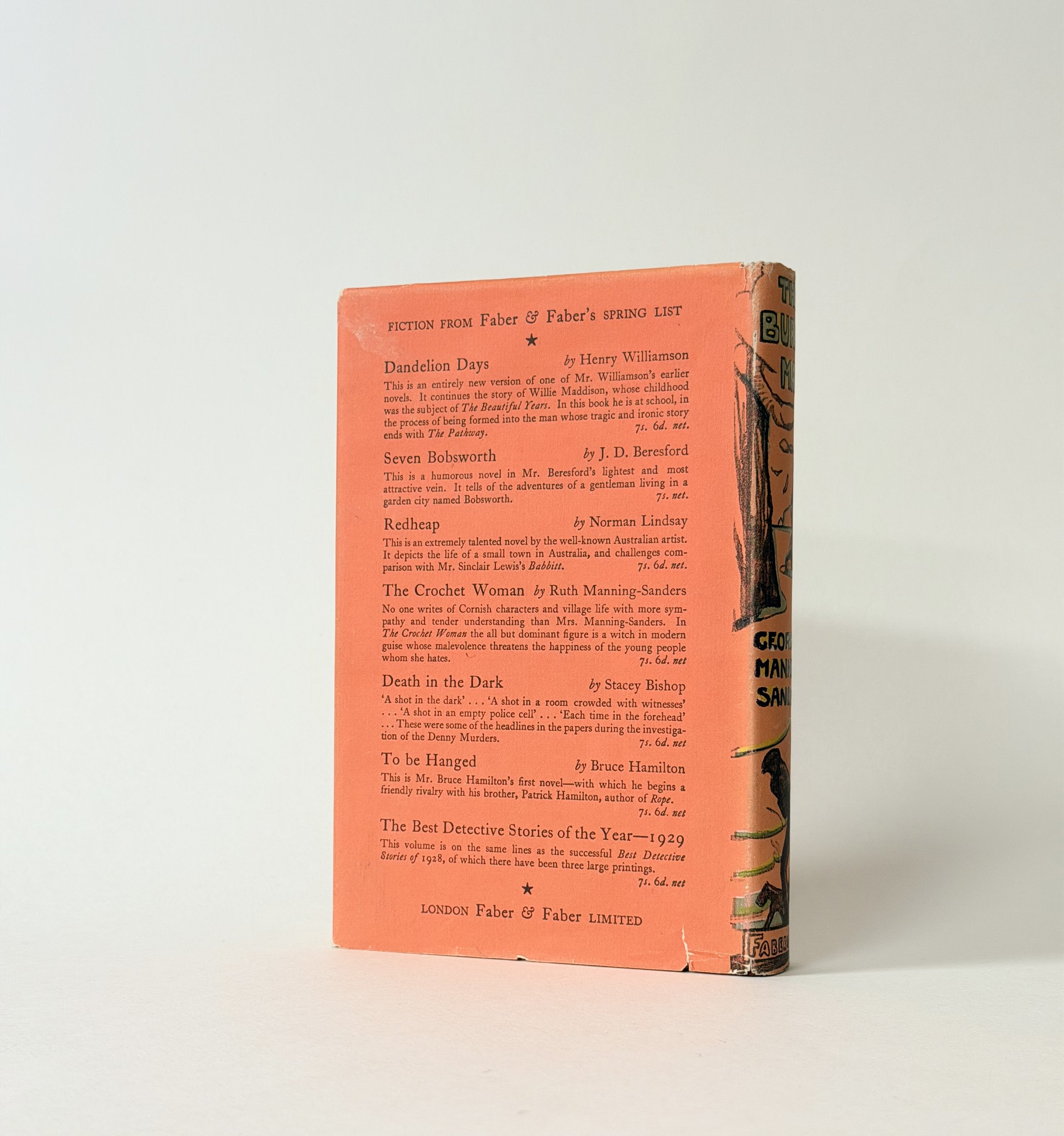 Image 3 of 7
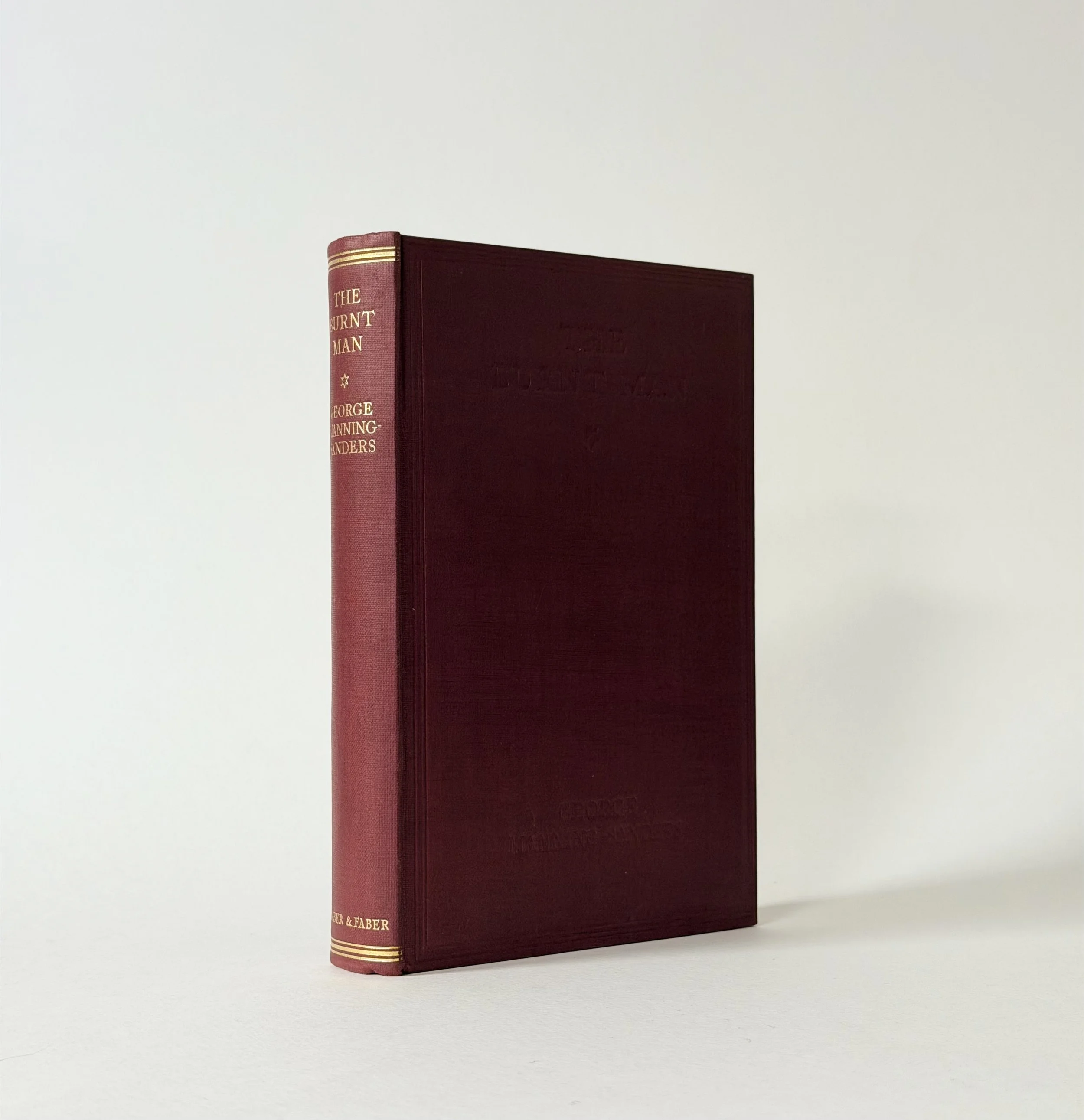 Image 4 of 7
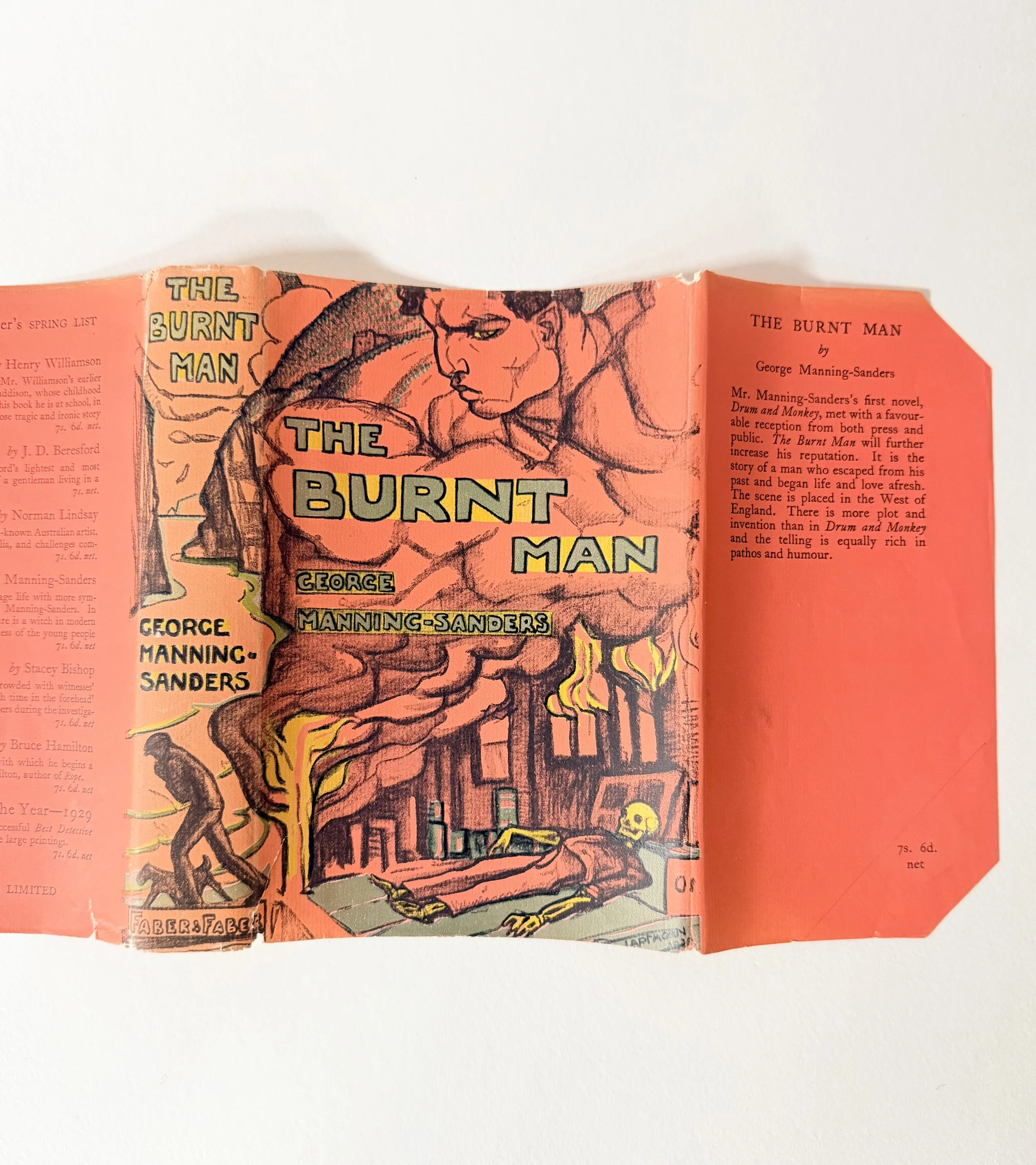 Image 5 of 7
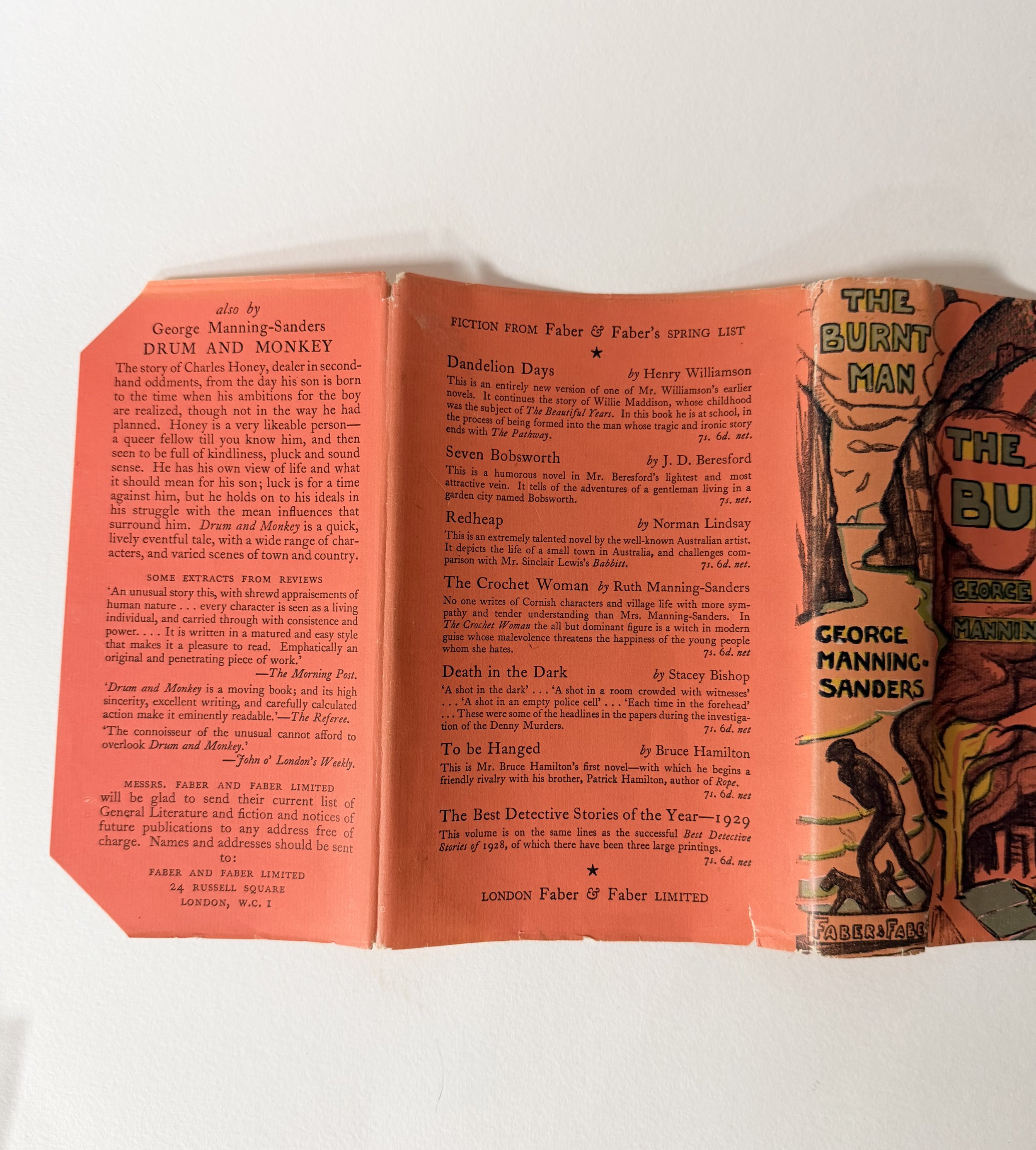 Image 6 of 7
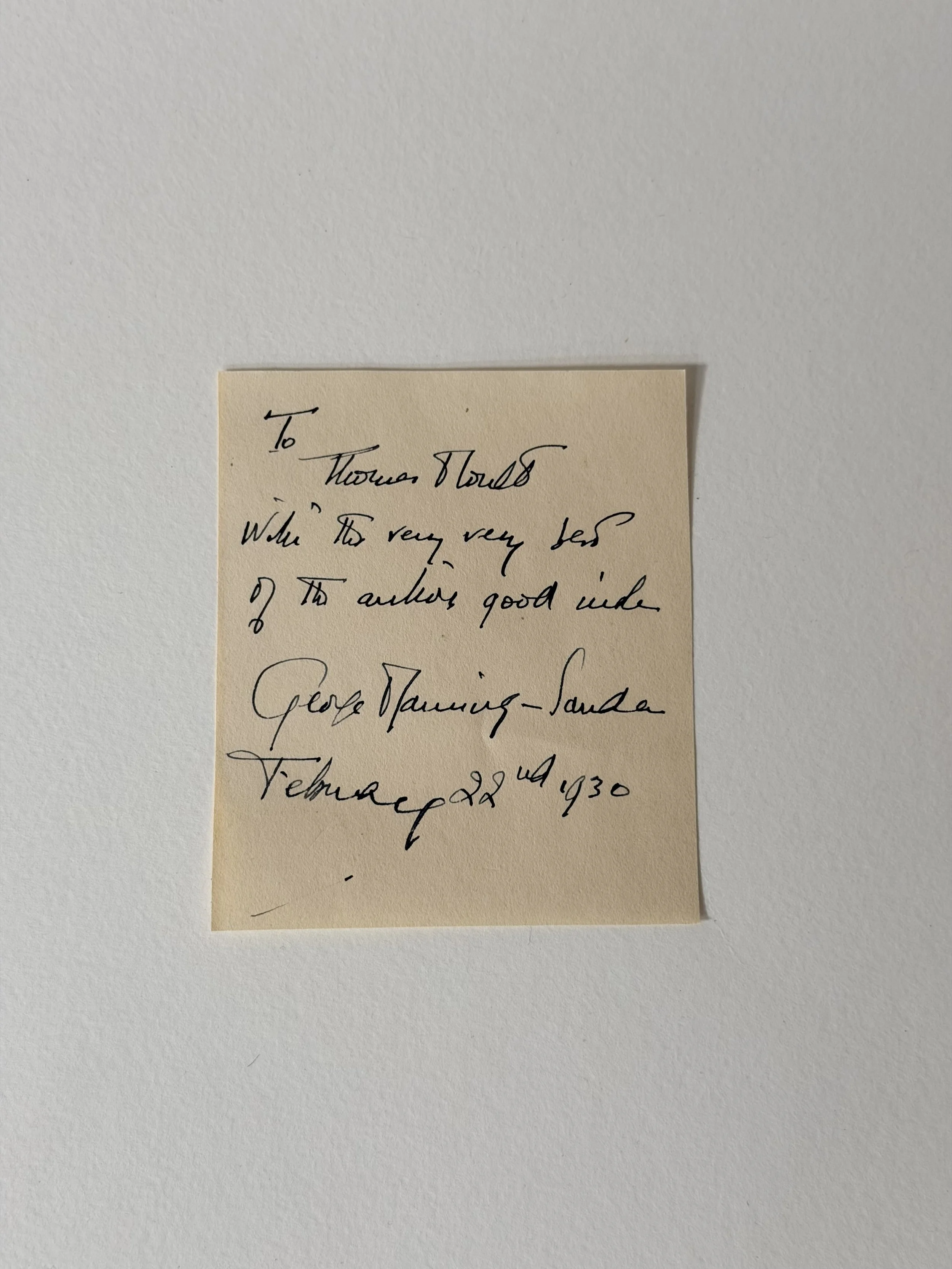 Image 7 of 7