
 Image 1 of 4
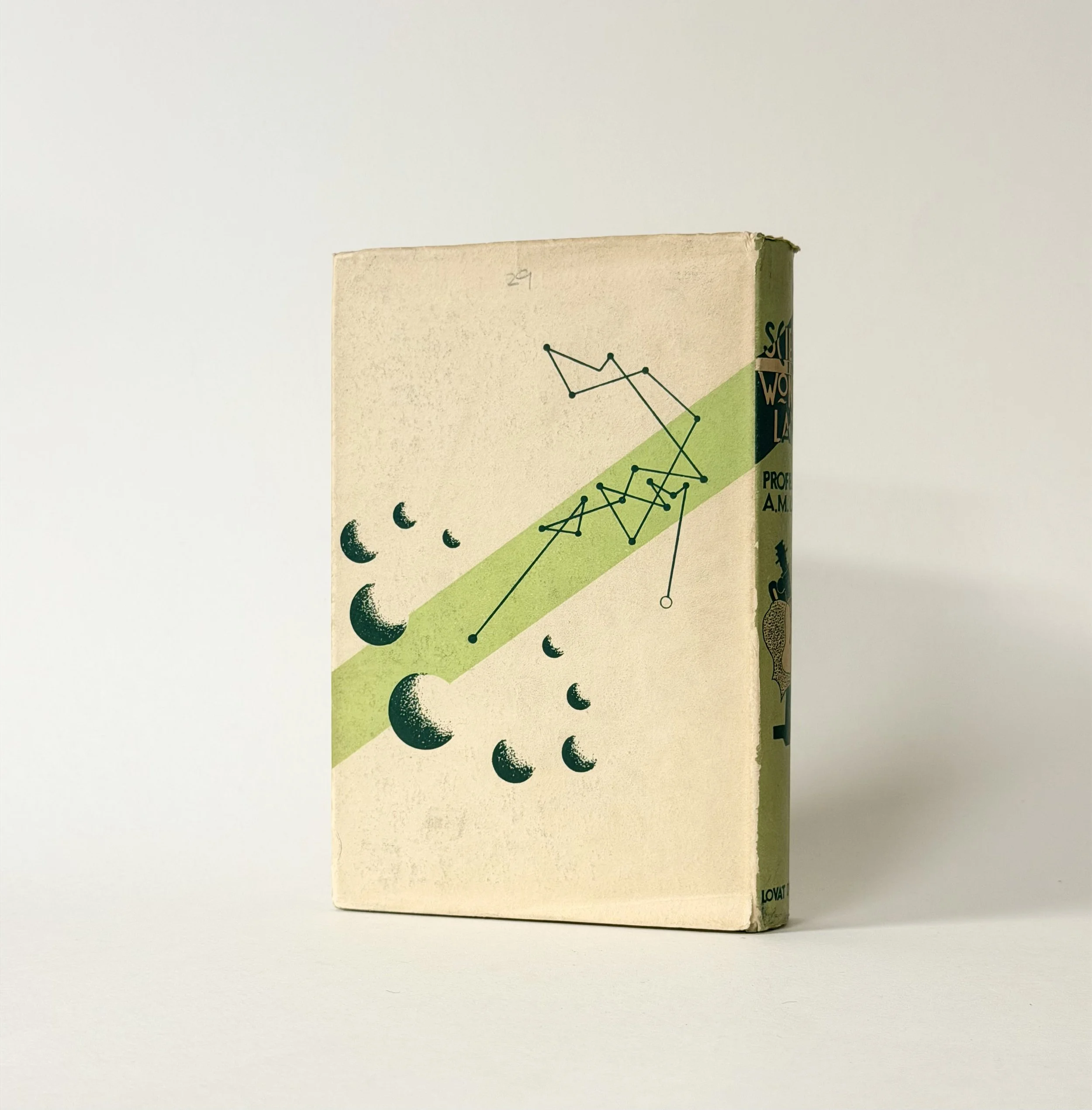 Image 2 of 4
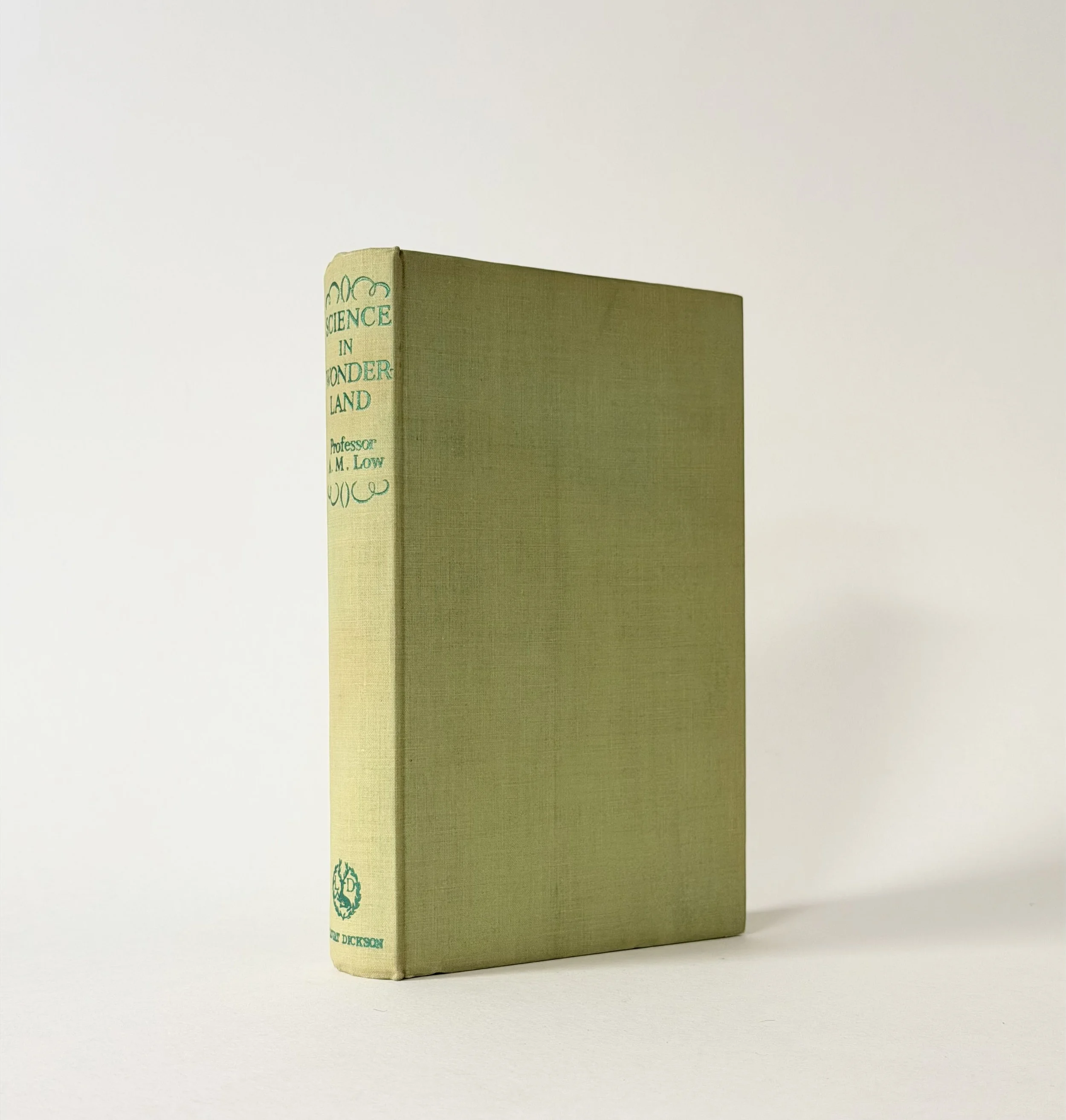 Image 3 of 4
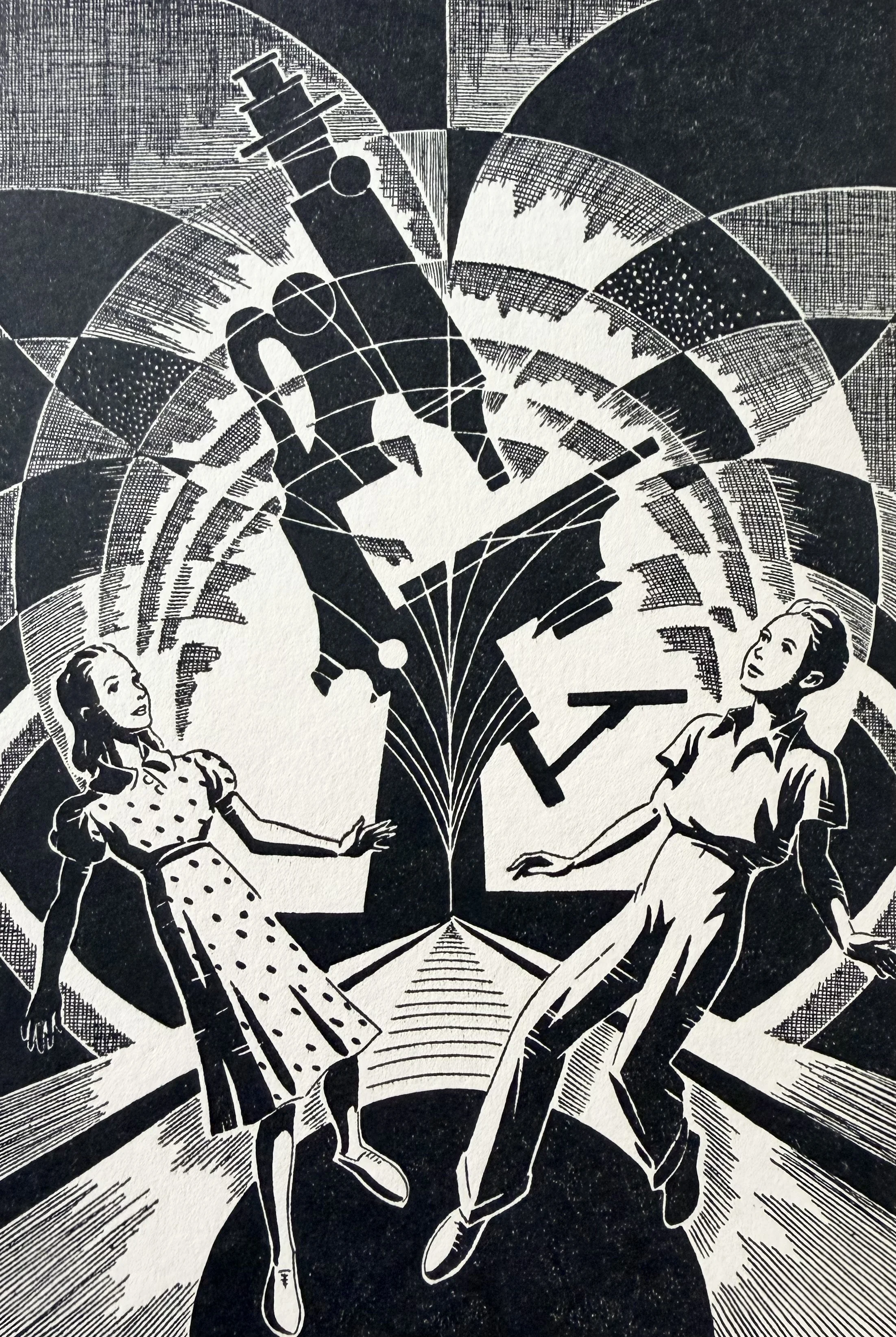 Image 4 of 4
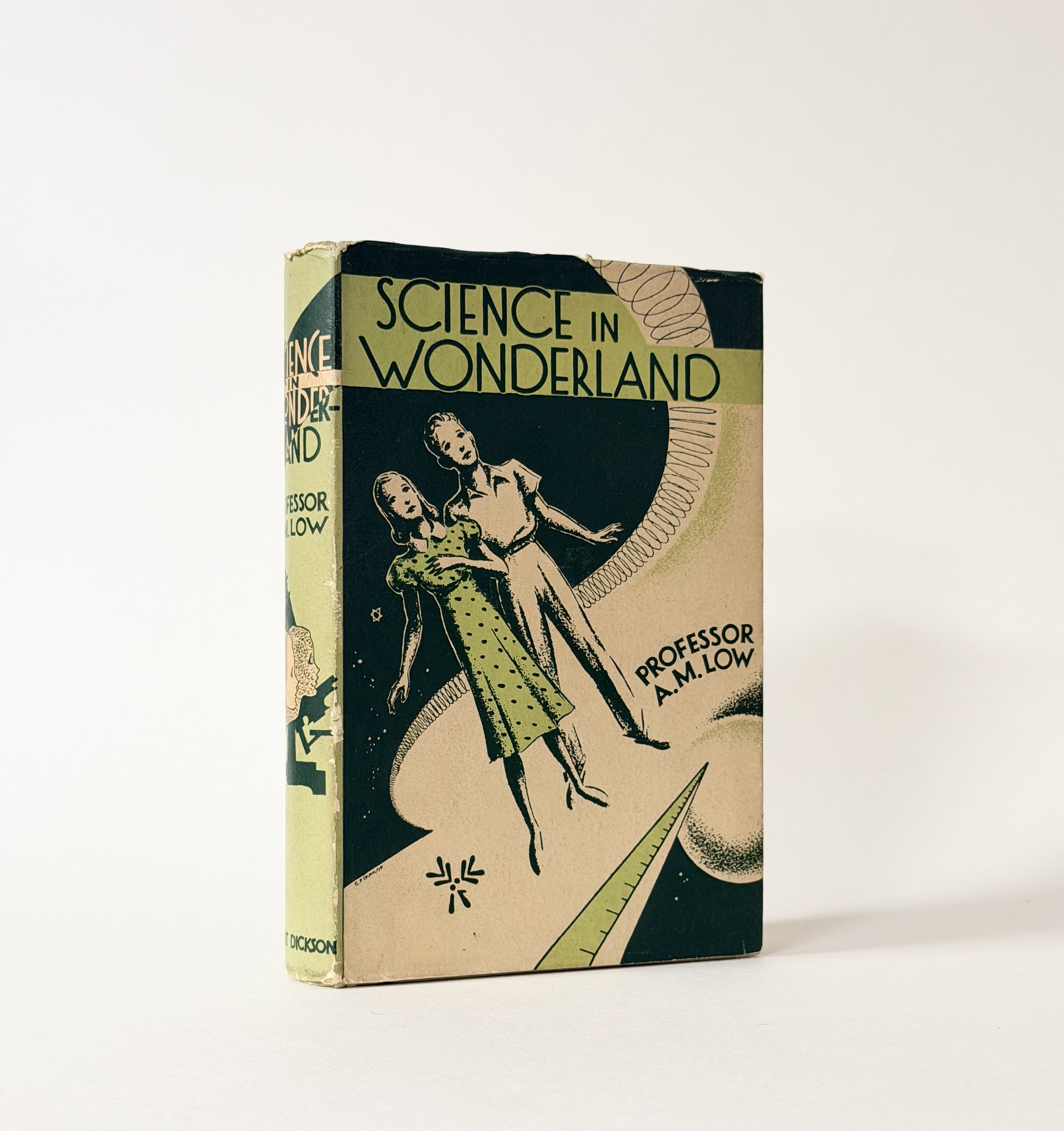
LOW, Archibald Montgomery. Science in Wonderland. London: Lovat Dickson and Thompson. 1935. 8vo. First edition. Publisher’s lime cloth lettered in green gilt to the spine, in the fittingly futuristic dust jacket designed by Gilbert Dunlop, who illustrates the volume with a black and white frontispiece and numerous terrific drawings throughout. A splendid example having been a retained copy—with one ‘file copy’ stamped to front endpaper—of Peter Davies, whom publisher Lovat Dickson sold his catalogue to in 1938. The cloth therefore bright and clean, the binding tight and square, the topstain still bright. The contents clean and bright throughout. The dust jacket unclipped (5s net) and complete, very gently rubbed along the spine tips and corners with some light creases, the spine joints also slightly bumped, but retaining all of its vivid two-tone green colour so wonderfully orchestrated by Dunlop.
A riveting collection of scientific stories for children told with a curious sense of narrative; think Alice in Wonderland, its evident fictional inspiration, told by your matter-of-fact scientist father—talking molecules and all. Low, who used the title ‘professor’ illegitimately, was an engineer, physicist, and inventor who, though pioneering in virtually every scientific field, was considered a crank by the public, his work and his personality clashing drastically with many of his contemporaries, who criticised his ‘ruthlessly inventive’ spirit marred by his absolute inability to see it through—ADHD, probably the parlance of our times. Low almost beat John Logie Baird to the invention of television (by twelve years!) with his usable ‘televista’, and has since been credited with the invention of drones and guided missiles, and made, as per any fantastical writer, made numerous predictions, some of which hit the mark. His livewire itchy-scratchiness leaves one wondering how he finished writing one book, let alone some forty or so. This tale follows John and Betty, twentieth century twins seemingly up for all things astronautical or bodily—we literally travel from Mars to inside the human ear, with great and frankly weird aplomb. The illustrator, Gilbert Dunlop, was a Scottish artist. Though mostly self-taught, he attended evening classes at Dundee School of Art, quickly showing precocious talent enough to begin working for a local magazine. He went on to illustrate various children’s books, most famously books by Enid Blyton. This seems to be his first commission in the medium—undertaken aged around 25. Uncommon.
LOW, Archibald Montgomery. Science in Wonderland. London: Lovat Dickson and Thompson. 1935. 8vo. First edition. Publisher’s lime cloth lettered in green gilt to the spine, in the fittingly futuristic dust jacket designed by Gilbert Dunlop, who illustrates the volume with a black and white frontispiece and numerous terrific drawings throughout. A splendid example having been a retained copy—with one ‘file copy’ stamped to front endpaper—of Peter Davies, whom publisher Lovat Dickson sold his catalogue to in 1938. The cloth therefore bright and clean, the binding tight and square, the topstain still bright. The contents clean and bright throughout. The dust jacket unclipped (5s net) and complete, very gently rubbed along the spine tips and corners with some light creases, the spine joints also slightly bumped, but retaining all of its vivid two-tone green colour so wonderfully orchestrated by Dunlop.
A riveting collection of scientific stories for children told with a curious sense of narrative; think Alice in Wonderland, its evident fictional inspiration, told by your matter-of-fact scientist father—talking molecules and all. Low, who used the title ‘professor’ illegitimately, was an engineer, physicist, and inventor who, though pioneering in virtually every scientific field, was considered a crank by the public, his work and his personality clashing drastically with many of his contemporaries, who criticised his ‘ruthlessly inventive’ spirit marred by his absolute inability to see it through—ADHD, probably the parlance of our times. Low almost beat John Logie Baird to the invention of television (by twelve years!) with his usable ‘televista’, and has since been credited with the invention of drones and guided missiles, and made, as per any fantastical writer, made numerous predictions, some of which hit the mark. His livewire itchy-scratchiness leaves one wondering how he finished writing one book, let alone some forty or so. This tale follows John and Betty, twentieth century twins seemingly up for all things astronautical or bodily—we literally travel from Mars to inside the human ear, with great and frankly weird aplomb. The illustrator, Gilbert Dunlop, was a Scottish artist. Though mostly self-taught, he attended evening classes at Dundee School of Art, quickly showing precocious talent enough to begin working for a local magazine. He went on to illustrate various children’s books, most famously books by Enid Blyton. This seems to be his first commission in the medium—undertaken aged around 25. Uncommon.