
 Image 1 of 3
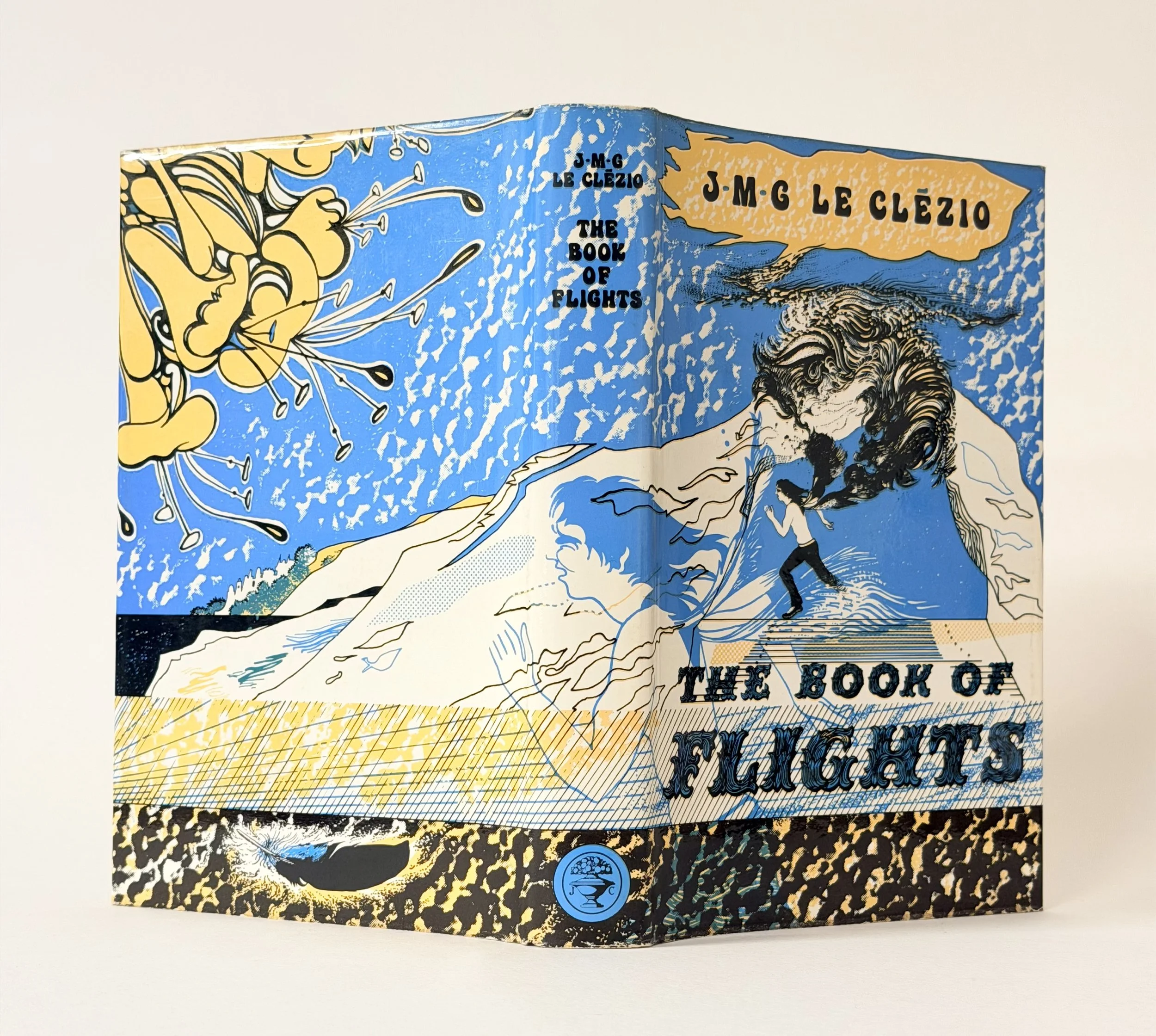 Image 2 of 3
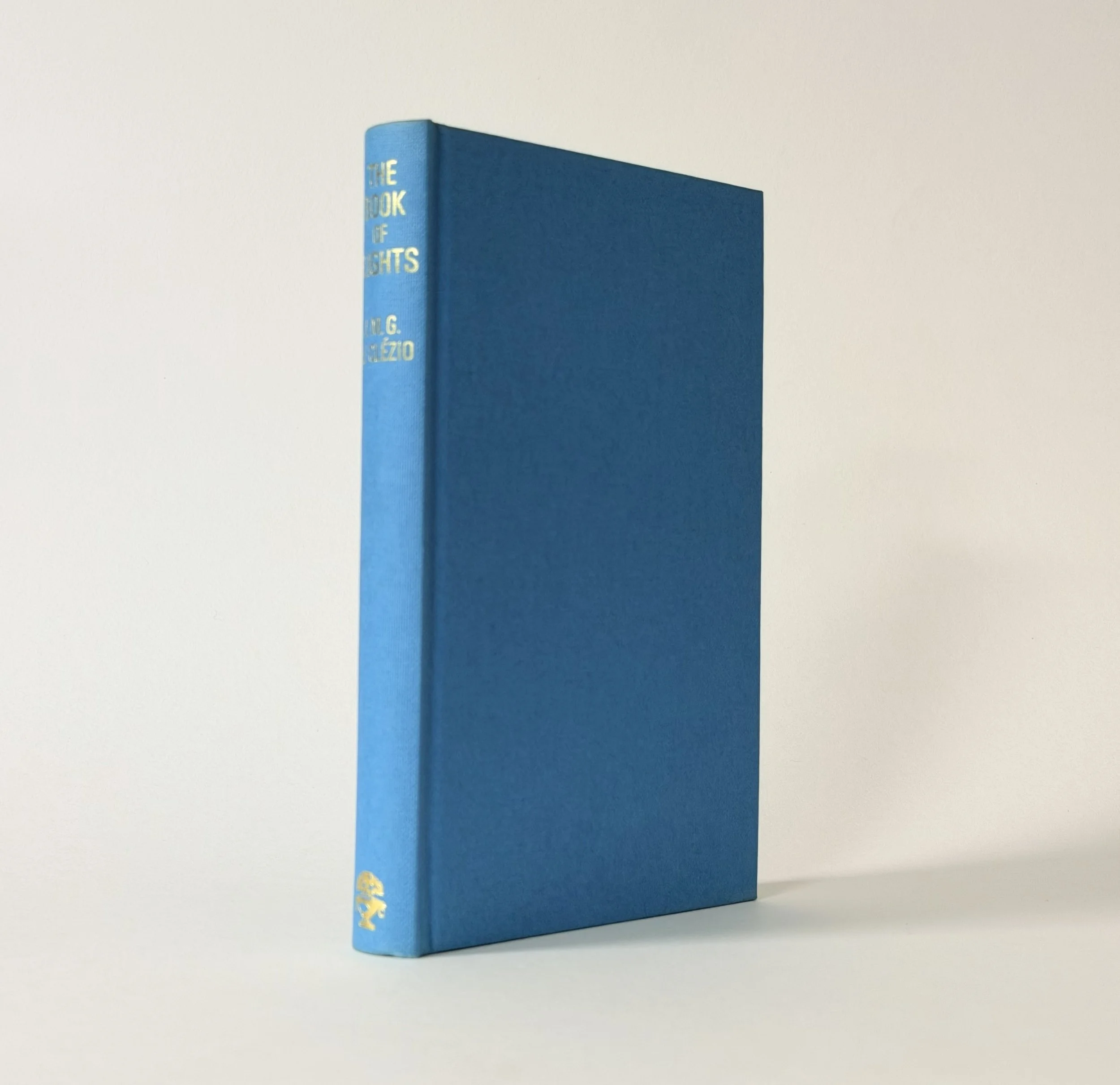 Image 3 of 3
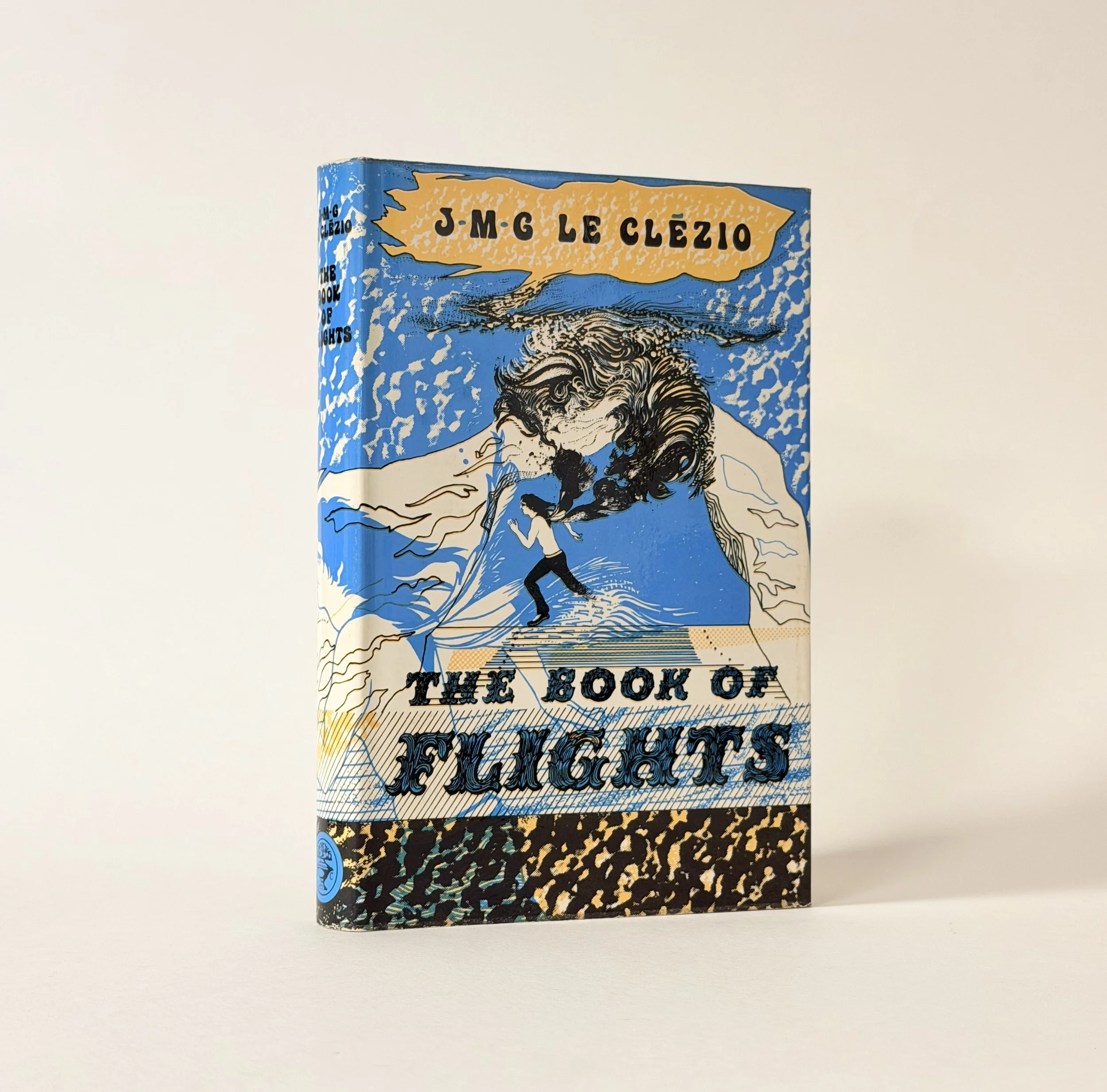
LE CLÉZIO, Jean-Marie Gustave. The Book of Flights. Trans. from the French by Simon Watson Taylor. London: Jonathan Cape. 1971. 8vo. First British edition. Publisher’s aquamarine cloth lettered in gilt to the spine, in the dust jacket spectacularly designed by Stanley Chapman. A fine example, the book clean and bright, the binding tight and square, the contents clean and fine. The dust jacket unclipped (£2.60 net), with some very mild bumps to extremities only. A sharp and very pleasing copy.
The Mauritian, French, and British author’s fourth novel published when Le Clézio was a self-proclaimed angry young man, long before his 2008 Nobel Prize win. Not unlike his own life, the protagonist, ‘the person called Hogan’, a stand-in for the author himself, sweeps across locales, from the city to the desert, from presumably Europe to Africa to the Americas. In true experimental style, it is near-plotless, and weaves quite excellently through genuine and unreal moments and ruthless social commentary, usually titled ‘self-criticism’, episodic interrogations of the self as writer, his purpose in the world and his reason for writing this book. It has associations with the metafictional work of Italo Calvino, and a bibliographic link to the two comes via the dust jacket designer, Stanley Chapman, who produced a similarly enthralling wraparound design for Calvino’s Time and the Hunter (Cape, 1970)—he produced relatively few designs. Uncommon in such sharp condition.
LE CLÉZIO, Jean-Marie Gustave. The Book of Flights. Trans. from the French by Simon Watson Taylor. London: Jonathan Cape. 1971. 8vo. First British edition. Publisher’s aquamarine cloth lettered in gilt to the spine, in the dust jacket spectacularly designed by Stanley Chapman. A fine example, the book clean and bright, the binding tight and square, the contents clean and fine. The dust jacket unclipped (£2.60 net), with some very mild bumps to extremities only. A sharp and very pleasing copy.
The Mauritian, French, and British author’s fourth novel published when Le Clézio was a self-proclaimed angry young man, long before his 2008 Nobel Prize win. Not unlike his own life, the protagonist, ‘the person called Hogan’, a stand-in for the author himself, sweeps across locales, from the city to the desert, from presumably Europe to Africa to the Americas. In true experimental style, it is near-plotless, and weaves quite excellently through genuine and unreal moments and ruthless social commentary, usually titled ‘self-criticism’, episodic interrogations of the self as writer, his purpose in the world and his reason for writing this book. It has associations with the metafictional work of Italo Calvino, and a bibliographic link to the two comes via the dust jacket designer, Stanley Chapman, who produced a similarly enthralling wraparound design for Calvino’s Time and the Hunter (Cape, 1970)—he produced relatively few designs. Uncommon in such sharp condition.