
 Image 1 of 5
 Image 2 of 5
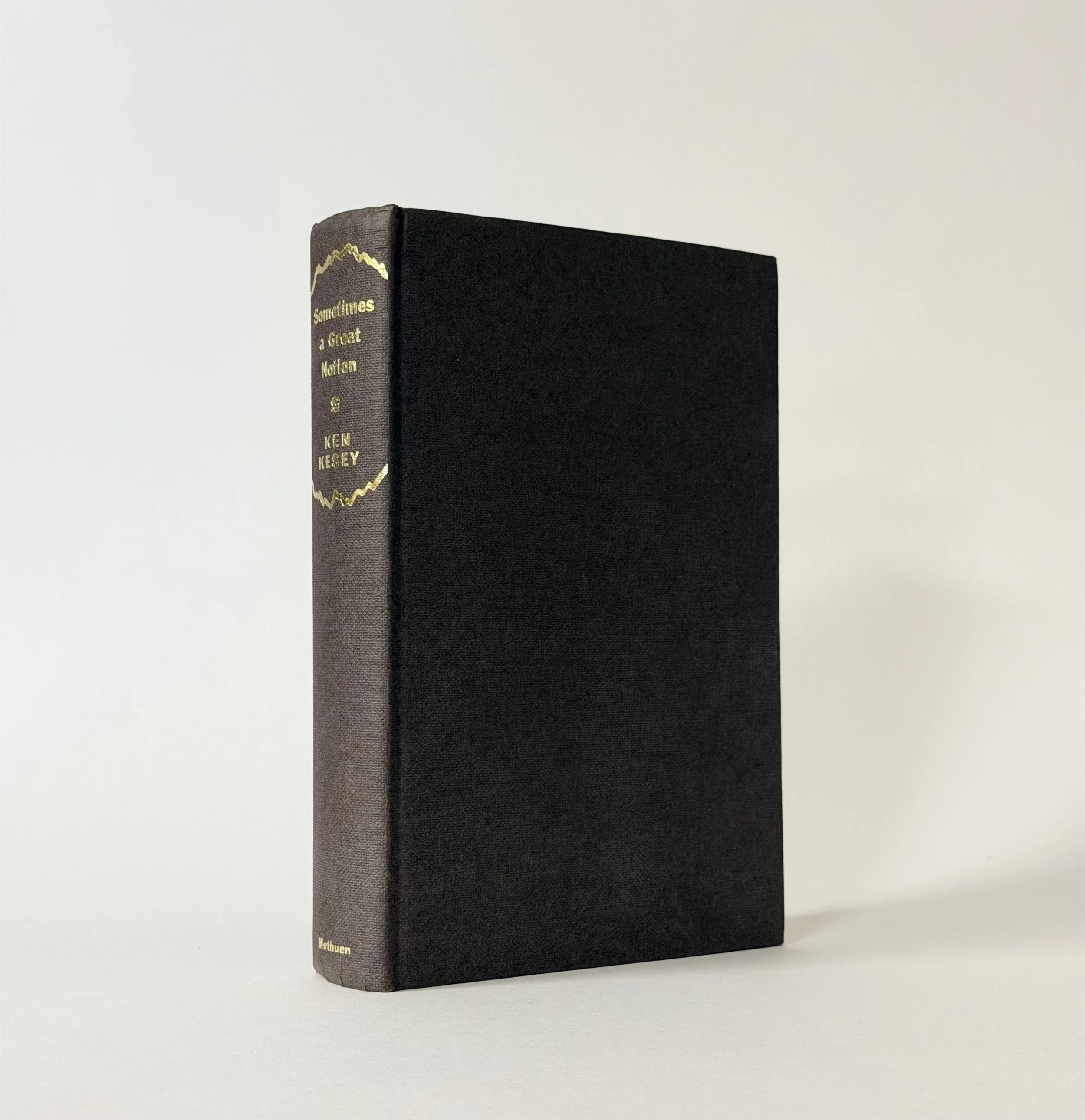 Image 3 of 5
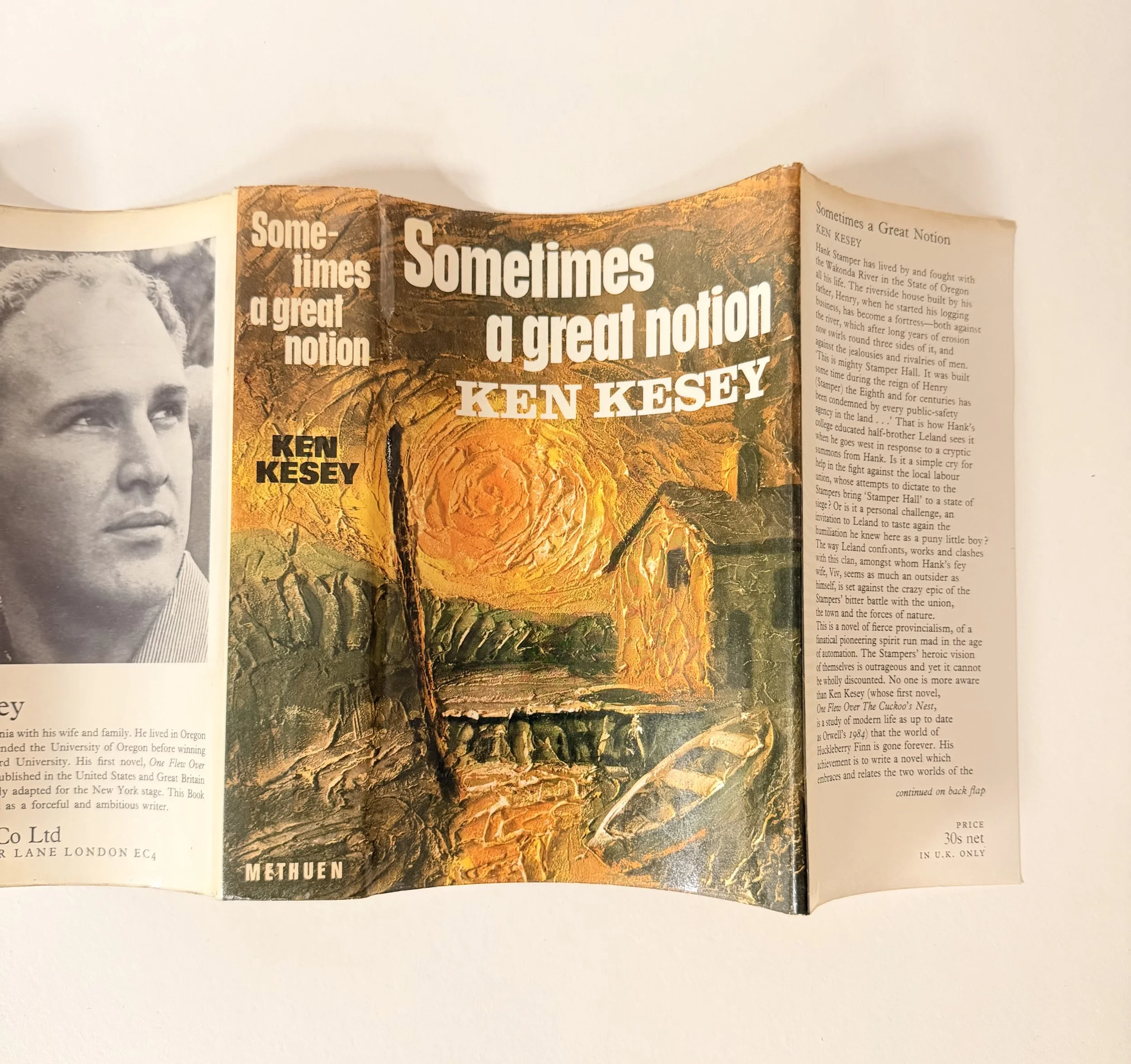 Image 4 of 5
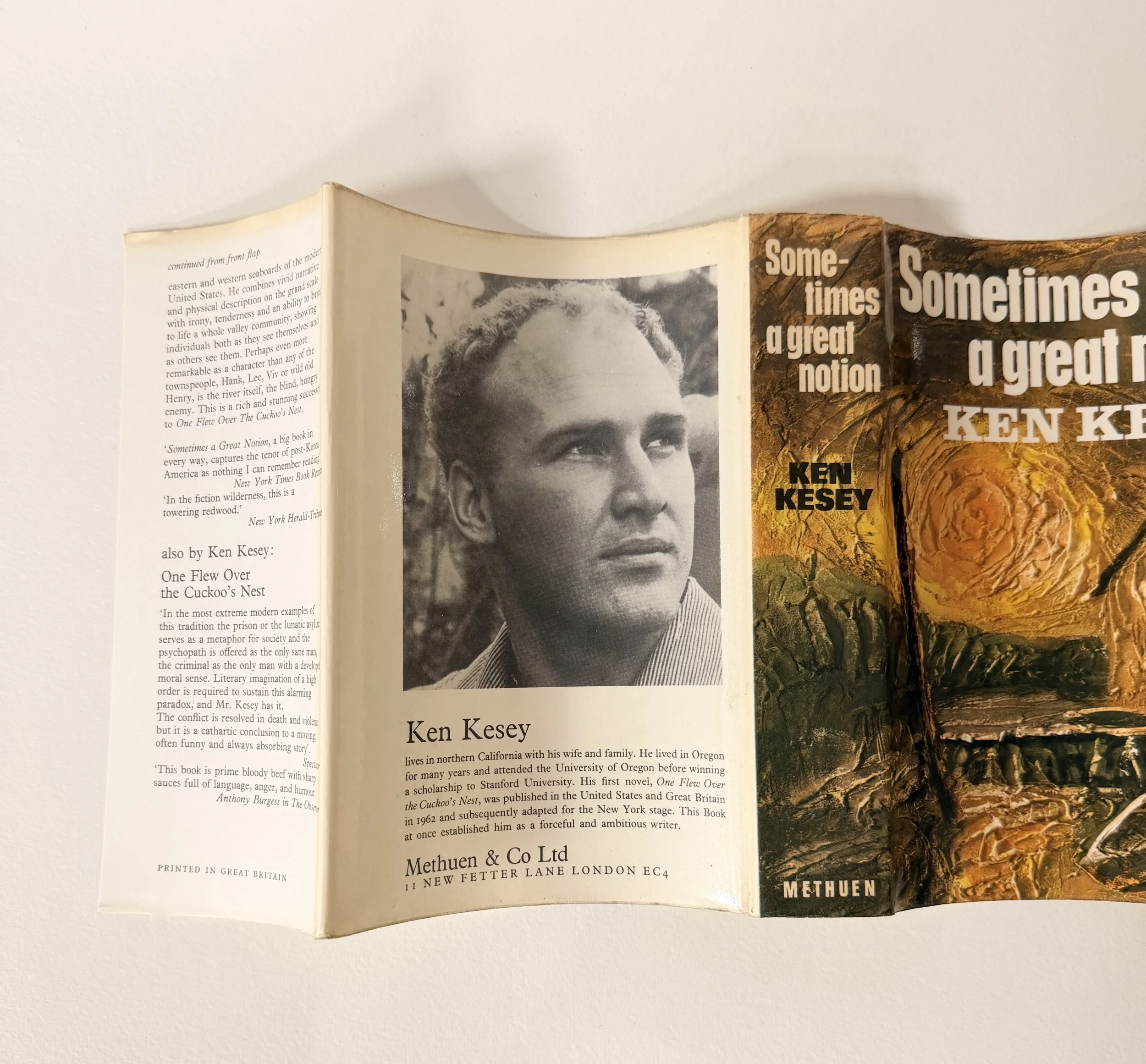 Image 5 of 5
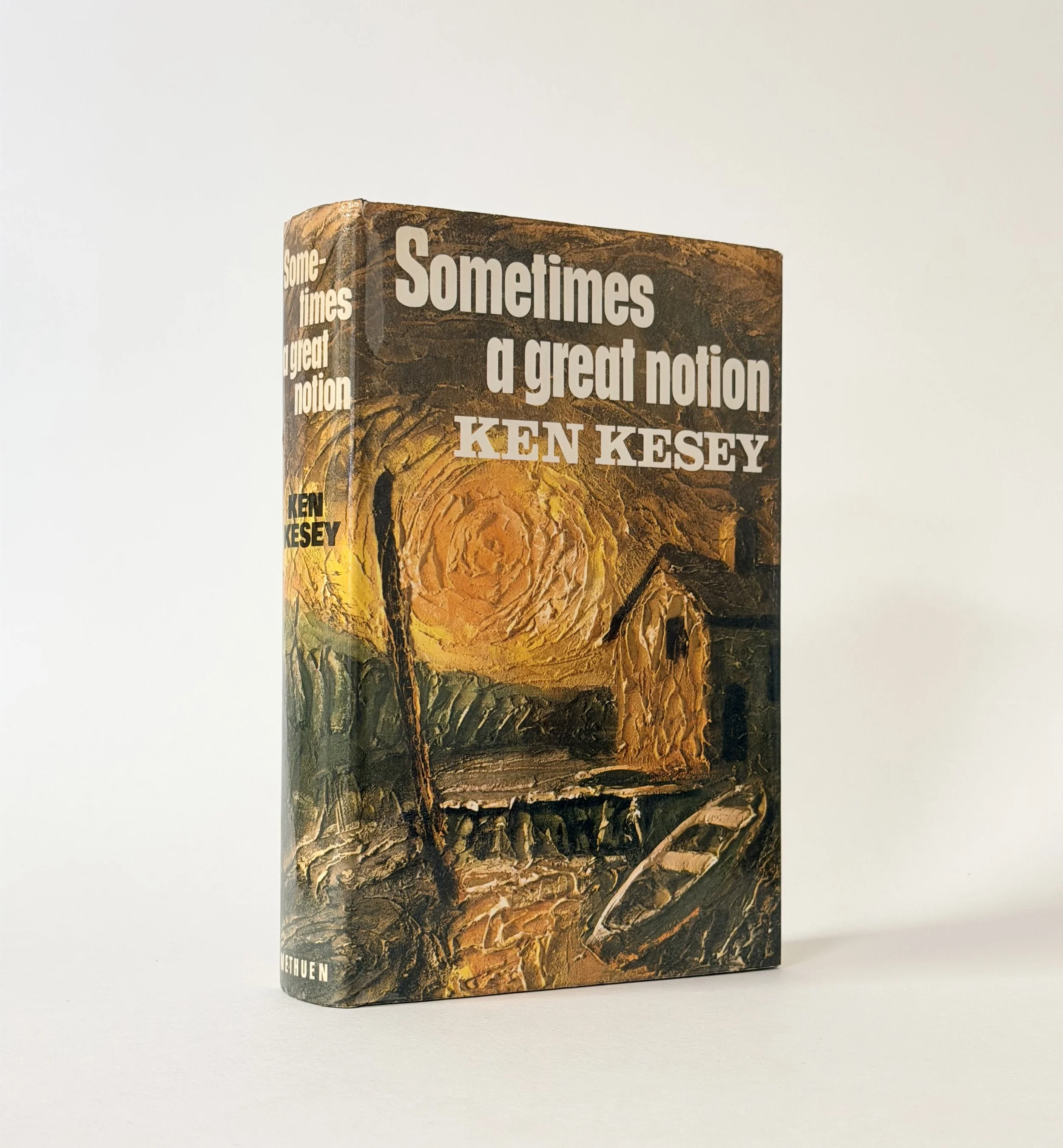
KESEY, Ken. Sometimes a Great Notion. London: Methuen. 1966. 8vo. First British edition, first printing. Publisher’s slate grey cloth lettered in gilt to the spine, in the dust jacket. An about fine copy, the cloth clean and bright, a trifle bumped at spine foot. The binding tight and square, the contents clean and fine without stamps, inscriptions, or foxing. The dust jacket unclipped (30s net) and about fine, just trivially bumped with very mild lamination lift at upper joint.
A smart copy of the scarce British edition of what is often considered Kesey’s magnum opus—it’s what he called it—despite his considerably wider acclaim for his earlier novel, One Flew Over the Cuckoo’s Nest (1962), immortalised by Miloš Forman’s film of the same name (1975). A familial epic in the East of Eden or One Hundred Years of Solitude sense, it follows with ‘fierce provincialism’ the Stamper family of loggers in Oregon and the historic strike which comes to define them in being, place, and time. The New York Herald Tribune aptly called it ‘a towering redwood’ of such fiction. This British edition, published two years after the American first, is considerably scarcer than its counterpart.
KESEY, Ken. Sometimes a Great Notion. London: Methuen. 1966. 8vo. First British edition, first printing. Publisher’s slate grey cloth lettered in gilt to the spine, in the dust jacket. An about fine copy, the cloth clean and bright, a trifle bumped at spine foot. The binding tight and square, the contents clean and fine without stamps, inscriptions, or foxing. The dust jacket unclipped (30s net) and about fine, just trivially bumped with very mild lamination lift at upper joint.
A smart copy of the scarce British edition of what is often considered Kesey’s magnum opus—it’s what he called it—despite his considerably wider acclaim for his earlier novel, One Flew Over the Cuckoo’s Nest (1962), immortalised by Miloš Forman’s film of the same name (1975). A familial epic in the East of Eden or One Hundred Years of Solitude sense, it follows with ‘fierce provincialism’ the Stamper family of loggers in Oregon and the historic strike which comes to define them in being, place, and time. The New York Herald Tribune aptly called it ‘a towering redwood’ of such fiction. This British edition, published two years after the American first, is considerably scarcer than its counterpart.