KAY-SCOTT, Cyril. (pseud. Frederick Creighton Wellman). Siren. London: Faber and Gwyer. 1925. 8vo. First edition. Publisher’s green cloth lettered in black to spine and front board with ruling to front board, in the wonderful dust jacket that goes uncredited. Printed dedication to ‘Elsa’, i.e. Evelyn Scott, the author’s common law wife. A very good copy. The boards with some light stains, particularly to front board upper, the corners and tips very gently bumped, but the binding tight and square. A few very mild marks within, but fine, with New York bookseller label to foot of rear endpaper. The dust jacket, evidently stored away from the book, with several vertical creases, most noticeably to front panel. One or two closed tears and mild rubbing to extremities, but a pleasing copy overall.
Cousin Belle! Cousin Belle! Cousin Belle! The author’s psychosexual third novel, all published under the Kay-Scott pseudonym after he eloped with then twenty-year-old Elsie Dunn, who later found considerable critical success for her masterful modernist novels written under her Evelyn Scott pseudonym—the pair endured years of poverty in Brazil prior. This novel in the somewhat slippery modernist narrative style, the eponymous siren Cousin Belle, ‘half-animal, perhaps half-saint’, with a tempestuously rebellious imagination who is ruled by sex from the off, both her own desires and the lust of all men who are not entirely oblivious to her age (she is thirteen at the start of the book). Such lust is not lost on cousin Freddie, whose Oedipal obsession with Belle is, though infuriating, quite skilfully explored by the author by way of the character’s first-person skittish rants which punctuate the novel, from childspeak to an existential level as he matures. It’s so deft, in fact, that one wonders if the obsession isn’t drawn from his own infatuation with Evelyn Scott on their first meeting some twelve years prior. In a letter between Evelyn and Otto Theis, dated 1923, Scott suggests her own publishers, Thomas Seltzer, had the manuscript for Siren but were hesitant to publish it. They didn’t, of course, but it’s unclear how it came to Geoffrey Faber, who published it in his new venture alongside Lady Gwyer, Faber & Gwyer. It was one of the publisher’s first publications as such. Scarce.

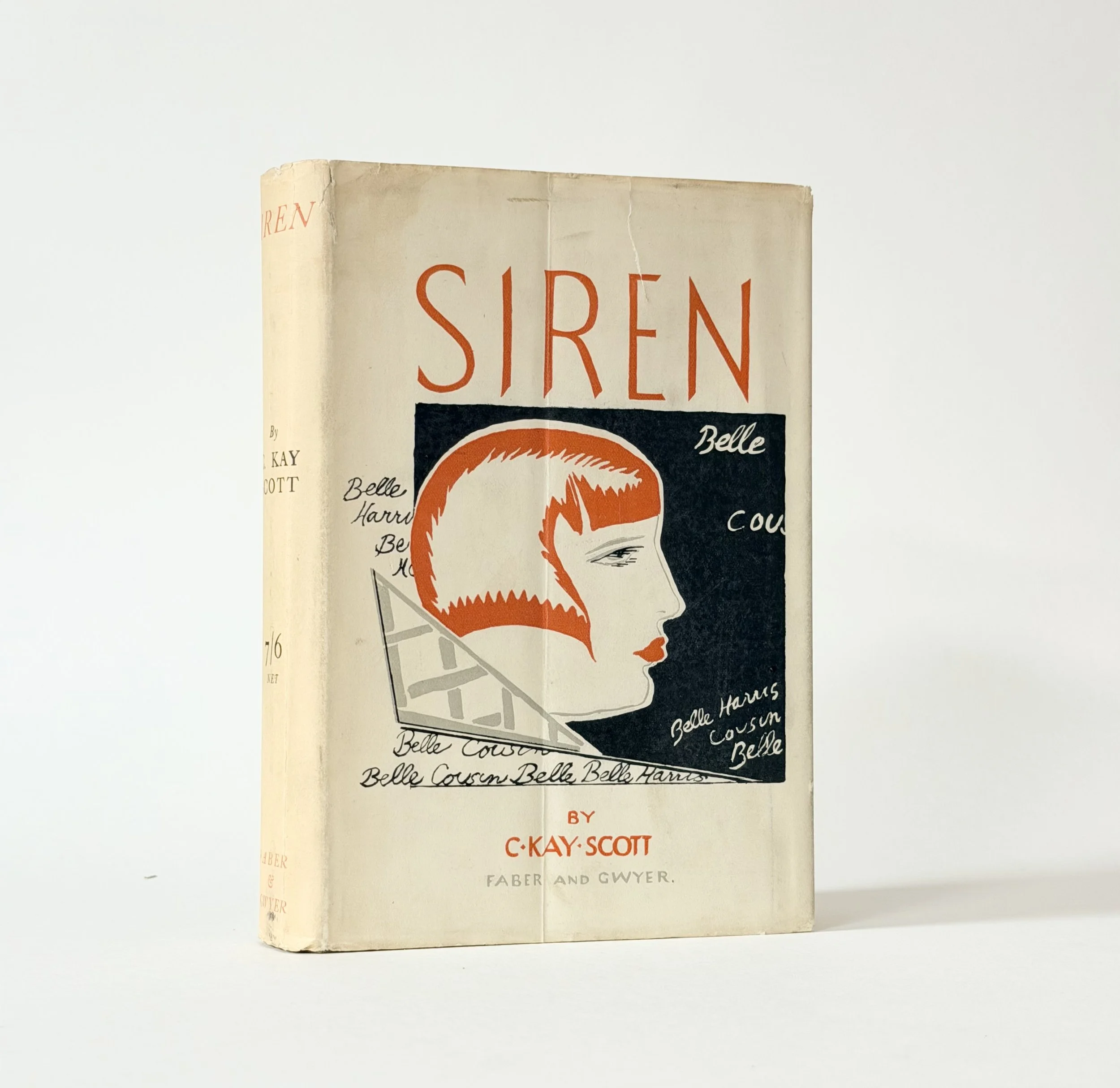 Image 1 of 6
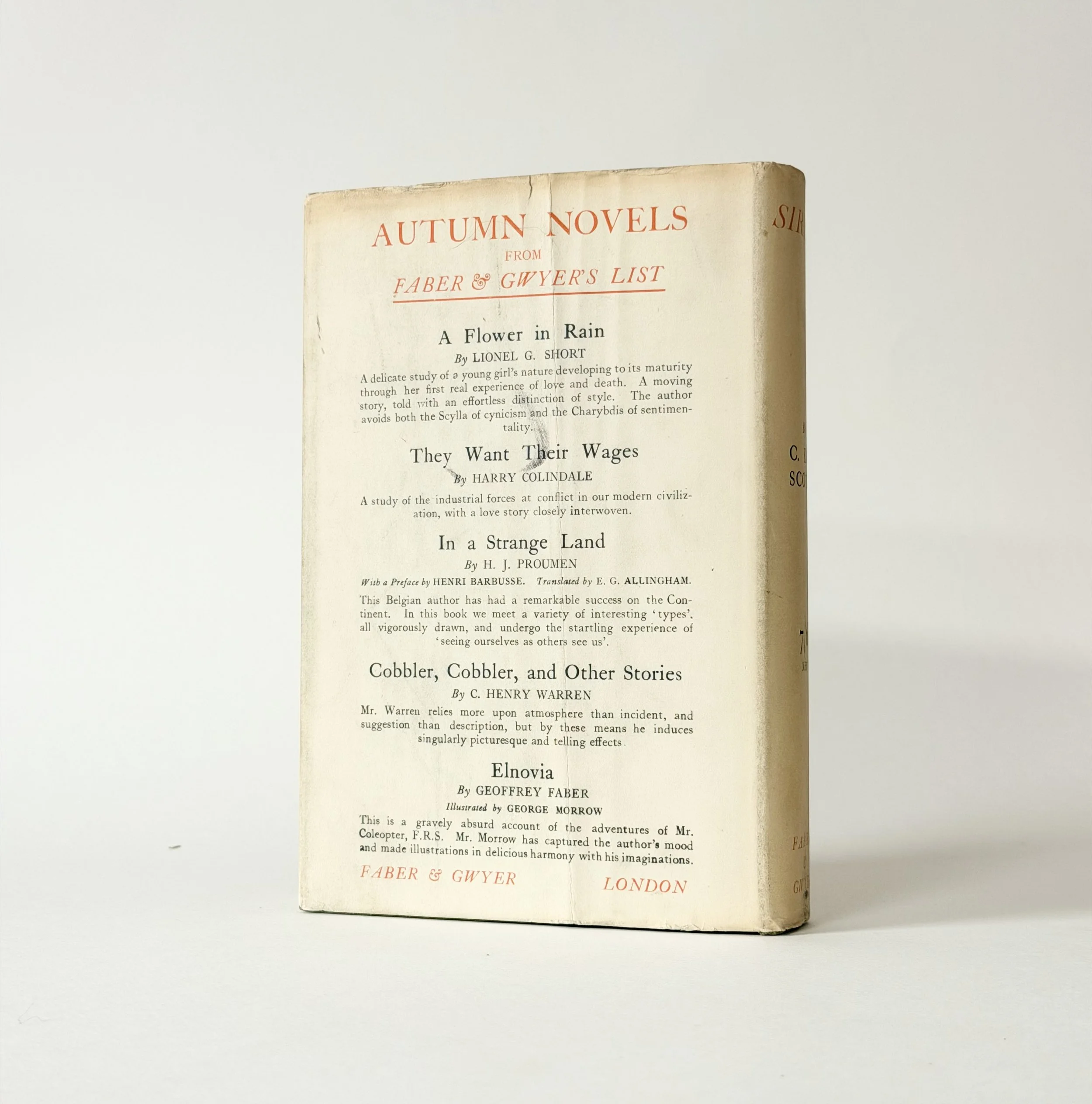 Image 2 of 6
 Image 3 of 6
 Image 4 of 6
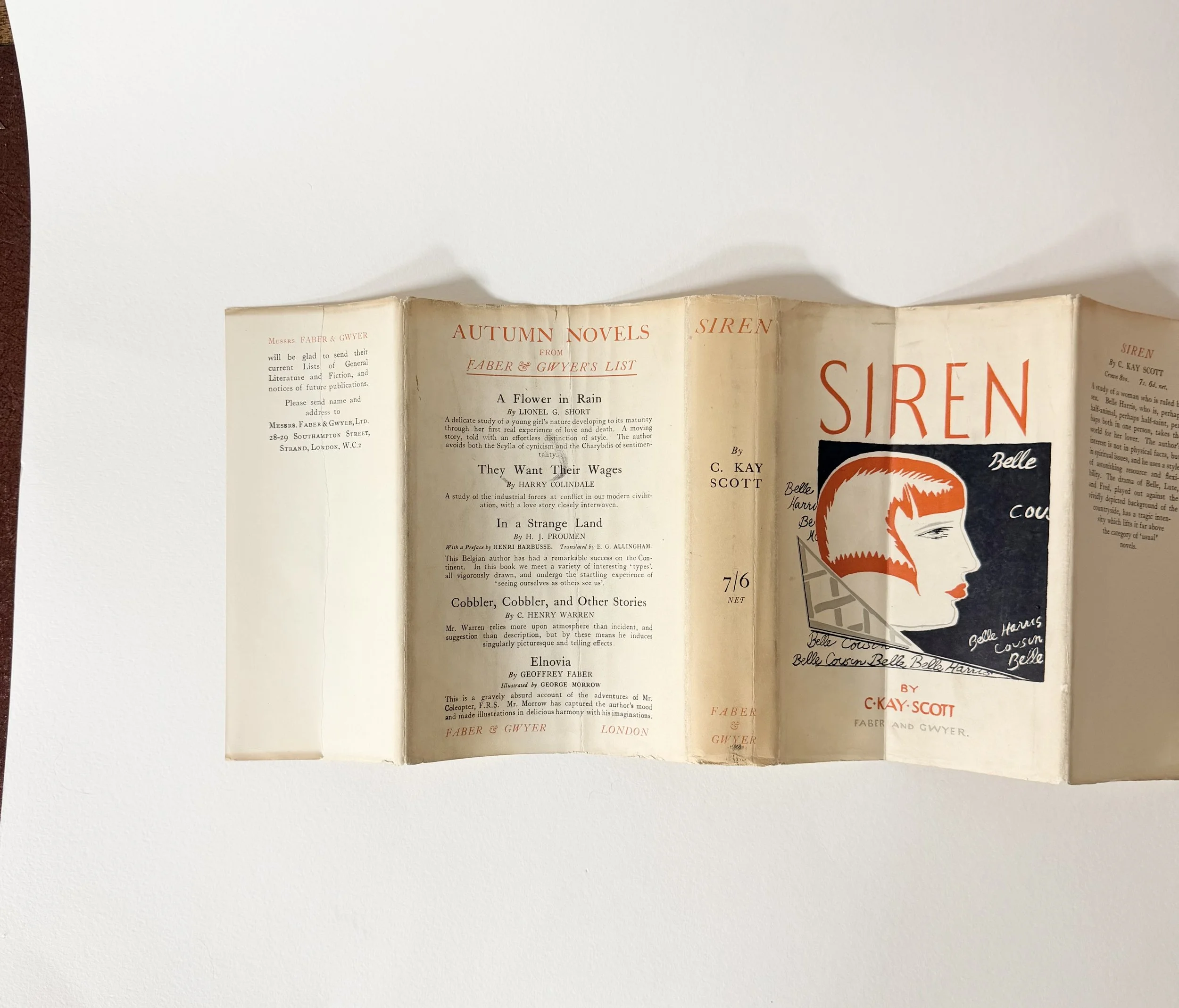 Image 5 of 6
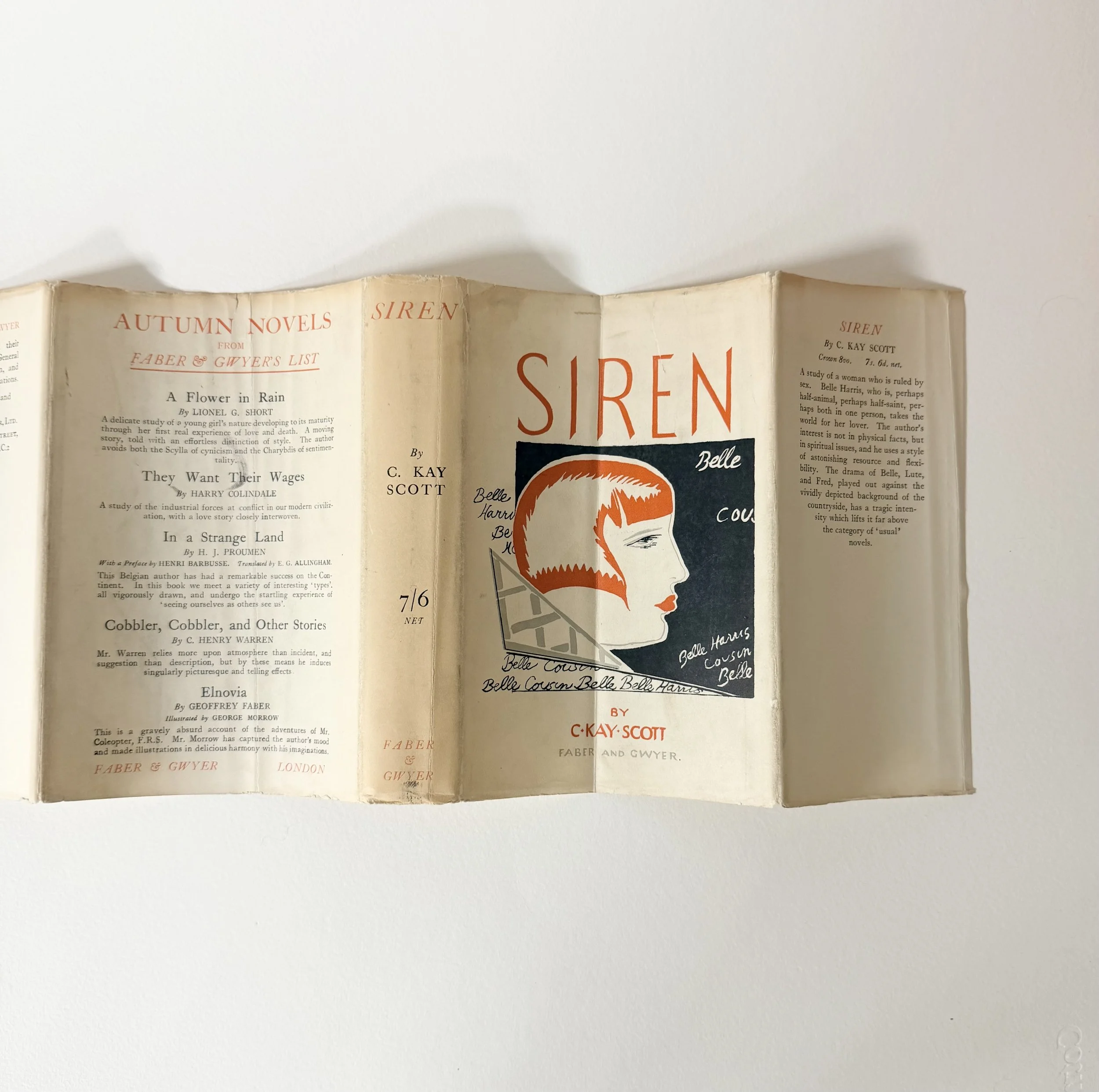 Image 6 of 6