
 Image 1 of 5
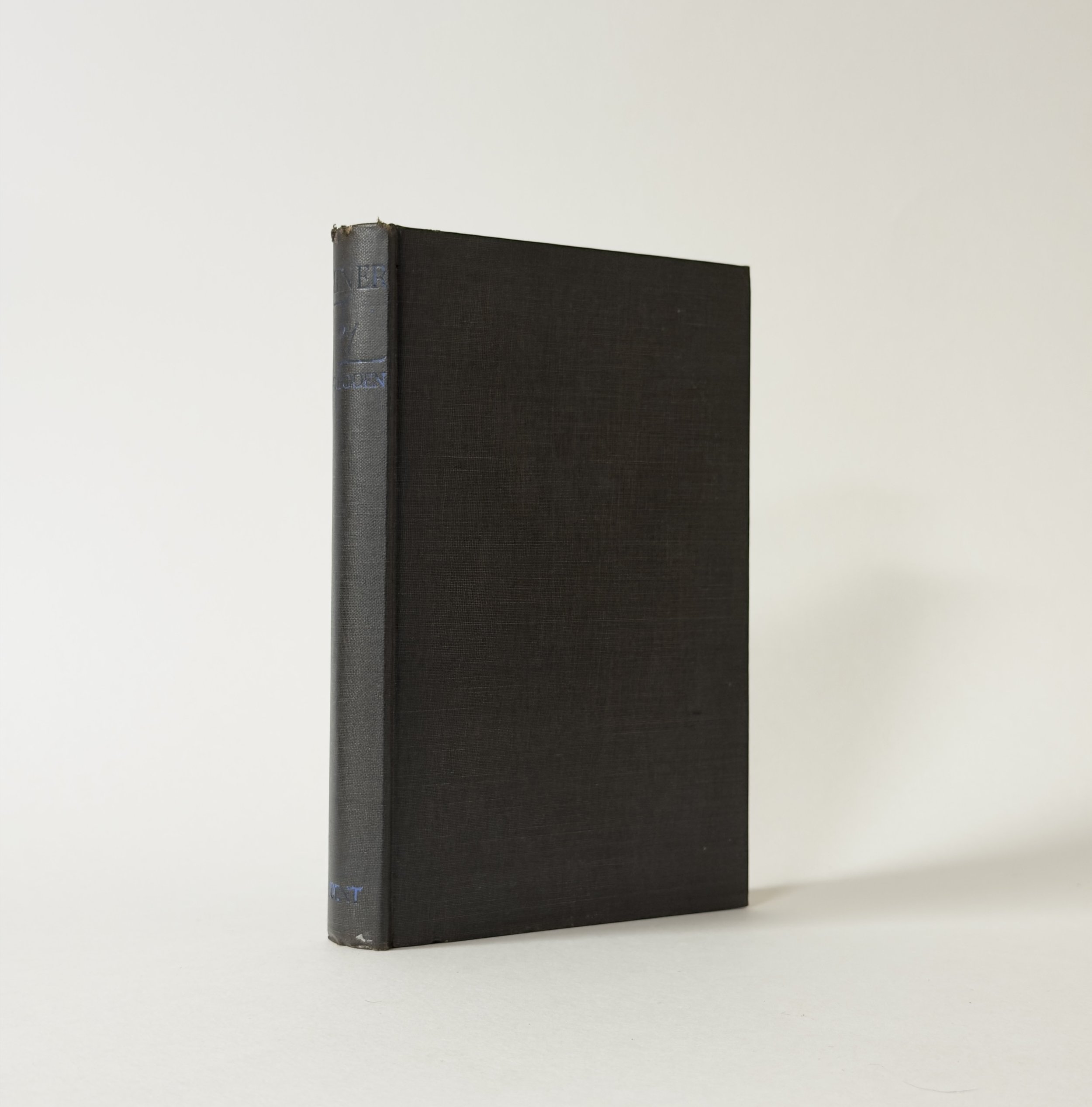 Image 2 of 5
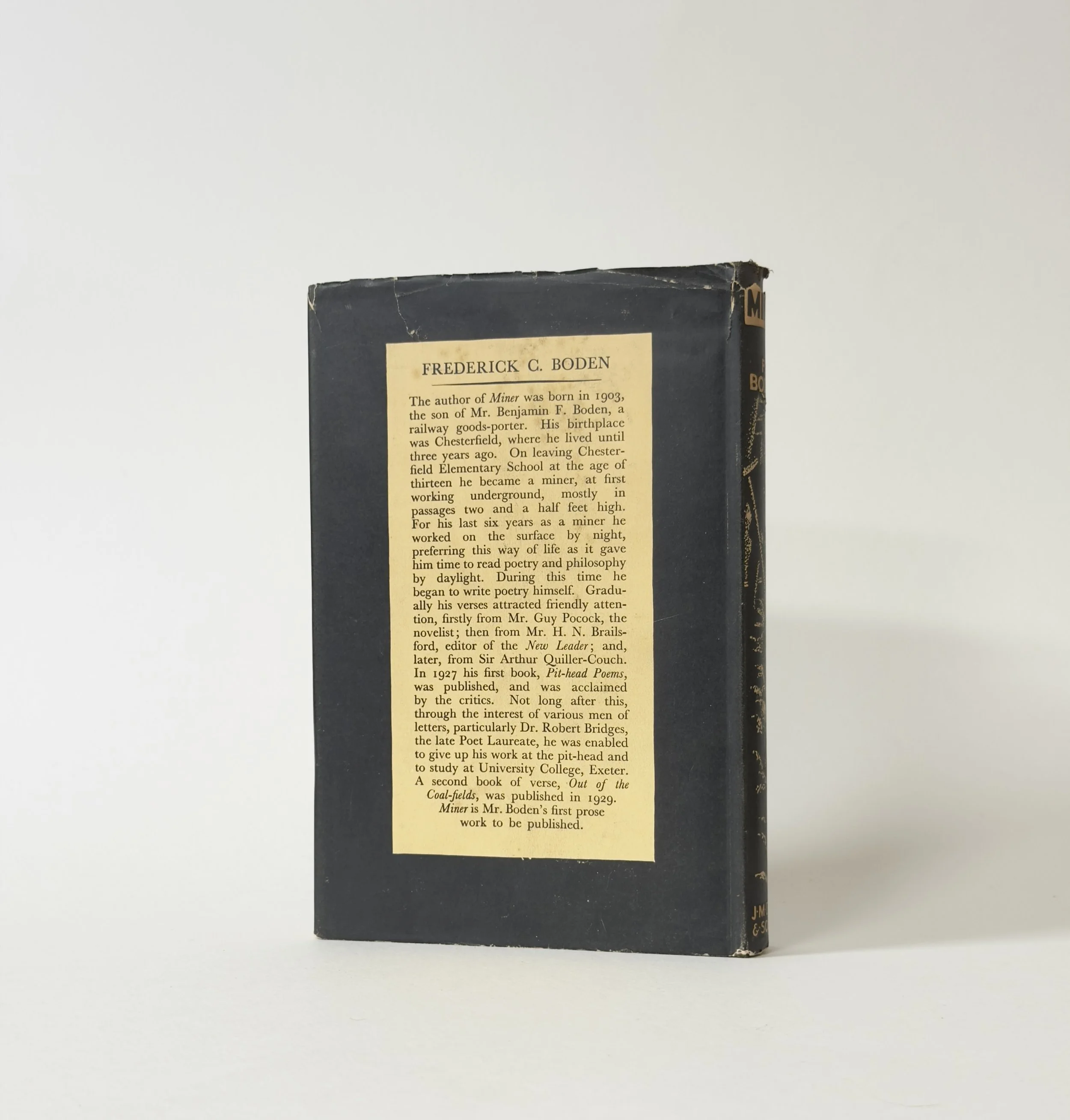 Image 3 of 5
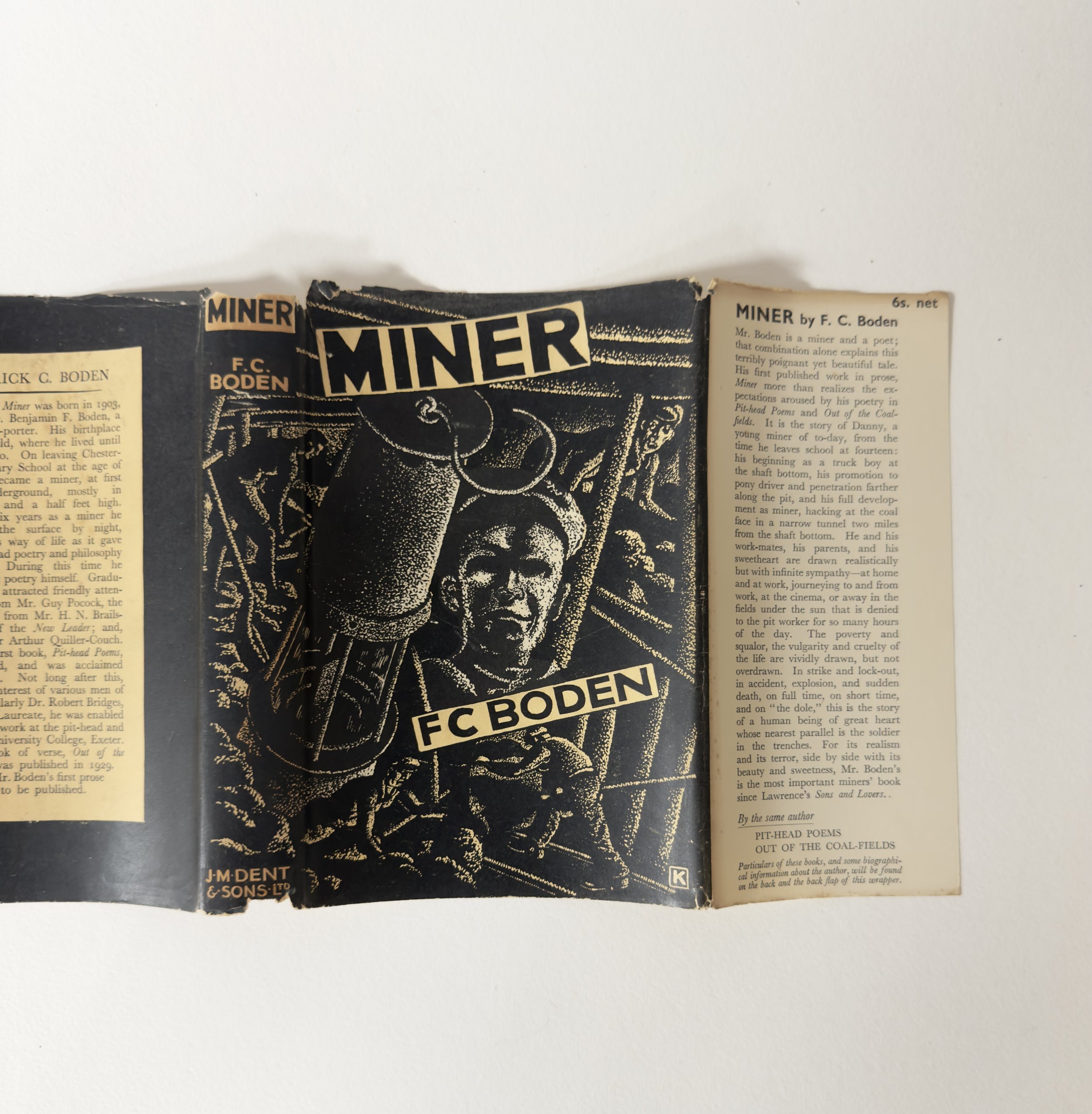 Image 4 of 5
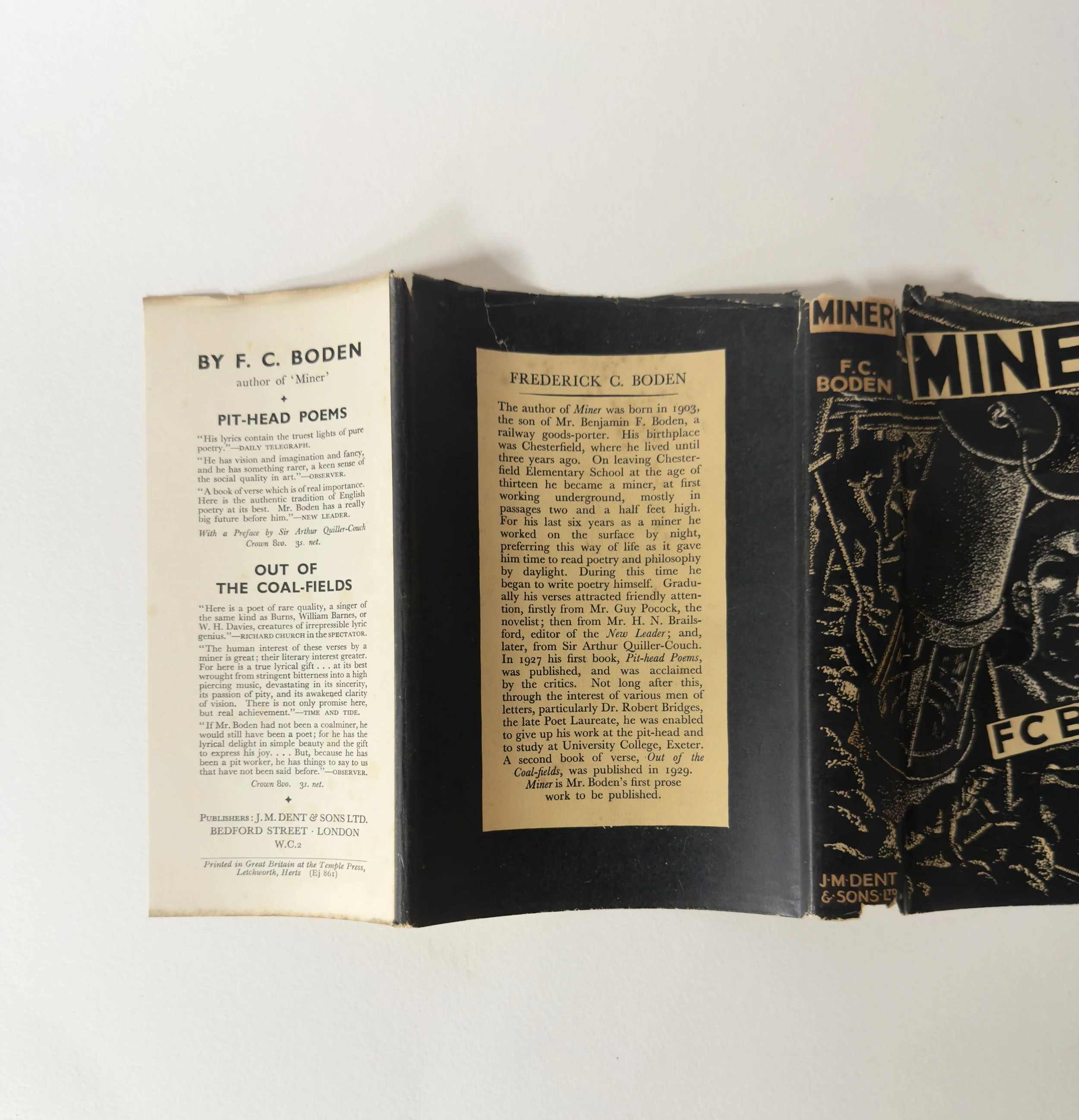 Image 5 of 5
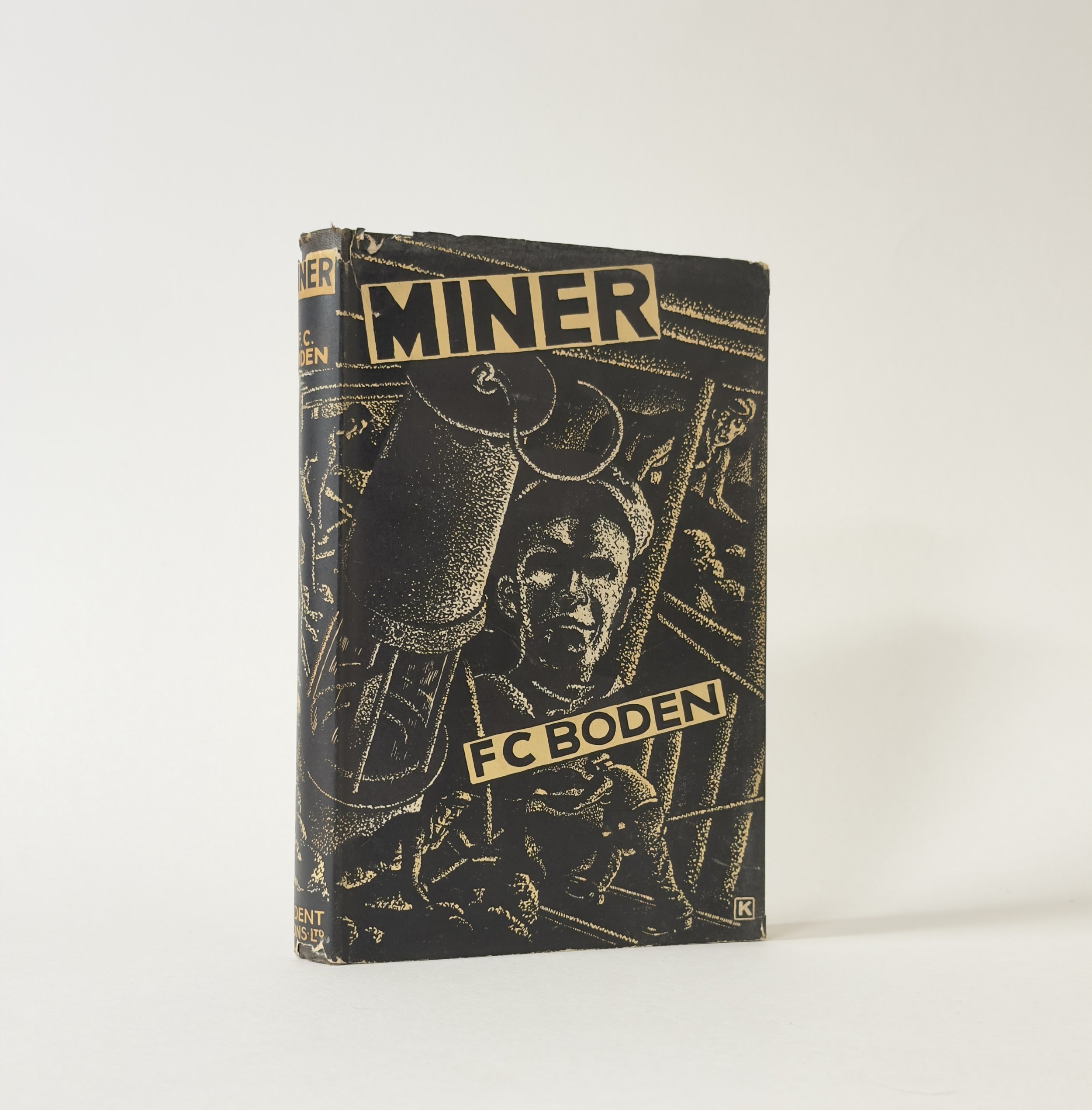
BODEN, Frederick Cyril. Miner. London: J. M. Dent. 1932. 8vo. First edition. Publisher’s review copy with ‘press copy’ slip loosely inserted. Publisher’s coal black cloth lettered in blue flame to the spine, in the suitably visceral monotone dust jacket designed by William Kermode. A very good copy. The cloth clean, though the blue lettering rubbed with a few nicks to crown. The binding tight and square, the contents mostly fine, with some singular spots to prelims, terminals and very occasionally elsewhere. The dust jacket unclipped (6s net), with a little loss around the spine head and much smaller nicks and chips to corners and foot, all quite coyly made discreet by the black cloth behind the busy design.
“Dad,” he said, quickly and eagerly, “Ah want to go to t’ pit.” So begins this unusually measured first novel telling the often grim, sometimes hopeful life of Danny, a fourteen-year-old boy straight out of school and straight down the coal-mines of Chesterfield, told via meticulously precise Chesterfield dialect—really, a very localised South Yorkshire accent—that is all too familiar to this cataloguer. (Seriously, it’s like I’m a child again, listening to my Dad and all his pals scold the working week just gone down at the worker’s as I rack up yet another game of pool, my fifth J2O beginning to take effect). It’s a considerable commendation in truth, the prose sophisticated and sincere, the story, told without glorification or empty drama, which follows Danny from his first day to the dole, “in strike and lock-out, in accident, explosion, and sudden death, full time, on short time, this is the story of a human being of great heart whose nearest parallel is the soldier in the trenches” (blurb). Percy Hillson of the New York Times called it “a remarkable first novel and a notable achievement at any stage of a writer's career". Its accuracy and control comes unquestionably from Boden’s own experiences—he was not fourteen but thirteen at his first pit entry, publishing two volumes of poetry before this, earning him the nickname ‘Chesterfield’s Lawrence’. Two further novels appeared before he managed to escape that toilsome life, moving to Exeter—where his wife was from—and becoming a Lecturer of Logic and Philosophy for the Worker’s Education Association. William Kermode’s conscious choice to use black and white for the jacket design points to his skill and understanding of his craft. A scarce and important novel.
BODEN, Frederick Cyril. Miner. London: J. M. Dent. 1932. 8vo. First edition. Publisher’s review copy with ‘press copy’ slip loosely inserted. Publisher’s coal black cloth lettered in blue flame to the spine, in the suitably visceral monotone dust jacket designed by William Kermode. A very good copy. The cloth clean, though the blue lettering rubbed with a few nicks to crown. The binding tight and square, the contents mostly fine, with some singular spots to prelims, terminals and very occasionally elsewhere. The dust jacket unclipped (6s net), with a little loss around the spine head and much smaller nicks and chips to corners and foot, all quite coyly made discreet by the black cloth behind the busy design.
“Dad,” he said, quickly and eagerly, “Ah want to go to t’ pit.” So begins this unusually measured first novel telling the often grim, sometimes hopeful life of Danny, a fourteen-year-old boy straight out of school and straight down the coal-mines of Chesterfield, told via meticulously precise Chesterfield dialect—really, a very localised South Yorkshire accent—that is all too familiar to this cataloguer. (Seriously, it’s like I’m a child again, listening to my Dad and all his pals scold the working week just gone down at the worker’s as I rack up yet another game of pool, my fifth J2O beginning to take effect). It’s a considerable commendation in truth, the prose sophisticated and sincere, the story, told without glorification or empty drama, which follows Danny from his first day to the dole, “in strike and lock-out, in accident, explosion, and sudden death, full time, on short time, this is the story of a human being of great heart whose nearest parallel is the soldier in the trenches” (blurb). Percy Hillson of the New York Times called it “a remarkable first novel and a notable achievement at any stage of a writer's career". Its accuracy and control comes unquestionably from Boden’s own experiences—he was not fourteen but thirteen at his first pit entry, publishing two volumes of poetry before this, earning him the nickname ‘Chesterfield’s Lawrence’. Two further novels appeared before he managed to escape that toilsome life, moving to Exeter—where his wife was from—and becoming a Lecturer of Logic and Philosophy for the Worker’s Education Association. William Kermode’s conscious choice to use black and white for the jacket design points to his skill and understanding of his craft. A scarce and important novel.