
 Image 1 of 3
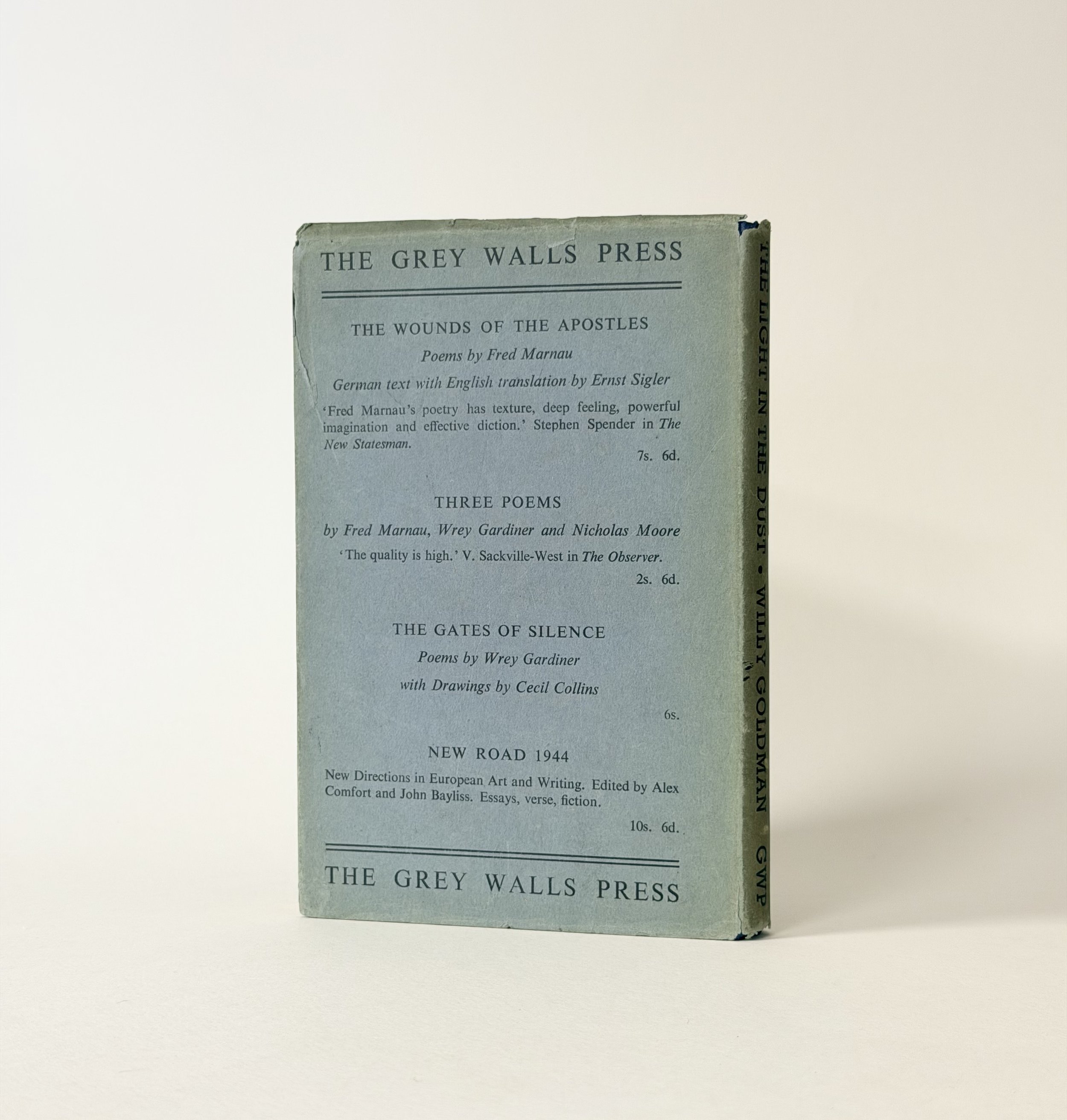 Image 2 of 3
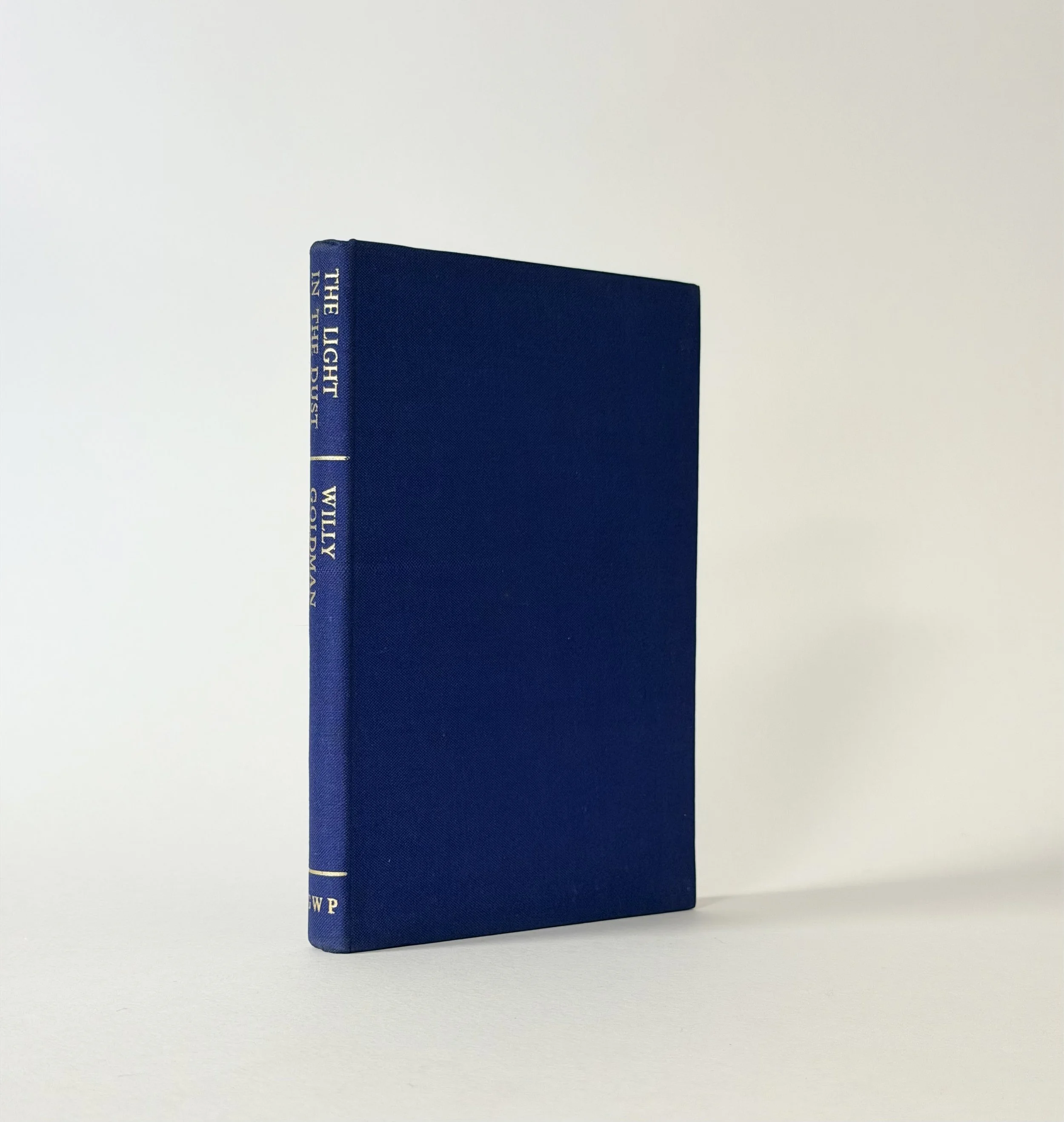 Image 3 of 3
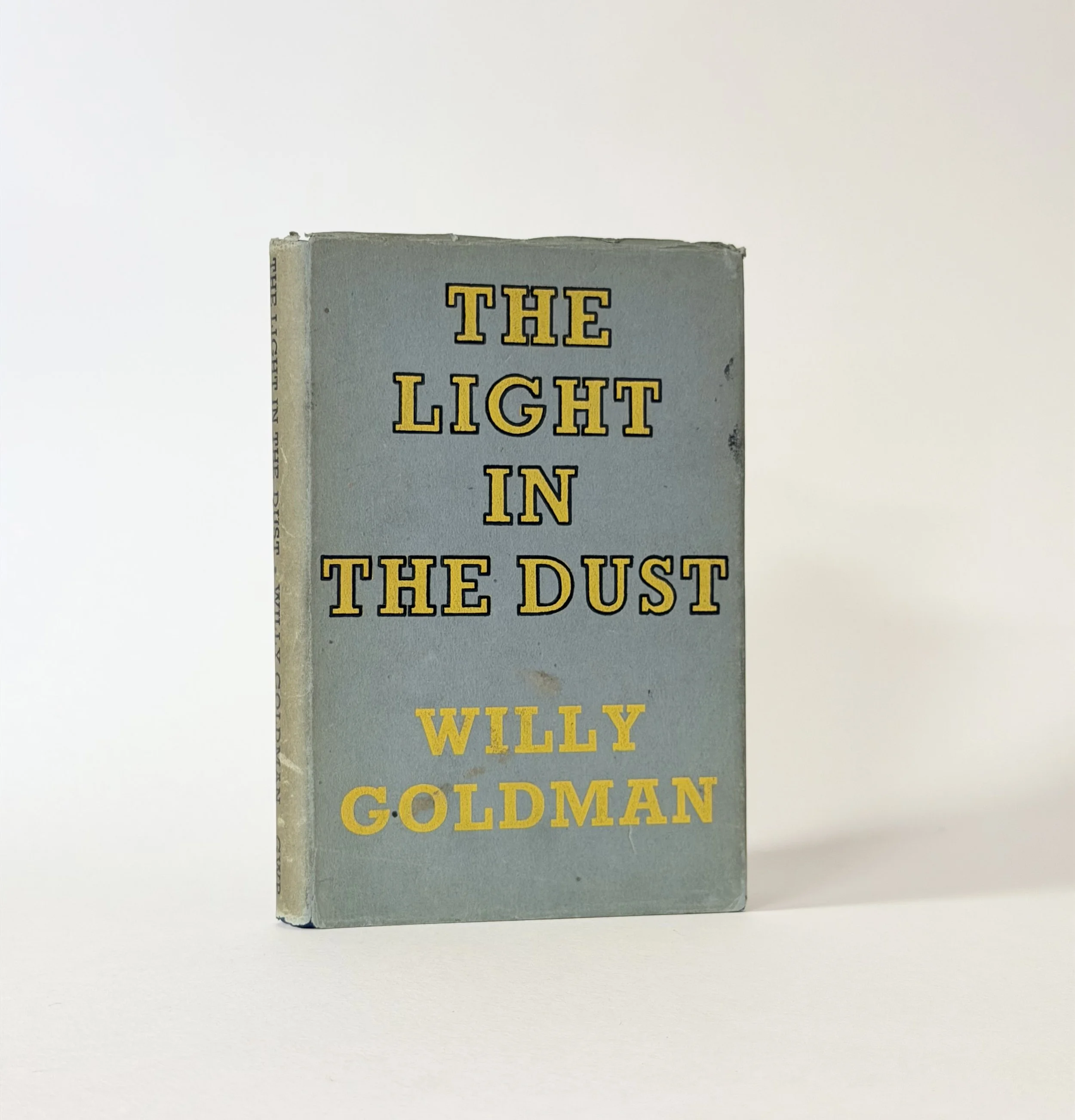
GOLDMAN, Willy. The Light in the Dust. London: The Grey Walls Press. 1944. 8vo. First edition. Publisher’s bright blue cloth lettered in gilt to the spine, in the dust jacket. A very good copy. The cloth clean and just gently bumped to extremities. The binding tight and square, a few mild spots to textblock edges, the contents largely fine. The dust jacket unclipped (7s 6d net) with a few light marks and stains, a small handful of closed tears and chips.
The London author’s second novel—his first was the continually-in-print East End My Cradle (1940) which serves as an excellent portrait of East End London Jewish life. This builds on that early success with unusual style, written in a well-crafted ‘historic present’ tense, an offshoot of the the diary form. It follows the closing months of a Jewish struggling artist, purportedly mirrored entirely on the author’s own close friend who wound up committing suicide via poison—according to the author’s introduction—although it is perhaps in fact a thinly-disguised self-portrait. Set in the mid-30s, our aspiring writer’s mind has ‘ceased to look objectively at the world’ as he slips into poverty amid brief respites of European vagabondage. Goldman’s own experiences of the 30s were not dissimilar, but he got a break when the publisher John Lehmann, who oft gave opportunities to up-and-comers, brought him into the New Writing fold where he eventually worked as editor, becoming, apparently, a son-like figure to Lehmann. Austria plays a role in this novel, and it was in Ausitra—funded by Lehmann—that Goldman was able to write his debut East End My Cradle. His always left-leaning, often satirical novels of this period and well into the forties have swayed some to place Goldman a precursor to the Angry Young Men that came a generation or so afterwards, though the Jewish experience was usually a central theme in his novels. Uncommon.
GOLDMAN, Willy. The Light in the Dust. London: The Grey Walls Press. 1944. 8vo. First edition. Publisher’s bright blue cloth lettered in gilt to the spine, in the dust jacket. A very good copy. The cloth clean and just gently bumped to extremities. The binding tight and square, a few mild spots to textblock edges, the contents largely fine. The dust jacket unclipped (7s 6d net) with a few light marks and stains, a small handful of closed tears and chips.
The London author’s second novel—his first was the continually-in-print East End My Cradle (1940) which serves as an excellent portrait of East End London Jewish life. This builds on that early success with unusual style, written in a well-crafted ‘historic present’ tense, an offshoot of the the diary form. It follows the closing months of a Jewish struggling artist, purportedly mirrored entirely on the author’s own close friend who wound up committing suicide via poison—according to the author’s introduction—although it is perhaps in fact a thinly-disguised self-portrait. Set in the mid-30s, our aspiring writer’s mind has ‘ceased to look objectively at the world’ as he slips into poverty amid brief respites of European vagabondage. Goldman’s own experiences of the 30s were not dissimilar, but he got a break when the publisher John Lehmann, who oft gave opportunities to up-and-comers, brought him into the New Writing fold where he eventually worked as editor, becoming, apparently, a son-like figure to Lehmann. Austria plays a role in this novel, and it was in Ausitra—funded by Lehmann—that Goldman was able to write his debut East End My Cradle. His always left-leaning, often satirical novels of this period and well into the forties have swayed some to place Goldman a precursor to the Angry Young Men that came a generation or so afterwards, though the Jewish experience was usually a central theme in his novels. Uncommon.