
 Image 1 of 5
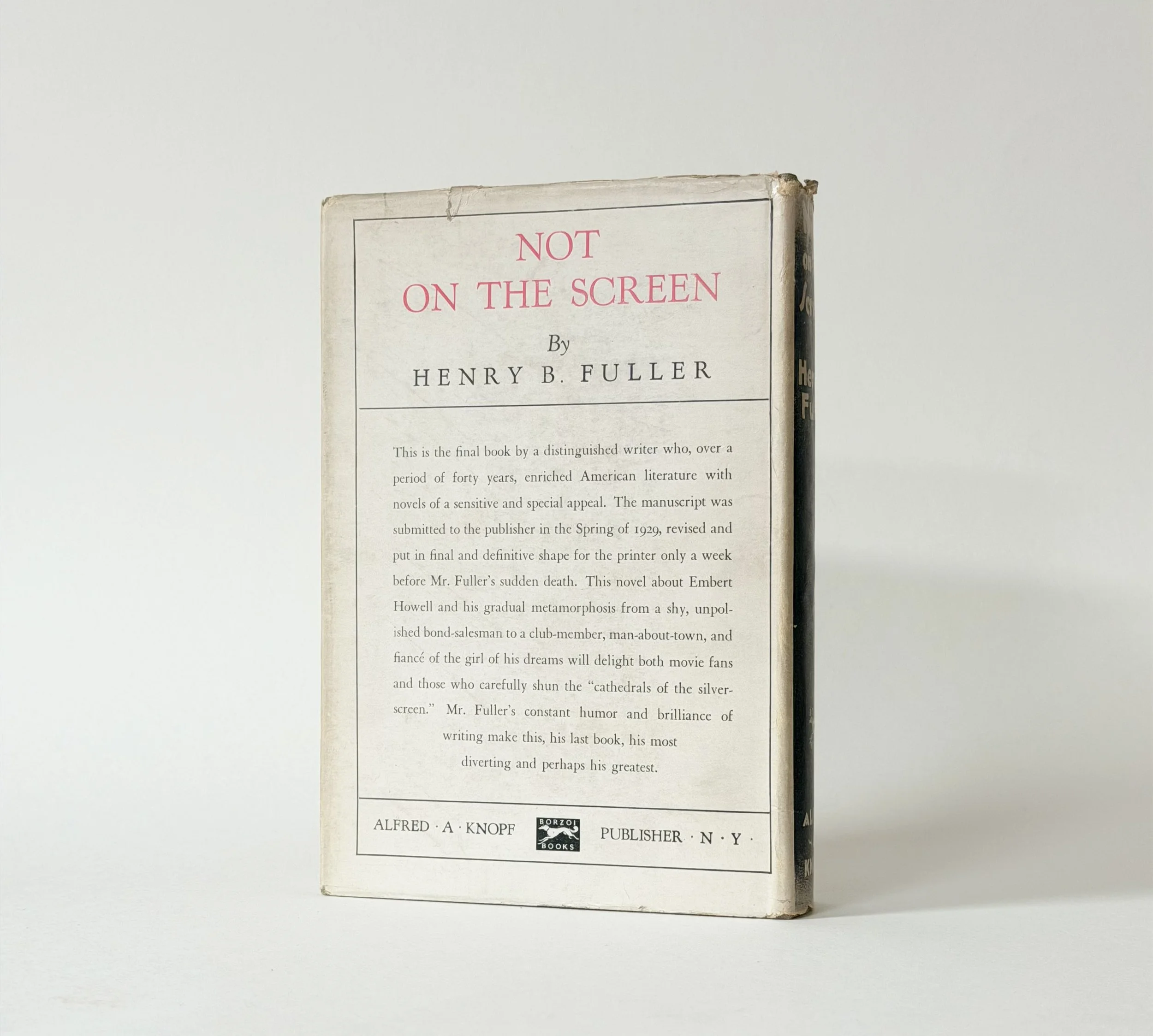 Image 2 of 5
 Image 3 of 5
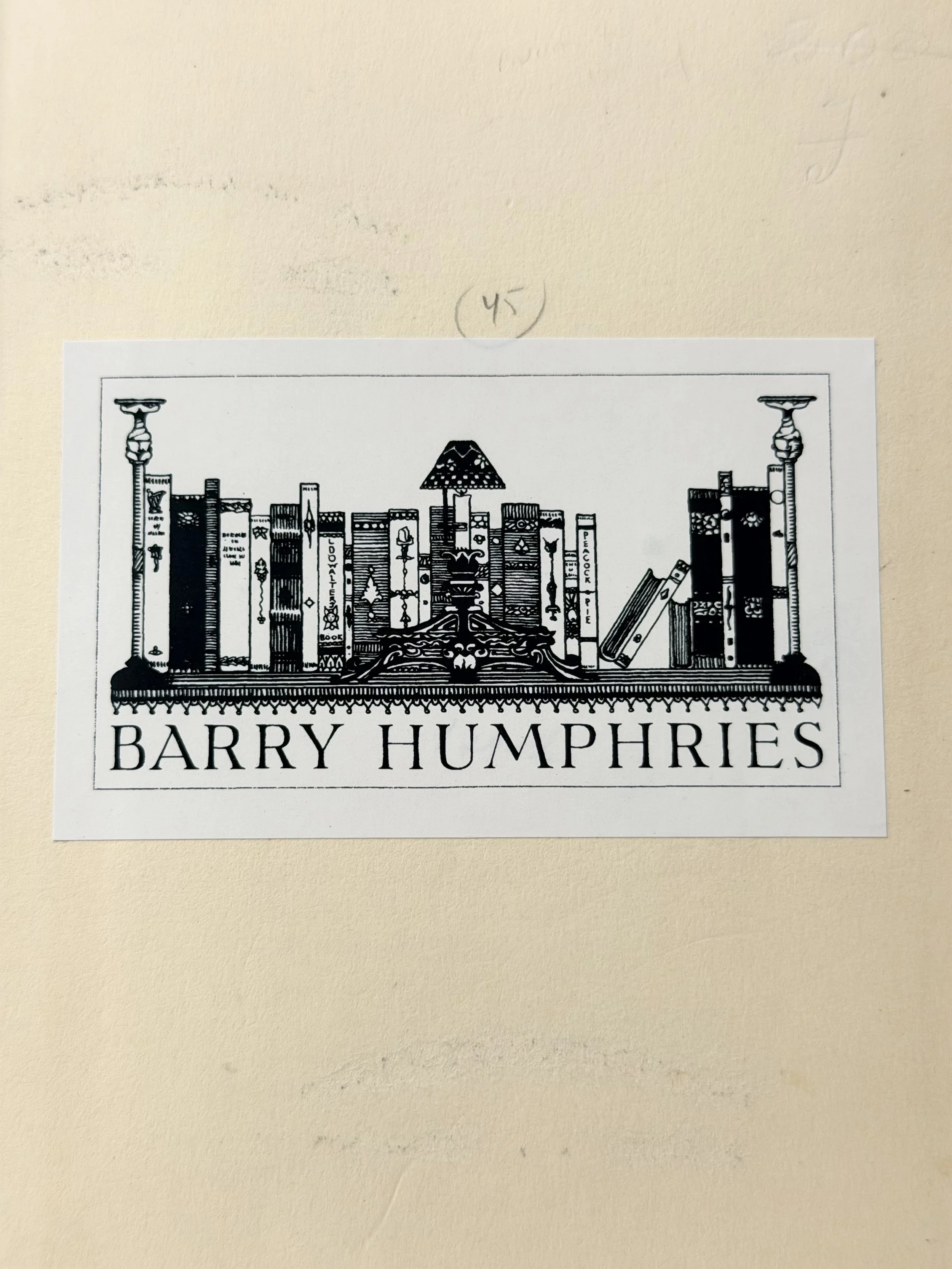 Image 4 of 5
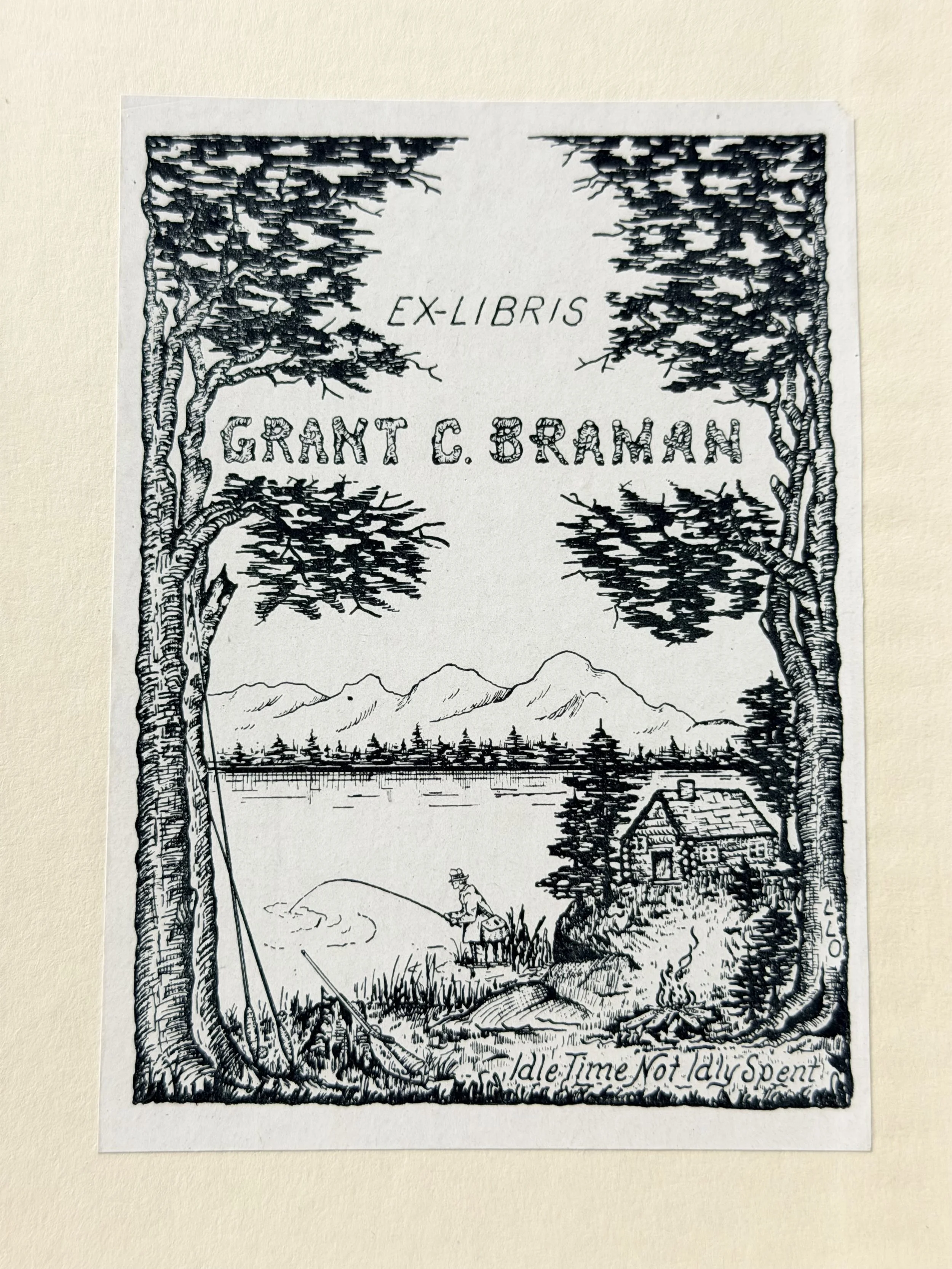 Image 5 of 5
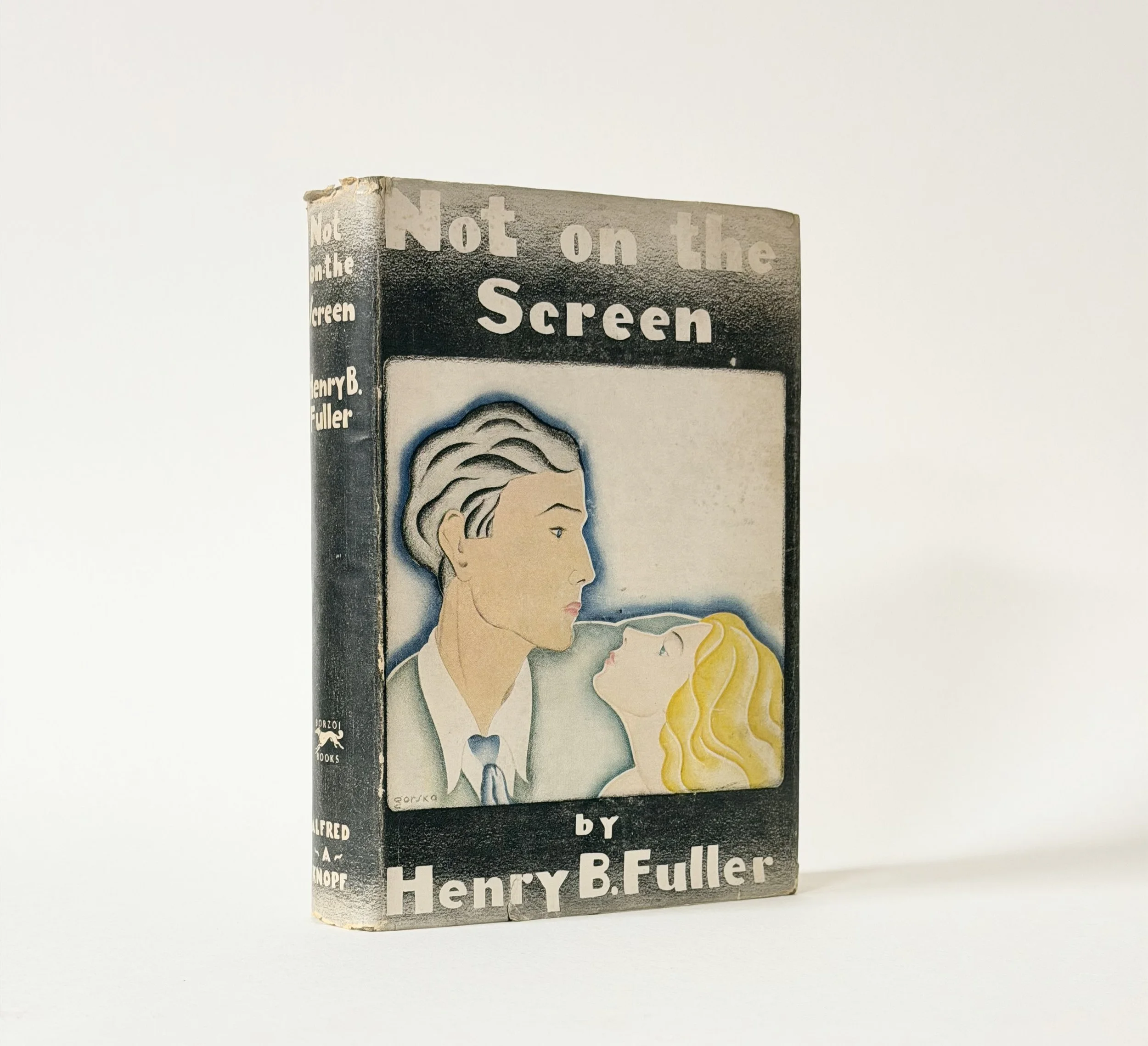
FULLER, Henry Blake. Not on the Screen. New York: Alfred A. Knopf. 1930. 8vo. First edition, first printing, one of three thousand numbered copies, this numbered 678. Publisher’s grey cloth lettered in black and gilt to the spine, in the dust jacket designed by Gorska in their usual art deco style. A very good copy overall, the cloth slightly toned and discoloured towards the extremities, the binding tight and square, the topstain bright. The contents generally clean, with ‘Colonial Circulating Library, Portland, Oregon’ stamp to the contents page, very faintly repeated to front endpaper, though no other library markings. This copy from the library of Australian comedian, Barry Humphries, equally famous perhaps for his persona Dame Edna Everage. Humphries was a noted bibliophile, and his attractive bookplate can be seen on the front endpaper. Another attractive bookplate of Grant Centenial Braman’s adorns the front pastedown obscured entirely by the front flap. The contents otherwise clean throughout. The dust jacket unclipped ($2.50) gently rubbed at spine head and tail, and at the corners, but a sharper than usual example.
The final novel by the Chicago author, posthumously published—he died only a week after the manuscript was submitted, and the publisher’s glowing reviews of his life and work to the front flap and colophon are a genuinely pleasing and uncommon send-off. He was the first established American author to write about Chicago city life and one of the first to explore homosexuality in fiction. Borne out of his growing interest in Hollywood, this one follows a shy and unpolished salesman’s metamorphosis into a man-about-town able to attract the girl of his dreams—a film-star. It was a return to form figuratively and literally—his previous novel, Bertram Cope’s Year, later dubbed ‘the first American homosexual novel’, was poorly received due in part to its homosexual content.
FULLER, Henry Blake. Not on the Screen. New York: Alfred A. Knopf. 1930. 8vo. First edition, first printing, one of three thousand numbered copies, this numbered 678. Publisher’s grey cloth lettered in black and gilt to the spine, in the dust jacket designed by Gorska in their usual art deco style. A very good copy overall, the cloth slightly toned and discoloured towards the extremities, the binding tight and square, the topstain bright. The contents generally clean, with ‘Colonial Circulating Library, Portland, Oregon’ stamp to the contents page, very faintly repeated to front endpaper, though no other library markings. This copy from the library of Australian comedian, Barry Humphries, equally famous perhaps for his persona Dame Edna Everage. Humphries was a noted bibliophile, and his attractive bookplate can be seen on the front endpaper. Another attractive bookplate of Grant Centenial Braman’s adorns the front pastedown obscured entirely by the front flap. The contents otherwise clean throughout. The dust jacket unclipped ($2.50) gently rubbed at spine head and tail, and at the corners, but a sharper than usual example.
The final novel by the Chicago author, posthumously published—he died only a week after the manuscript was submitted, and the publisher’s glowing reviews of his life and work to the front flap and colophon are a genuinely pleasing and uncommon send-off. He was the first established American author to write about Chicago city life and one of the first to explore homosexuality in fiction. Borne out of his growing interest in Hollywood, this one follows a shy and unpolished salesman’s metamorphosis into a man-about-town able to attract the girl of his dreams—a film-star. It was a return to form figuratively and literally—his previous novel, Bertram Cope’s Year, later dubbed ‘the first American homosexual novel’, was poorly received due in part to its homosexual content.