
 Image 1 of 3
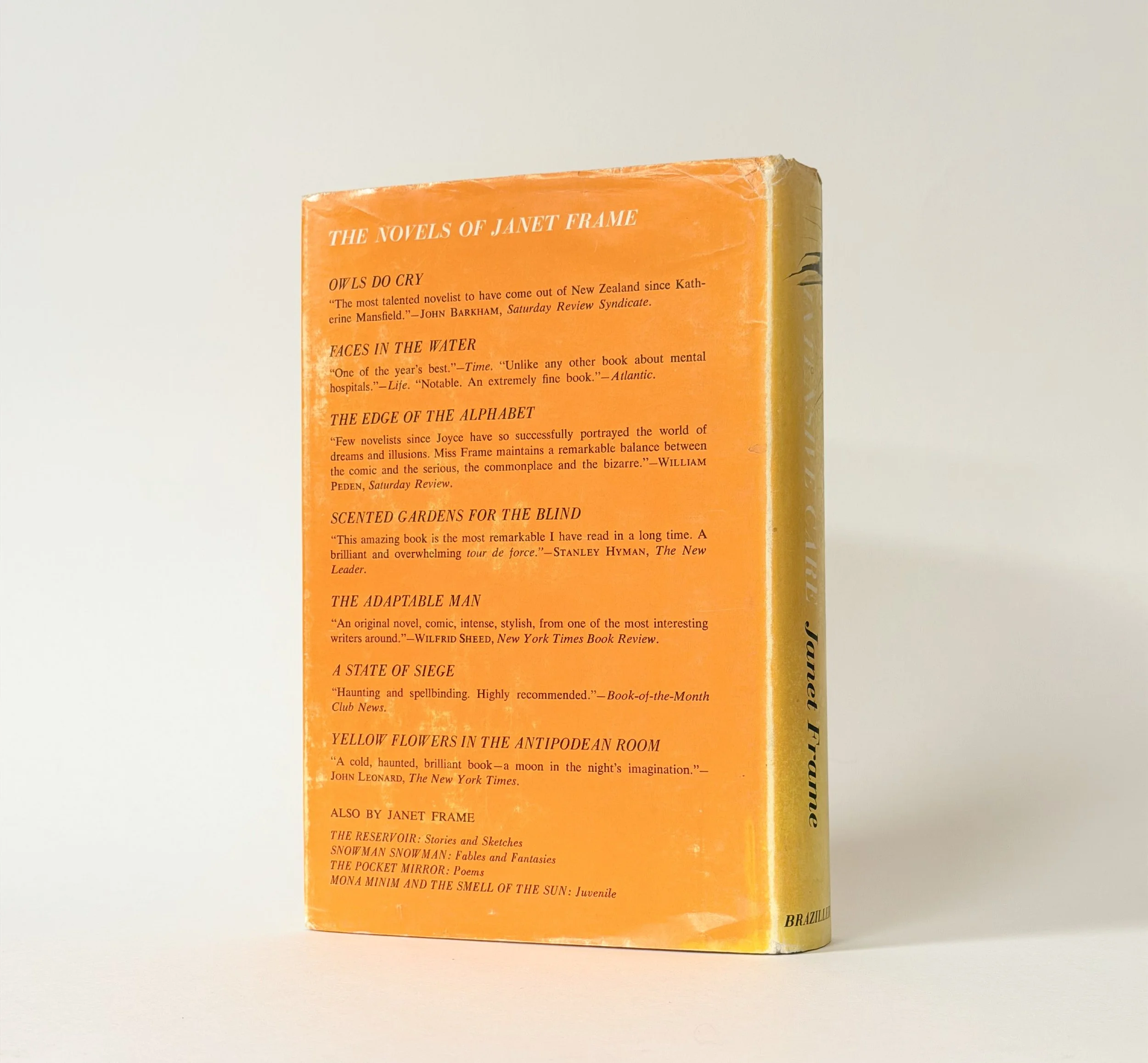 Image 2 of 3
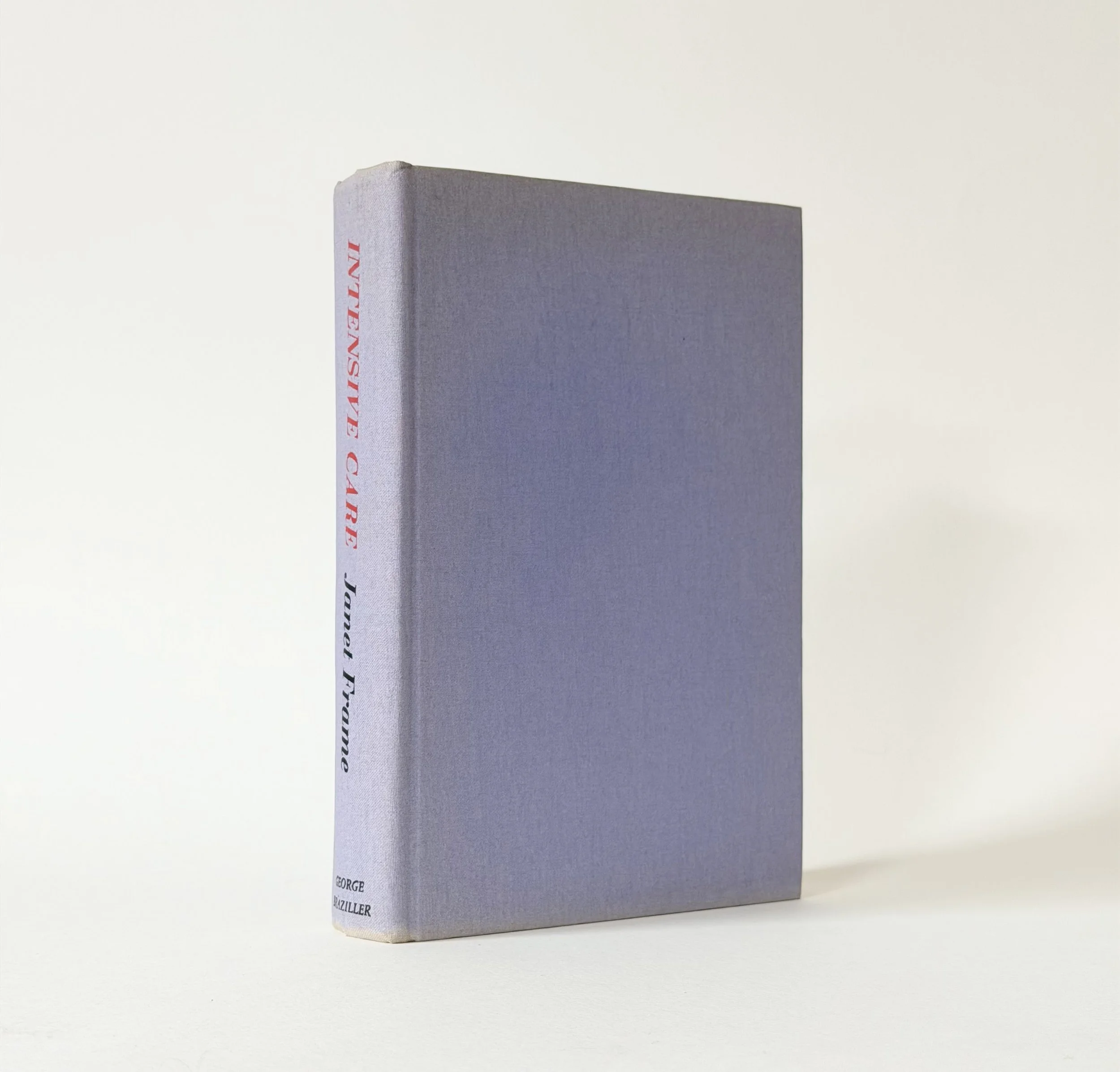 Image 3 of 3
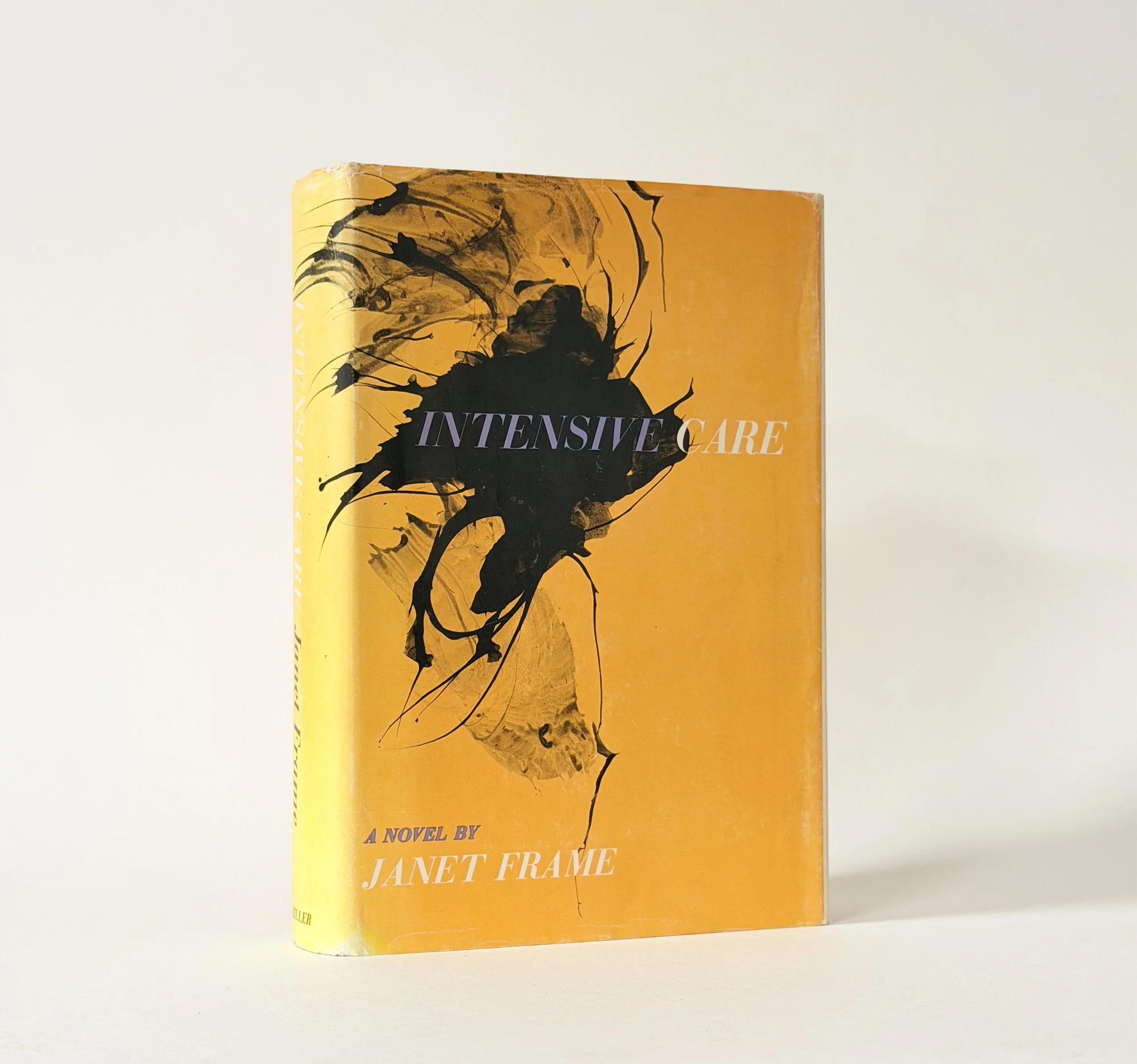
FRAME, Janet. Intensive Care. New York: George Braziller. 1970. 8vo. First edition, first printing, preceding both the UK and NZ editions by one year. Publisher’s pale blue cloth lettered in red and black to the spine, in the dust jacket designed by Ati Forberg. A very good or better copy, the cloth clean and bright, a trifle faded at spine. The binding tight and square, the contents clean throughout. The dust jacket unclipped ($6.95) and complete, gently rubbed along the corners and spine tips, the spine slightly faded, but a sharp copy of a rather uncommon book.
Often cited as one of Frame’s stronger novels, about a wounded war veteran and his surreal journey into the meaning of life and loss, from that Flanders battlefield to a dreamlike apocalyptic future. Nearly but not quite fantasy a la Peake’s Gormenghast, it traces that undefinable categorisation, much like the author herself. Frame’s own story—she spent almost a decade in harsh psychiatric hospitals across New Zealand, often voluntarily, amid incorrect or vacant diagnoses and medication, and only the announcement of her first work receiving a prestigious literary award halted a scheduled lobotomy—is relatively well-known, with thanks to the compatriot filmmaker, Jane Campion, and her novels continue to garner academic interest.
FRAME, Janet. Intensive Care. New York: George Braziller. 1970. 8vo. First edition, first printing, preceding both the UK and NZ editions by one year. Publisher’s pale blue cloth lettered in red and black to the spine, in the dust jacket designed by Ati Forberg. A very good or better copy, the cloth clean and bright, a trifle faded at spine. The binding tight and square, the contents clean throughout. The dust jacket unclipped ($6.95) and complete, gently rubbed along the corners and spine tips, the spine slightly faded, but a sharp copy of a rather uncommon book.
Often cited as one of Frame’s stronger novels, about a wounded war veteran and his surreal journey into the meaning of life and loss, from that Flanders battlefield to a dreamlike apocalyptic future. Nearly but not quite fantasy a la Peake’s Gormenghast, it traces that undefinable categorisation, much like the author herself. Frame’s own story—she spent almost a decade in harsh psychiatric hospitals across New Zealand, often voluntarily, amid incorrect or vacant diagnoses and medication, and only the announcement of her first work receiving a prestigious literary award halted a scheduled lobotomy—is relatively well-known, with thanks to the compatriot filmmaker, Jane Campion, and her novels continue to garner academic interest.