
 Image 1 of 3
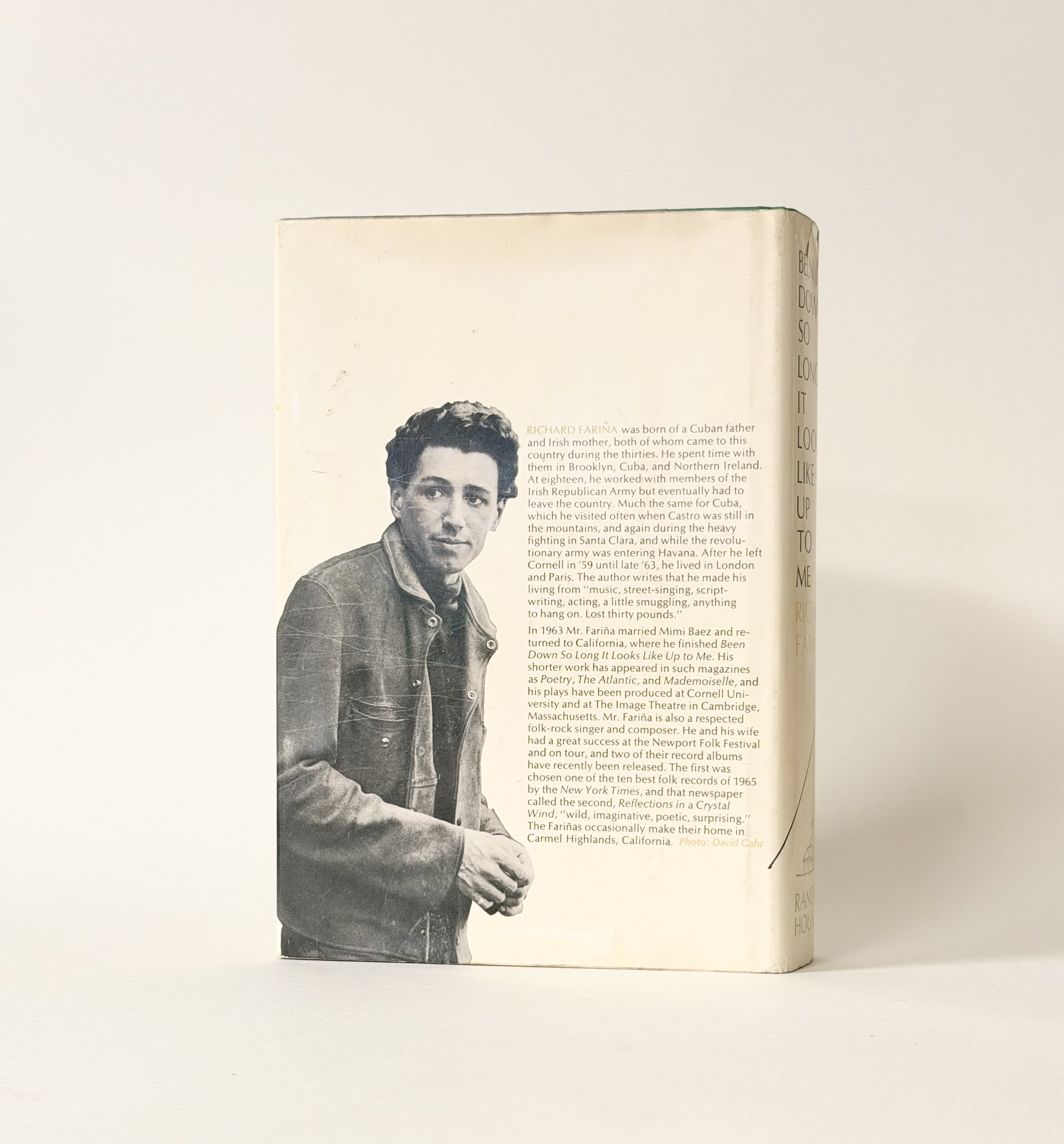 Image 2 of 3
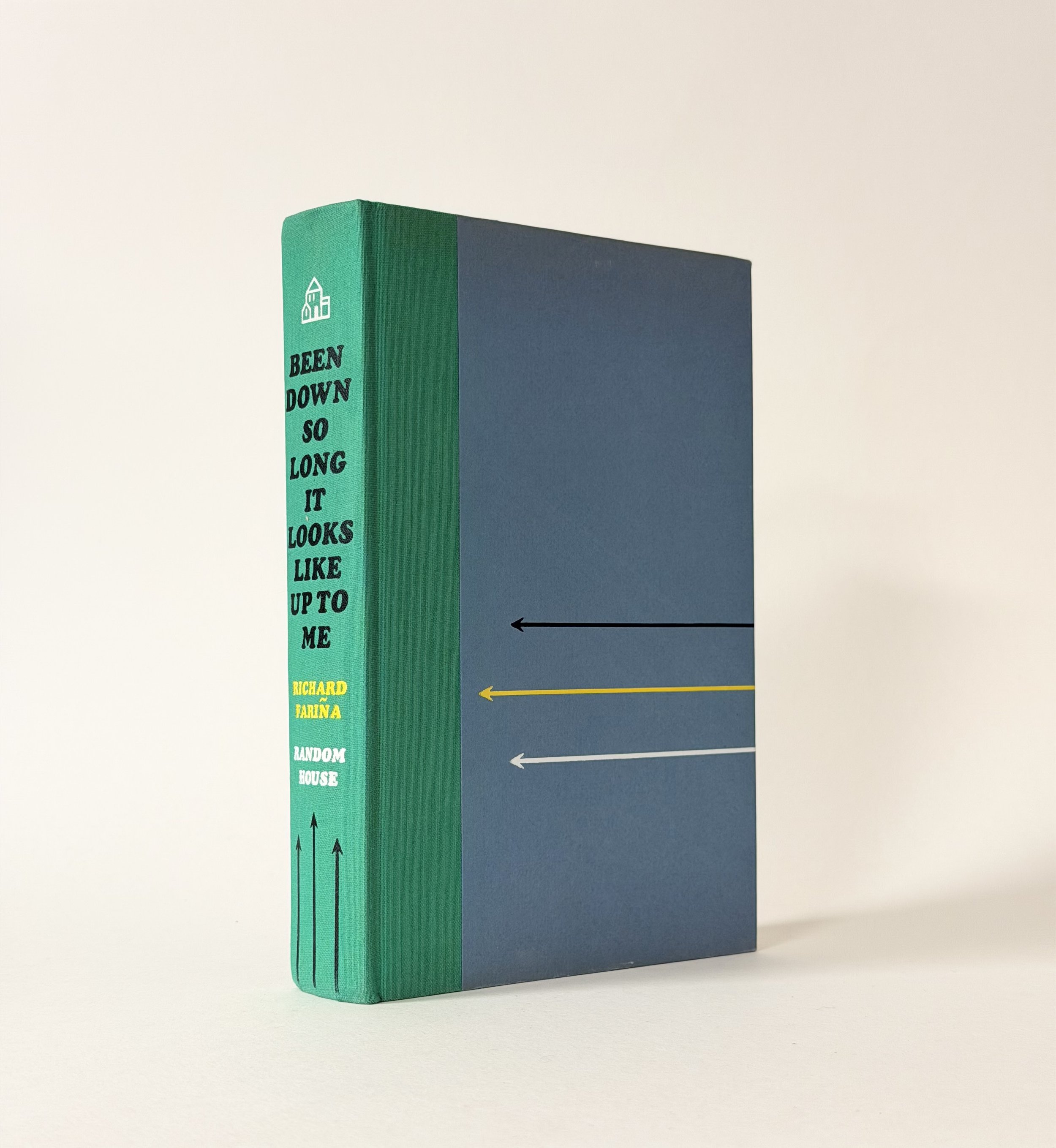 Image 3 of 3
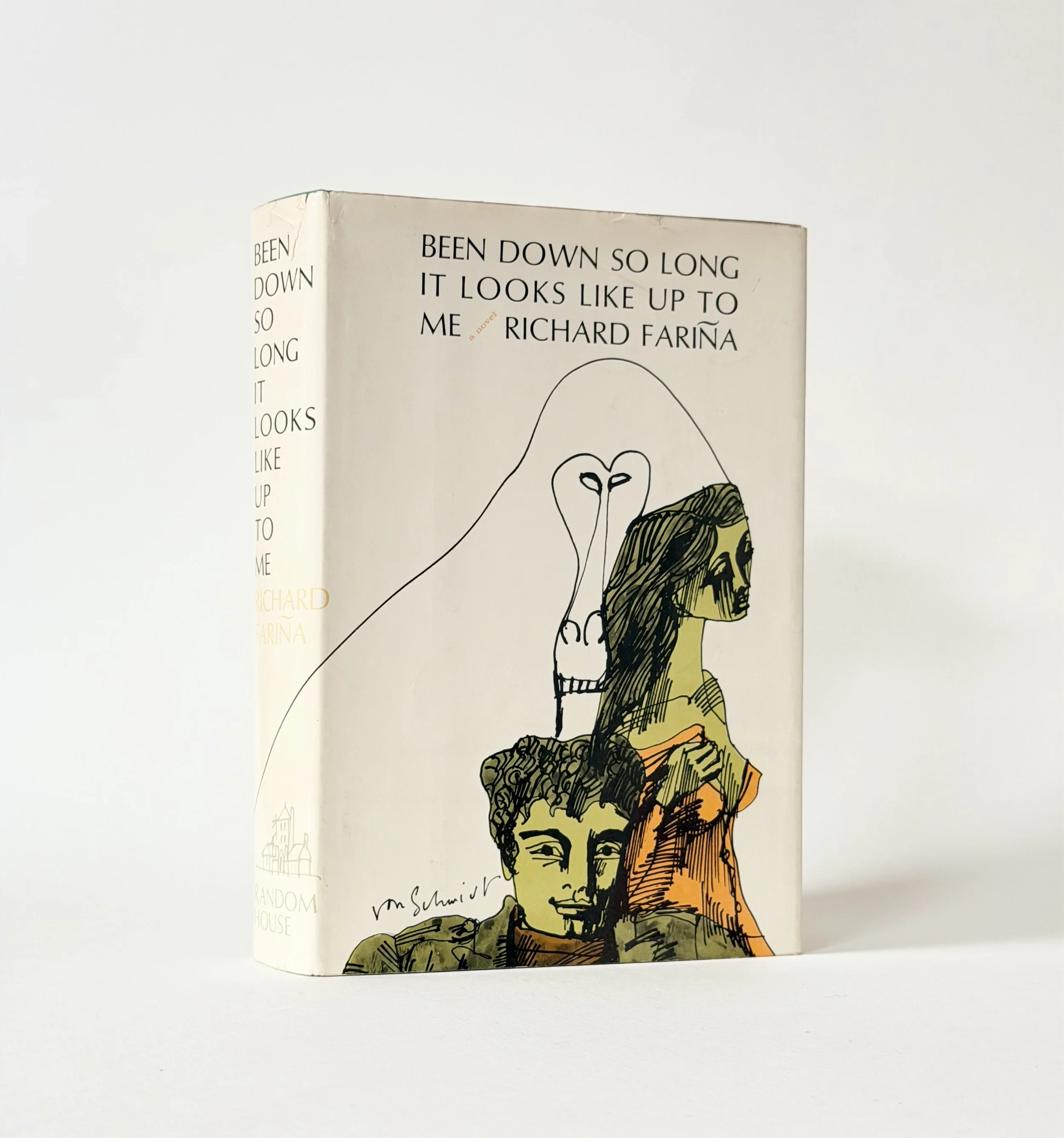
FARIÑA, Richard. Been Down So Long It Looks Like Up To Me. New York: Random House. 1966. 8vo. First edition, first printing. Publisher’s vibrant quarter green cloth over blue boards lettered and decorated in black, yellow and white to spine and front board, in the excellent dust jacket designed by Eric von Schmidt. A superb copy, the cloth clean and bright, the binding tight and square, the dark blue topstain vivid. Printed dedication to Mimi Baez, his wife and sister of Joan Baez. The contents fine but for bookplate depicting Hokusai’s The Great Wave off Kanagawa, partially removed and hidden entirely by front flap. The dust jacket unclipped ($5.95) and very sharp, the spine lettering slightly faded as commonly found, with small closed tear to spine head and very gentle rubbing elsewhere.
A very pleasing example of Fariña’s only novel, a zany, picaresque counterculture classic heavily endorsed by his good friend and Cornell fellow Thomas Pynchon, whose magnum opus, Gravity’s Rainbow (1973), is dedicated to Fariña. The author’s tragic story remains one of the great what-ifs of twentieth century American fiction—two days after the publication of the novel, Fariña died in a motorcycle accident. Who knows where his literary career might have taken him?
FARIÑA, Richard. Been Down So Long It Looks Like Up To Me. New York: Random House. 1966. 8vo. First edition, first printing. Publisher’s vibrant quarter green cloth over blue boards lettered and decorated in black, yellow and white to spine and front board, in the excellent dust jacket designed by Eric von Schmidt. A superb copy, the cloth clean and bright, the binding tight and square, the dark blue topstain vivid. Printed dedication to Mimi Baez, his wife and sister of Joan Baez. The contents fine but for bookplate depicting Hokusai’s The Great Wave off Kanagawa, partially removed and hidden entirely by front flap. The dust jacket unclipped ($5.95) and very sharp, the spine lettering slightly faded as commonly found, with small closed tear to spine head and very gentle rubbing elsewhere.
A very pleasing example of Fariña’s only novel, a zany, picaresque counterculture classic heavily endorsed by his good friend and Cornell fellow Thomas Pynchon, whose magnum opus, Gravity’s Rainbow (1973), is dedicated to Fariña. The author’s tragic story remains one of the great what-ifs of twentieth century American fiction—two days after the publication of the novel, Fariña died in a motorcycle accident. Who knows where his literary career might have taken him?