
 Image 1 of 5
 Image 2 of 5
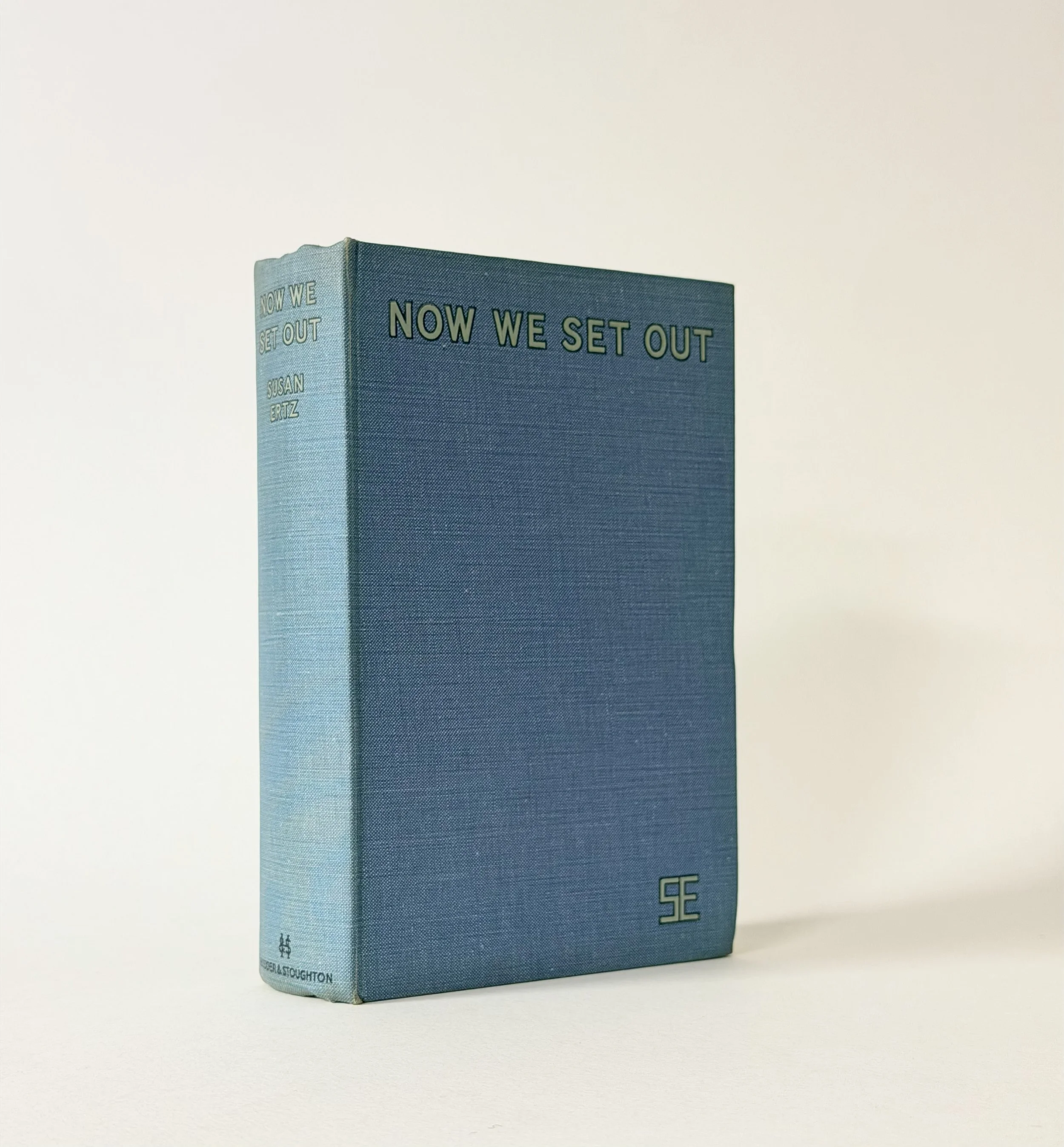 Image 3 of 5
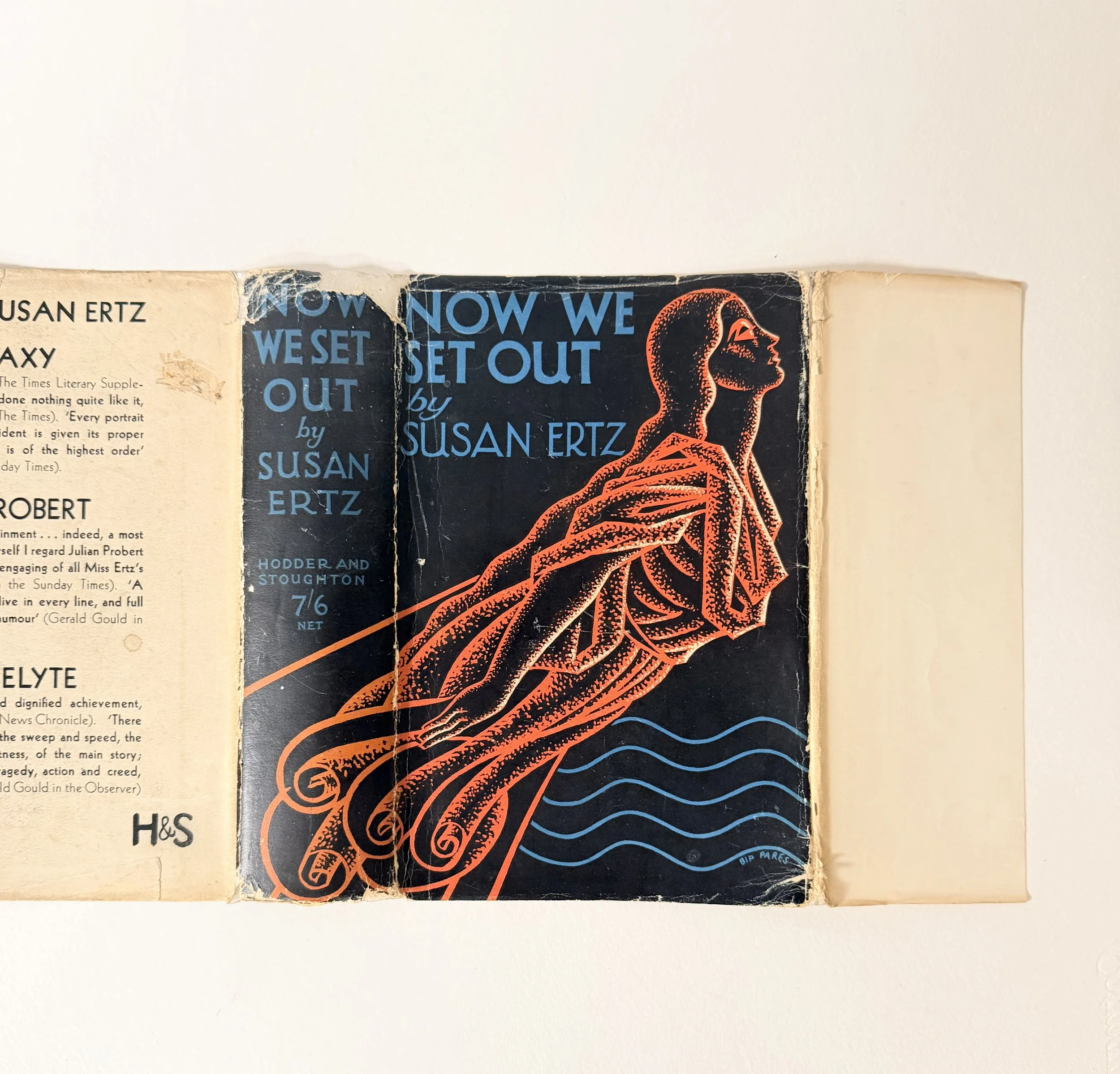 Image 4 of 5
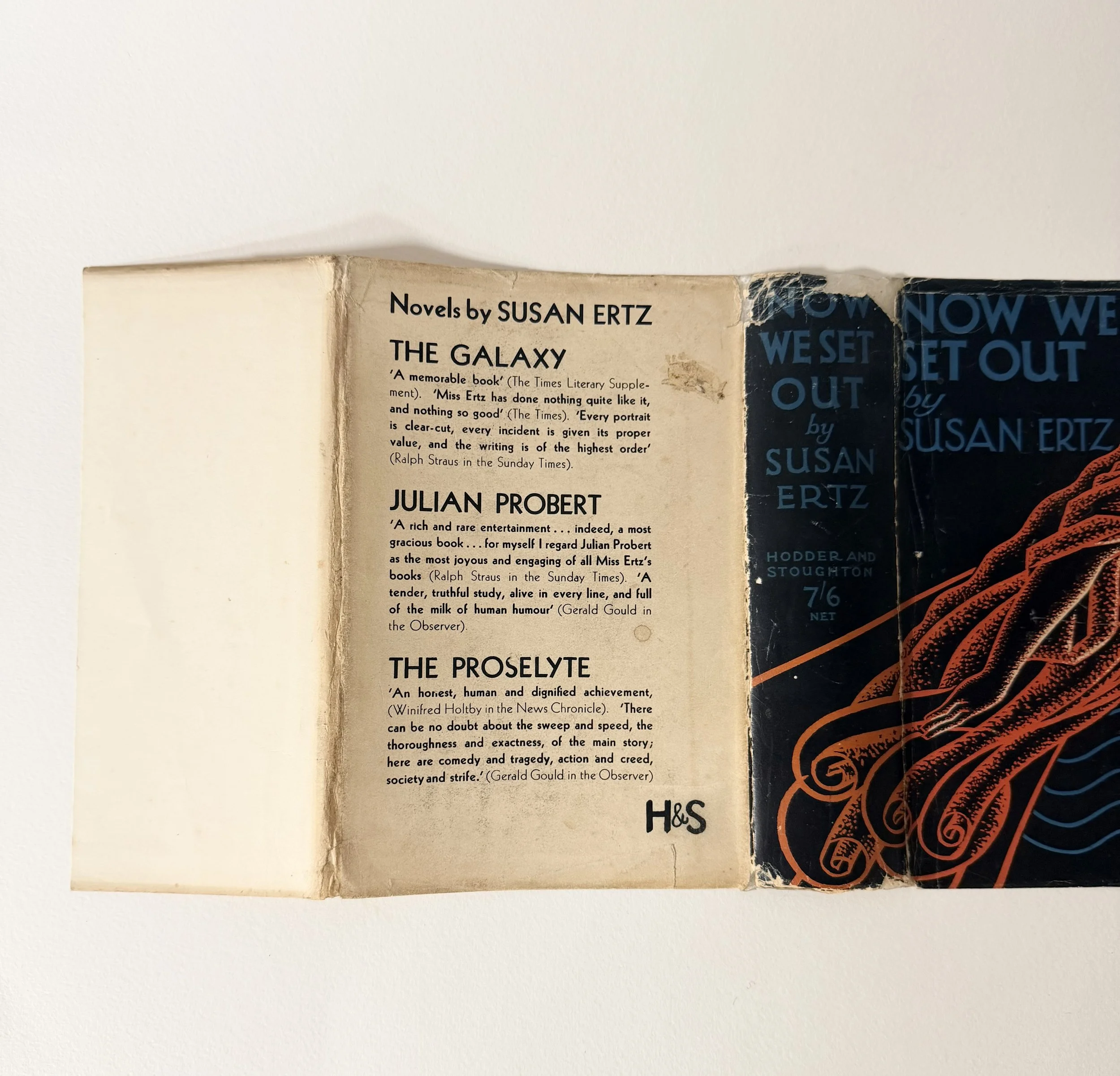 Image 5 of 5
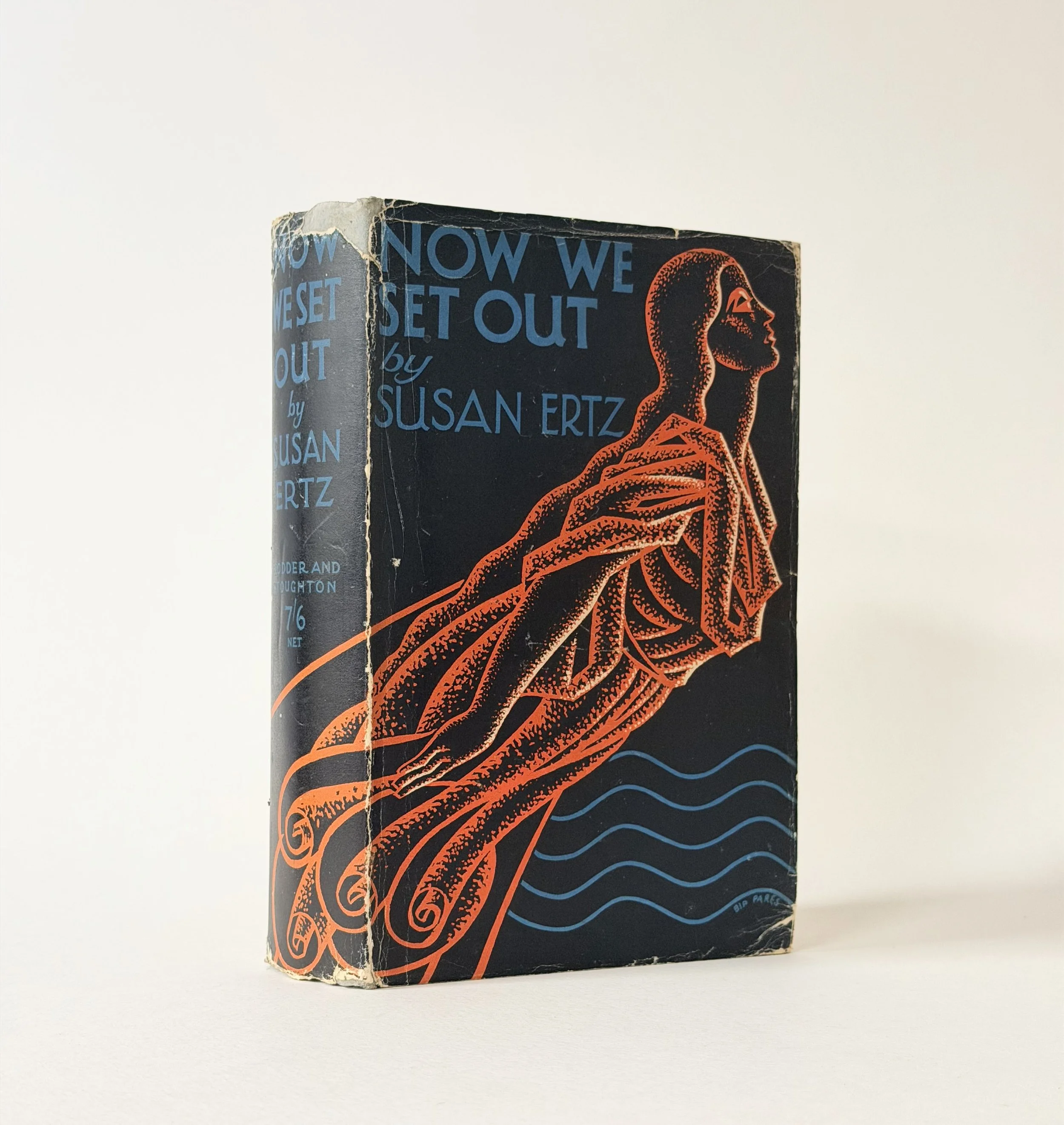
ERTZ, Susan. Now We Set Out: A Comedy of the First Six Months of Marriage. London: Hodder and Stoughton. 1934. 8vo. First edition. Publisher’s blue cloth lettered in pale blue bordered in black to the spine and upper board, in the enigmatic dust jacket designed by Bip Pares. A very good book. The cloth clean and bright, the backstrip a trifle faded, but the boards clean, the binding tight and square, slightly cracked at half-title gutter. The textblock a trifle marked, with ink ownership signature to the front endpaper and a few other light spots to prelims, then clean. The dust jacket priced 7/6 net to the spine panel, with noticeable loss to the spine head, the spine tips, joint and corners rubbed with a handful of small nicks, with adhesive tape reinforcement to verso tips and joints, though overall not entirely detracting from that wonderful central image.
A relatively uncommon novel by Susan Ertz, the Anglo-American author of quite a good many works worthy of reissue—her important speculative novel about a world where all females bar one have perished, Woman Alive (1935), has just been republished. Her earliest work, Madame Claire (1923), was chosen as one of the first ten Penguin Paperbacks. Her novels have since been designated middlebrow—seemingly a malady cast to many a female author able to sell her books in numbers—yet the prose here is often vibrant: “One imagined that the blue sky stretched and stretched till it covered the whole surface of the globe with a seamless mantle. Far out on the Atlantic, on such a day, a petal might lie as quietly as upon a duck-pond; wheat would be standing motionless in the great shimmering fields of Kansas; the grass of the Siberian steppes would be unruffled by so much as a playful breath; the Pacific would lace its edges with tiny rims of foam, and murmur softly along its thousand beaches; the fronds of the palms in tropical atolls would be unfretted; the smoke from steamers plying between London and Archangel would lie level on the air, and everywhere, throughout the world, the flags of all nations would forget to wave.” Ertz was an ardent critic of nationalism, as the quote hints. The novel therein follows a man and his instant crush on the woman pictured at jacket, whom he marries, the couple embarking on an at-first shaky life together on account of his jealousy of her past.
ERTZ, Susan. Now We Set Out: A Comedy of the First Six Months of Marriage. London: Hodder and Stoughton. 1934. 8vo. First edition. Publisher’s blue cloth lettered in pale blue bordered in black to the spine and upper board, in the enigmatic dust jacket designed by Bip Pares. A very good book. The cloth clean and bright, the backstrip a trifle faded, but the boards clean, the binding tight and square, slightly cracked at half-title gutter. The textblock a trifle marked, with ink ownership signature to the front endpaper and a few other light spots to prelims, then clean. The dust jacket priced 7/6 net to the spine panel, with noticeable loss to the spine head, the spine tips, joint and corners rubbed with a handful of small nicks, with adhesive tape reinforcement to verso tips and joints, though overall not entirely detracting from that wonderful central image.
A relatively uncommon novel by Susan Ertz, the Anglo-American author of quite a good many works worthy of reissue—her important speculative novel about a world where all females bar one have perished, Woman Alive (1935), has just been republished. Her earliest work, Madame Claire (1923), was chosen as one of the first ten Penguin Paperbacks. Her novels have since been designated middlebrow—seemingly a malady cast to many a female author able to sell her books in numbers—yet the prose here is often vibrant: “One imagined that the blue sky stretched and stretched till it covered the whole surface of the globe with a seamless mantle. Far out on the Atlantic, on such a day, a petal might lie as quietly as upon a duck-pond; wheat would be standing motionless in the great shimmering fields of Kansas; the grass of the Siberian steppes would be unruffled by so much as a playful breath; the Pacific would lace its edges with tiny rims of foam, and murmur softly along its thousand beaches; the fronds of the palms in tropical atolls would be unfretted; the smoke from steamers plying between London and Archangel would lie level on the air, and everywhere, throughout the world, the flags of all nations would forget to wave.” Ertz was an ardent critic of nationalism, as the quote hints. The novel therein follows a man and his instant crush on the woman pictured at jacket, whom he marries, the couple embarking on an at-first shaky life together on account of his jealousy of her past.