DUHAMEL, Georges. America the Menace. Scenes de la vie future [Scenes from the Life of the Future]. Trans. from the French by Charles Miner Thompson. Boston and New York: Houghton Mifflin. 1931. 8vo. First American edition. Publisher’s red cloth lettered in black to the spine and front panels, in the dust jacket, a visceral wraparound design of the New York cityscape in monotone. A very good copy indeed, the cloth clean, bright with a couple of very minor marks only. The binding tight and square, the topstain very vivid, with illustrated endpapers. The contents clean and fine throughout. The dust jacket unclipped ($2.00), complete, gently faded at the spine panel, a few small closed tears and slight rubbing to corners, tips and some edges, a few tape repairs to verso but altogether a bright and pleasing copy.
One of Duhamel’s most famous works, a cornerstone of interwar anti-American sentiment in Europe, the country described iconoclastically here as ‘a storm cloud in the Western sky’. A scathing criticism of American industrial developments, it is based on Duhamel’s travels across the US, first in New Orleans, up the Mississippi River and on to Chicago and New York. His many associates laid bare America’s booming industries, its transport, its sports, its entertainments. Where his American colleagues see the free capitalist market, Duhamel sees only the human soul ready to be chewed up by the money machine, a consumer society primed to invade Europe. Perhaps a consolation to the American jingoist might well be Duhamel’s belief that America was not alone in its citizen prison-building, and that great rival Soviet Union too had a penchant for such brutality. The book was met with acclaim and gained Duhamel a loyal following. Such anti-American sentiments were not the flavour of everybody, though, which led Duhamel to readdress the book. It is said Hergé used Duhamel’s depictions of Chicago when writing Tintin in America (1932), and it also influenced Louis Ferdinand Celine in his writing of his magnum opus, Journey to the End of the Night (1934). An important volume, very scarce in dust jacket.
DUHAMEL, Georges. America the Menace. Scenes de la vie future [Scenes from the Life of the Future]. Trans. from the French by Charles Miner Thompson. Boston and New York: Houghton Mifflin. 1931. 8vo. First American edition. Publisher’s red cloth lettered in black to the spine and front panels, in the dust jacket, a visceral wraparound design of the New York cityscape in monotone. A very good copy indeed, the cloth clean, bright with a couple of very minor marks only. The binding tight and square, the topstain very vivid, with illustrated endpapers. The contents clean and fine throughout. The dust jacket unclipped ($2.00), complete, gently faded at the spine panel, a few small closed tears and slight rubbing to corners, tips and some edges, a few tape repairs to verso but altogether a bright and pleasing copy.
One of Duhamel’s most famous works, a cornerstone of interwar anti-American sentiment in Europe, the country described iconoclastically here as ‘a storm cloud in the Western sky’. A scathing criticism of American industrial developments, it is based on Duhamel’s travels across the US, first in New Orleans, up the Mississippi River and on to Chicago and New York. His many associates laid bare America’s booming industries, its transport, its sports, its entertainments. Where his American colleagues see the free capitalist market, Duhamel sees only the human soul ready to be chewed up by the money machine, a consumer society primed to invade Europe. Perhaps a consolation to the American jingoist might well be Duhamel’s belief that America was not alone in its citizen prison-building, and that great rival Soviet Union too had a penchant for such brutality. The book was met with acclaim and gained Duhamel a loyal following. Such anti-American sentiments were not the flavour of everybody, though, which led Duhamel to readdress the book. It is said Hergé used Duhamel’s depictions of Chicago when writing Tintin in America (1932), and it also influenced Louis Ferdinand Celine in his writing of his magnum opus, Journey to the End of the Night (1934). An important volume, very scarce in dust jacket.

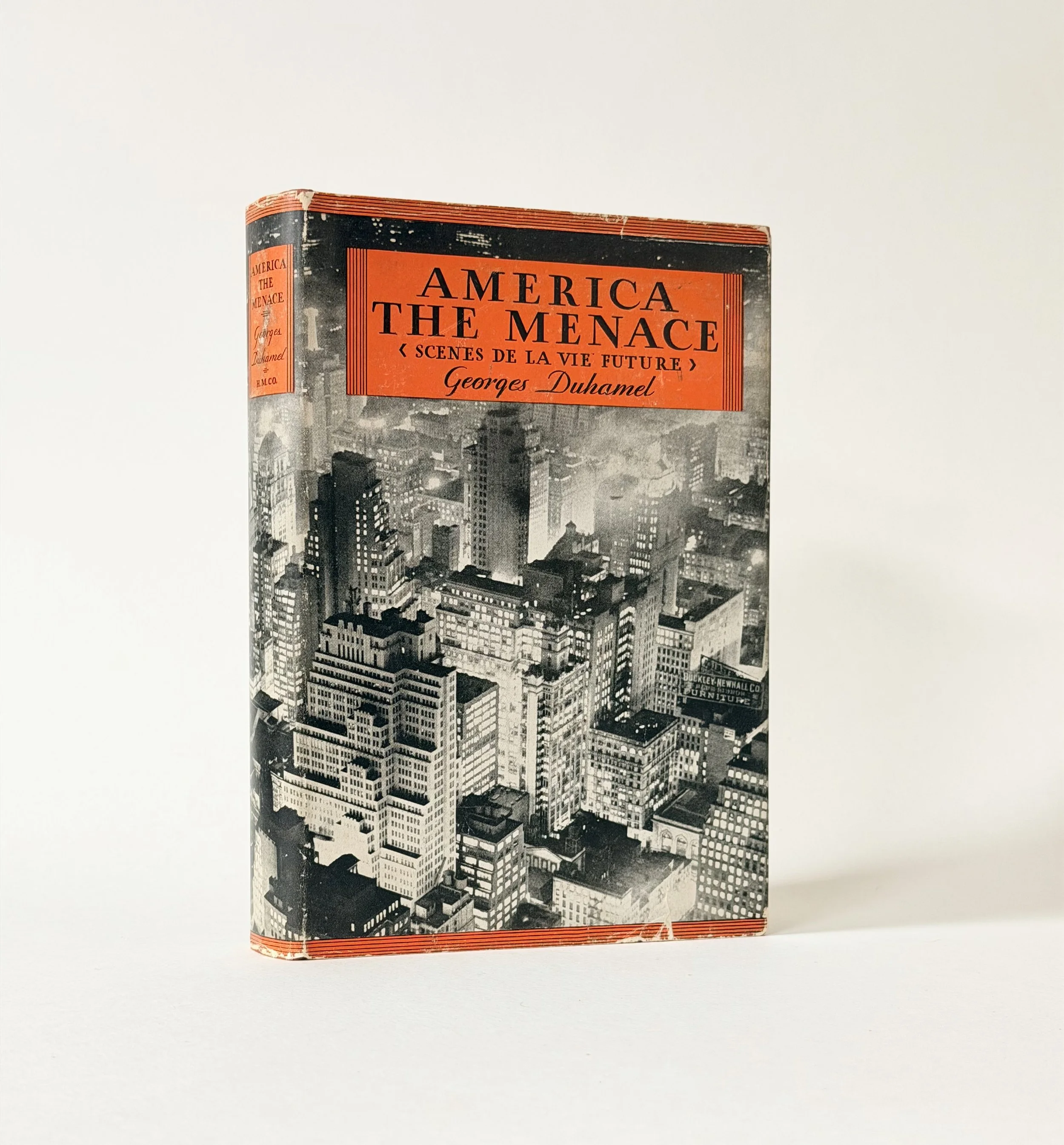 Image 1 of 6
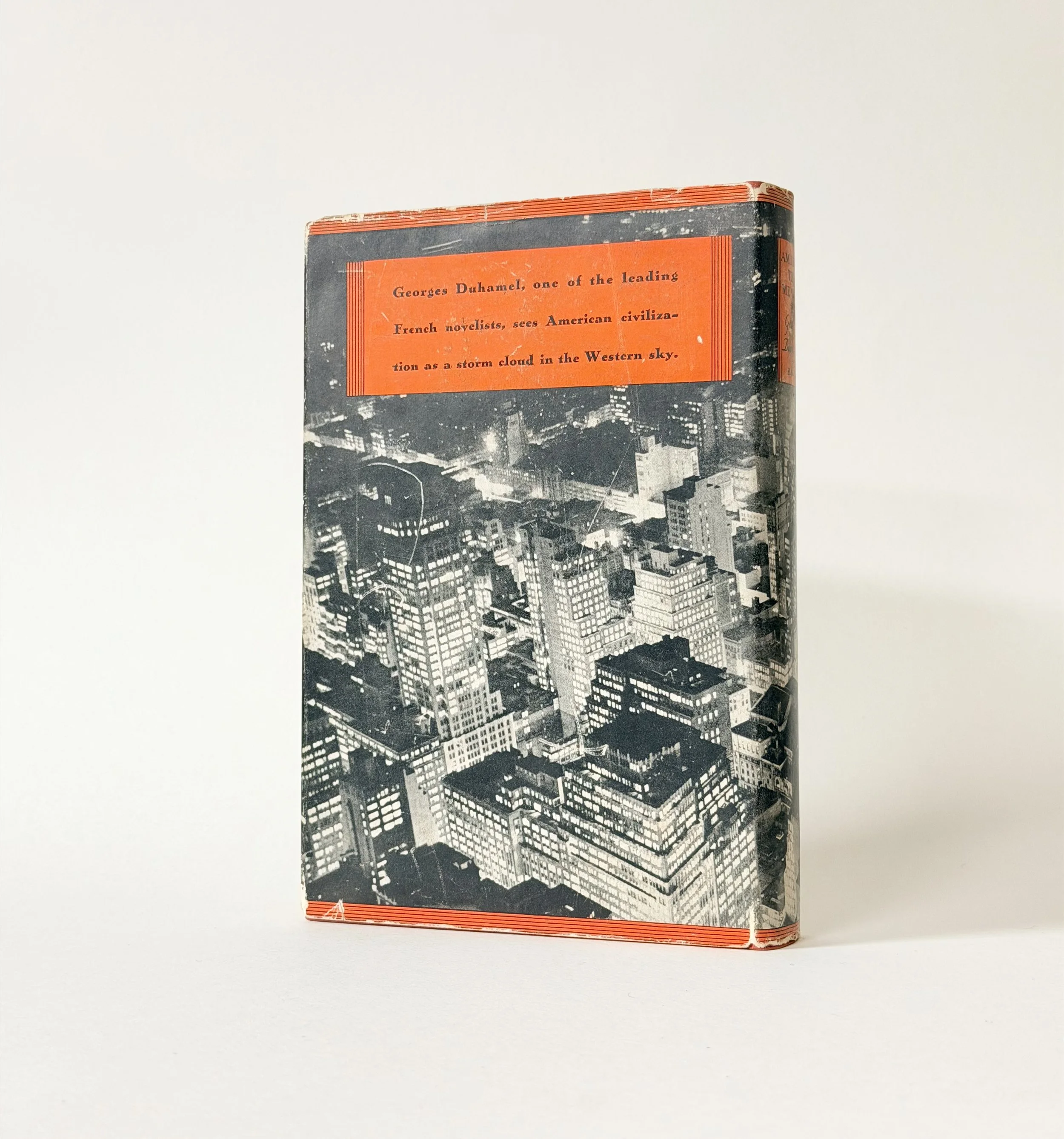 Image 2 of 6
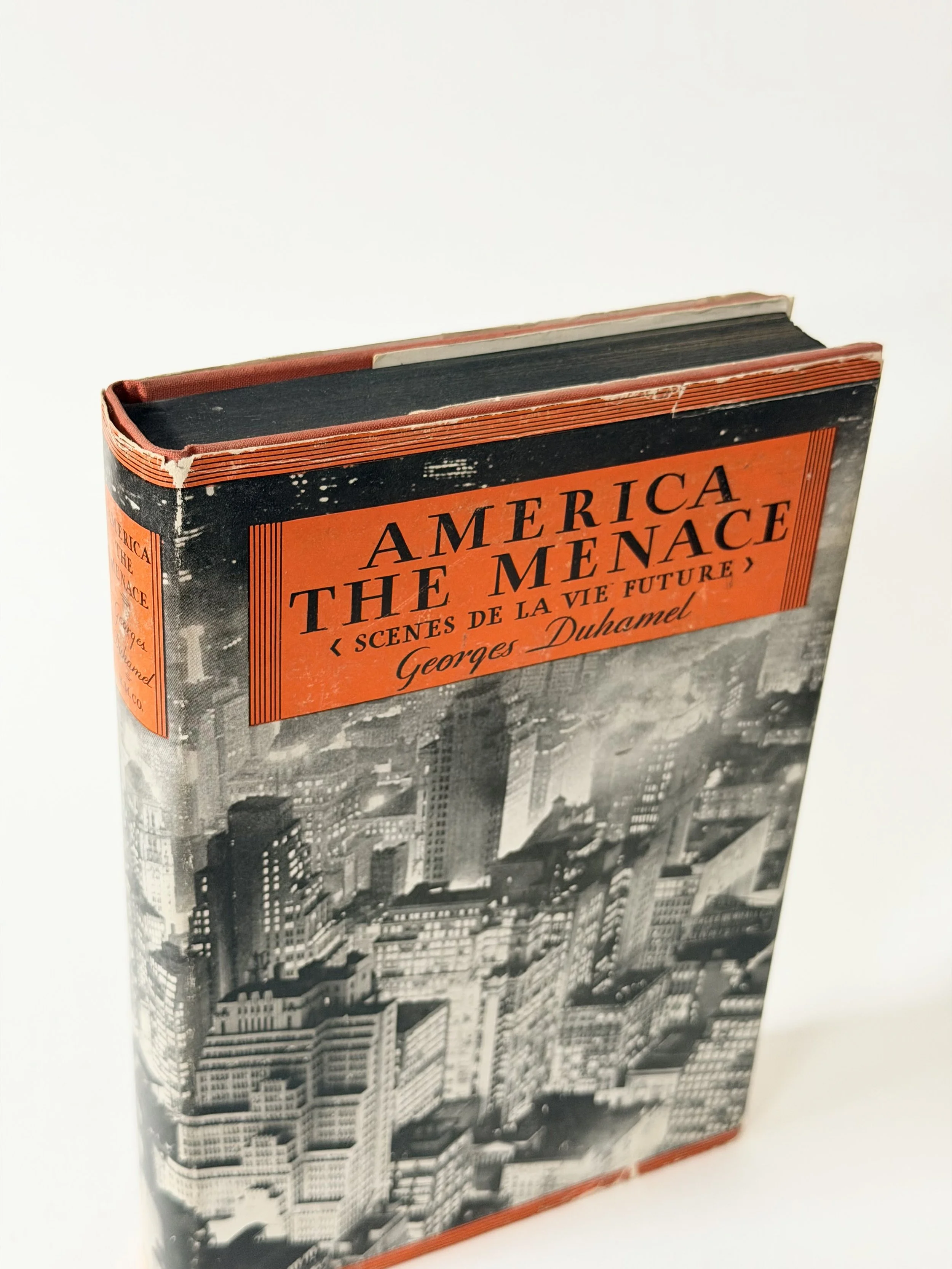 Image 3 of 6
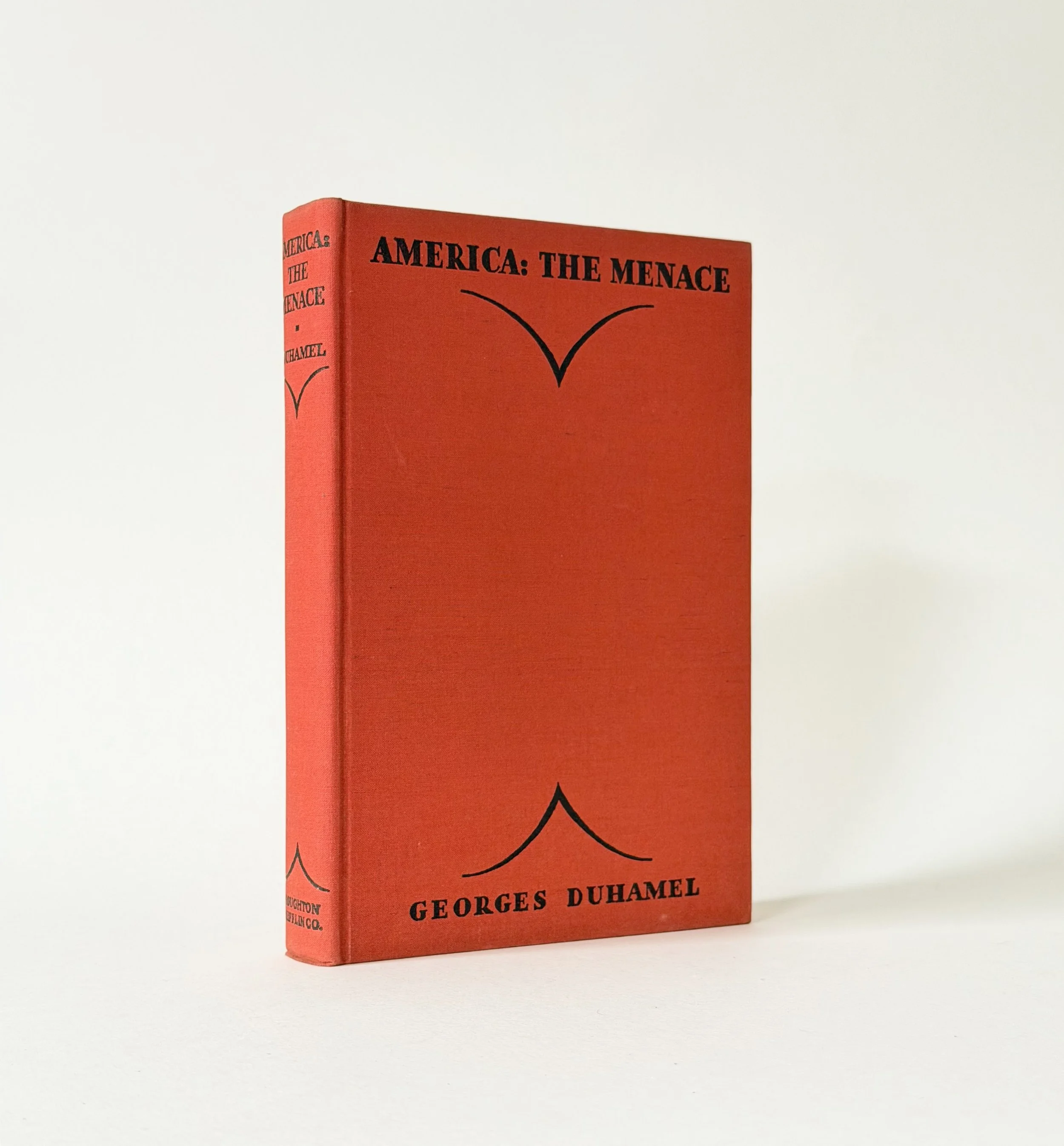 Image 4 of 6
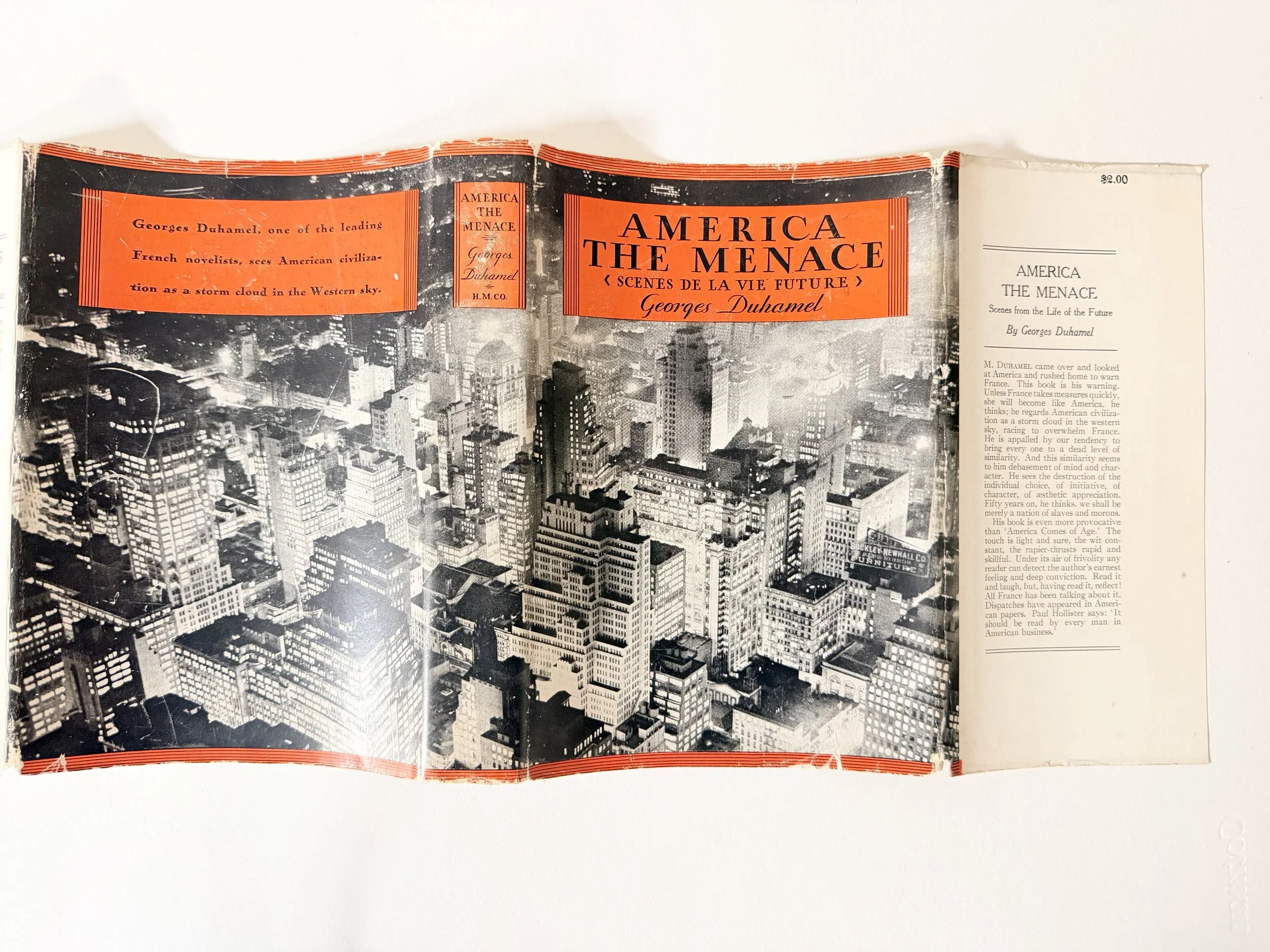 Image 5 of 6
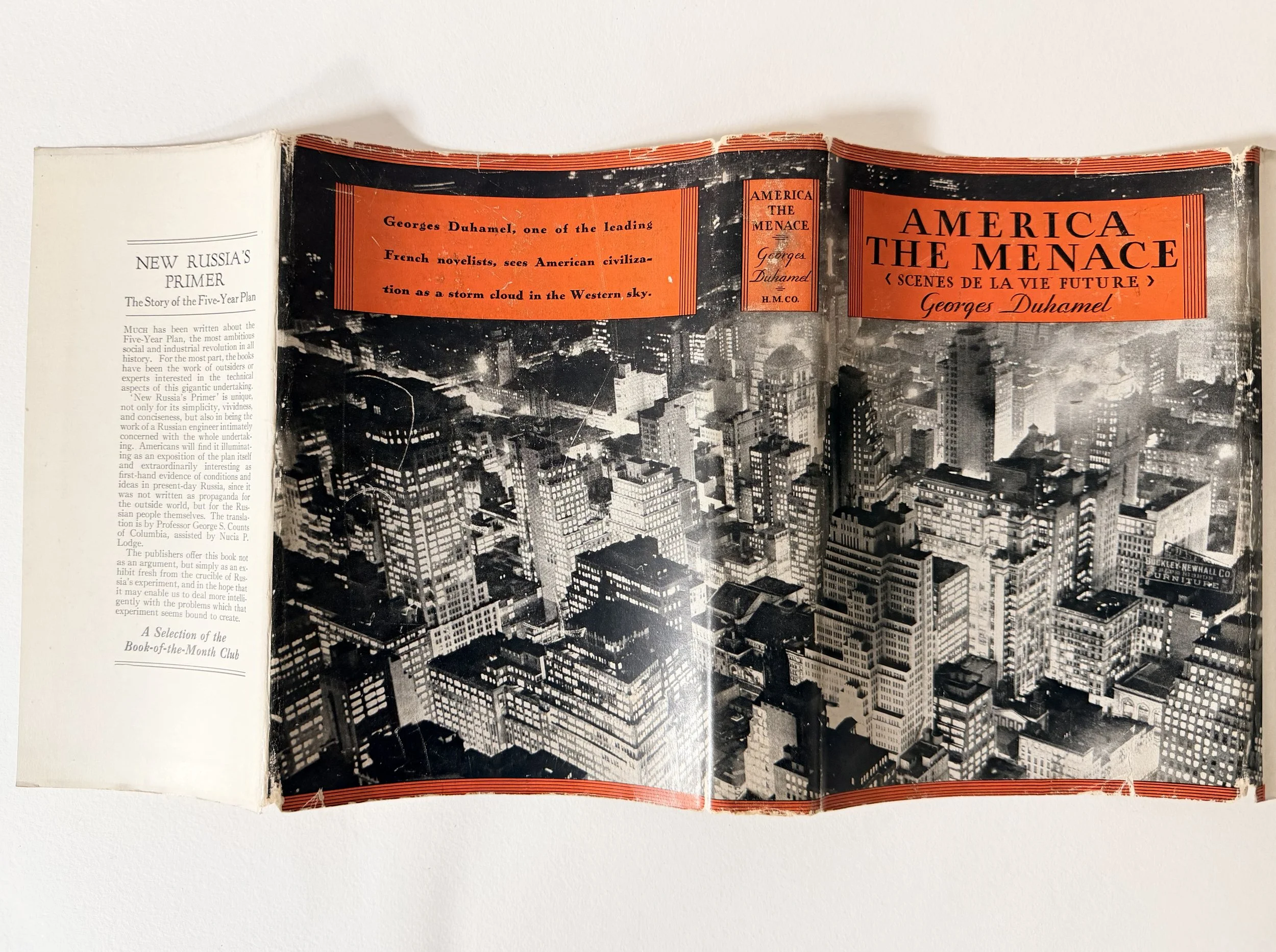 Image 6 of 6