
 Image 1 of 4
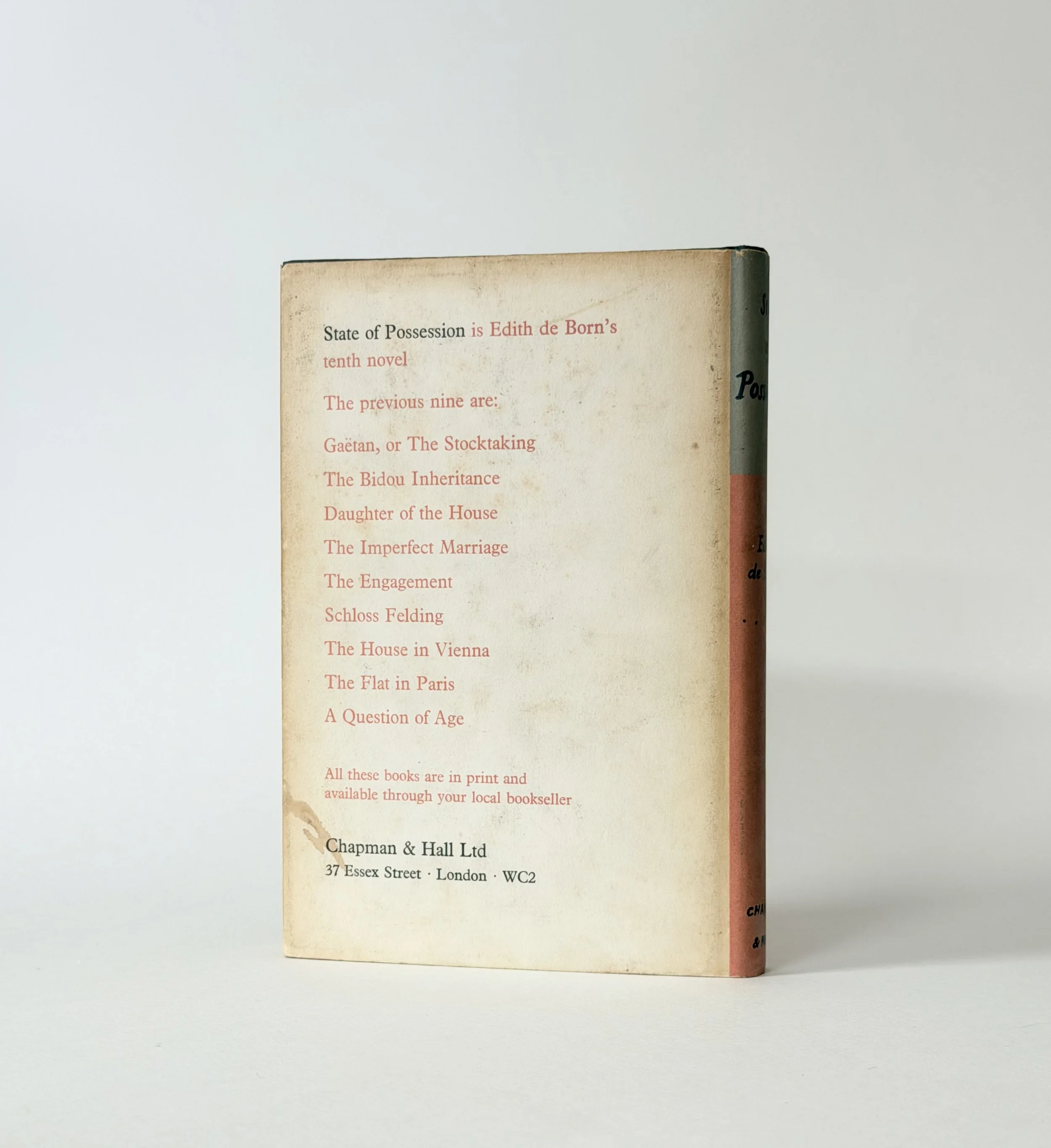 Image 2 of 4
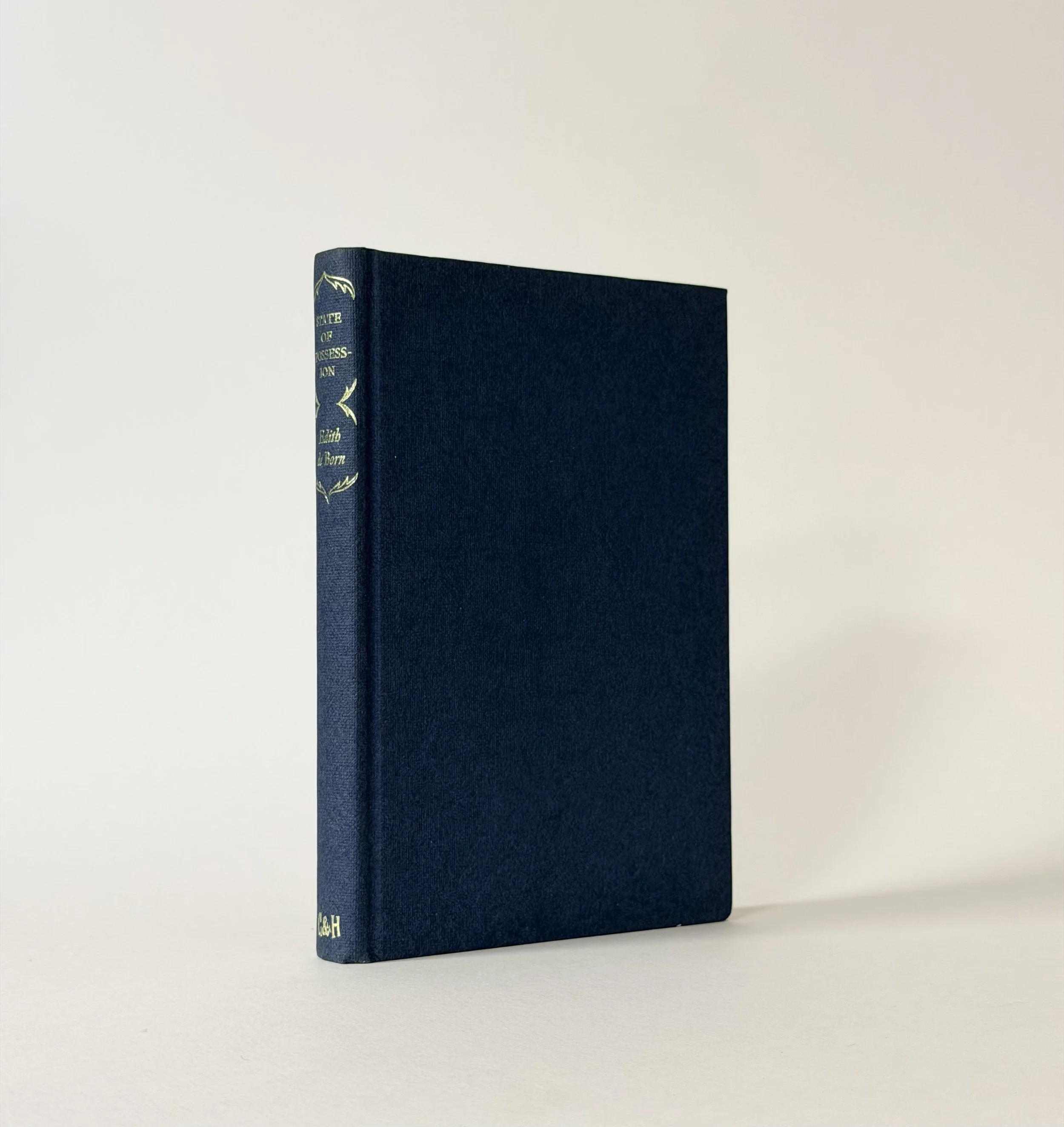 Image 3 of 4
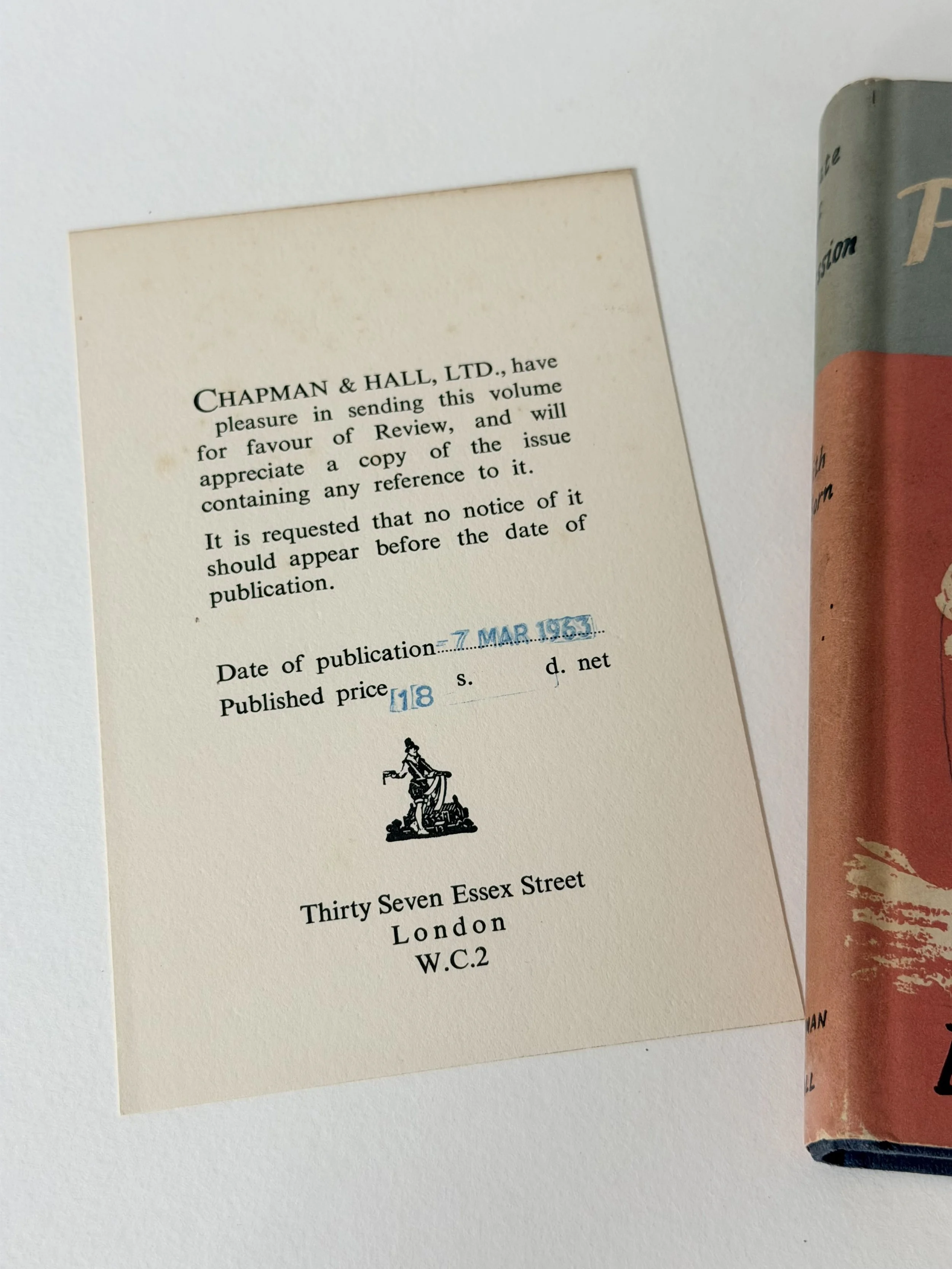 Image 4 of 4
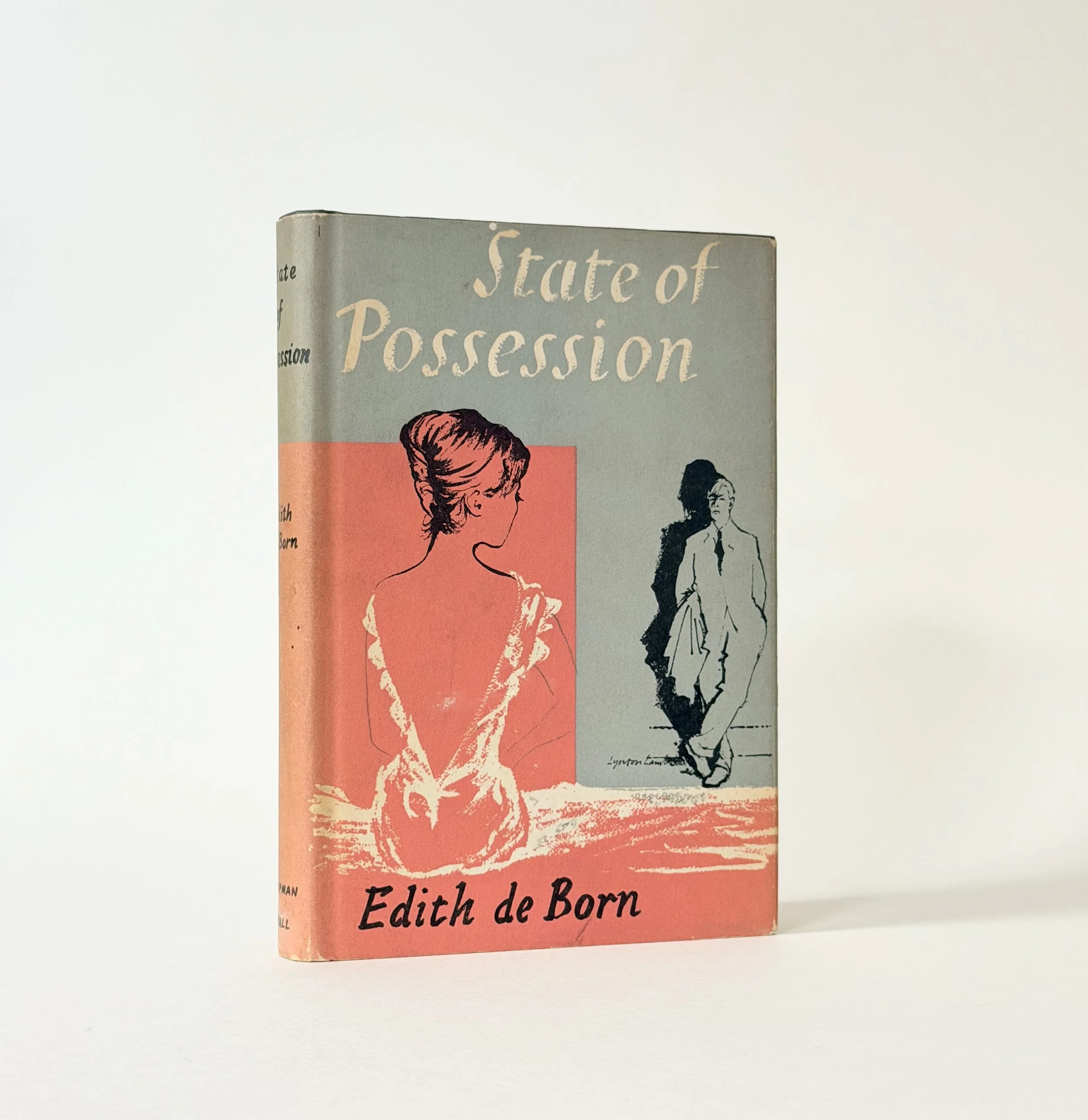
DE BORN, Edith. State of Possession. London: Chapman & Hall. 1963. 8vo. First edition. Publisher’s review copy with review slip loosely inserted. Publisher’s blue cloth lettered in gilt to the spine, in the dust jacket by Lynton Lamb. A very good or better copy. The cloth clean and bright, the binding tight and square, with some mild spots and marks to the textblock edges. The contents with some very faint occasional spots throughout, one instance of brief pencil underlining—to a great line—else clean. The dust jacket unclipped (18s net) and quite sharp, gently rubbed at corners and spine tips, brief ink notes to rear flap.
A smart copy of the Austrian’s tenth novel. de Born was born into a remarkably wealthy Viennese family, marrying prominent banker, Jacques Bisch and settling first in London and then in Paris. On the outbreak of the Second World War, Edith decided to stay in Paris despite her Jewishness, and began working for the Resistance, relaying messages back and forth with the Special Operations Executive. It is in this capacity that her rigid prose style was formulated, which has since gained comparison to Joseph Conrad, Henry James, and Vladimir Nabokov. Despite her social status, Edith touched on themes most unusual among her contemporaries—this novel, for instance, follows a single woman in her desperate attempts to prove she did indeed give birth to her son amid the chaos of the outbreak of war. De Born’s novels are yet to be reprinted, and most are uncommon.
DE BORN, Edith. State of Possession. London: Chapman & Hall. 1963. 8vo. First edition. Publisher’s review copy with review slip loosely inserted. Publisher’s blue cloth lettered in gilt to the spine, in the dust jacket by Lynton Lamb. A very good or better copy. The cloth clean and bright, the binding tight and square, with some mild spots and marks to the textblock edges. The contents with some very faint occasional spots throughout, one instance of brief pencil underlining—to a great line—else clean. The dust jacket unclipped (18s net) and quite sharp, gently rubbed at corners and spine tips, brief ink notes to rear flap.
A smart copy of the Austrian’s tenth novel. de Born was born into a remarkably wealthy Viennese family, marrying prominent banker, Jacques Bisch and settling first in London and then in Paris. On the outbreak of the Second World War, Edith decided to stay in Paris despite her Jewishness, and began working for the Resistance, relaying messages back and forth with the Special Operations Executive. It is in this capacity that her rigid prose style was formulated, which has since gained comparison to Joseph Conrad, Henry James, and Vladimir Nabokov. Despite her social status, Edith touched on themes most unusual among her contemporaries—this novel, for instance, follows a single woman in her desperate attempts to prove she did indeed give birth to her son amid the chaos of the outbreak of war. De Born’s novels are yet to be reprinted, and most are uncommon.