
 Image 1 of 3
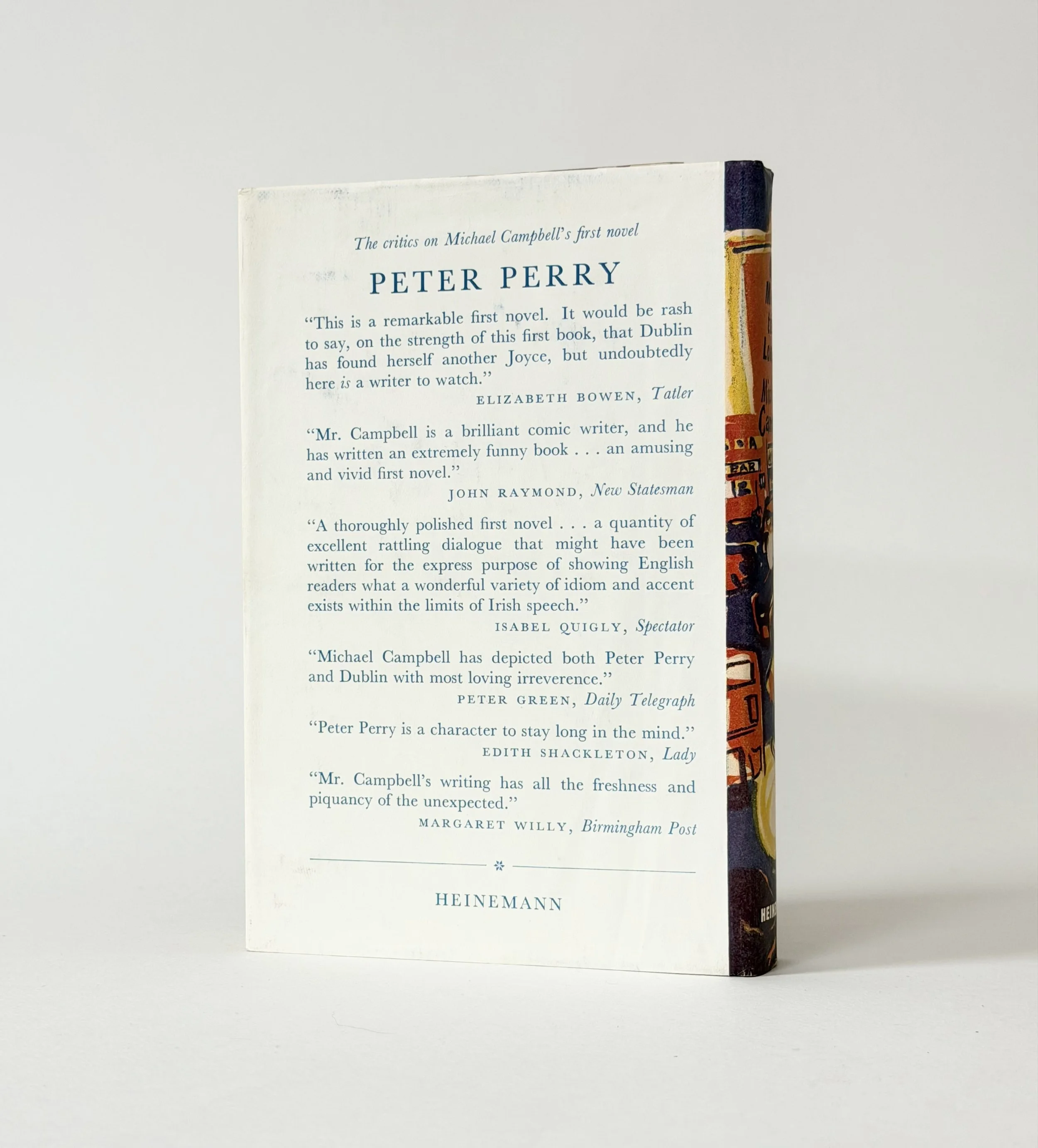 Image 2 of 3
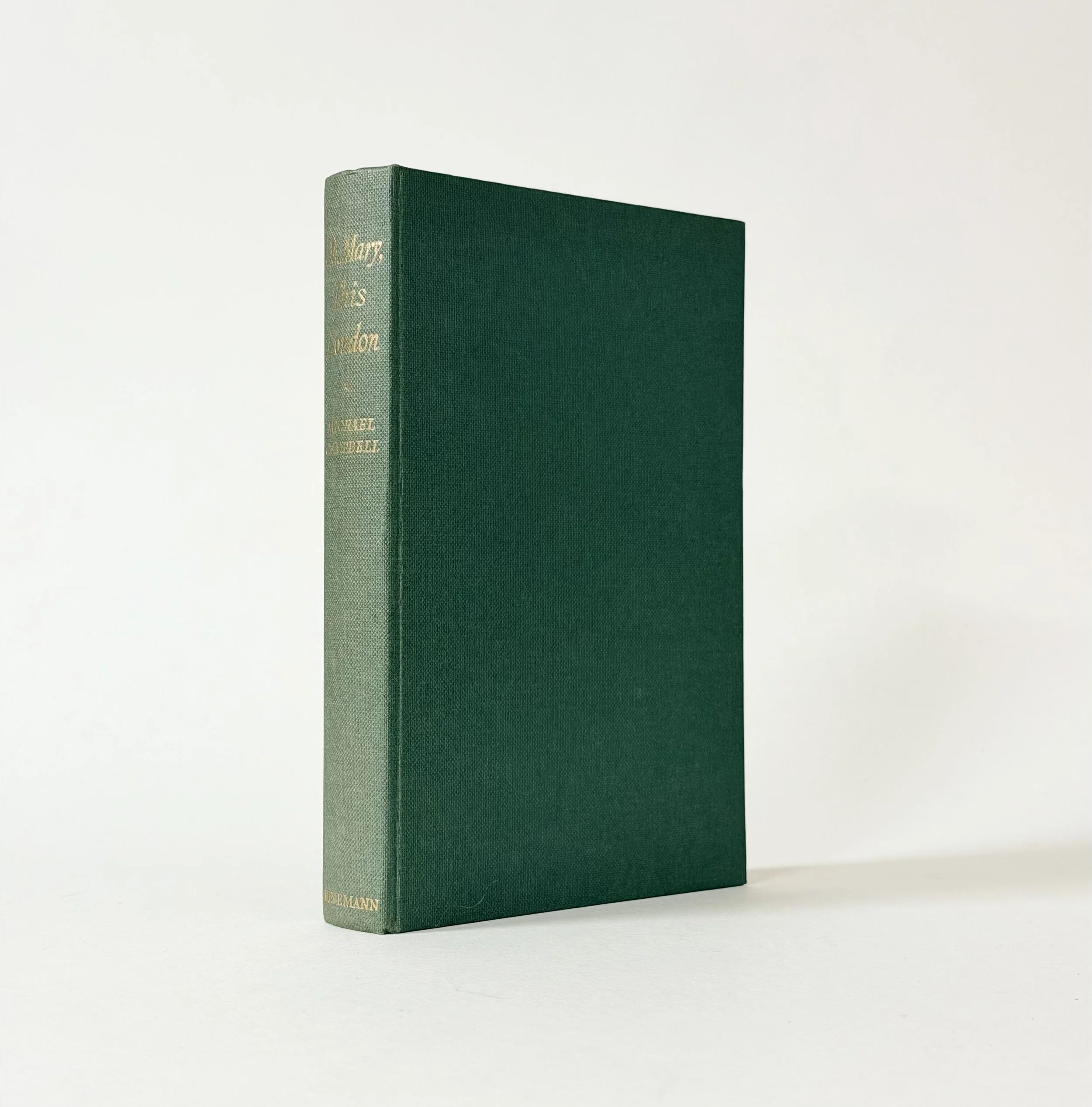 Image 3 of 3
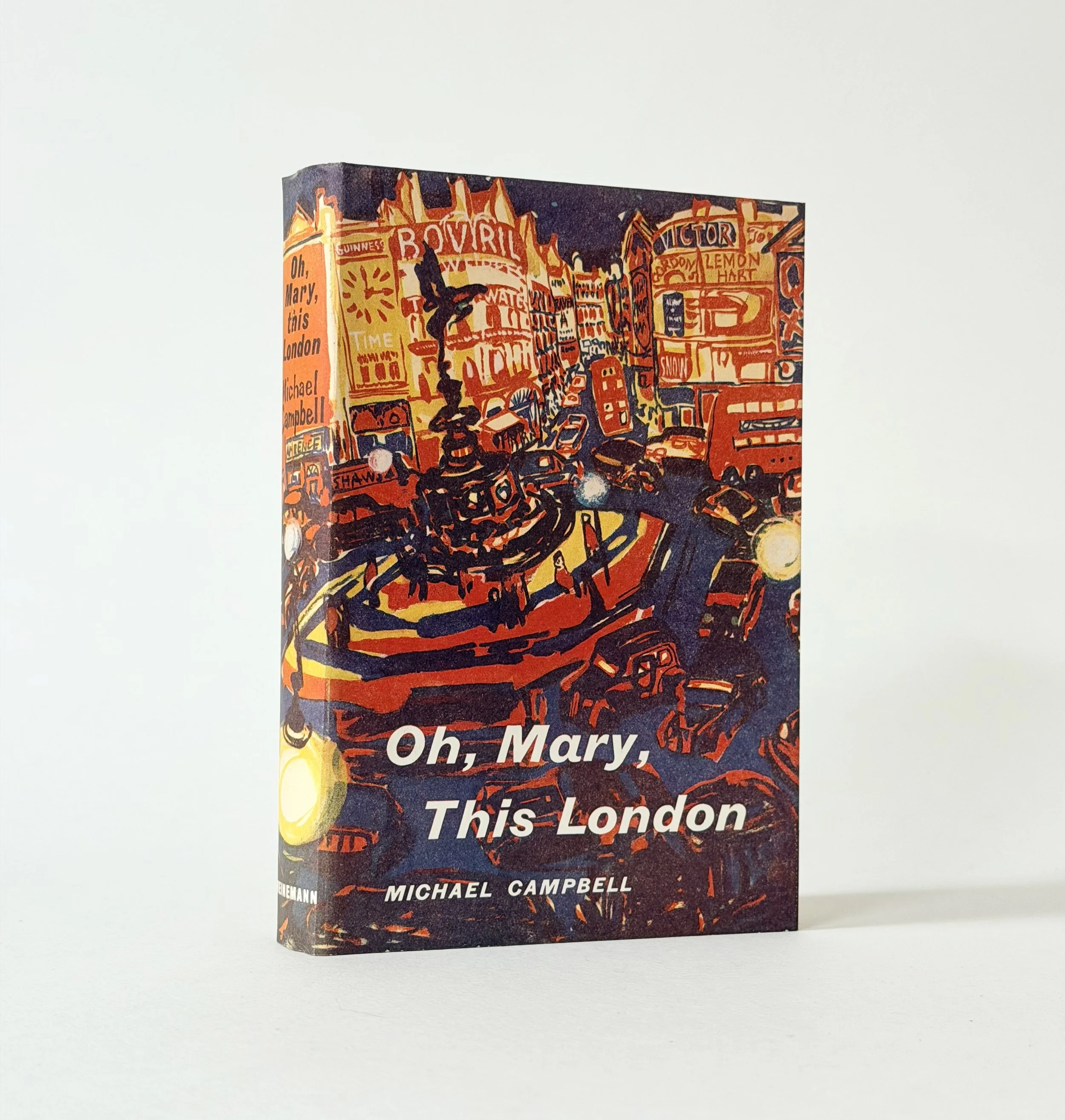
CAMPBELL, Michael. Oh, Mary, This London. London: Heinemann. 1959. 8o. First edition. Publisher’s green cloth lettered in gilt to the spine, in the fabulous dust jacket designed by Dick Hart. A fine copy. The cloth very clean and bright, the binding tight and square. A few mild marks to top edge, else fine throughout. The dust jacket unclipped (16s net), one or two mild marks to rear panel, but refreshingly bright and well-preserved.
The author’s second novel after his debut Peter Perry about which Elizabeth Bowen claimed Campbell ‘a writer to watch’. Here, two wide-eyed Irish young’uns come to London on the basic premise of experience; “to gain enlightenment and escape provincialdom". Their journey rails between the vacuities of a Mayfair party—in their immediately too-expensive flat—to ‘the mannered squalor of an Earls Court evening of spaghetti and lust, the horrors of lunch in the country with blazered exurbanites, towards the entertainment industry and, eventually and inevitably, the underworld in the form of nightclub gangsters, Campbell’s wider lens seemingly ‘that even the commonplace has astonishing things to offer and his search for experience was all the while a search for himself’ (Kirkus). Like many great novels of the city, it seems London appears very much as character, and the vibrant dust jacket design—probably Dick Hart’s best design—certainly adds to this notion. Uncommon.