
 Image 1 of 5
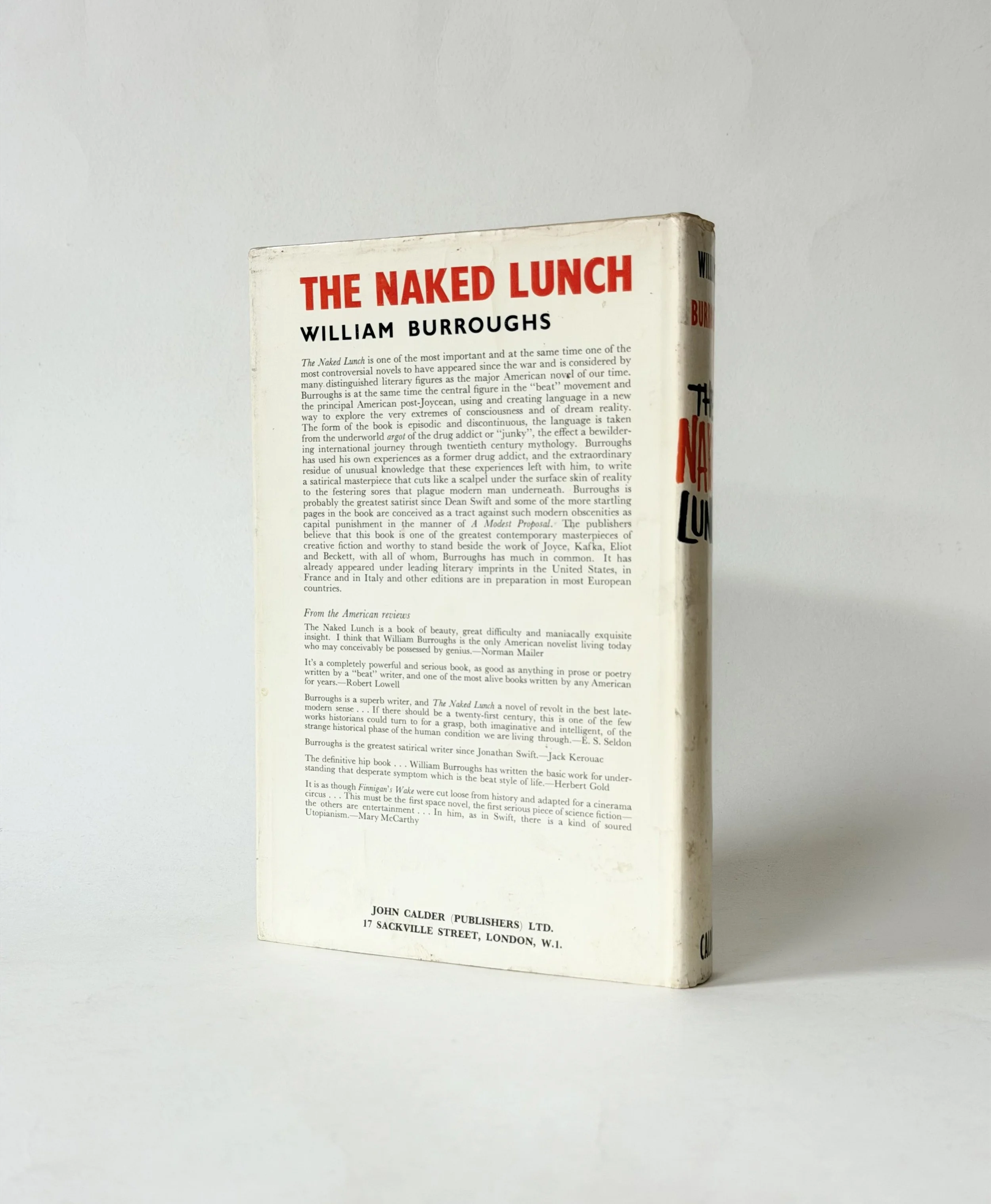 Image 2 of 5
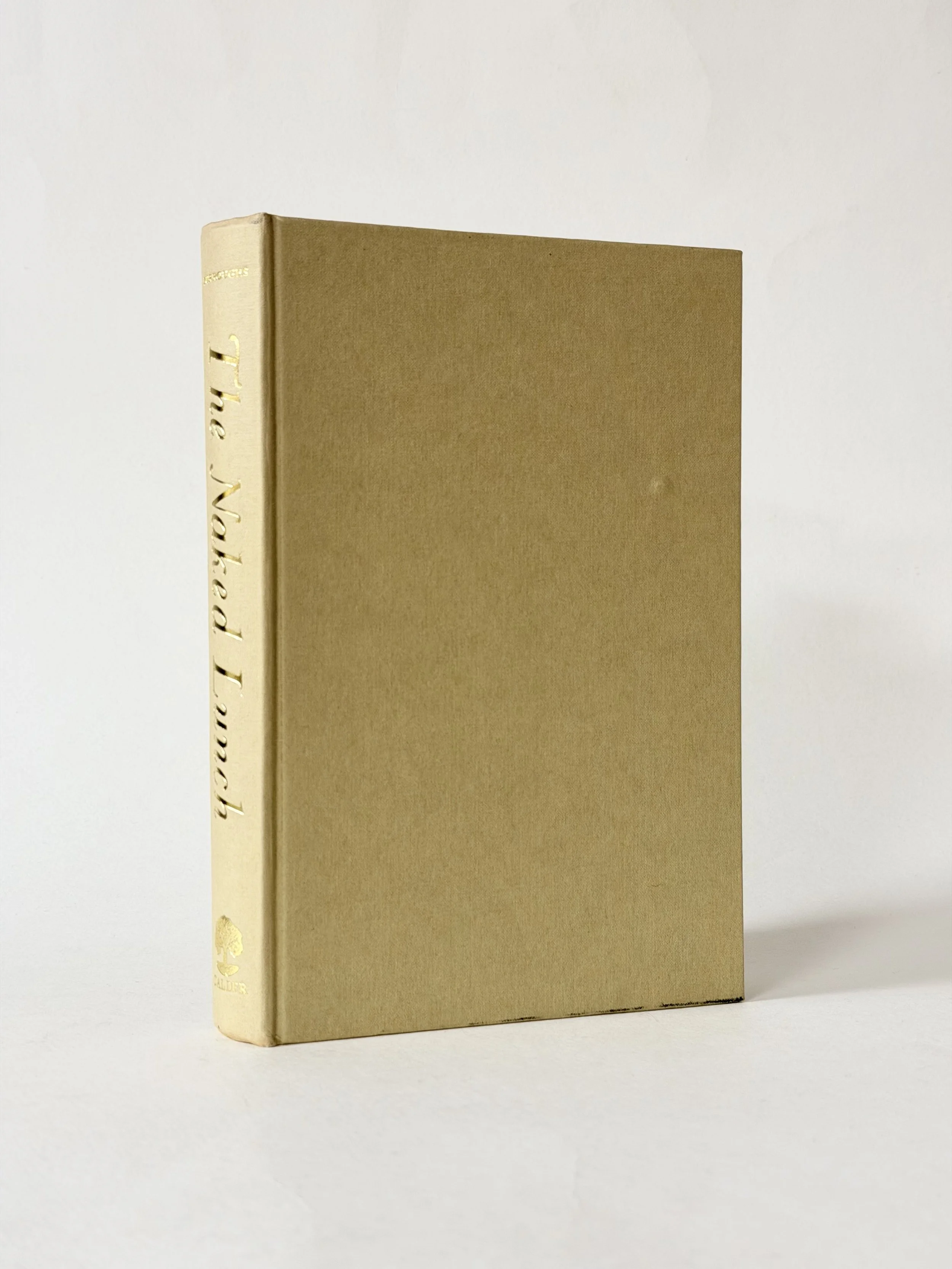 Image 3 of 5
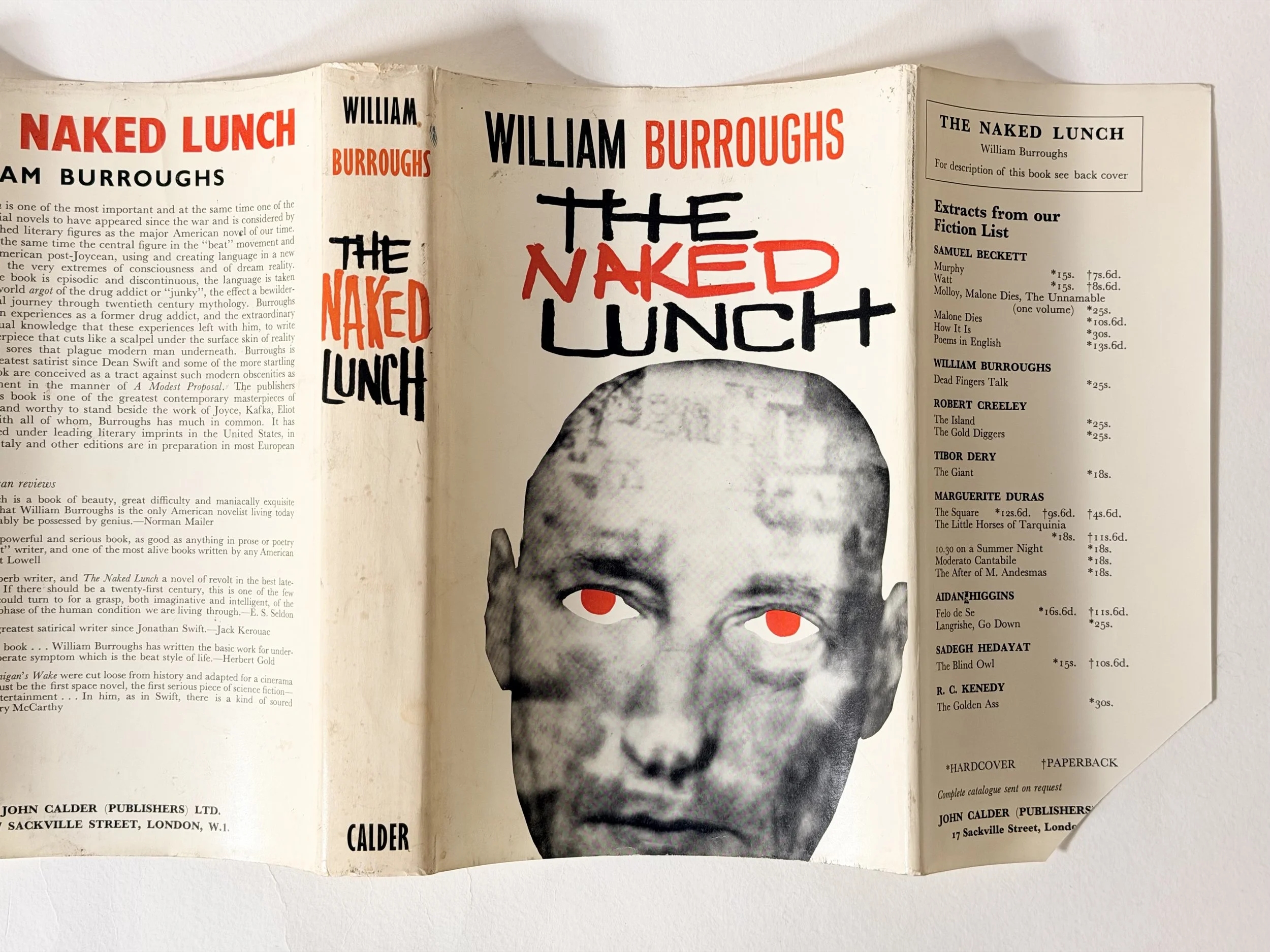 Image 4 of 5
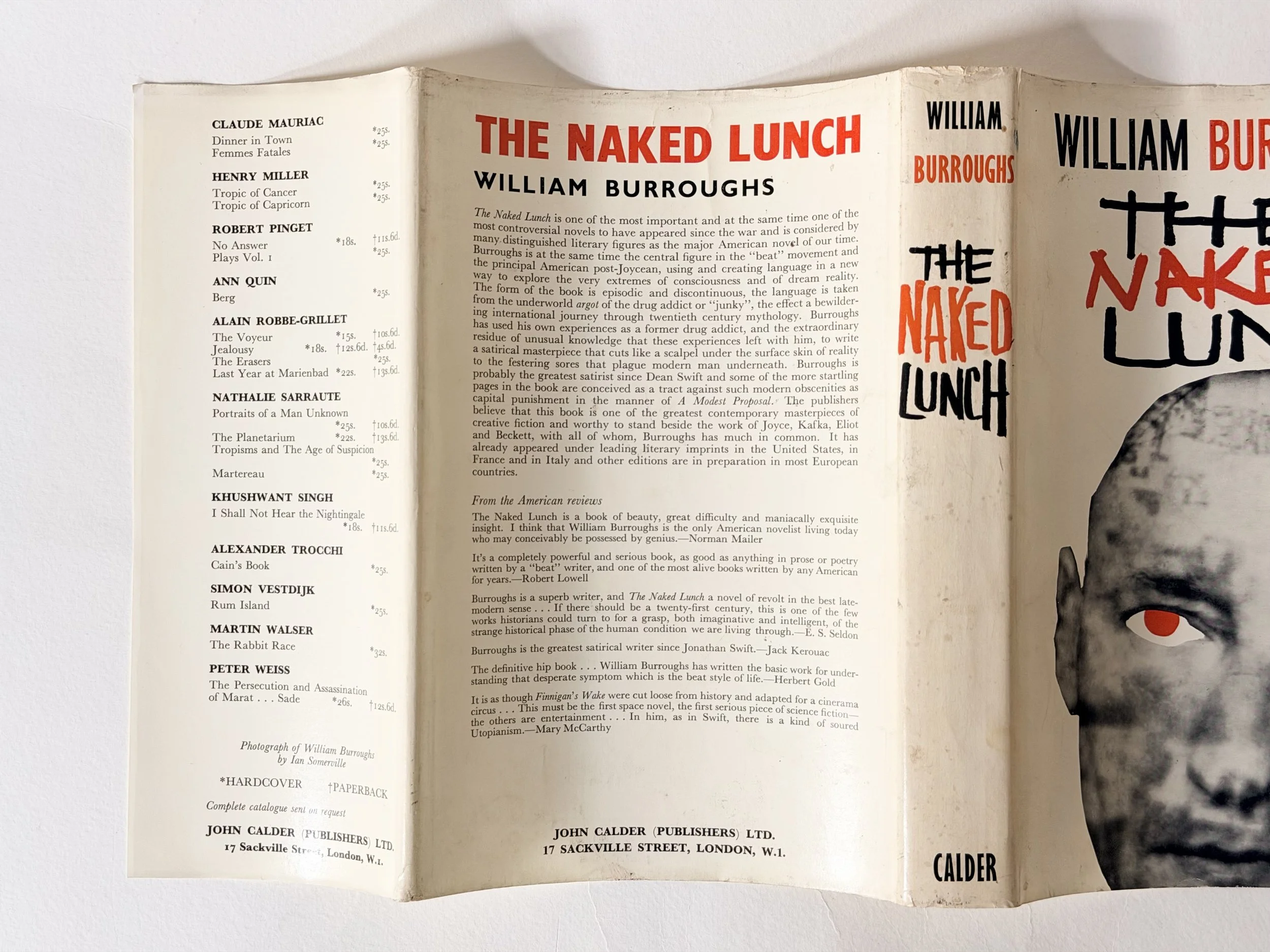 Image 5 of 5
BURROUGHS, William. The Naked Lunch. London: John Calder in association with Olympia Press. 1964. 8vo. First British edition. Publisher’s cream cloth lettered in gilt to the spine, in the maniacal dust jacket representing much of the contents within. A very good example, the cloth clean and bright with a small bump to front board and a touch shelf-worn at bottom edge. The binding tight and square, the contents clean without stamps, inscriptions or foxing which often hampers the volume. The dust jacket price-clipped, a couple of minor closed tears and light marks to the edges and spine panel, but a bright and pleasing copy overall.
The author’s seminal work and a cornerstone volume of Beat literature alongside Kerouac’s On the Road and Ginsburg’s Howl, and this like those carries the same frenetic energy 'to explore the very extremes of consciousness and of dream reality’. Its controversy leads to an always-fascinating publication history; originally published by Olympia Press, Paris in 1959, then by Grove Press, New York in 1962, then Sugar Editore, Milan in 1963, and Editions Gallimard, Paris in 1964. This is the first British edition.
BURROUGHS, William. The Naked Lunch. London: John Calder in association with Olympia Press. 1964. 8vo. First British edition. Publisher’s cream cloth lettered in gilt to the spine, in the maniacal dust jacket representing much of the contents within. A very good example, the cloth clean and bright with a small bump to front board and a touch shelf-worn at bottom edge. The binding tight and square, the contents clean without stamps, inscriptions or foxing which often hampers the volume. The dust jacket price-clipped, a couple of minor closed tears and light marks to the edges and spine panel, but a bright and pleasing copy overall.
The author’s seminal work and a cornerstone volume of Beat literature alongside Kerouac’s On the Road and Ginsburg’s Howl, and this like those carries the same frenetic energy 'to explore the very extremes of consciousness and of dream reality’. Its controversy leads to an always-fascinating publication history; originally published by Olympia Press, Paris in 1959, then by Grove Press, New York in 1962, then Sugar Editore, Milan in 1963, and Editions Gallimard, Paris in 1964. This is the first British edition.