
 Image 1 of 4
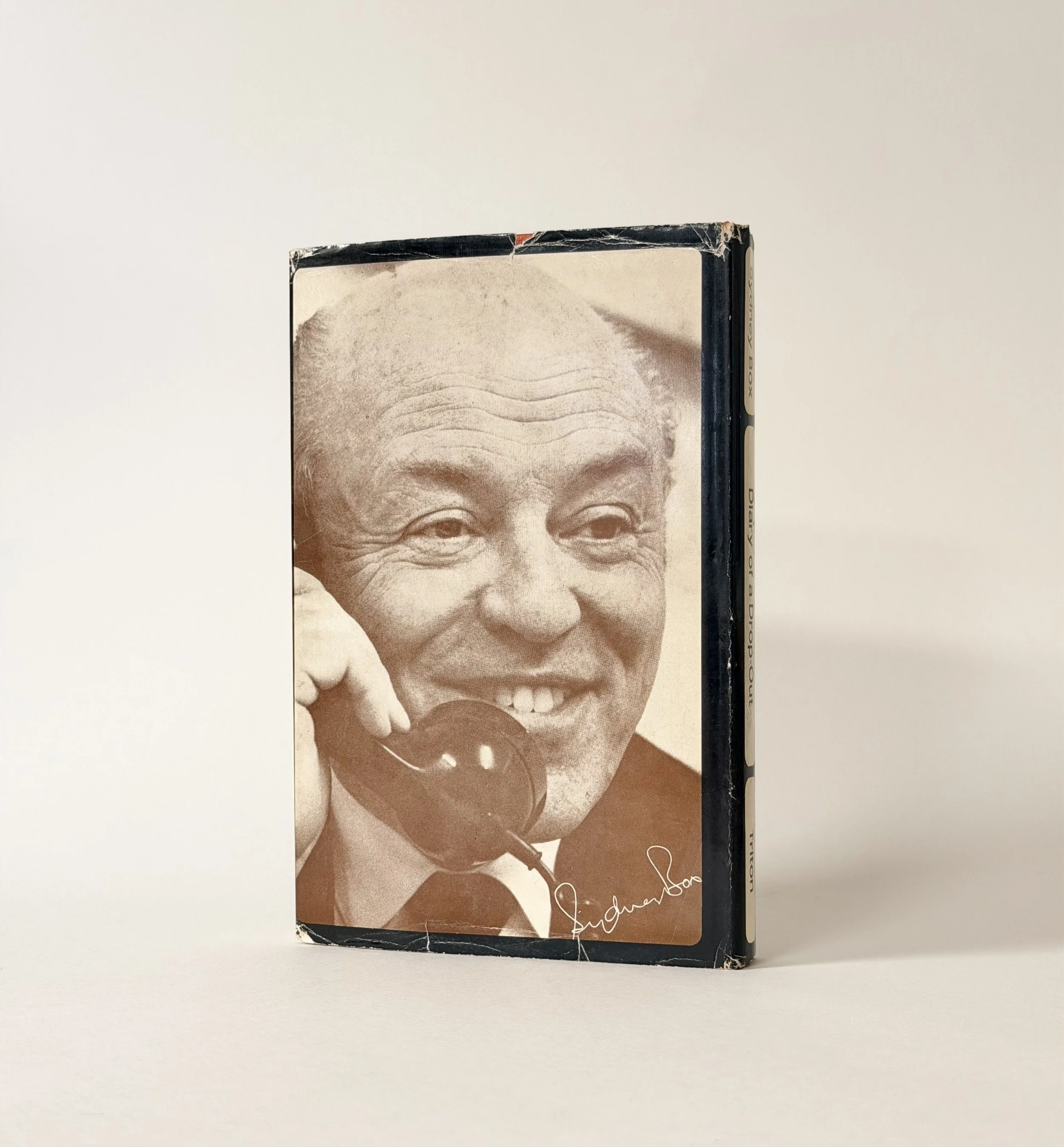 Image 2 of 4
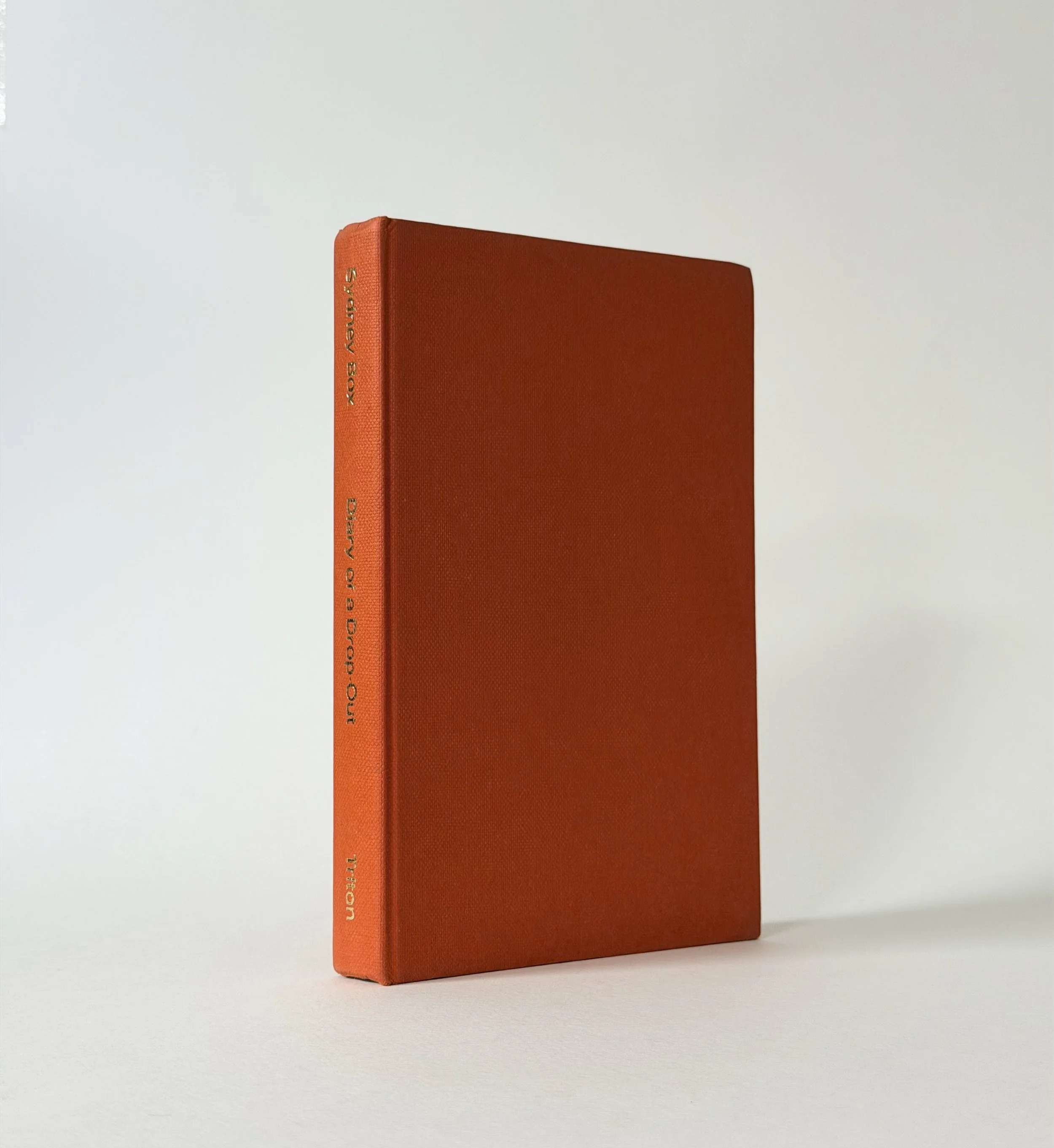 Image 3 of 4
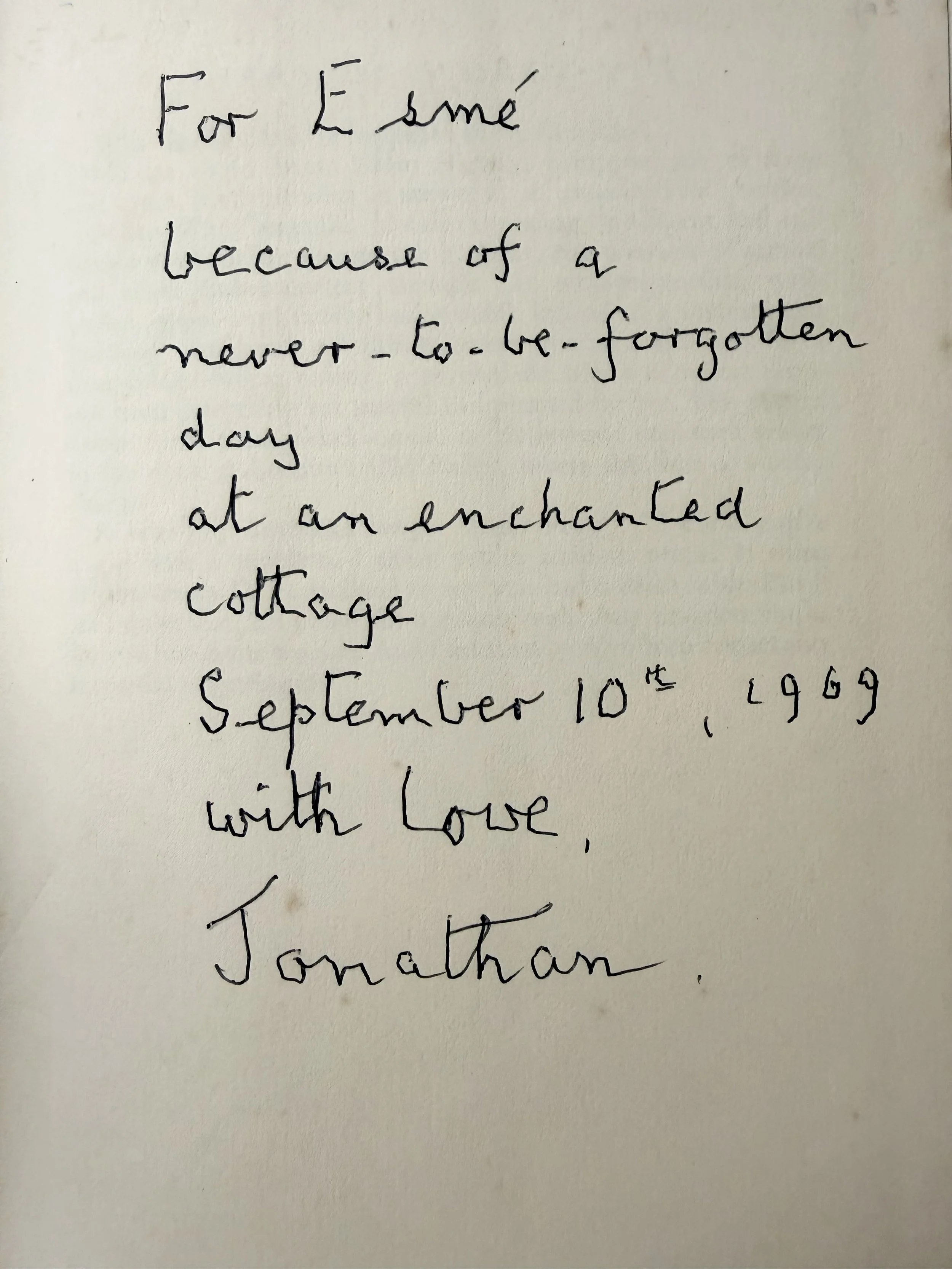 Image 4 of 4
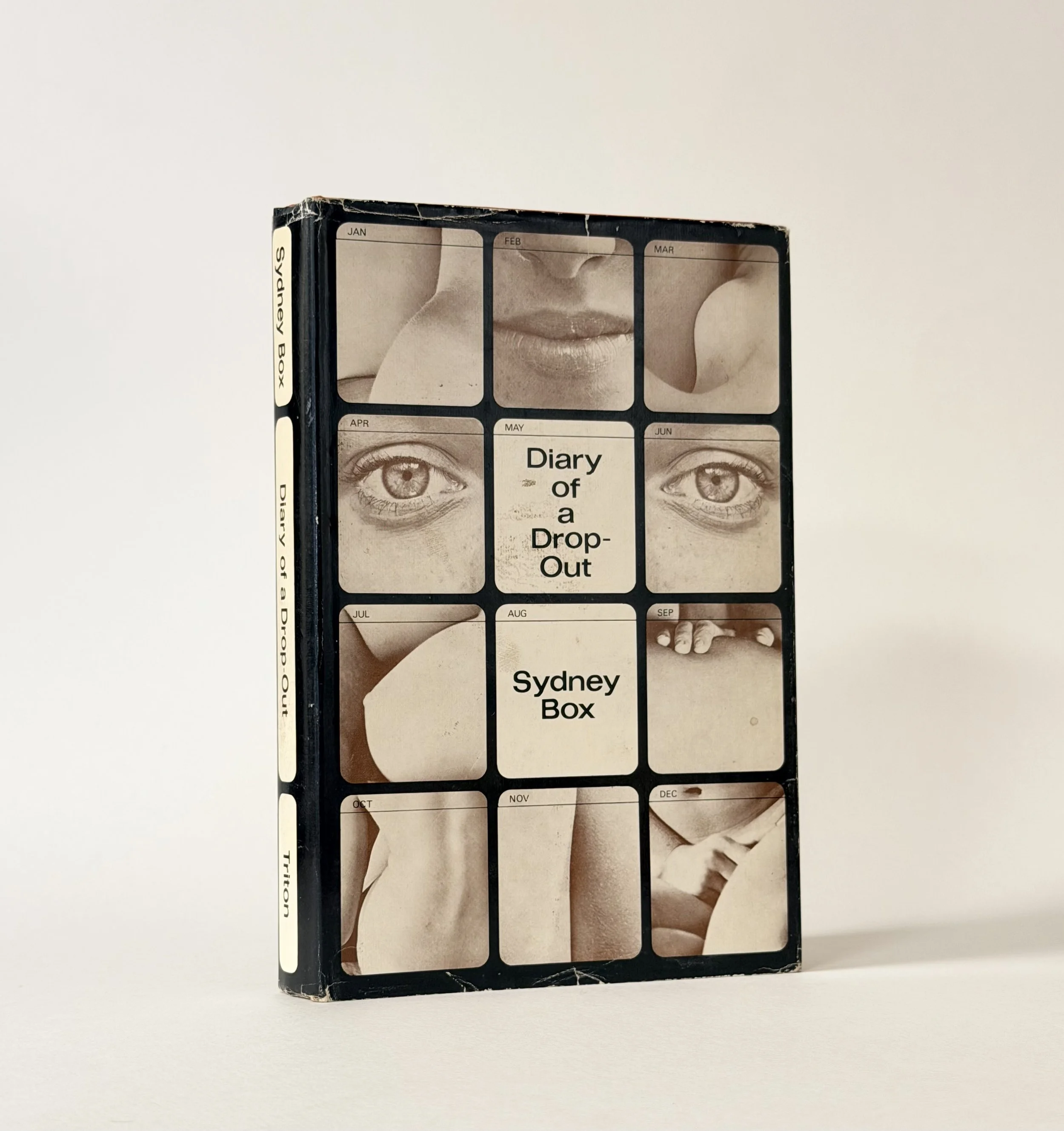
BOX, Sydney. Diary of a Drop-Out. London: Triton. 1969. 8vo. First edition. Publisher’s red cloth lettered in gilt to the spine, in the dust jacket designed by Donald Dossett, the author’s grandson. A very good copy. The cloth clean and bright, gently bumped to the corners and spine tips. The binding tight and square, the textblock gently spotted at edges, with lengthly and rather humorous ink gift inscription to front endpaper—'For Esmé, because of a never-to-be-forgotten day at an enchanted cottage September 10th, 1969’, The dust jacket price-clipped, slightly nicked, rubbed and creased at corners, tips and some edges.
A relatively uncommon first novel by the prolific film producer and screenwriter. The book follows an angsty teenage girl who cuts a swathe of scandal through her ultra-respectable, upper-crust parents. ‘Instead of a sophisticated finishing school and a brilliant society marriage, she opts for a drug-ridden hippie colony, a psychedelic trip, a complete drop-out from everything her parents had planned for her’, traversing London, Hollywood and on to the Old Bailey on account of a murder charge. Published late in Box’s artistic career, he had overseen a plethora of films as producer and/or screenwriter, many in partnership with his wife of three decades, Muriel Box. Their most notable achievement the screenplay for The Seventh Veil (1945) which won the Oscar for Best Screenplay in 1946. Muriel herself remains a bizarrely forgotten behemoth of British cinema—a genuine trailblazer, she remains Britain’s most prolific director, yet is obscure, mostly unheard of, blue-plaqueless, and certainly primed for rediscovery. Her quiet legacy is due in part to Sydney’s impressive reputation in the industry. Though it was in fact Muriel with the creative instinct, Sydney’s debut novel here does have a filmic quality, with the narrative pushed forwards and backwards via diary entries. Uncommon.
BOX, Sydney. Diary of a Drop-Out. London: Triton. 1969. 8vo. First edition. Publisher’s red cloth lettered in gilt to the spine, in the dust jacket designed by Donald Dossett, the author’s grandson. A very good copy. The cloth clean and bright, gently bumped to the corners and spine tips. The binding tight and square, the textblock gently spotted at edges, with lengthly and rather humorous ink gift inscription to front endpaper—'For Esmé, because of a never-to-be-forgotten day at an enchanted cottage September 10th, 1969’, The dust jacket price-clipped, slightly nicked, rubbed and creased at corners, tips and some edges.
A relatively uncommon first novel by the prolific film producer and screenwriter. The book follows an angsty teenage girl who cuts a swathe of scandal through her ultra-respectable, upper-crust parents. ‘Instead of a sophisticated finishing school and a brilliant society marriage, she opts for a drug-ridden hippie colony, a psychedelic trip, a complete drop-out from everything her parents had planned for her’, traversing London, Hollywood and on to the Old Bailey on account of a murder charge. Published late in Box’s artistic career, he had overseen a plethora of films as producer and/or screenwriter, many in partnership with his wife of three decades, Muriel Box. Their most notable achievement the screenplay for The Seventh Veil (1945) which won the Oscar for Best Screenplay in 1946. Muriel herself remains a bizarrely forgotten behemoth of British cinema—a genuine trailblazer, she remains Britain’s most prolific director, yet is obscure, mostly unheard of, blue-plaqueless, and certainly primed for rediscovery. Her quiet legacy is due in part to Sydney’s impressive reputation in the industry. Though it was in fact Muriel with the creative instinct, Sydney’s debut novel here does have a filmic quality, with the narrative pushed forwards and backwards via diary entries. Uncommon.