
 Image 1 of 3
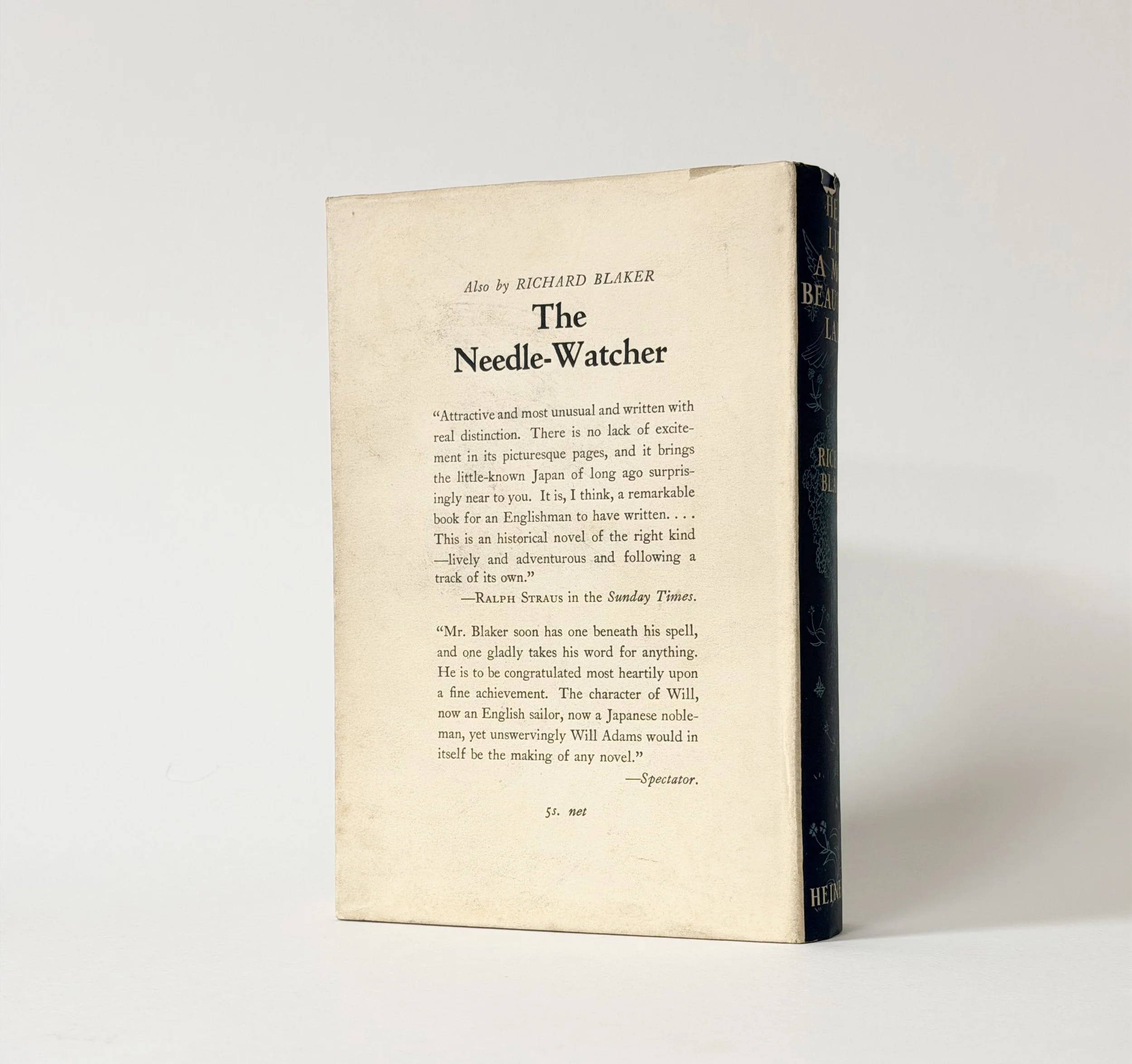 Image 2 of 3
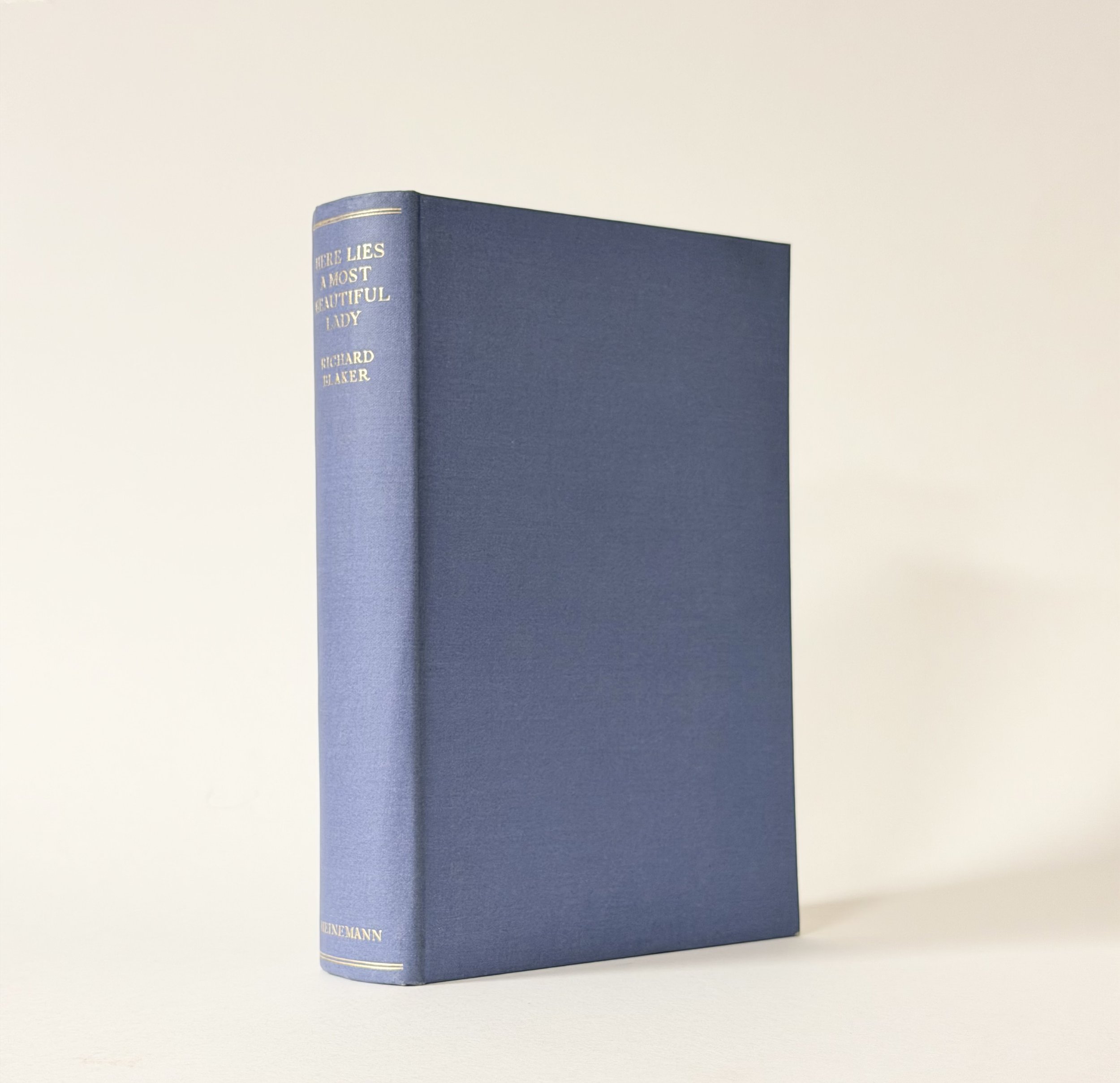 Image 3 of 3
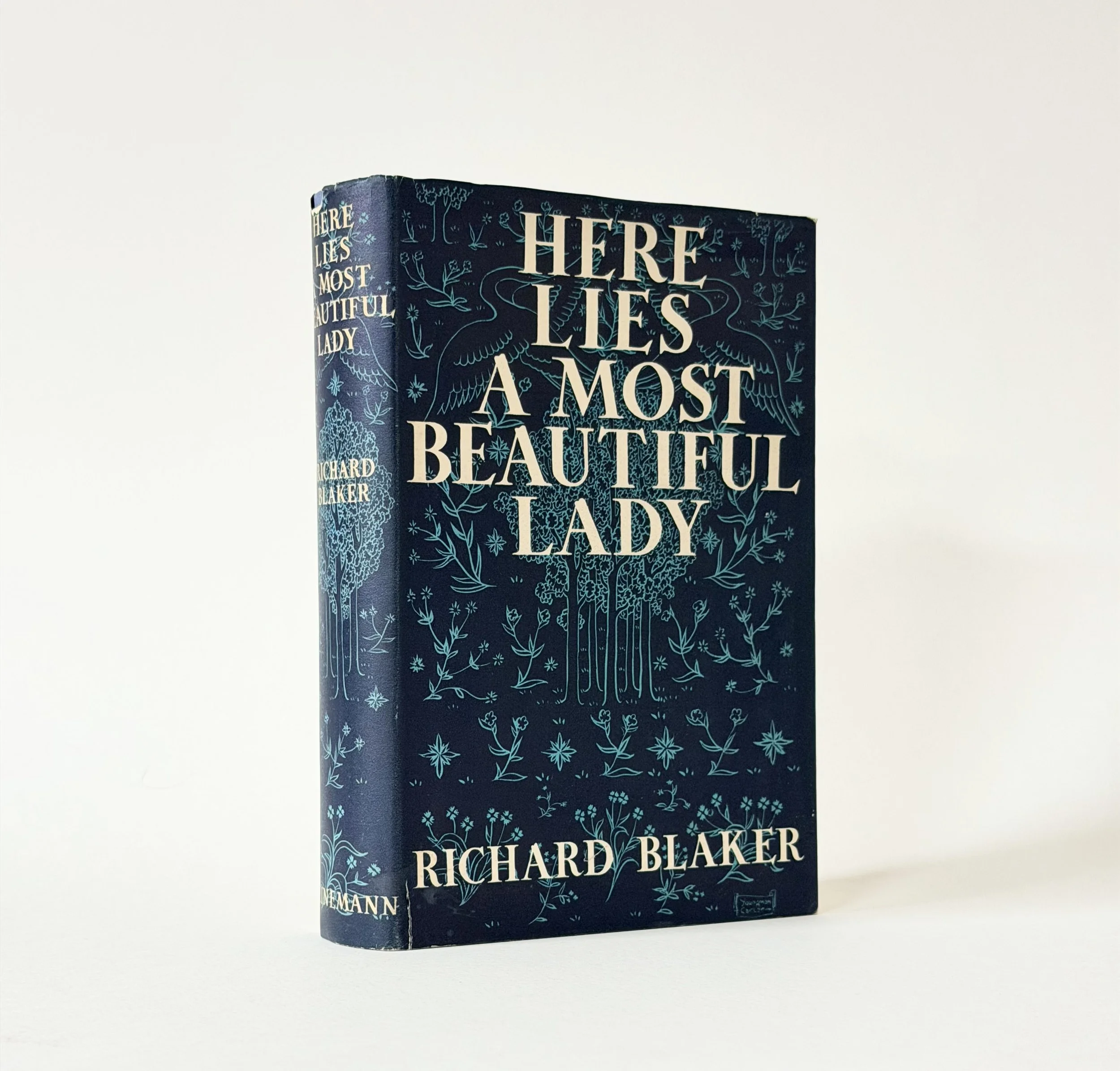
BLAKER, Richard. Here Lies a Most Beautiful Lady. London: Heinemann. 1935. 8vo. First edition. Publisher’s blue cloth lettered in gilt to the spine, in the dust jacket designed by P. Youngman Carter. A very good copy, the cloth clean and bright, the binding tight and square, the textblock with some faint spots, the contents fine but for Book Society bookplate to front pastedown partially obscured by the front flap. Some associated offsetting facing, else clean. The dust jacket unclipped (7/6 net) and complete but for small chip to the spine head. Slightly nicked at other corners, else a presentable copy.
An uncommon turn of the century novel by the obscure writer, curiously written end-first. After a brief introduction to the characters, the apparent happy couple—whose male protagonist is an adventurer through and through—see tragedy, a bandit attack in the Caucasus. The husband dies, the wife and friend left for dead. The book unravels from there. Blaker himself was a curious writer, author of several anti-war novels from the late 20s—he was invalided after fighting at the Somme and in Israel—and thereafter a judge both in favour and in rebellion of war. The Youngman Carter dust jacket, as ever, striking.
BLAKER, Richard. Here Lies a Most Beautiful Lady. London: Heinemann. 1935. 8vo. First edition. Publisher’s blue cloth lettered in gilt to the spine, in the dust jacket designed by P. Youngman Carter. A very good copy, the cloth clean and bright, the binding tight and square, the textblock with some faint spots, the contents fine but for Book Society bookplate to front pastedown partially obscured by the front flap. Some associated offsetting facing, else clean. The dust jacket unclipped (7/6 net) and complete but for small chip to the spine head. Slightly nicked at other corners, else a presentable copy.
An uncommon turn of the century novel by the obscure writer, curiously written end-first. After a brief introduction to the characters, the apparent happy couple—whose male protagonist is an adventurer through and through—see tragedy, a bandit attack in the Caucasus. The husband dies, the wife and friend left for dead. The book unravels from there. Blaker himself was a curious writer, author of several anti-war novels from the late 20s—he was invalided after fighting at the Somme and in Israel—and thereafter a judge both in favour and in rebellion of war. The Youngman Carter dust jacket, as ever, striking.