
 Image 1 of 3
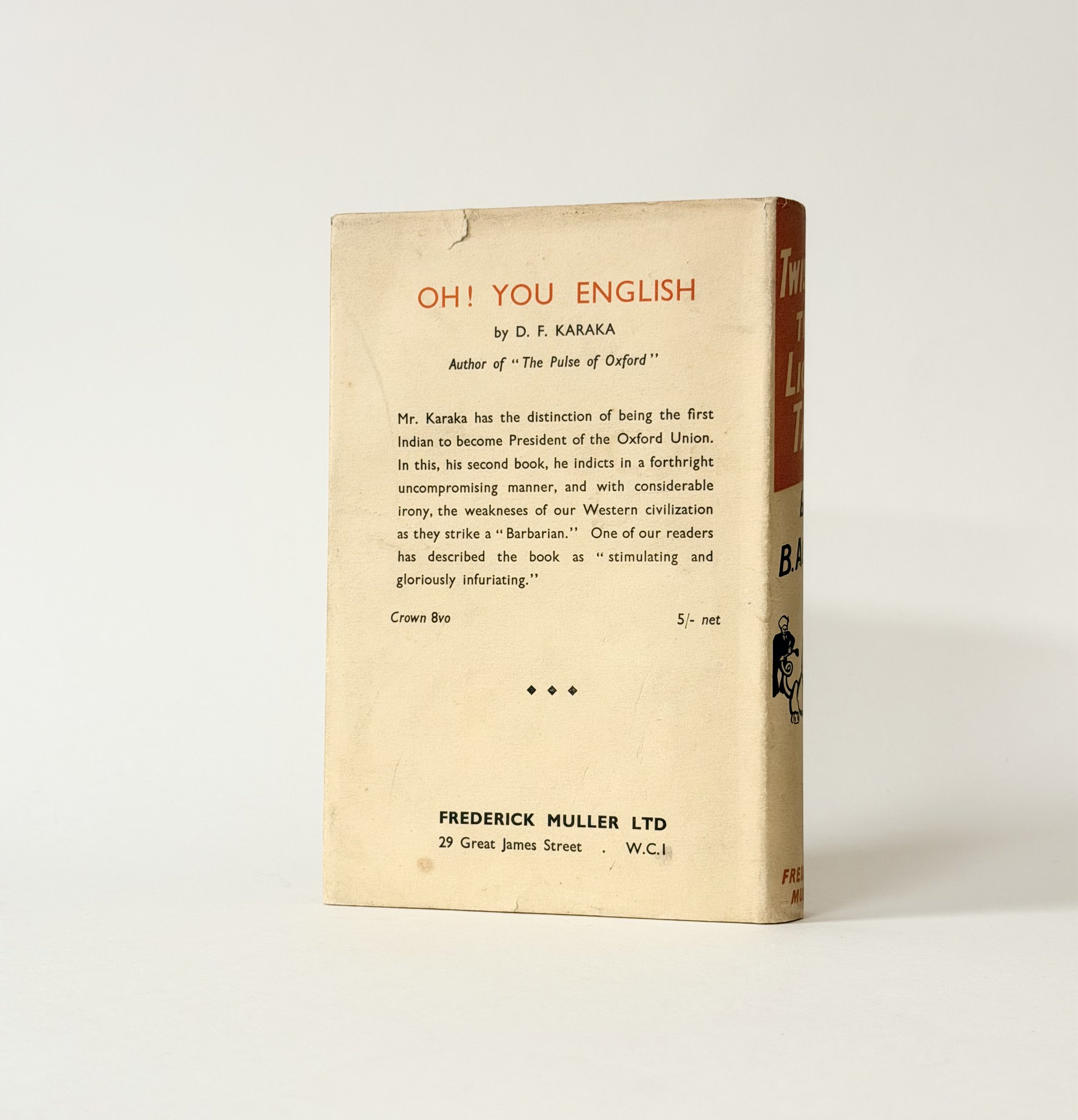 Image 2 of 3
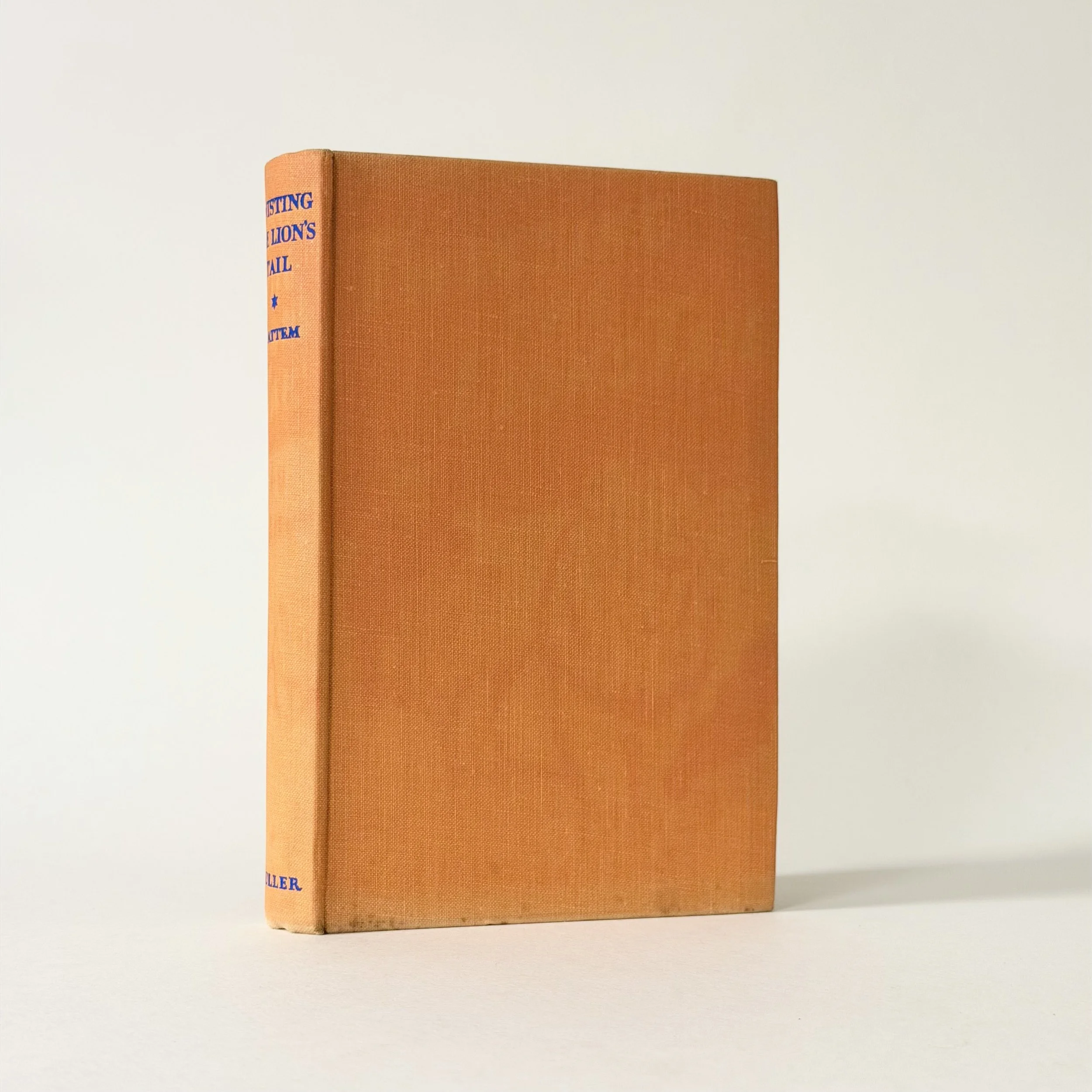 Image 3 of 3
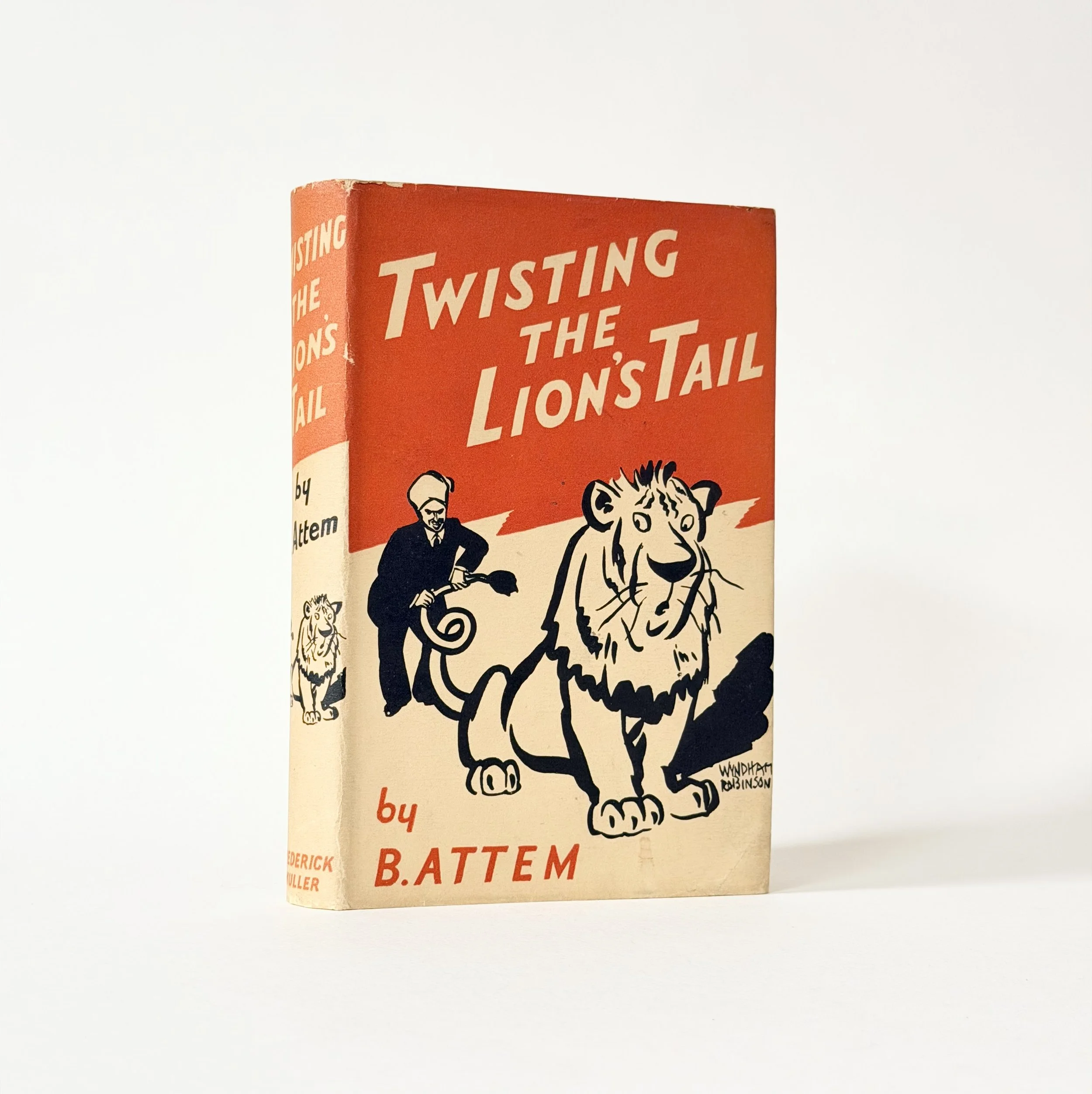
ATTEM, B. [pseud. Vasudeo B. Metta]. Twisting the Lion’s Tale. London: Frederick Muller. 1938. 8vo. First edition. Publisher’s pale red cloth lettered in blue to the spine, in the dust jacket designed by Wyndham Robinson, depicting the author twisting the tail of Britain’s emblematic lion. A very good or better copy. The cloth clean and bright, but with faint outline of jacket front panel illustration slightly transferred to front board. The binding tight and square, the contents clean and fine throughout, faint eraser mark to front endpaper. The dust jacket unclipped (5/- net), very lightly rubbed and marked only.
Not one to show Nigel Farage or Tommy Robinson, here. Or any remotely patriotic jingoist, really. A scathing attack on all aspects of English life, from its government and its language, its sports and its literature—the Bard is intentionally brushed over. The author criticises the English upper classes, ‘the child unable to grow up’ who ‘have always shown a positive dislike for hard work’. English culture, he says, ‘is more or less confined to a few Bloomsburyites, and their provincial brothers and sisters’, while it lacks ‘ravishingly beautiful women’ whose fight for equality is entirely misguided, since post-Great War Englishmen are weak, and frivolous women have been able to dominate society. Its satire is sharp throughout and a modern reader might not necessarily be mistaken for considering the narrow line between wit and belief. Attem was a pseudonym used by Vasudeo B. Metta, an Indian barrister who published various books and essays on his resentment of British rule in India. Uncommon in such sharp condition.