
 Image 1 of 5
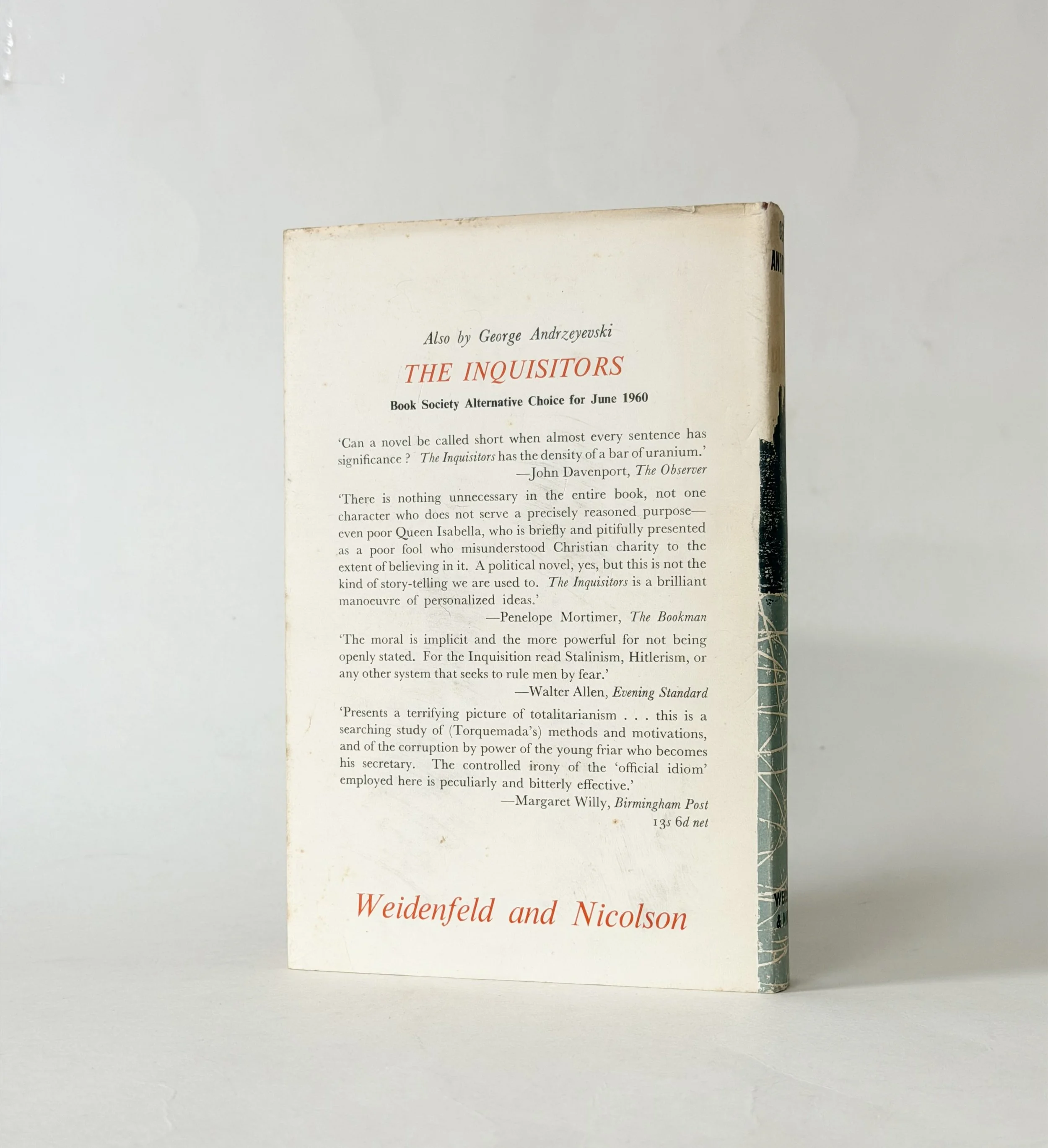 Image 2 of 5
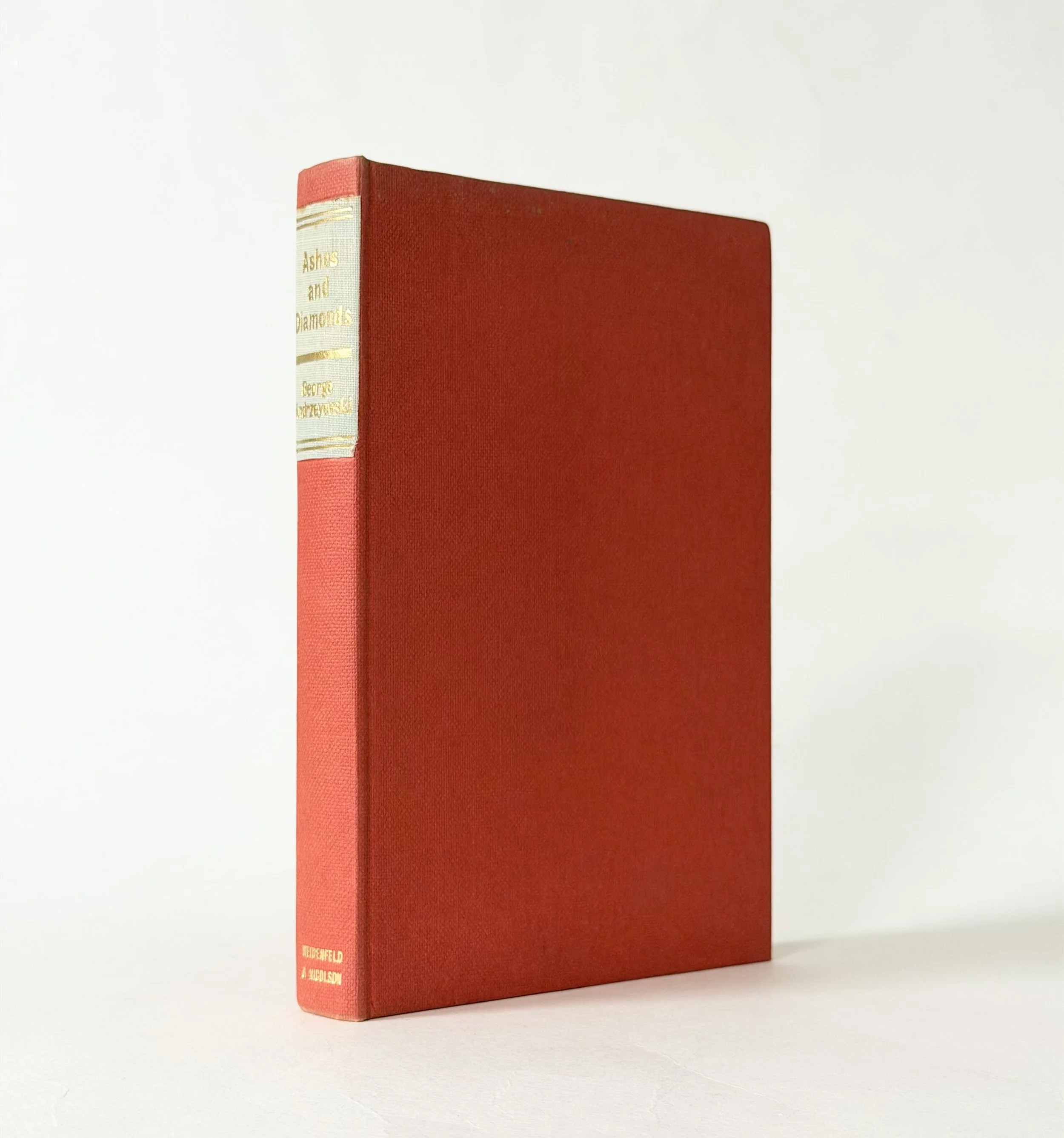 Image 3 of 5
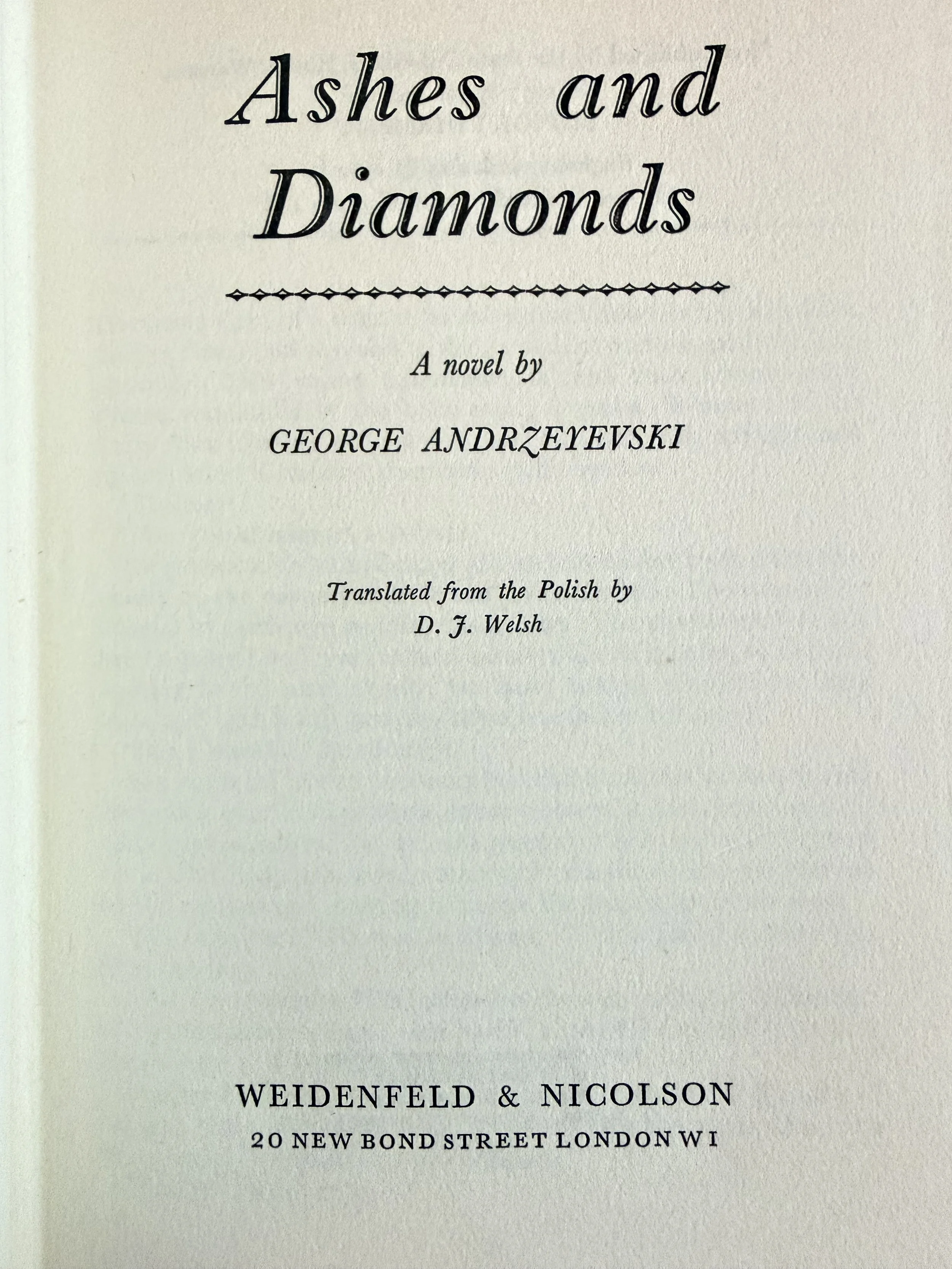 Image 4 of 5
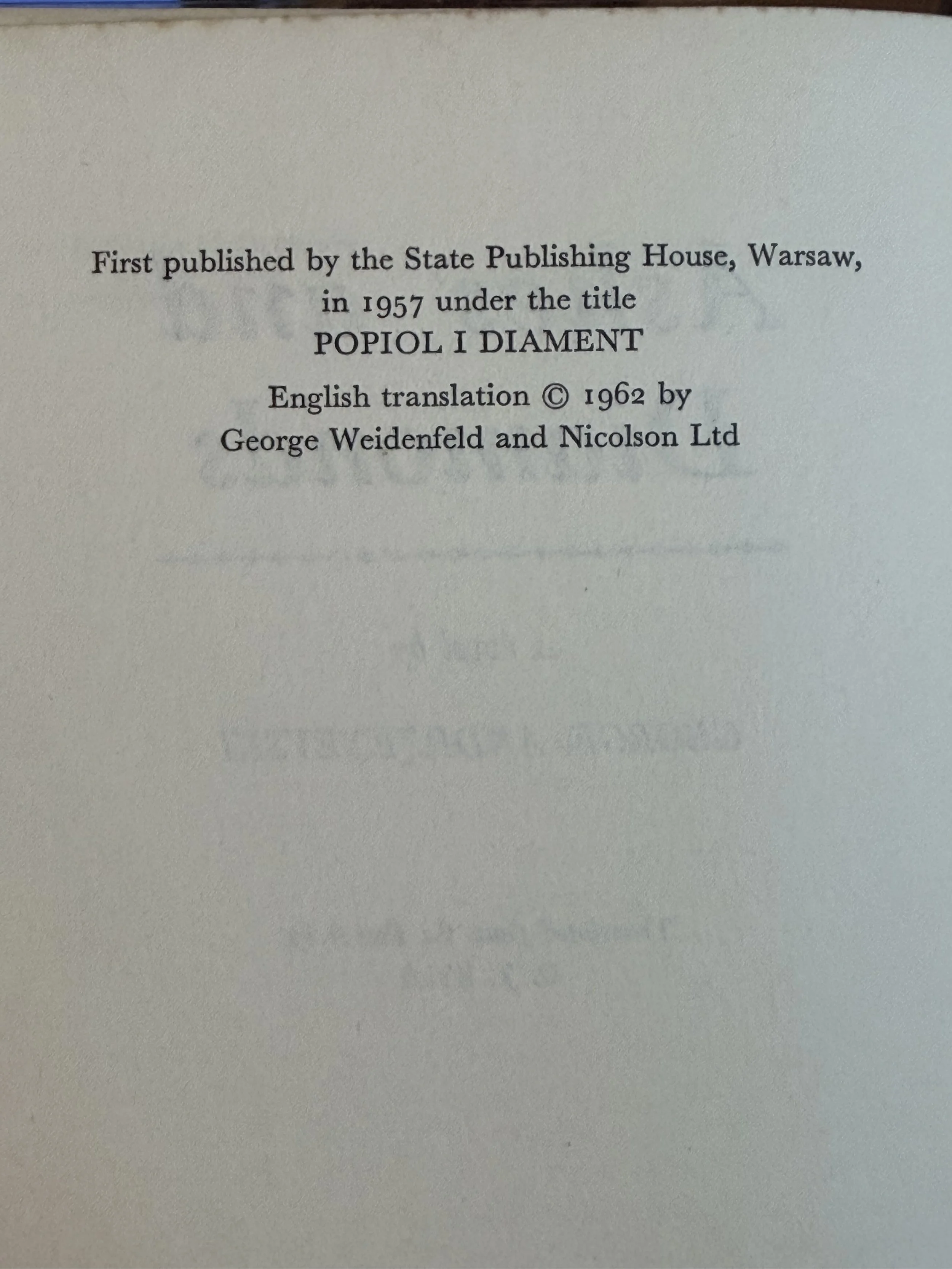 Image 5 of 5
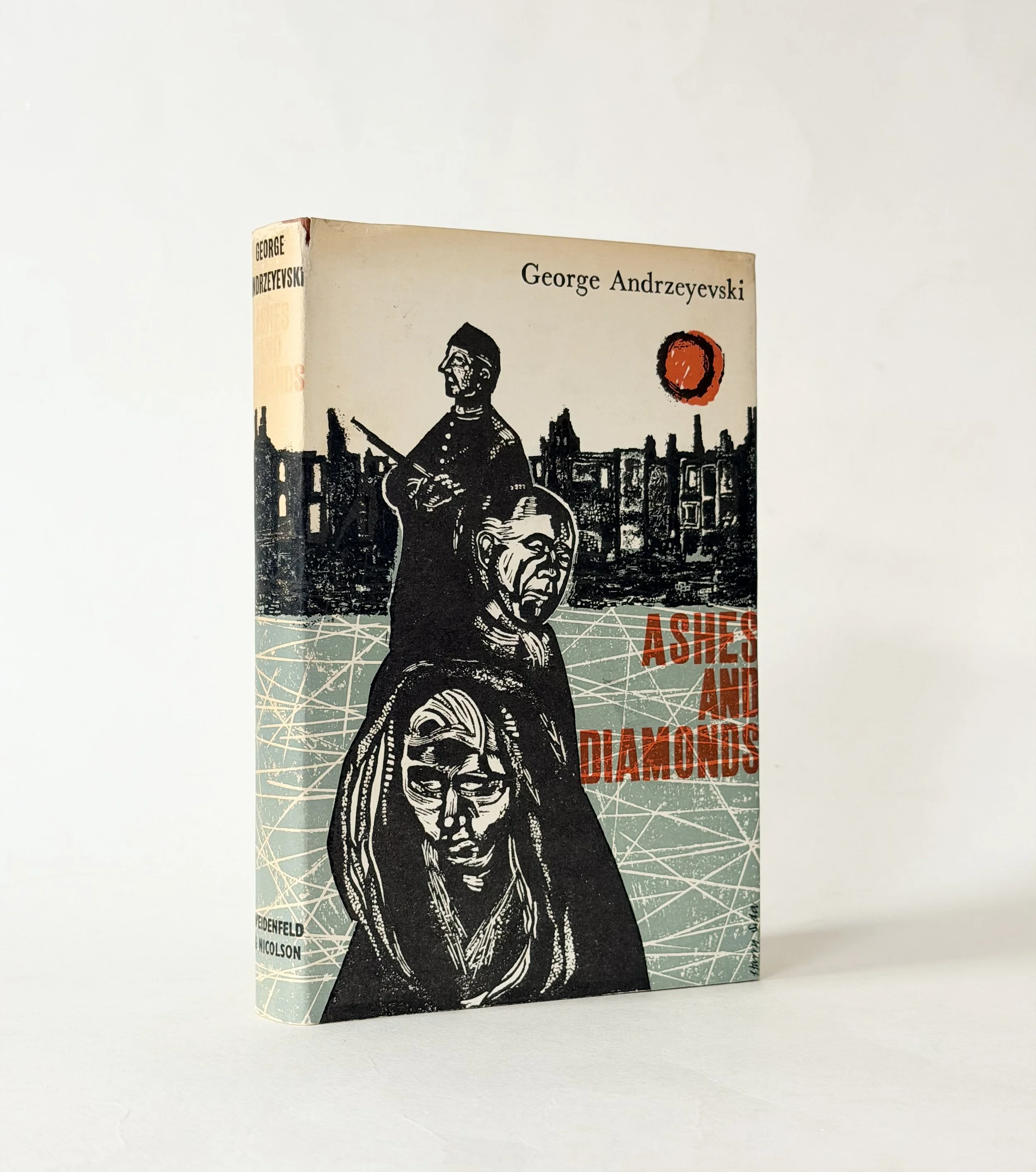
ANDRZEYEVSKI, George. Ashes and Diamonds. Trans. from the Polish by D. J. Welsh. London: Weidenfeld & Nicolson. 1962. 8vo. First British edition. Publisher’s red cloth lettered in gilt over blue cloth to spine, in the terrific dust jacket designed by Harry Sida. A very good copy. The boards clean, just a trifle bumped. The binding tight and square. The textblock slightly spotted, with occasional spots in places though largely fine. From the library of Bruce Marshall with his ink ownership inscription to front endpaper. The dust jacket unclipped, very slightly nicked at spine tips and corners, the spine lettering slightly faded, with some mild toning to extremities, but a pleasing example.
One of only a small handful of novels translated into English by the Polish author. The novel sees regime as character, that being the Communist regime come the end of the Second World War and the fall of the Nazis. While the war is officially over, unofficially, rival bands and factions compete for power, loot, and often mere survival in the ruined rural stretches of Poland with the intended assassination of a prominent Communist secretary taking centre-stage. Originally published in Poland in 1948.
ANDRZEYEVSKI, George. Ashes and Diamonds. Trans. from the Polish by D. J. Welsh. London: Weidenfeld & Nicolson. 1962. 8vo. First British edition. Publisher’s red cloth lettered in gilt over blue cloth to spine, in the terrific dust jacket designed by Harry Sida. A very good copy. The boards clean, just a trifle bumped. The binding tight and square. The textblock slightly spotted, with occasional spots in places though largely fine. From the library of Bruce Marshall with his ink ownership inscription to front endpaper. The dust jacket unclipped, very slightly nicked at spine tips and corners, the spine lettering slightly faded, with some mild toning to extremities, but a pleasing example.
One of only a small handful of novels translated into English by the Polish author. The novel sees regime as character, that being the Communist regime come the end of the Second World War and the fall of the Nazis. While the war is officially over, unofficially, rival bands and factions compete for power, loot, and often mere survival in the ruined rural stretches of Poland with the intended assassination of a prominent Communist secretary taking centre-stage. Originally published in Poland in 1948.